Kirjojen hintavertailu. Mukana 11 244 527 kirjaa ja 12 kauppaa.

Kirjahaku

Etsi kirjoja tekijän nimen, kirjan nimen tai ISBN:n perusteella.

876 tulosta hakusanalla Michaelangelo Rodriguez

Michelangelo, Volume 5

Michelangelo, Volume 5

Charles De Tolnay

Princeton University Press
1960
sidottu
This magnificent five-volume work on the life and art of the great Florentine is being written by one of the world's most eminent art scholars. The volumes cover the entire artistic activity of Michelangelo period by period-his life, his sources of inspiration, and all essential information about both the extant and the lost works.
Michelangelo, Volume 4

Michelangelo, Volume 4

Charles De Tolnay

Princeton University Press
1954
sidottu
This magnificent five-volume work on the life and art of the great Florentine is being written by one of the world's most eminent art scholars. The volumes cover the entire artistic activity of Michelangelo period by period-his life, his sources of inspiration, and all essential information about both the extant and the lost works.
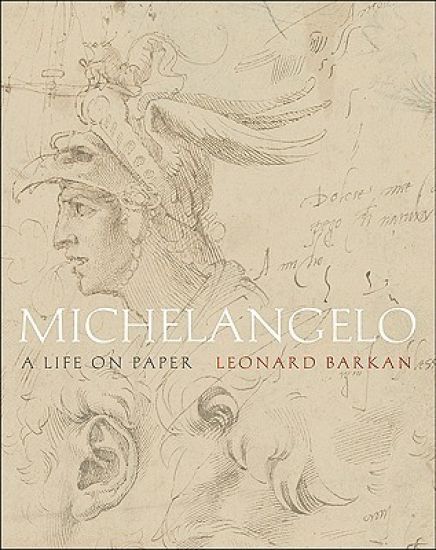
Michelangelo

Michelangelo

Leonard Barkan

Princeton University Press
2010
sidottu
Michelangelo is best known for great artistic achievements such as the Sistine ceiling, the David, the Piet, and the dome of St. Peter's. Yet throughout his seventy-five year career, he was engaged in another artistic act that until now has been largely overlooked: he not only filled hundreds of sheets of paper with exquisite drawings, sketches, and doodles, but also, on fully a third of these sheets, composed his own words. Here we can read the artist's marginal notes to his most enduring masterpieces; workaday memos to assistants and pupils; poetry and letters; and achingly personal expressions of ambition and despair surely meant for nobody's eyes but his own. Michelangelo: A Life on Paper is the first book to examine this intriguing interplay of words and images, providing insight into his life and work as never before. This sumptuous volume brings together more than two hundred stunning, museum-quality reproductions of Michelangelo's most private papers, many in color. Accompanying them is Leonard Barkan's vivid narrative, which explains the important role the written word played in the artist's monumental public output. What emerges is a wealth of startling juxtapositions: perfectly inscribed sonnets and tantalizing fragments, such as "Have patience, love me, sufficient consolation"; careful notations listing money spent for chickens, oxen, and funeral rites for the artist's father; a beautiful drawing of a Madonna and child next to a mock love poem that begins, "You have a face sweeter than boiled grape juice, and a snail seems to have passed over it." Magnificently illustrated and superbly detailed, this book provides a rare and intimate look at how Michelangelo's artistic genius expressed itself in words as well as pictures.
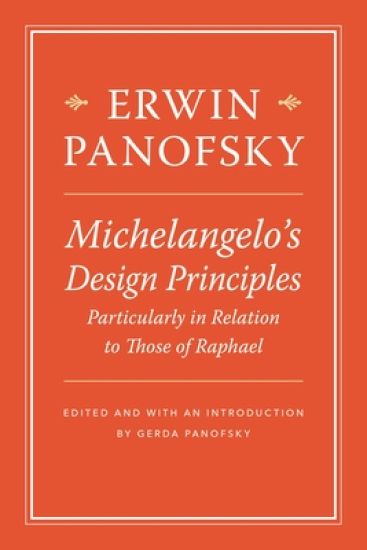
Michelangelo’s Design Principles, Particularly in Relation to Those of Raphael
The first English translation of Erwin Panofsky's long-lost work on MichelangeloIn 2012, a manuscript by renowned art historian Erwin Panofsky was rediscovered in a safe in Munich, in the basement of the Central Institute for Art History. Hidden for decades among folders and administrative files was Panofsky's thesis on Michelangelo—originally submitted to Hamburg University in March of 1920, abandoned when Panofsky fled Hitler's Germany in 1934, and thought to have been destroyed in the Allied bombings. A century on, Michelangelo's Design Principles makes this remarkable work available for the first time in English.Casting Panofsky's thought in an entirely new light, Michelangelo's Design Principles is the legendary scholar's only book-length examination of the art of the Italian Renaissance. He provides a compelling analysis of Michelangelo's artistic style and deftly compares it with that of Raphael, situating both Renaissance masters in the broader context of Western art. This illuminating book offers unique perspectives on Panofsky's early intellectual development and the state of research on Michelangelo and the High Renaissance at a period of transition in art history, when formalist readings of artworks began to take precedence over a biographical approach.Featuring an introduction by Gerda Panofsky that discusses the history of the manuscript and the significance of its rediscovery, Michelangelo's Design Principles is a crucial link between Panofsky's formalist training as a young art historian and his later work in iconology.
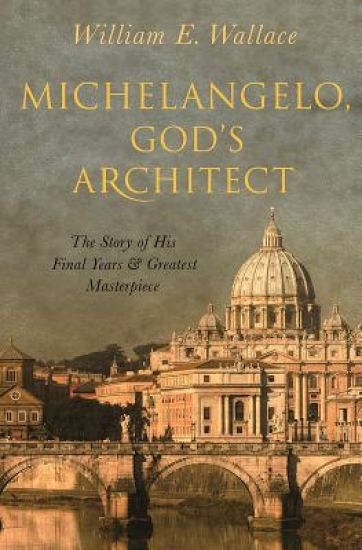
Michelangelo, God's Architect

Michelangelo, God's Architect

William E. Wallace

PRINCETON UNIVERSITY PRESS
2019
sidottu
The untold story of Michelangelo's final decades—and his transformation into one of the greatest architects of the Italian RenaissanceAs he entered his seventies, the great Italian Renaissance artist Michelangelo despaired that his productive years were past. Anguished by the death of friends and discouraged by the loss of commissions to younger artists, this supreme painter and sculptor began carving his own tomb. It was at this unlikely moment that fate intervened to task Michelangelo with the most ambitious and daunting project of his long creative life.Michelangelo, God's Architect is the first book to tell the full story of Michelangelo's final two decades, when the peerless artist refashioned himself into the master architect of St. Peter’s Basilica and other major buildings. When the Pope handed Michelangelo control of the St. Peter’s project in 1546, it was a study in architectural mismanagement, plagued by flawed design and faulty engineering. Assessing the situation with his uncompromising eye and razor-sharp intellect, Michelangelo overcame the furious resistance of Church officials to persuade the Pope that it was time to start over.In this richly illustrated book, leading Michelangelo expert William Wallace sheds new light on this least familiar part of Michelangelo’s biography, revealing a creative genius who was also a skilled engineer and enterprising businessman. The challenge of building St. Peter’s deepened Michelangelo’s faith, Wallace shows. Fighting the intrigues of Church politics and his own declining health, Michelangelo became convinced that he was destined to build the largest and most magnificent church ever conceived. And he was determined to live long enough that no other architect could alter his design.
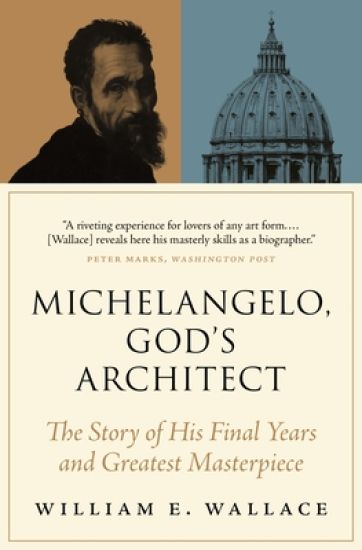
Michelangelo, God's Architect

Michelangelo, God's Architect

William E. Wallace

Princeton University Press
2021
pokkari
The untold story of Michelangelo’s final decades—and his transformation into the master architect of St. Peter’s BasilicaAs he entered his seventies, Michelangelo despaired that his productive years were over. Anguished by the death of friends and discouraged by the loss of commissions to younger artists, this supreme Renaissance painter and sculptor began carving his own tomb. It was at this unlikely moment that Michelangelo was given charge of the most ambitious and daunting project of his long creative life—the design and construction of St. Peter’s Basilica. In this richly illustrated book, William Wallace tells for the first time the full story of Michelangelo's final two decades—and of how the artist transformed himself into one of the greatest architects of the Renaissance.
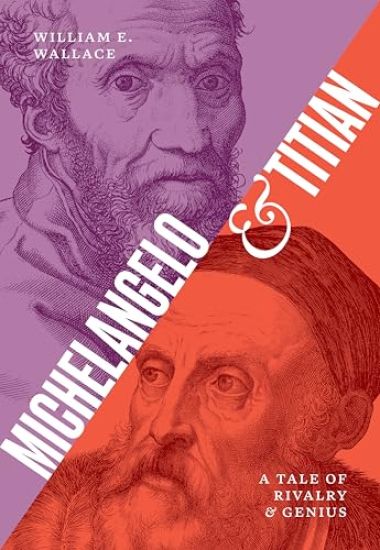
Michelangelo and Titian

Michelangelo and Titian

William E. Wallace

PRINCETON UNIVERSITY PRESS
2026
sidottu
From the acclaimed author of Michelangelo, God’s Architect, a dual biography of two towering artists of the Renaissance, whose decades-long rivalry spurred both to greater heightsIn 1529, Michelangelo was in Venice when he first met Titian, Venice’s famed painter of princes, gods, and goddesses. Coming face-to-face with Titian’s drama-infused, richly colored works, the creator of David and the Sistine Chapel ceiling realized he had met a worthy opponent. Twenty-five years later, Titian came to Rome to paint the pope, and the two met again. Painting in the Vatican, Titian experienced the full power of Michelangelo’s work and vowed to surpass the achievements of his older contemporary.Michelangelo and Titian is the untold story of history’s greatest artistic rivalry, a competition between two monumental figures more admiring of one another than either would ever admit. William Wallace brings the world of the sixteenth century to life, and in particular its culture of gossip and intrigue. Wallace challenges the established narrative of this relationship as mostly one-sided, with the younger artist in competition with the reigning master. He shows how the artists moved in overlapping courtly and papal circles, sharing the patronage, power, and sometimes friendship of the most important people of their era, including members of the Medici, Este, and Farnese families. Wallace traces how, over the span of some forty years, this unspoken rivalry was reciprocal and mutually beneficial, with each learning from the other’s brilliance, quietly seeking to best the other’s work and secure his own legacy.An extraordinary achievement, Michelangelo and Titian is a richly textured account of two supremely gifted rivals who inspired each other to test the limits of their creative genius, and in doing so created some of the most soaring works of art the world has ever known.
Michelangelo's Poetry

Michelangelo's Poetry

Glauco Cambon

Princeton University Press
2014
pokkari
Glauco Cambon asserts the independent significance of Michelangelo's poetry vis-a-vis his overwhelming contribution to the visual arts, while also investigating the formal and thematic relations of his writing to his sculpture and paintings Originally published in 1986. The Princeton Legacy Library uses the latest print-on-demand technology to again make available previously out-of-print books from the distinguished backlist of Princeton University Press. These editions preserve the original texts of these important books while presenting them in durable paperback and hardcover editions. The goal of the Princeton Legacy Library is to vastly increase access to the rich scholarly heritage found in the thousands of books published by Princeton University Press since its founding in 1905.
Michelangelo's Poetry

Michelangelo's Poetry

Glauco Cambon

Princeton University Press
2016
sidottu
Glauco Cambon asserts the independent significance of Michelangelo's poetry vis-a-vis his overwhelming contribution to the visual arts, while also investigating the formal and thematic relations of his writing to his sculpture and paintings Originally published in 1986. The Princeton Legacy Library uses the latest print-on-demand technology to again make available previously out-of-print books from the distinguished backlist of Princeton University Press. These editions preserve the original texts of these important books while presenting them in durable paperback and hardcover editions. The goal of the Princeton Legacy Library is to vastly increase access to the rich scholarly heritage found in the thousands of books published by Princeton University Press since its founding in 1905.
Michelangelo

Michelangelo

Hugo Chapman

British Museum Press
2006
sidottu
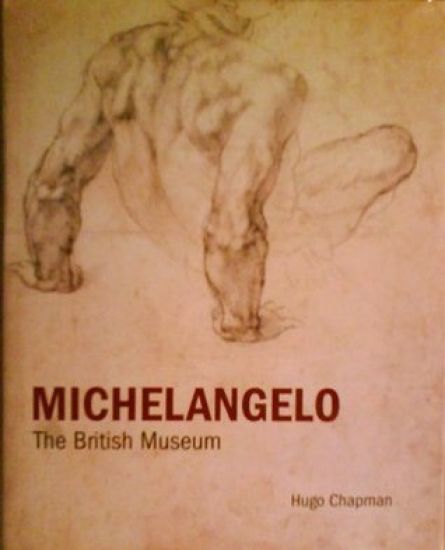
This lovely gift book introduces one of the greatest Renaissance masters through his drawings. A short illustrated essay opens the book, describing Michelangelo's life and the background behind some of his greatest works, including the Sistine chapel ceiling and the Last Judgement. The book then illustrates a selection of his most important drawings with short captions, from sketches jotting down preliminary ideas to highly finished studies - all proving how integral drawing was to the artist in the process of perfecting his ideas. In all the illustrated works, from portraits to architectural studies, from complex studies for the Sistine chapel to his moving Crucifixion scenes, the genius and inventiveness of the artist is apparent, making this the perfect introduction to the work of an unsurpassed master draughtsman.
Michelangelo: the last decades

Michelangelo: the last decades

Sarah Vowles; Grant Lewis

BRITISH MUSEUM PRESS
2024
sidottu
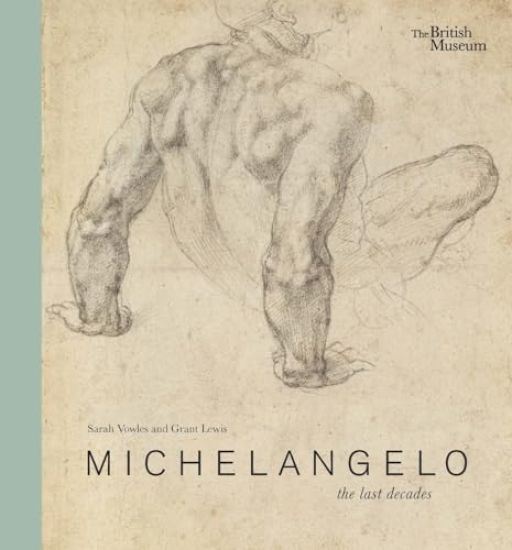
Tracing the final 30 years of Michelangelo’s career, this book examines how the great master used art and faith to explore the common human experience of ageing in a rapidly changing world. ‘This fascinating and beautifully illustrated catalogue demonstrates the creativity of Michelangelo’s late years in a way that is both accessible and scholarly.’ – Jill Burke, author of How to be a Renaissance Woman and The Italian Renaissance Nude Michelangelo Buonarroti (1475–1564) was one of the greatest artists of the Renaissance. He was not the isolated, tortured genius of artistic myth, but a man who maintained a close circle of friends and associates into old age. He developed collaborative working relationships with younger artists, thereby maintaining his fame and reputation even as he aged, relinquishing the hardest physical work to others. His late drawings offer a powerful insight into his psychology, reflecting his Catholic faith, his commanding intellectual engagement and his hope for eternal life. Michelangelo reimagined the iconography of religious art to create hugely influential compositions of key moments in Christian faith, such as the Crucifixion, the Last Judgment and the Pietà (or Lamentation). He was involved in designing several significant sites in Rome at this time – including his key architectural project, the immense challenge of rebuilding St Peter’s, at the very heart of Christianity. His role as an architect is explored through beautiful drawings, highlighting his range as a designer. Alongside his major commissions he created deeply personal drawings – revisiting earlier compositions to explore intensely moving Crucifixions that served as spiritual meditations on Christ’s death and offered the hope of salvation for an elderly man facing the end of his own long life. Built on the British Museum’s extraordinary collection of drawings, this book explores Michelangelo’s relationships and late creativity to go beyond the towering Renaissance master known today.
Michelangelo

Michelangelo

Antonio Forcellino

Polity Press
2011
nidottu
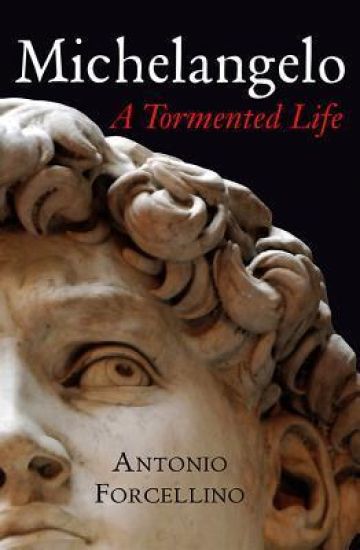
This major new biography recounts the extraordinary life of one of the most creative figures in Western culture, weaving together the multiple threads of Michelangelo’s life and times with a brilliant analysis of his greatest works. The author retraces Michelangelo’s journey from Rome to Florence, explores his changing religious views and examines the complicated politics of patronage in Renaissance Italy. The psychological portrait of Michelangelo is constantly foregrounded, depicting with great conviction a tormented man, solitary and avaricious, burdened with repressed homosexuality and a surplus of creative enthusiasm. Michelangelo’s acts of self-representation and his pivotal role in constructing his own myth are compellingly unveiled. Antonio Forcellino is one of the world’s leading authorities on Michelangelo and an expert art historian and restorer. He has been involved in the restoration of numerous masterpieces, including Michelangelo’s Moses. He combines his firsthand knowledge of Michelangelo’s work with a lively literary style to draw the reader into the very heart of Michelangelo’s genius.
Michelangelo in Print

Michelangelo in Print

Bernadine Barnes

Ashgate Publishing Limited
2010
sidottu
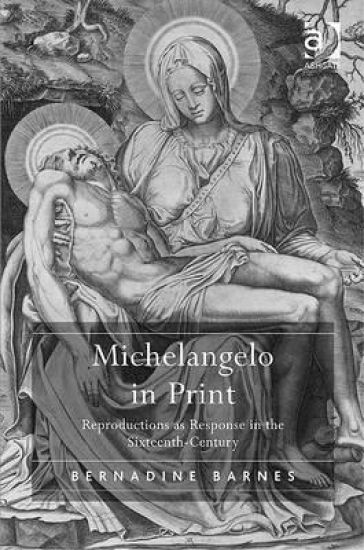
In seeing printed reproductions as a form of response to Michelangelo's work, Bernadine Barnes focuses on the choices that printmakers and publishers made as they selected which works would be reproduced and how they would be presented to various audiences. Six essays set the reproductions in historical context, and consider the challenges presented by works in various media and with varying degrees of accessibility, while a seventh considers how published verbal descriptions competed with visual reproductions. Rather than concentrating on the intentions of the artist, Barnes treats the prints as important indicators of the use of, and public reaction to, Michelangelo's works. Emphasizing reception and the construction of history, her approach adds to the growing body of scholarship on print culture in the Renaissance. The volume includes a comprehensive checklist organized by the work reproduced.
Michelangelo and the English Martyrs

Michelangelo and the English Martyrs

Anne Dillon

Ashgate Publishing Limited
2012
sidottu
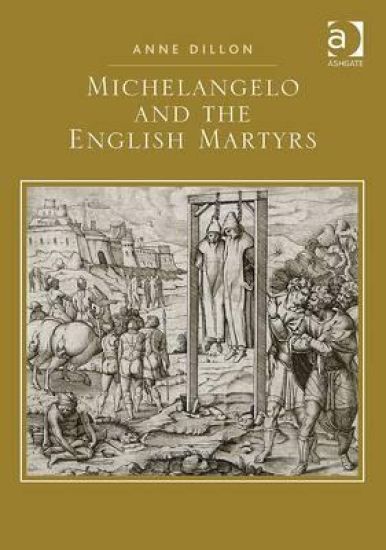
In May 1555, a broadsheet was produced in Rome depicting the torture and execution in London and York of the Carthusians of the Charterhouses of London, Axeholme, Beauvale and Sheen during the reign of Henry VIII. This single-page martyrology provides the basis for an in-depth exploration of several interconnected artistic, scientific and scholarly communities active in Rome in 1555 which are identified as having being involved in its production. Their work and concerns, which reflect their time and intellectual environment, are deeply embedded in the broadsheet, especially those occupying the groups and individuals who came to be known as Spirituali and in particular those associated with Cardinal Reginald Pole who is shown to have played a key role in its production. Following an examination of the text and a discussion of the narrative intentions of its producers a systematic analysis is made of the images. This reveals that the structure, content and intention of what, at first sight, seems to be nothing more than a confessionally charged Catholic image of the English Carthusian martyrs, typical of the genre of propaganda produced during the Reformation, is, astonishingly, dominated by the most celebrated name of the Italian Renaissance, the artist Michelangelo Buonarotti. Not only are there direct borrowings from two works by Michelangelo which had just been completed in Rome, The Conversion of St Paul and The Crucifixion of St Peter in the Pauline Chapel but many other of his works are deliberately cited by the broadsheet's producers. Through the use of a variety of artistic, scientific and historical approaches, the author makes a compelling case for the reasons for Michelangelo's presence in the broadsheet and his influence on its design and production. The book not only demonstrates Michelangelo's close relationship with notable Catholic reformers, but shows him to have been at the heart of the English Counter Reformation at its inception. This detailed analysis of the broadsheet also throws fresh light on the Marian religious policy in England in 1555, the influence of Spain and the broader preoccupations of the Counter Reformation papacy, while at the same time, enriching our understanding of martyrology across the confessional divide of the Reformation.
Michelangelo: His Life & Works In 500 Images

Michelangelo: His Life & Works In 500 Images

Rosalind Ormiston

Lorenz Books
2010
sidottu
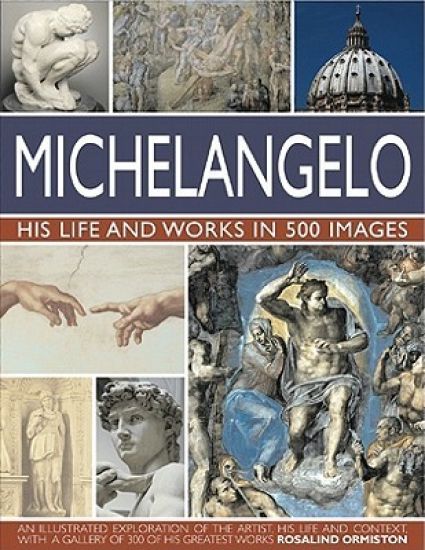
The first half of this stunning new book explores Michelangelo's fascinating life through his family, friends, patrons and commissions. Born near Florence in 1475 Michelangelo grew up surrounded by new forms of architecture, painting and sculpture. His influences and achievements are explained clearly and comprehensively with informative and attractive illustrations throughout. The second half of the book contains a comprehensive gallery of over 300 of his major works of sculpture, painting and architecture. These superb reproductions are accompanied by thorough analysis of each artwork and its significance with the context of Michelangelo's life, his technique and his body of work as a whole.
Michelangelo

Michelangelo

William E. Wallace

Universe Publishing
2009
sidottu
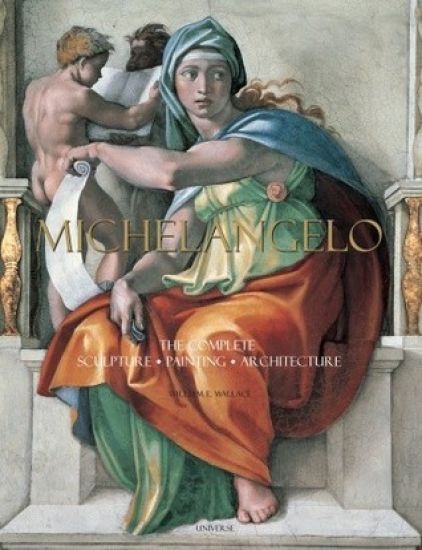
With an engaging text by renowned Michelangelo scholar William E. Wallace, Michelangelo: The Complete Sculpture, Painting, Architecture brings together in one exquisite volume the powerful sculptures, the awe-inspiring paintings, and the classical architectural works of one of the greatest artists of all time. Including everything from his sculptures Pietàs and David to his beautiful paintings of the Sistine Chapel and the Doni Tondo, the book provides an opportunity to view Michelangelo’s work as never before, and to more fully understand the artist who, through his work, spoke of his life and times. The frescoes are specially printed on onion skin paper to recreate the actual appearance of light reflecting off of the plaster walls. The stunning black-and-white photography of the sculptures is printed in four colors to bring out the rich details of the marble.
Michelangelo

Michelangelo

Frederick Hartt

Abrams
2004
nidottu
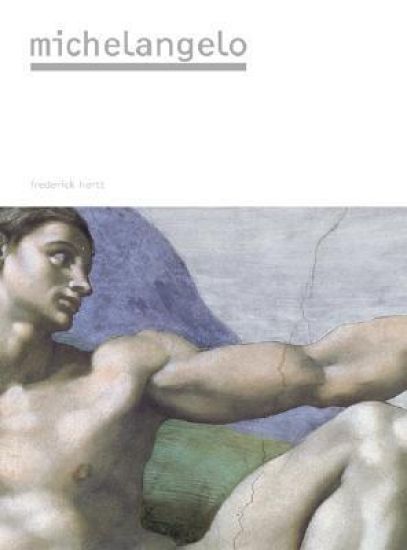
This volume includes all of Michelangelo's paintings, as well as a selection of his work in sculpture and architecture. Numerous full-color details capture the works' staggering depth of meaning and magnificent beauty. Frederick Hartt, the great scholar of Italian Renaissance art, provides a fascinating account of Michelangelo's titanic genius.
Michelangelo's Double Self-Portraits

Michelangelo's Double Self-Portraits

Edith Balas

Carnegie-Mellon University Press
2004
sidottu
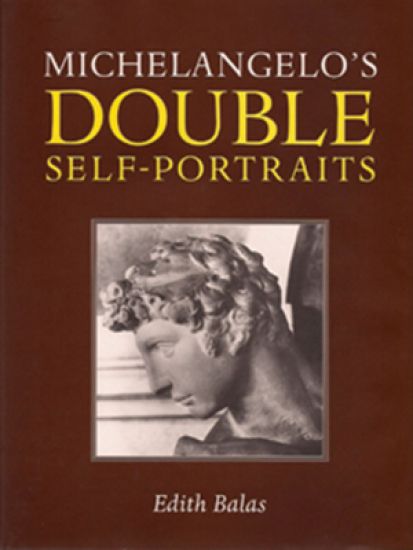
For many years scholars have been aware that Michelangelo included his own image in his art. In this study, Edith Balas discusses two previously unrecognized double self-portraits. The earliest of these, a statue known as the Victory, was a private project in which an aging Michelangelo of depicted himself surmounted by an idealized alter ego, a figure associated with his younger self, his beloved friend Tommaso Cavalieri, and the David and Goliath theme that preoccupied him through much of his career. In the second of these double self-portraits, The Conversion of Paul in the Pauline Chapel of the Vatican, the artist, again portraying himself in youth and old age, used a central event in sacred history to make a statement about his own spiritual transformation from Neoplatonist "paganism" to a more orthodox form of Christian piety. Dr. Balas carefully explores the meaning of both works with reference to Michelangelo's life, art and poetry, and reveals them to be among the profoundest autobiographical statements in the history of Western art.