
Kirjahaku
Etsi kirjoja tekijän nimen, kirjan nimen tai ISBN:n perusteella.
1000 tulosta hakusanalla Michel Lefebvre

This volume of essays brings together critical analysis and commentary on the literary work of Michel Tournier.
First Published in 1984. Routledge is an imprint of Taylor & Francis, an informa company.
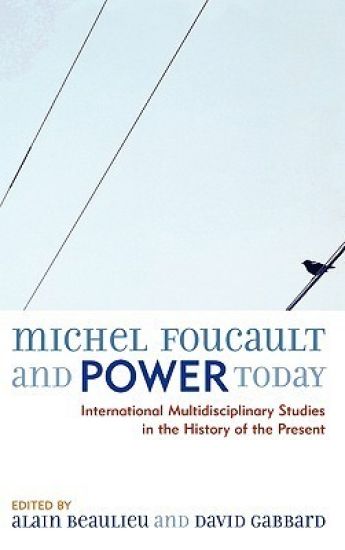
Michel Foucault and Power Today
Lexington Books
2005
sidottu
Foucault's thought finds innumerable applications across the social sciences, from studies in the social aspects of the medical practices and criminal sociology to juridical and economic sciences. Owing to their philosophical ramifications, his ideas have also impacted the spheres of literary studies, ethics, political thought, and "critical ontology." Few thinkers have left such an influence across such a diverse range of studies. Contributors attempt to pay homage to that diversity by presenting a multidisciplinary series of analyses dedicated to the question of "power today." Drawn from a number of papers presented at an international conference entitled "Michel Foucault and social Control: conducted at Maison de la culture Côte-des-Neiges in Montreal on May 8-10, 2004 to commemorate the twentieth anniversary of Foucault's death, the essays that comprise this volume address the issue at both a theoretical level and as it pertains to specific fields of practice. In addition to paying tribute to Foucault's achievements and situating his thought within the French and larger European context from which it emerged, these essays also re-evaluate the relevance of Foucault's ideas for understanding contemporary conditions. This book is suited for a broad academic audience in the humanities and Social Sciences, especially philosophy, sociology, and cultural studies.

Michel Foucault and Power Today
Lexington Books
2005
nidottu
Foucault's thought finds innumerable applications across the social sciences, from studies in the social aspects of the medical practices and criminal sociology to juridical and economic sciences. Owing to their philosophical ramifications, his ideas have also impacted the spheres of literary studies, ethics, political thought, and 'critical ontology.' Few thinkers have left such an influence across such a diverse range of studies. Contributors attempt to pay homage to that diversity by presenting a multidisciplinary series of analyses dedicated to the question of 'power today.' Drawn from a number of papers presented at an international conference entitled 'Michel Foucault and social Control: conducted at Maison de la culture CTte-des-Neiges in Montreal on May 8-10, 2004 to commemorate the twentieth anniversary of Foucault's death, the essays that comprise this volume address the issue at both a theoretical level and as it pertains to specific fields of practice. In addition to paying tribute to Foucault's achievements and situating his thought within the French and larger European context from which it emerged, these essays also re-evaluate the relevance of Foucault's ideas for understanding contemporary conditions. This book is suited for a broad academic audience in the humanities and Social Sciences, especially philosophy, sociology, and cultural studies.

Michel Foucault and the Politics of Freedom
Thomas L. Dumm
Rowman Littlefield Publishers
2002
nidottu
What is freedom? In this study, Thomas Dumm challenges the conventions that have governed discussions and debates concerning modern freedom by bringing the work of Michel Foucault into dialogue with contemporary liberal thought. While Foucault has been widely understood to have characterized the modern era as being opposed to the realization of freedom, Dumm shows how this characterization conflates FoucaultOs genealogy of discipline with his overall view of the practices of being free. Dumm demonstrates how FoucaultOs critical genealogy does not shrink from understanding the ways in which modern subjects are constrained and shaped by forces greater than themselves, but how it instead works through these constraints to provide, not simply a vision of liberation, but a joyous wisdom concerned with showing us, in his words, that we Oare much freer than we feel.O Both as an introduction to Foucault and as an intervention in liberal theory, Michel Foucault and the Politics of Freedom is bound to change how we think about the limits and possibilities of freedom in late modernity.
This unique and original study analyzes Foucault's interaction with the history of ideas, undertaking a genealogy of the subject that subverts conventional philosophical history to develop a distinctly Foucauldian intellectual history. Through a detailed account of Foucault's work and its relation to the history of ideas, Philip Barker shows how that history can be usefully reconceptualised using Foucault's concepts of genealogy and archaeology. Locating the emergence of self-reflexive consciousness in twelfth century philosophy, and elaborating upon autobiography as a philosophical persona, Barker argues that this extremely productive approach can be used to analyze the relationship between the history of philosophy, psychoanalysis and the transparent subject.

Since his death in 1986, Michel de Certeau's reputation as a thinker has steadily grown both in France and throughout the English-speaking world. His work is extraordinarily innovative and wide-ranging, cutting across issues in historiography, literary and cultural studies, anthropology, sociology, theology, philosophy and psychoanalysis. This book represents the first full-length study of Certeau's thought. It is organized around the central theme of interpretation and alterity, which Ahearne uses to illuminate Certeau's work as a whole. The author also examines Certeau's theory and practice of historiography; his reflection on the relations between changing historical forms of writing, reading and orality; and his distinction between the "strategic" programmes of the politically powerful and the "tactics" of the relatively powerless. Ahearne places Certeau's work in its general intellectual context, relating it to the views of important contemporary thinkers, such as Pierre Bourdieu and Michel Foucault, and demonstrating the decisive importance to Certeau's thought of the writings of the early modern mystics and travellers. This book constitutes an excellent critical introduction to Certeau's work, while also providing a comprehensive and nuanced reading for those already familiar with his thought.

The ideal guide to Foucault's work for the non-specialist reader. Organised into easy-to-follow thematic sections, it allows the student to explore Foucault's work with no previous knowledge of contemporary theory. It takes the student through the major strands of Foucault's thought on power and knowledge, discipline and punishment, history and the subject, in a clear and engaging style, providing an easy entry into the complexities of Foucault's thinking.
Michel Foucault
Ashgate Publishing Limited
2014
sidottu
Michel Foucault was one of the twentieth century’s most influential thinkers whose work has unsettled and transformed the field of social philosophy and the social sciences. The essays and articles selected for this volume are written by many of the most important of Foucault’s interpreters and interlocutors and show the range of Foucault’s influence and the debates it has provoked about Foucault’s own approaches and in relation to substantive areas of social philosophy and social science such as power, critique, enlightenment, law, governance, ethics and truthfulness. This volume provides a comprehensive introduction to, and overview of, the development of Foucault’s thought and demonstrates its enduring significance on our understanding of how we have become what we are.

Whilst Foucault's work has become a major strand of postmodern theology, the wider relevance of his work for theology still remains largely unexamined. Foucault both engages the Christian tradition and critically challenges its disciplinary regime. Michel Foucault and Theology brings together a selection of essays by leading Foucault scholars on a variety of themes within the history, thought and practice of theology. Revealing the diverse ways that the work of Michel Foucault (1926-1984) has been employed to rethink theology in terms of power, discourse, sexuality and the politics of knowledge, the authors examine power and sexuality in the church in late antiquity, (Castelli, Clark, Schuld), raise questions about the relationship between theology and politics (Bernauer, Leezenberg, Caputo), consider new challenges to the nature of theological knowledge in terms of Foucault's critical project (Flynn, Cutrofello, Beadoin, Pinto) and rethink theology in terms of Foucault's work on the history of sexuality (Carrette, Jordan, Mahon). This book demonstrates, for the first time, the influence and growing importance of Foucault's work for contemporary theology.

de Certeau is often considered to be the theorist of everyday life par excellence. This book provides an unrivalled critical introduction to de Certeau's work and influence and looks at his key ideas and asks how should we try to understand him in relation to theories of modern culture and society. Ian Buchanan demonstrates how de Certeau was influenced by Lacan, Merleau-Ponty and Greimas and the meaning of de Certeau's notions of `strategy', `tactics', `place' and `space' are clearly described. The book argues that de Certeau died before developing the full import of his work for the study of culture and convincingly, it tries to complete or imagine the directions that de Certeau's work would have taken, had he lived.
de Certeau is often considered to be the theorist of everyday life par excellence. This book provides an unrivalled critical introduction to de Certeau's work and influence and looks at his key ideas and asks how should we try to understand him in relation to theories of modern culture and society. Ian Buchanan demonstrates how de Certeau was influenced by Lacan, Merleau-Ponty and Greimas and the meaning of de Certeau's notions of `strategy', `tactics', `place' and `space' are clearly described. The book argues that de Certeau died before developing the full import of his work for the study of culture and convincingly, it tries to complete or imagine the directions that de Certeau's work would have taken, had he lived.

A truly magnificent book... If there is a more comprehensive book on Foucault's work I have yet to see it. I anticipate those teaching and taking courses on Foucault's work will find Clare O'Farrell's book to be an invaluable resource. - Barry Smart, University of Portsmouth "A marvellous introduction. This volume captures the penetrating interdisciplinary concerns that have made Foucault a guide to so many beyond the frontiers of philosophy and history, beyond the borders of the academic community itself... This is an excellent introduction for the general reader to a passionate mind that continues to spread its influence." - James Bernauer, Boston College "Offers the best introduction to Foucault's philosophy... Superb glossary of major terms; excellent bibliography and chronology. Summing Up: Essential. Upper-level undergraduates through faculty/researchers." - C.E. Reagan, Kansas State University, CHOICE Michel Foucault's work is one of the most influential sources of ideas in the humanities and social sciences today. Clare O'Farrell offers a comprehensive and accessible introduction to Foucault's enormous, diverse and challenging output. Her book provides a range of practical tools and a reference work for readers who wish to understand and apply his ideas at both introductory and advanced levels. This volume includes: A discussion of Foucault's situation in the contemporary context exploring his role as an iconic thinker, with clear explanations as to why his work is so difficult to come to grips with, and also importantly, why it is of interest to so many people.The location of Foucault's work within its own historical, social and political setting.Brief summaries in chronological order of all of Foucault's major works, including the more recently published volumes of lectures.The organization of Foucault's work around five interrelated assumptions which underpin his world view: namely order, history, truth, power and ethics. Ideas for which he is well-known, such as archaeology, genealogy, discourse, discipline, and governmentality are discussed within the framework of these.A chronology of Foucault's life, work and times.An extensive list of key concepts in Foucault's work with detailed references pointing to where the relevant material can be found in his writings.A wide-ranging list of resources and a bibliography of Foucault's work for easy consultation.

A truly magnificent book... If there is a more comprehensive book on Foucault's work I have yet to see it. I anticipate those teaching and taking courses on Foucault's work will find Clare O'Farrell's book to be an invaluable resource. - Barry Smart, University of Portsmouth "A marvellous introduction. This volume captures the penetrating interdisciplinary concerns that have made Foucault a guide to so many beyond the frontiers of philosophy and history, beyond the borders of the academic community itself... This is an excellent introduction for the general reader to a passionate mind that continues to spread its influence." - James Bernauer, Boston College "Offers the best introduction to Foucault's philosophy... Superb glossary of major terms; excellent bibliography and chronology. Summing Up: Essential. Upper-level undergraduates through faculty/researchers." - C.E. Reagan, Kansas State University, CHOICE Michel Foucault's work is one of the most influential sources of ideas in the humanities and social sciences today. Clare O'Farrell offers a comprehensive and accessible introduction to Foucault's enormous, diverse and challenging output. Her book provides a range of practical tools and a reference work for readers who wish to understand and apply his ideas at both introductory and advanced levels. This volume includes: A discussion of Foucault's situation in the contemporary context exploring his role as an iconic thinker, with clear explanations as to why his work is so difficult to come to grips with, and also importantly, why it is of interest to so many people.The location of Foucault's work within its own historical, social and political setting.Brief summaries in chronological order of all of Foucault's major works, including the more recently published volumes of lectures.The organization of Foucault's work around five interrelated assumptions which underpin his world view: namely order, history, truth, power and ethics. Ideas for which he is well-known, such as archaeology, genealogy, discourse, discipline, and governmentality are discussed within the framework of these.A chronology of Foucault's life, work and times.An extensive list of key concepts in Foucault's work with detailed references pointing to where the relevant material can be found in his writings.A wide-ranging list of resources and a bibliography of Foucault's work for easy consultation.

This book is designed to serve two purposes. First it provides an introduction to the ideas and works of Michel Foucault. It should be particularly appropriate for education students for whom, in general, Foucault is a shadowy presence. Second, it provides a Foucault based critique of a central plank of Western liberal education, the notion of the autonomous individual or personal autonomy. There are several introductions to Foucault but they tend to be written from a particular theoretical position, or with a particular interest in Foucault's ideas and works. For example Smart (1986) and Poster (1984) exemplify the former, and Dreyfus and Rabinow (1983) the latter. There is no substantial work in education on Foucault, apart from Ball (1990), which is an edited collection of papers by educationalists. The writer started reading Foucault from a position in education which was in the liberal framework, somewhere between Dewey, Freire and Habermas, but with an interest in punishment, authority and power. The book is the outcome of several years of trying to introduce students in education to his ideas and works in an educationally relevant manner. But an introduction, on its own, cannot show this relevance to education. Unless his ideas are put to work, unless they are used as opposed to mentioned in some sphere or area of education, then they may be of little relevance.

This book is the first full-length study of Certeau's thought, designed as a guide to draw out not only the exceptional range but the overall coherence of his oeuvre. The author focuses on those intertexts that work most powerfully in Certeau's major writings: contemporary French historiography, the writings of early modern mystics and travelers, Michel Foucault and Pierre Bourdieu, Freud, the linguistics of "utterance," and a broad spectrum of work on contemporary cultural practices.

This book is the first full-length study of Certeau's thought, designed as a guide to draw out not only the exceptional range but the overall coherence of his oeuvre. The author focuses on those intertexts that work most powerfully in Certeau's major writings: contemporary French historiography, the writings of early modern mystics and travelers, Michel Foucault and Pierre Bourdieu, Freud, the linguistics of "utterance," and a broad spectrum of work on contemporary cultural practices.
Michel Foucault's Archaeology of Western Culture
Major-Poetzl Pamela
The University of North Carolina Press
2011
nidottu
The author argues that Foucault's archaeology""is an attampt to separate historical and philosophical analysis from the evolutionary model of nineteenth-century biology and to establish a new form of social thought based on principles similar to field theory in twentieth-century physics. She examines Foucault's view of the relationship between power and knowledge and goes on to discuss the new concepts of space, time, subject, and causality expressed in relativity theory, quantum mechanics, saussarian linguistics, and Foucault's literary essays.""A UNC Press Enduring Edition -- UNC Press Enduring Editions use the latest in digital technology to make available again books from our distinguished backlist that were previously out of print. These editions are published unaltered from the original, and are presented in affordable paperback formats, bringing readers both historical and cultural value.