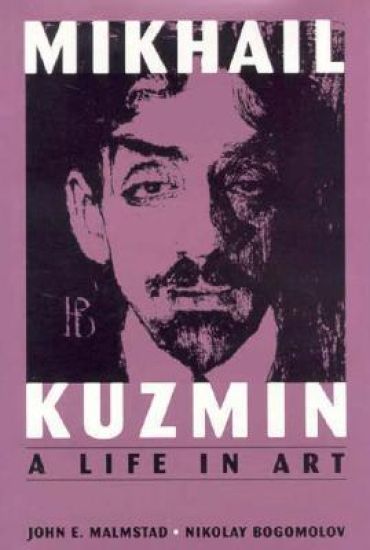
Mikhail Kuzmin (1872–1936), Russia’s first openly gay writer, stood at the epicenter of the turbulent cultural and social life of Petersburg-Petrograd-Leningrad for over three decades. A poet of the caliber of Aleksandr Blok, Vladimir Mayakovsky, Boris Pasternak, Osip Mandelshtam, and Marina Tsvetaeva (and acknowledged as such by them and other contemporaries), Kuzmin was also a prose writer, playwright, critic, translator, and composer who was associated with every aspect of modernism’s history in Russia, from Symbolism to the Leningrad avant-gardes of the 1920s.Only now is Kuzmin beginning to emerge from the “official obscurity” imposed by the Soviet regime to assume his place as one of Russia’s greatest poets and one of this century’s most characteristic and colorful creative figures. This biography, the first in any language to be based on full and uncensored access to the writer’s private papers, including his notorious Diary, places Kuzmin in the context of his society and times and contributes to our discovery and appreciation of a fascinating period and of Russia’s long suppressed gay history.
In such diverse fields as semiotics, literary theory, social theory, linguistics, psychology, and anthropology, Mikhail Bakhtin’s importance is increasingly recognized. His posthumous fame comes in striking contrast to his obscurity during his lifetime (1895–1975), much of it spent as a semi-invalid in a succession of provincial towns. He received no public recognition, in the Soviet Union or abroad, until the last dozen years of his long life—not surprisingly, given the historical circumstances. His books on Freudianism (1927), on Formalism (1928), and on Marxism and the philosophy of language (1929) were published as the work of others, as were a number of important essays. His study of Dostoevsky appeared under his own name but only after his arrest and sentence to exile, and it quickly disappeared from sight. Some manuscripts were never published; one was used by Bakhtin for cigarette paper. His book on Rabelais, completed in 1940, remained unpublished for twenty-five years—until, in a less repressive political climate, friends had succeeded in negotiating a reissue of the book on Dostoevsky.The Rabelais book, when translated, caused a stir among folklorists, anthropologists, and social historians, with its theory of carnival and of ritual inversions of hierarchy. The book on Dostoevsky aroused intense interest among literary theorists in the concept of the “polyphonic novel” and the many authorial voices to be heard therein. Similarly, as Bakhtin’s other writings have appeared in translation, he has been hailed in disparate circles for his contributions to linguistic, psychoanalytic, and social theory. But among all those who have studied various aspects of Bakhtin’s work, few have been in a position, or even attempted, to assess his total achievement.It is the great merit of Katerina Clark and Michael Holquist’s book that they have endeavored, insofar as possible, to give us the complete life and the complete works of this complex and multifaceted figure. The authors have had unique access to the Bakhtin archive in Moscow, have traced further material in other cities in Europe, and have interviewed many persons who knew Bakhtin. The phases of his life are placed in their physical and intellectual milieux, and accounts are given of the figures who made up the various “Bakhtin circles” over the years. All of the works, published and unpublished, are discussed, in the context of European philosophical movements and the currents of thought of the time. Underlying and informing Bakhtin’s particular theories in various fields was, in the authors’ view, his lifelong meditation on the relation between self and other. The philosophy he evolved has come to be called dialogism, since it conceives of the world in terms of communication and exchange. It is a world view with wide-ranging implications for the human sciences.
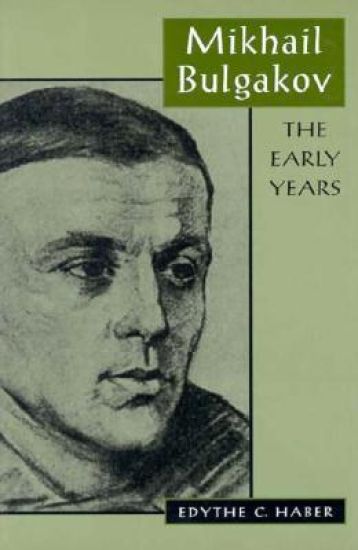
One of the foremost Russian writers of the Soviet period, Mikhail Bulgakov (1891-1940) has attracted much critical attention. But Edythe Haber is the first to explore in depth his formative years, to probe the roots of his artistic vision. Her study yields a new picture of the novelist and playwright working in tumultuous times, and a fresh understanding of his ultimate masterpiece, The Master and Margarita.Bulgakov as writer was born out of the chaos of the Russian revolution and civil war. Haber shows how he mines his civil war experience for literary purposes, and how he molds and remolds his protagonist, transforming the tormented intellectual of the earliest fiction into a complex solitary hero. In achieving in his fiction a version of the creative self, an autobiographical hero, Bulgakov redefines such traditional moral categories as courage and honor. Blending biography and literary analysis of motifs, story, and characterization, Haber tracks one writer's answer to the dislocations of revolution, civil war, and early Bolshevism. And from her examination of Bulgakov's satirical writings a vivid panorama emerges of the burgeoning Soviet society. These comic sketches and novellas, blending the fantastic and quotidian, evoke an intellectual's struggle with a hostile new world. In Haber's trenchant and broadly informed analysis we can see how the themes and characters of the early works receive their final permutation--and transcendence--in The Master and Margarita, surely the finest novel produced in Russia since the Revolution.
Treating Sholokhov's art and life against the Soviet political background, the author considers the episodes in his life that influenced his writing and then shows how one-sided commitment to party ideology led to his creative deterioration. Originally published in 1982. The Princeton Legacy Library uses the latest print-on-demand technology to again make available previously out-of-print books from the distinguished backlist of Princeton University Press. These editions preserve the original texts of these important books while presenting them in durable paperback and hardcover editions. The goal of the Princeton Legacy Library is to vastly increase access to the rich scholarly heritage found in the thousands of books published by Princeton University Press since its founding in 1905.
Treating Sholokhov's art and life against the Soviet political background, the author considers the episodes in his life that influenced his writing and then shows how one-sided commitment to party ideology led to his creative deterioration. Originally published in 1982. The Princeton Legacy Library uses the latest print-on-demand technology to again make available previously out-of-print books from the distinguished backlist of Princeton University Press. These editions preserve the original texts of these important books while presenting them in durable paperback and hardcover editions. The goal of the Princeton Legacy Library is to vastly increase access to the rich scholarly heritage found in the thousands of books published by Princeton University Press since its founding in 1905.
Books about thinkers require a kind of unity that their thought may not possess. This cautionary statement is especially applicable to Mikhail Bakhtin, whose intellectual development displays a diversity of insights that cannot be easily integrated or accurately described in terms of a single overriding concern. Indeed, in a career spanning some sixty years, he experienced both dramatic and gradual changes in his thinking, returned to abandoned insights that he then developed in unexpected ways, and worked through new ideas only loosely related to his earlier concerns Small wonder, then, that Bakhtin should have speculated on the relations among received notions of biography, unity, innovation, and the creative process. Unity—with respect not only to individuals but also to art, culture, and the world generally—is usually understood as conformity to an underlying structure or an overarching scheme. Bakhtin believed that this idea of unity contradicts the possibility of true creativity. For if everything conforms to a preexisting pattern, then genuine development is reduced to mere discovery, to a mere uncovering of something that, in a strong sense, is already there. And yet Bakhtin accepted that some concept of unity was essential. Without it, the world ceases to make sense and creativity again disappears, this time replaced by the purely aleatory. There would again be no possibility of anything meaningfully new. The grim truth of these two extremes was expressed well by Borges: an inescapable labyrinth could consist of an infinite number of turns or of no turns at all. Bakhtin attempted to rethink the concept of unity in order to allow for the possibility of genuine creativity. The goal, in his words, was a "nonmonologic unity," in which real change (or "surprisingness") is an essential component of the creative process. As it happens, such change was characteristic of Bakhtin's own thought, which seems to have developed by continually diverging from his initial intentions. Although it would not necessarily follow that the development of Bakhtin's thought corresponded to his ideas about unity and creativity, we believe that in this case his ideas on nonmonologic unity are useful in understanding his own thought—as well as that of other thinkers whose careers are comparably varied and productive.
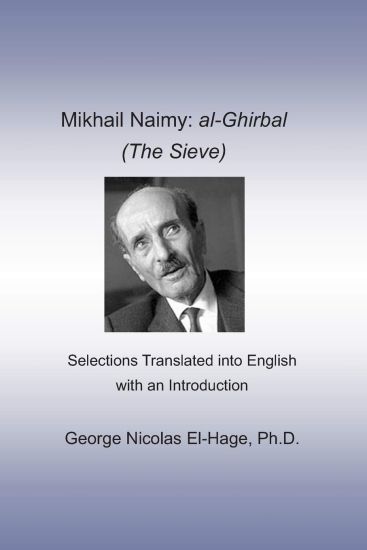
When The members of the Pen Bond Association (al-Rabita al-Qalamiya), a distinguished group of "like-minded" authors to borrow Naimy's phrase, were busy writing and publishing in New York City and striving to modernize and change the course of Arabic Literature, there was another group in the Middle East, particularly in Egypt (The Diwan Group) trying, within the limitations imposed on them by their closed environment, to do the same but with much less success. Perhaps it is not fair to compare the achievements and impact of these two separate groups on the modernization of Arabic literature and poetry at the turn of the twentieth century and the three decades that followed because al-Akkad, al-Mazini, and to some extent Shoukry, although they were open-minded and wanted to be tolerant of new ideas and literary theories, they still lived in a very conservative and extremely traditional society that worshiped the past and adhered to ancient rules of grammar, linguistics, morphology, and prosody. In al-Akkad, Naimy found a partner, a "like-minded" counterpart across the seas, who shared with him some basic understanding of the role of literature, poetry, the poet, and the critic. These two prominent authors had more in common even if al-Akkad insisted on putting language above the poet, thus disagreeing with Naimy who believed that language is but an instrument and a means to an end. Nevertheless, it was befitting that al-Akkad was chosen to write the introduction to the first edition of Naimy's influential book of literary criticism, al-Ghirbal, because the Egyptian Scholar was also in his own way trying to innovate in an environment shackled with a heavy inheritance of outworn traditions and forced to still wear the outmoded garments of a bygone world. As a critic, Naimy ignited a revolution that set new standards for literary criticism in modern Arabic literature. Al-Ghirbal is a decisive and definitive statement which rejects the years of stagnation that plagued Arabic literature and offers new rules and guidance to replace the archaic ones. The book bravely admits that thanks to Western literature and theories of literary criticism, we started to witness a noticeable change in Arabic literature. It introduces and legitimizes the theater, acting, the role of the actor, the play writer, and novelist as well as the important act of translating and the vital role of the translator. Placing the book in its proper historical timeframe, we realize that many of the revolutionary ideas and concepts advanced in al-Ghirbal were at the time of its publication considered avant-garde, radical, and almost heretical. The amazing fact is that the message of this book is as relevant today as it was valid and pertinent then, and if Naimy returned to life, he would not change a word in the book. Al-Ghirbal's message was strong and clear. It was certainly meant to awaken the sleepy and "lazy" minds and souls and to shock, anger, and even hurt the sensitivity of its readers and the hosts of versifiers and pretenders who thought they were poets and drive them to rethink, reconsider, and reevaluate. All said, al-Ghirbal remains one the most powerful documents on literary criticism in modern Arabic literature since the turn of the twentieth century. It abounds with sarcasm that bites but also with wisdom that enlightens and guides. It also summarizes the position of the Pen Bond Association (al-Rabita al-Qalamiya) regarding poetry and the role of the poet and of literature as they viewed it and strongly advocated to popularize and modernize it.
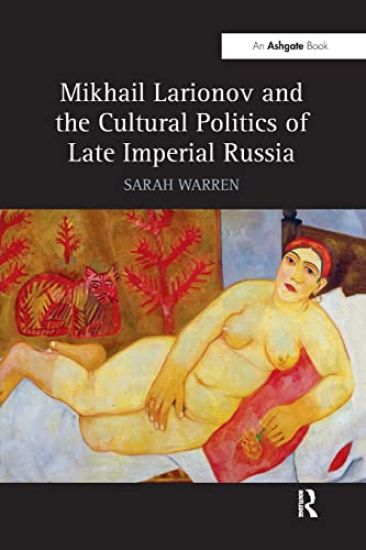
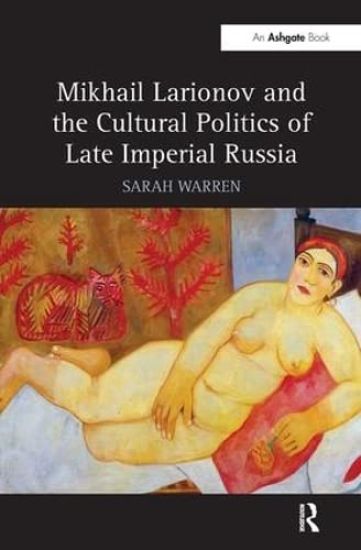
In the turbulent atmosphere of early twentieth-century Tsarist Russia, avant-garde artists took advantage of a newly pluralistic culture in order to challenge orthodoxies of form as well as social prohibitions. Very few did this as effectively, or to as broad an audience, as Mikhail Larionov. This groundbreaking study examines the complete range of his work (painting, book illustration, performance, and curatorial work), and demonstrates that Larionov was taking part in a broader cultural conversation that arose out of fundamental challenges to autocratic rule. Sarah Warren brings the culture of late Imperial Russia out of obscurity, highlighting Larionov's specific interventions into conversations about nationality and empire, democracy and autocracy, and people and intelligentsia that colonized all areas of cultural production. Rather than analyzing Larionov's works within the same interpretive frameworks as those of his contemporaries in France or Germany-such as Matisse or Kirchner-Warren explores the Russian's negotiations with both nationalism and modernism. Further, this study shows that Larionov's group exhibitions, public debates, and face-painting performances were more than a derivative repetition of the techniques of the Italian Futurists. Rather, these activities were the culmination of his attempt to create a radical primitivism, one that exploited the widespread Russian desire for an authentic collective identity, while resisting imperial efforts to appropriate this revivalism to its own ends.
The book ""Mikhail Lermontov"" by John Mersereau Jr. is a comprehensive biography of the famous Russian writer and poet Mikhail Lermontov. The book delves into Lermontov's life, exploring his upbringing, education, and early career as a writer. It also examines his literary works, including his most famous novel ""A Hero of Our Time"" and his poetry, and the impact they had on Russian literature and culture.The author provides a detailed analysis of Lermontov's personal life, including his relationships with family, friends, and lovers, as well as his struggles with mental health and addiction. Mersereau Jr. also explores Lermontov's political views and his involvement in the Decembrist movement, a group of Russian revolutionaries who sought to overthrow the Tsarist regime.The book includes extensive research and analysis of primary sources, such as Lermontov's letters and journals, as well as secondary sources, including biographies and critical studies of Lermontov's work. The author's writing style is engaging and accessible, making the book an enjoyable read for both scholars and general readers interested in Russian literature and history.Overall, ""Mikhail Lermontov"" is a definitive biography of one of Russia's most important literary figures, providing a comprehensive and nuanced portrait of the man and his work.This scarce antiquarian book is a facsimile reprint of the old original and may contain some imperfections such as library marks and notations. Because we believe this work is culturally important, we have made it available as part of our commitment for protecting, preserving, and promoting the world's literature in affordable, high quality, modern editions, that are true to their original work.
This first comparative study of the philosophers and literary critics, Walter Benjamin and Mikhail Bakhtin, focuses on the two thinkers' conceptions of experience and form, investigating parallels between Bakhtin's theories of responsibility, dialogue, and the novel, and Benjamin's theories of translation, montage, allegory, and the aura.
In the turbulent atmosphere of early twentieth-century Tsarist Russia, avant-garde artists took advantage of a newly pluralistic culture in order to challenge orthodoxies of form as well as social prohibitions. Very few did this as effectively, or to as broad an audience, as Mikhail Larionov. This groundbreaking study examines the complete range of his work (painting, book illustration, performance, and curatorial work), and demonstrates that Larionov was taking part in a broader cultural conversation that arose out of fundamental challenges to autocratic rule. Sarah Warren brings the culture of late Imperial Russia out of obscurity, highlighting Larionov's specific interventions into conversations about nationality and empire, democracy and autocracy, and people and intelligentsia that colonized all areas of cultural production. Rather than analyzing Larionov's works within the same interpretive frameworks as those of his contemporaries in France or Germany-such as Matisse or Kirchner-Warren explores the Russian's negotiations with both nationalism and modernism. Further, this study shows that Larionov's group exhibitions, public debates, and face-painting performances were more than a derivative repetition of the techniques of the Italian Futurists. Rather, these activities were the culmination of his attempt to create a radical primitivism, one that exploited the widespread Russian desire for an authentic collective identity, while resisting imperial efforts to appropriate this revivalism to its own ends.
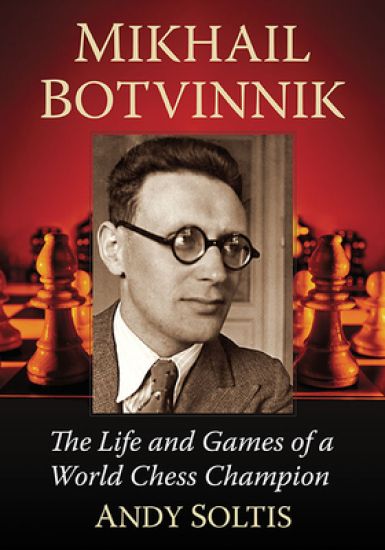
The games of Mikhail Botvinnik, world chess champion from 1948 to 1963, have been studied by players around the world for decades. But little has been written about Botvinnik himself. This book explores his unusual dual career--as a highly regarded scientist as well as the first truly professional chess player--as well as his complex relations with Soviet leaders, including Josef Stalin, his bitter rivalries, and his doomed effort to create the perfect chess-playing computer program. The book has more than 85 games, 127 diagrams, twelve photographs, a chronology of his life and career, a bibliography, an index of openings, an index of opponents, and a general index.