There's lots of places you can find water Can you think of any?Nước c mặt ở rất nhiều nơi đấy B c biết những nơi đ kh ng? Your purchase of this book supports Library For All in its mission to make knowledge available to all, equally.
My Grandma lives very far away from me. I love to speak to her on the phone and hear about her adventures.B ngoại sống c ch mẹ con m nh rất xa. M nh rất th ch gọi điện cho b v nghe b kể đủ thứ chuyện tr n đời. Your purchase of this book supports Library For All in its mission to make knowledge available to all, equally.
Do you like music? What kind of instruments do you like?Lợn đang nghỉ ngơi th bị một con muỗi bu v o đốt. Bạn đ nghĩ ngay ra một c ch để xử l nốt muỗi đốt n y. Your purchase of this book supports Library For All in its mission to make knowledge available to all, equally.
How should one make sense of the Christian confession that God has instilled a 'sense of divinity' in every person? While other approaches have identified the sense with a perceptual or cognitive faculty or with the empirical reports of theistic belief, this Element advances an affective model of general revelation, which draws from the writings of the neo-Calvinist branch of the Reformed tradition. The author argues that the sense of divinity refers to an implanted 'feeling of divinity', a sensus numinis, and that this model makes better sense of the Christian witness, theologically re-orients the empirical findings from the cognitive science of religion, and eludes influential objections against the doctrine of general revelation.
How should one make sense of the Christian confession that God has instilled a 'sense of divinity' in every person? While other approaches have identified the sense with a perceptual or cognitive faculty or with the empirical reports of theistic belief, this Element advances an affective model of general revelation, which draws from the writings of the neo-Calvinist branch of the Reformed tradition. The author argues that the sense of divinity refers to an implanted 'feeling of divinity', a sensus numinis, and that this model makes better sense of the Christian witness, theologically re-orients the empirical findings from the cognitive science of religion, and eludes influential objections against the doctrine of general revelation.
Blue, a perfect gentleman, seems to have it all. From his breathtaking physique to his exquisite style and charming personality. With a successful contracting business and an up and coming music production company, wealth is knocking at his door. Raised in a well polished household with both parents, Love is absorbed throughout his soul with the exception of his personal life. Juggling women as he tries to fulfill a deep emptiness, he slowly realizes he is the only one in the way of UNCONDITIONAL LOVE...Rose, a beautiful mother, battles a 10 year abusive relationship. Struggling with who she is as a woman, mother and friend, Rose is determined to beat the odds set by life and find herself. Raised by her Grandmother, fairy tales don't exist in her world. With a lot of prayer and a few great friends, Rose slowly realizes she is the only one in the way of UNCONDITIONAL LOVE...Erotic, raw, and deeply engaging, blue rose... is the realest love story you'll ever read!
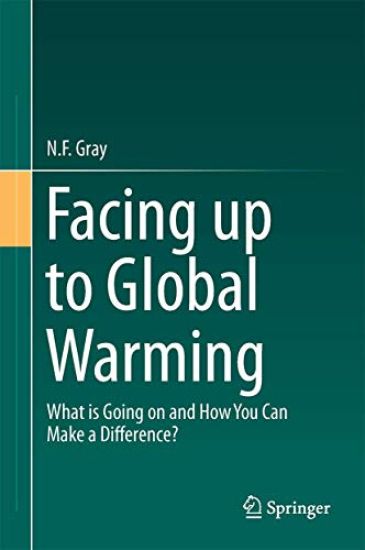
In this volume, Professor N.F. Gray offers a comprehensive primer on climate change, sustainability, and how the two concepts are related. This book consists of fifteen chapters, each treating a specific aspect of the current global crisis, including scientific background as well as an up to date appraisal of the issue at hand. It covers the reasons behind climate change and the effect it will have on the planet and on the reader directly. Gray also presents readers with the means to assess their own environmental impact and details positive individual and community actions to address global warming.“Climate change,” “global warming,” and “sustainability” are phrases that almost everyone has heard, whether on the news or around the dinner table. The increasing frequency of major events such as droughts, severe storms, and floods are beginning to make these concepts inescapable, and being fully informed is an absolute necessity for students and indeed for us all.Nick Gray (PhD, ScD) is a founding member of the Environmental Sciences Unit (1979) at Trinity College Dublin, which was the first center for postgraduate research and training in environmental science and technology in Ireland. He has written a number of books and over 150 research papers and book chapters, and currently serves as the Director of the Trinity Centre for the Environment.
In this volume, Professor N.F. Gray offers a comprehensive primer on climate change, sustainability, and how the two concepts are related. This book consists of fifteen chapters, each treating a specific aspect of the current global crisis, including scientific background as well as an up to date appraisal of the issue at hand. It covers the reasons behind climate change and the effect it will have on the planet and on the reader directly. Gray also presents readers with the means to assess their own environmental impact and details positive individual and community actions to address global warming.“Climate change,” “global warming,” and “sustainability” are phrases that almost everyone has heard, whether on the news or around the dinner table. The increasing frequency of major events such as droughts, severe storms, and floods are beginning to make these concepts inescapable, and being fully informed is an absolute necessity for students and indeed for us all.Nick Gray (PhD, ScD) is a founding member of the Environmental Sciences Unit (1979) at Trinity College Dublin, which was the first center for postgraduate research and training in environmental science and technology in Ireland. He has written a number of books and over 150 research papers and book chapters, and currently serves as the Director of the Trinity Centre for the Environment.
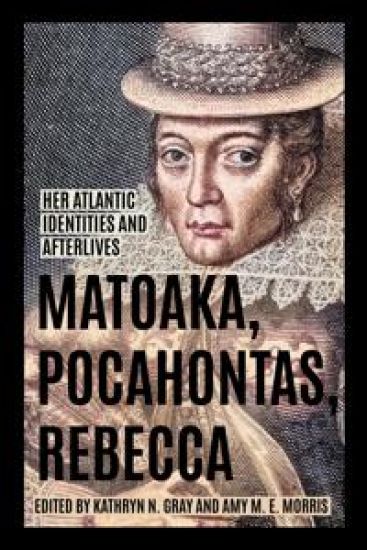
Remembering the woman known as Pocahontas, and the myths surrounding her down to the present day This collection of essays is the first of its kind to focus exclusively on the woman known as Pocahontas. Contributions from established leaders in the field offer innovative perspectives on the life of Matoaka/Pocahontas, especially on the creation and perpetuation of her cultural image in the seventeenth century and beyond—and on how new archival research, interdisciplinary methodologies, and contemporary creative practice challenge that image. The chronological scope of this collection, compiled in honor of the late Monacan poet and historian Karenne Wood, illustrates the ongoing legacies of colonialism as they relate to recurring representations of and by Native American women. Contributors Karen Kupperman, New York University, Helen Rountree, Old Dominion University, Karenne Wood, Virginia Humanities, Lucinda Rasmussen, University of Alberta, Camilla Townsend, Rutgers University, E. M. Rose, Oxford University, James Ring Adams, National Museum of the American Indian, Graziella Crezegut, independent scholar, Cristina L. Azocar, San Francisco State University, Ivana Markova, San Francisco State University, Stephanie Pratt, independent scholar, Sarah Sense, artist
Remembering the woman known as Pocahontas, and the myths surrounding her down to the present day This collection of essays is the first of its kind to focus exclusively on the woman known as Pocahontas. Contributions from established leaders in the field offer innovative perspectives on the life of Matoaka/Pocahontas, especially on the creation and perpetuation of her cultural image in the seventeenth century and beyond—and on how new archival research, interdisciplinary methodologies, and contemporary creative practice challenge that image. The chronological scope of this collection, compiled in honor of the late Monacan poet and historian Karenne Wood, illustrates the ongoing legacies of colonialism as they relate to recurring representations of and by Native American women. Contributors Karen Kupperman, New York University, Helen Rountree, Old Dominion University, Karenne Wood, Virginia Humanities, Lucinda Rasmussen, University of Alberta, Camilla Townsend, Rutgers University, E. M. Rose, Oxford University, James Ring Adams, National Museum of the American Indian, Graziella Crezegut, independent scholar, Cristina L. Azocar, San Francisco State University, Ivana Markova, San Francisco State University, Stephanie Pratt, independent scholar, Sarah Sense, artist
To most outsiders, the hills of the Scottish Borders are a bleak and foreboding space - usually made to represent the stigmatized Other, Ad Finis, by the centers of power in Edinburgh, London, and Brussels. At a time when globalization seems to threaten our sense of place, people of the Scottish borderlands provide a vivid case study of how the being-in-place is central to the sense of self and identity. Since the end of the thirteenth century, people living in the Scottish Border hills have engaged in armed raiding on the frontier with England, developed capitalist sheep farming in the newly united kingdom of Great Britain, and are struggling to maintain their family farms in one of the marginal agricultural rural regions of the European Community. Throughout their history, sheep farmers living in these hills have established an abiding sense of place in which family and farm have become refractions of each other. Adopting a phenomenological perspective, this book concentrates on the contemporary farming practices - shepherding, selling lambs and rams at auctions - as well as family and class relations through which hill sheep fuse people, place, and way of life to create this sense of being-at-home in the hills.
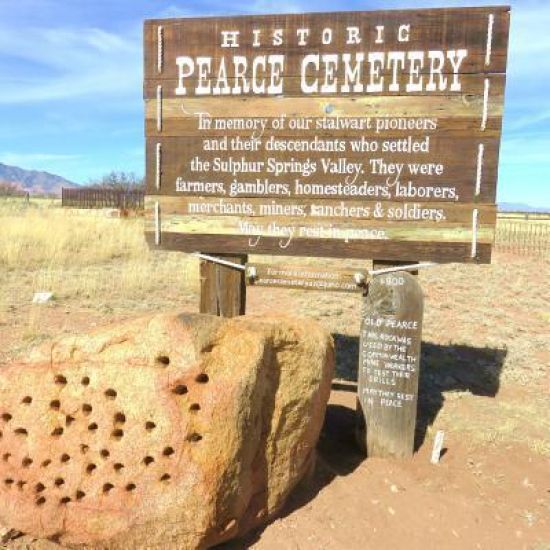
The Historic Pearce Cemetery tells the story of a remote grasslands valley that became the site of a huge gold rush. The cemetery records reveal who the earliest settlers were and what their lives were like from 1900 to 1940's. You will see how a burial ground evolves and how the early graves were constructed. We include a brief genealogy and history of the major families and photos of their lots.A list of major events at the cemetery is included.