Kirjojen hintavertailu. Mukana 12 390 323 kirjaa ja 12 kauppaa.

Kirjahaku

Etsi kirjoja tekijän nimen, kirjan nimen tai ISBN:n perusteella.

1000 tulosta hakusanalla N. H.

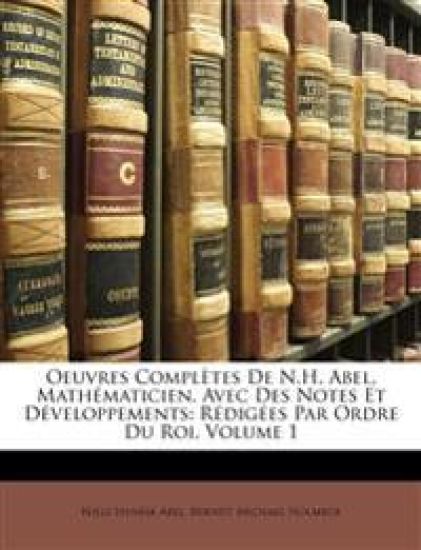
Oeuvres complètes de N.H. Abel

Oeuvres complètes de N.H. Abel

Niels Henrik Abel; Berndt Michael Holmboe

Antigonos Verlag
2025
sidottu
R impression inchang e de l' dition originale de 1839. La maison d' dition Antigonos est sp cialis e dans la publication de r impressions de livres historiques. Nous veillons ce que ces ouvrages soient mis la disposition du public dans de bonnes conditions afin de pr server leur patrimoine culturel.
The New H.N.I.C.

The New H.N.I.C.

Todd Boyd

New York University Press
2003
sidottu
Frames hip-hop as the defining cultural force in the aftermath of the Civil Rights and Black Power eras When Lauryn Hill stepped forward to accept her fifth Grammy Award in 1999, she paused as she collected the last trophy, and seeming somewhat startled said, "This is crazy, 'cause this is hip hop music.'" Hill's astonishment at receiving mainstream acclaim for music once deemed insignificant testifies to the explosion of this truly revolutionary art form. Hip hop music and the culture that surrounds it—film, fashion, sports, and a whole way of being—has become the defining ethos for a generation. Its influence has spread from the state's capital to the nation's capital, from the Pineapple to the Big Apple, from 'Frisco to Maine, and then on to Spain. But moving far beyond the music, hip hop has emerged as a social and cultural movement, displacing the ideas of the Civil Rights era. Todd Boyd maintains that a new generation, having grown up in the aftermath of both Civil Rights and Black Power, rejects these old school models and is instead asserting its own values and ideas. Hip hop is distinguished in this regard because it never attempted to go mainstream, but instead the mainstream came to hip hop. The New H.N.I.C., like hip hop itself, attempts to keep it real, and challenges conventional wisdom on a range of issues, from debates over use of the "N-word," the comedy of Chris Rock, and the "get money" ethos of hip hop moguls like Sean "P. Diddy" Combs and Russell Simmons, to hip hop's impact on a diverse array of figures from Bill Clinton and Eminem to Jennifer Lopez. Maintaining that Martin Luther King, Jr.'s "I Have a Dream" speech is less important today than DMX's It's Dark and Hell is Hot, Boyd argues that Civil Rights as a cultural force is dead, confined to a series of media images frozen in another time. Hip hop, on the other hand, represents the vanguard, and is the best way to grasp both our present and future.
The New H.N.I.C.

The New H.N.I.C.

Todd Boyd

New York University Press
2004
pokkari
Frames hip-hop as the defining cultural force in the aftermath of the Civil Rights and Black Power eras When Lauryn Hill stepped forward to accept her fifth Grammy Award in 1999, she paused as she collected the last trophy, and seeming somewhat startled said, "This is crazy, 'cause this is hip hop music.'" Hill's astonishment at receiving mainstream acclaim for music once deemed insignificant testifies to the explosion of this truly revolutionary art form. Hip hop music and the culture that surrounds it—film, fashion, sports, and a whole way of being—has become the defining ethos for a generation. Its influence has spread from the state's capital to the nation's capital, from the Pineapple to the Big Apple, from 'Frisco to Maine, and then on to Spain. But moving far beyond the music, hip hop has emerged as a social and cultural movement, displacing the ideas of the Civil Rights era. Todd Boyd maintains that a new generation, having grown up in the aftermath of both Civil Rights and Black Power, rejects these old school models and is instead asserting its own values and ideas. Hip hop is distinguished in this regard because it never attempted to go mainstream, but instead the mainstream came to hip hop. The New H.N.I.C., like hip hop itself, attempts to keep it real, and challenges conventional wisdom on a range of issues, from debates over use of the "N-word," the comedy of Chris Rock, and the "get money" ethos of hip hop moguls like Sean "P. Diddy" Combs and Russell Simmons, to hip hop's impact on a diverse array of figures from Bill Clinton and Eminem to Jennifer Lopez. Maintaining that Martin Luther King, Jr.'s "I Have a Dream" speech is less important today than DMX's It's Dark and Hell is Hot, Boyd argues that Civil Rights as a cultural force is dead, confined to a series of media images frozen in another time. Hip hop, on the other hand, represents the vanguard, and is the best way to grasp both our present and future.
The History of Eccles and Barton's Contentious Guising war. ... With Several Entertaining Remarks. By F. H**r**g**n
The 18th century was a wealth of knowledge, exploration and rapidly growing technology and expanding record-keeping made possible by advances in the printing press. In its determination to preserve the century of revolution, Gale initiated a revolution of its own: digitization of epic proportions to preserve these invaluable works in the largest archive of its kind. Now for the first time these high-quality digital copies of original 18th century manuscripts are available in print, making them highly accessible to libraries, undergraduate students, and independent scholars.Western literary study flows out of eighteenth-century works by Alexander Pope, Daniel Defoe, Henry Fielding, Frances Burney, Denis Diderot, Johann Gottfried Herder, Johann Wolfgang von Goethe, and others. Experience the birth of the modern novel, or compare the development of language using dictionaries and grammar discourses. ++++The below data was compiled from various identification fields in the bibliographic record of this title. This data is provided as an additional tool in helping to insure edition identification: ++++British LibraryT171613F. H**r**g**n = F. Harrington?. Latest internal date is 20 October 1777. A comic account of the morris dancers of Eccles and Barton. Manchester?, 1777?]. 19, 1]p.; 12