

Kirjahaku
Etsi kirjoja tekijän nimen, kirjan nimen tai ISBN:n perusteella.
1000 tulosta hakusanalla Nadja


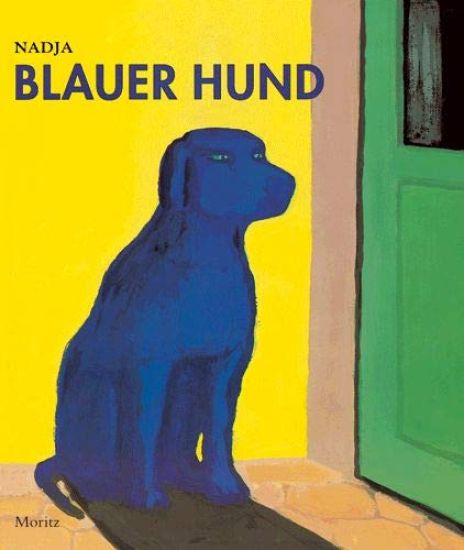
Jeden Abend kommt der blaue Hund an Charlottes Fenster, wo sie mit ihm spricht und sein Fell krault. Aber welch Enttäuschung, als die Mutter ihr verbietet, sich weiter mit ihm zu abzugeben! Doch als Charlotte sich bei einem Picknick im Wald verirrt und den Weg nach Hause nicht mehr findet, taucht der blaue Hund wieder auf und beschützt sie vor dem Nachtgeist, der keine Eindringlinge in seinem Reich dulden will. Wie froh sind die Eltern, als Charlotte am nächsten Tag wieder bei ihnen ist! Von nun an darf Blauer Hund bei Charlotte bleiben. Für immer. Immer wieder sind Kinder fasziniert von dieser elementaren Geschichte und fiebern mit Charlotte und dem blauen Hund mit! So ist Blauer Hund ein leuchtendes Beispiel für die Kraft, die in Bilderbüchern stecken kann!

Ty - voskhititelnaja devochka! 10 istorij o devochkakh, chi khrabrost, dobrota i uverennost v sebe pomogli im preodolet vse trudnosti
Nadja
Eksmodetstvo
2025
nidottu
8-10 let - vazhnyj period v zhizni kazhdoj devochki. V shkole ona okazyvaetsja v neprivychnoj obstanovke, znakomitsja s novymi ljudmi, uchitsja sledovat pravilam i brat na sebja otvetstvennost. V etom vozraste nachinaet formirovatsja zhiznenno vazhnyj navyk - umenie raspoznavat svoi emotsii i spravljatsja s nimi. Poetomu rebjonku ochen nuzhna zabota i podderzhka roditelej i blizkikh. Nu a im, v svoju ochered, pomozhet eta kniga! V nejo vkljucheny rasskazy pro devochek, kotorye tozhe stolknulis s raznoobraznymi neprijatnostjami. U Ljusi nikak ne poluchalos ispech vkusnyj tort, Grejs prishlos ostrich ljubimye volosy, a Sare - podgotovit slozhnyj shkolnyj proekt. Geroini rasskazov ispytyvali volnenie, grust, razdrazhenie - no v itoge s pomoschju blizkikh i druzej nauchilis prinimat svoi emotsii i spravljatsja s nimi. A na ikh primere smogut nauchitsja i malenkie chitatelnitsy! Kniga podkhodit kak dlja samostojatelnogo chtenija, tak i dlja sovmestnogo chtenija so vzroslym. A eschjo ejo mozhno vzjat s soboj v poezdku ili na progulku, chtoby vash rebjonok tochno ne zaskuchal!
A history of 1960s activist art group Black Mask. With Up Against the Real, Nadja Millner-Larsen offers the first comprehensive study of the group Black Mask and its acrimonious relationship to the New York art world of the 1960s. Cited as pioneers of now-common protest aesthetics, the group’s members employed incendiary modes of direct action against racism, colonialism, and the museum system. They shut down the Museum of Modern Art, fired blanks during a poetry reading, stormed the Pentagon in an antiwar protest, sprayed cow’s blood at the secretary of state, and dumped garbage into the fountain at Lincoln Center. Black Mask published a Dadaist broadside until 1968, when it changed its name to Up Against the Wall Motherfucker (after line in a poem by Amiri Baraka) and came to classify itself as “a street gang with analysis.” American activist Abbie Hoffman described the group as “the middle-class nightmare . . . an anti-media phenomenon simply because their name could not be printed.” Up Against the Real examines how and why the group ultimately rejected art in favor of what its members deemed “real” political action. Exploring this notorious example of cultural activism that rose from the ruins of the avant-garde, Millner-Larsen makes a critical intervention in our understanding of political art.

A history of 1960s activist art group Black Mask. With Up Against the Real, Nadja Millner-Larsen offers the first comprehensive study of the group Black Mask and its acrimonious relationship to the New York art world of the 1960s. Cited as pioneers of now-common protest aesthetics, the group’s members employed incendiary modes of direct action against racism, colonialism, and the museum system. They shut down the Museum of Modern Art, fired blanks during a poetry reading, stormed the Pentagon in an antiwar protest, sprayed cow’s blood at the secretary of state, and dumped garbage into the fountain at Lincoln Center. Black Mask published a Dadaist broadside until 1968, when it changed its name to Up Against the Wall Motherfucker (after line in a poem by Amiri Baraka) and came to classify itself as “a street gang with analysis.” American activist Abbie Hoffman described the group as “the middle-class nightmare . . . an anti-media phenomenon simply because their name could not be printed.” Up Against the Real examines how and why the group ultimately rejected art in favor of what its members deemed “real” political action. Exploring this notorious example of cultural activism that rose from the ruins of the avant-garde, Millner-Larsen makes a critical intervention in our understanding of political art.
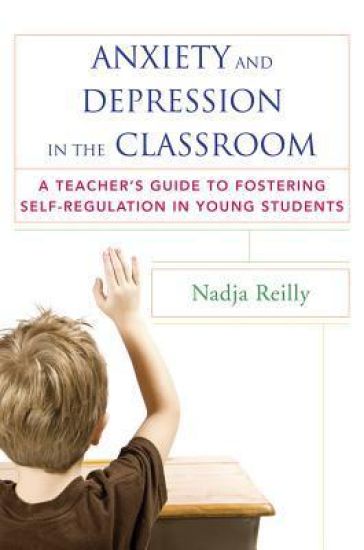
Anxiety and depression are two of the most common mental health problems for students. This book, the first of its kind, teaches teachers what signs to look for so they can direct their students to help and ensure emotional wellness in the classroom.
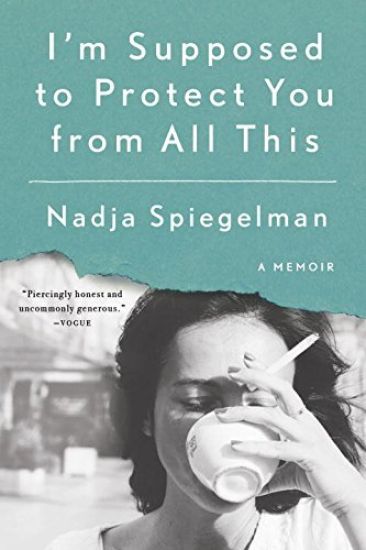
A Vogue Best Book of the Year "What Ferrante did for female friends--exploring the tumult and complexity their relationships could hold--Spiegelman sets out to do for mothers and daughters. She's essentially written My Brilliant Mom." --Slate A memoir of mothers and daughters--and mothers as daughters--traced through four generations, from Paris to New York and back again. For a long time, Nadja Spiegelman believed her mother was a fairy. More than her famous father, Maus creator Art Spiegelman, and even more than most mothers, hers--French-born New Yorker art director Fran oise Mouly--exerted a force over reality that was both dazzling and daunting. As Nadja's body changed and "began to whisper to the adults around me in a language I did not understand," their relationship grew tense. Unwittingly, they were replaying a drama from her mother's past, a drama Nadja sensed but had never been told. Then, after college, her mother suddenly opened up to her. Fran oise recounted her turbulent adolescence caught between a volatile mother and a playboy father, one of the first plastic surgeons in France. The weight of the difficult stories she told her daughter shifted the balance between them. It had taken an ocean to allow Fran oise the distance to become her own person. At about the same age, Nadja made the journey in reverse, moving to Paris determined to get to know the woman her mother had fled. Her grandmother's memories contradicted her mother's at nearly every turn, but beneath them lay a difficult history of her own. Nadja emerged with a deeper understanding of how each generation reshapes the past in order to forge ahead, their narratives both weapon and defense, eternally in conflict. Every reader will recognize herself and her family in I'm Supposed to Protect You From All This, a gorgeous and heartbreaking memoir that helps us to see why sometimes those who love us best hurt us most.

How do children learn about the expression and meaning of emotions – both happy and sad? This book answers questions regarding the foundation of emotional intelligence, and examines how children become emotionally literate as they are socialised into their family environment from birth to 2 years of age. These early stages are vitally important in teaching children to understand themselves and others, as well as how to relate to people, and how to adapt to and cope with their immediate surroundings. In order to examine the development of emotional intelligence, the author presents an overview of the literature on the subject and in the second part of the book presents a case study in which the concepts introduced in the first part of the book are revisited. Based on daily tape-recorded ‘conversations’ between a baby and her father, the data demonstrate how, over a two-year period, the child learns to express and understand emotions within social interactions. This capacity to reason with emotions is examined through four areas: perceiving emotion, integrating emotion, understanding emotion and managing emotion.The Development of Emotional Intelligence adds a new perspective to the theoretical debate on emotions and how they develop. It will be of great interest to psychologists and any professionals dealing with families. It will also be helpful reading for parents.

How do children learn about the expression and meaning of emotions – both happy and sad? This book answers questions regarding the foundation of emotional intelligence, and examines how children become emotionally literate as they are socialised into their family environment from birth to 2 years of age. These early stages are vitally important in teaching children to understand themselves and others, as well as how to relate to people, and how to adapt to and cope with their immediate surroundings. In order to examine the development of emotional intelligence, the author presents an overview of the literature on the subject and in the second part of the book presents a case study in which the concepts introduced in the first part of the book are revisited. Based on daily tape-recorded ‘conversations’ between a baby and her father, the data demonstrate how, over a two-year period, the child learns to express and understand emotions within social interactions. This capacity to reason with emotions is examined through four areas: perceiving emotion, integrating emotion, understanding emotion and managing emotion.The Development of Emotional Intelligence adds a new perspective to the theoretical debate on emotions and how they develop. It will be of great interest to psychologists and any professionals dealing with families. It will also be helpful reading for parents.
There's more to the art world than auctions and appetizers. Behind the serious museum walls, one arts reporter has a sense of humor and she isn't afraid to share it in this comedic romp through the art world. Featuring 30 short stories, Nadja Sayej plows through a food review of the Venice Biennale, butterfly kisses Cate Blanchett and talks performance art with Salma Hayek Oh and is it 'biennial' or 'biennale' Nevermind that, where's the hor d'oeuvres? This book highlights a run in with A$AP Rocky at Miami Beach, calling Patton Oswalt from Marrakech and snoring her way through Documenta. There are cameos from Robert Crumb, doing vodka shots with Anish Kapoor and meeting Helmut Newton's wife Jane Newton for her very first selfie. Join in on the chaos, the comedy and the bad pastry fillings you can't help but criticize.
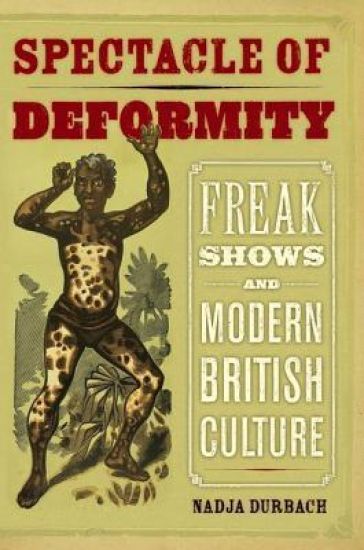
In 1847, during the great age of the freak show, the British periodical Punch bemoaned the public's 'prevailing taste for deformity'. This vividly detailed work argues that far from being purely exploitative, displays of anomalous bodies served a deeper social purpose as they generated popular and scientific debates over the meanings attached to bodily difference. Nadja Durbach examines freaks both well-known and obscure including the Elephant Man; 'Lalloo, the Double-Bodied Hindoo Boy', a set of conjoined twins advertised as half male, half female; Krao, a seven-year-old hairy Laotian girl who was marketed as Darwin's 'missing link'; the 'Last of the Mysterious Aztecs' and African 'Cannibal Kings', who were often merely Irishmen in blackface. Upending our tendency to read late twentieth-century conceptions of disability onto the bodies of freak show performers, Durbach shows that these spectacles helped to articulate the cultural meanings invested in otherness - and thus clarified what it meant to be British - at a key moment in the making of modern and imperial ideologies and identities.
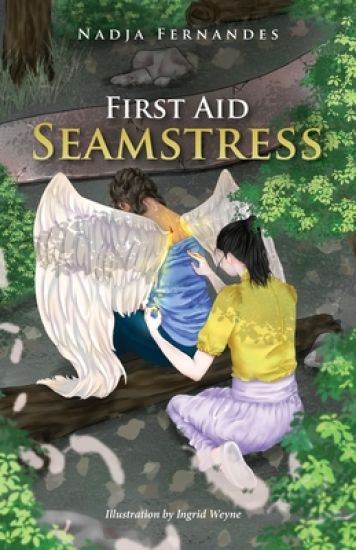
First Aid Seamstress tells the story of two single mothers. After they become best friends, their love for each other blooms but then seems to wither with neglect. Felicity appears assertive yet craves approval. Clarissa shows fragility, but cannot accept deceit, in any form. As we explore Felicity's past, her future also starts to unravel, with intricate parallels of ideas of life, death, and choices. Nadja Fernandes attempts to depict and contrast the attitudes of a society of the late 20th century and of the early 21st century.

Do you own an old lamp? Would you like to learn its approximate age, value, and history? Antique Lamp Buyer’s Guide is the reference book used by professionals and collectors alike. Dealers and appraisers often carry this paperback with them to quickly identify antique and collectible late 19th century and early 20th century lighting. Now in its third edition, with updated prices and additional photography, this book is a must-have for any antique or decorative arts reference library. Beautiful photographs plus catalogue illustrations in an easy-to-read format, make research a pleasure.
Bodily Matters explores the anti-vaccination movement that emerged in England in the late nineteenth century and early twentieth in response to government-mandated smallpox vaccination. By requiring a painful and sometimes dangerous medical procedure for all infants, the Compulsory Vaccination Act set an important precedent for state regulation of bodies. From its inception in 1853 until its demise in 1907, the compulsory smallpox vaccine was fiercely resisted, largely by members of the working class who interpreted it as an infringement of their rights as citizens and a violation of their children’s bodies. Nadja Durbach contends that the anti-vaccination movement is historically significant not only because it was arguably the largest medical resistance campaign ever mounted in Europe but also because it clearly articulated pervasive anxieties regarding the integrity of the body and the role of the modern state.Analyzing historical documents on both sides of the vaccination debate, Durbach focuses on the key events and rhetorical strategies of the resistance campaign. She shows that those for and against the vaccine had very different ideas about how human bodies worked and how best to safeguard them from disease. Individuals opposed to mandatory vaccination saw their own and their children’s bodies not as potentially contagious and thus dangerous to society but rather as highly vulnerable to contamination and violation. Bodily Matters challenges the notion that resistance to vaccination can best be understood, and thus easily dismissed, as the ravings of an unscientific “lunatic fringe.” It locates the anti-vaccination movement at the very center of broad public debates in Victorian England over medical developments, the politics of class, the extent of government intervention into the private lives of its citizens, and the values of a liberal society.
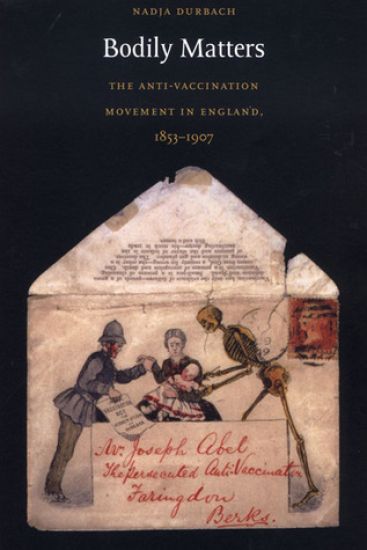
Bodily Matters explores the anti-vaccination movement that emerged in England in the late nineteenth century and early twentieth in response to government-mandated smallpox vaccination. By requiring a painful and sometimes dangerous medical procedure for all infants, the Compulsory Vaccination Act set an important precedent for state regulation of bodies. From its inception in 1853 until its demise in 1907, the compulsory smallpox vaccine was fiercely resisted, largely by members of the working class who interpreted it as an infringement of their rights as citizens and a violation of their children’s bodies. Nadja Durbach contends that the anti-vaccination movement is historically significant not only because it was arguably the largest medical resistance campaign ever mounted in Europe but also because it clearly articulated pervasive anxieties regarding the integrity of the body and the role of the modern state.Analyzing historical documents on both sides of the vaccination debate, Durbach focuses on the key events and rhetorical strategies of the resistance campaign. She shows that those for and against the vaccine had very different ideas about how human bodies worked and how best to safeguard them from disease. Individuals opposed to mandatory vaccination saw their own and their children’s bodies not as potentially contagious and thus dangerous to society but rather as highly vulnerable to contamination and violation. Bodily Matters challenges the notion that resistance to vaccination can best be understood, and thus easily dismissed, as the ravings of an unscientific “lunatic fringe.” It locates the anti-vaccination movement at the very center of broad public debates in Victorian England over medical developments, the politics of class, the extent of government intervention into the private lives of its citizens, and the values of a liberal society.
For the past 15 years, pop culture journalist Nadja Sayej has interviewed over 200 celebrities, from A-listers to D-listers, 1980s heartthrobs to Instagram superstars and global icons. This compilation includes her best backstage stories from the red carpet, film festivals, art fairs and beyond, uncut and never seen before. In 25 candid short stories about her moments with the stars, she dishes on dinner with Kanye West in Miami, interviewing Salma Hayek in Venice and lunching with Steve Martin in Grand Central Station. Featuring backstage access over the past 10 years (2010 to 2020), it's a peek into how she scored her major interviews with stars like Kathleen Turner, Spike Lee and Karl Lagerfeld, as well as what it has been like attending A-list events like Heidi Klum's legendary Halloween party. This is all driven by her snarky observations, with photos taken by the female gaze. This book is released ahead of the 100 year anniversary of the red carpet, which is celebrated in 2022.