Unlike most of Gunn's novels, The Lost Chart is set in a city - the city of Glasgow and its sea approaches. The untypical choice of background for the story is not the only departure from Gunn's usual approach to his novels. The book is also a thriller. The story unfolds in a social ambience of fear and speculation within which certain sinister political forces are at work. Nuclear war is a possibility, if not a certainty. Shipping executive Dermot Cameron gets involved in a street brawl, loses the chart of the approaches to a remote Hebridean island and finds himself in a tussle between the British Secret Service and a locally-based communist fifth-column. The plot turns almost exclusively on the date of a looming crisis, and the imminence of that date pervades the thoughts and feelings of those in conflict with a locally-based sinister and elusive enemy. This timeless work, from one of the most important writers of the twentieth century, has a remarkable relevance to the events of today. When it was written in 1949 there was an uneasiness in the West regarding changes to the 'old order' of society and the decline in certain moral standards and spiritual beliefs. Today the problems facing humanity have not changed. The threatening political situations in the Far East, Middle East and Eastern Europe and the concomitant danger of nuclear warfare are all too evident. Against such a background, the way of life on the remote Hebridean island depicted by the author has an almost irresistible appeal.
Neil M Gunn, one of Scotland's most distinguished 20th century authors, wrote over a period of 30 years, starting in 1926 and ending in 1956 with his so-called spiritual autobiography The Atom of Delight. Two years before this he wrote his last novel, The Other Landscape, the setting being the east coast of Scotland's most northerly mainland county. This provides the perfect backdrop - a fishing hotel and its English residents, the local ghillies who served them, and a solitary white house near the cliffs in which the occupant, a man from the South, lives alone. Add to this the Major, a retired military officer-cum-diplomat, who quickly shows himself to be an insensitive and overbearing man, disdainful of his fellows and aggressive towards those who challenge his views or show any form of disrespect towards him. His paternalistic behaviour towards the local community masks a contempt for it. Life in the hotel is lightened on a more mundane level by two incidents, both directly relating to the Major - a false alarm over a drowning incident and a fire in his bedroom, both of which end happily, but with a damaging loss of face for the Major and much amusement for the guests and staff at the hotel. Juxtaposed with the sporting life at the hotel, and in a subtle way connected to it, is the fate of the solitary and bereaved occupant of the white house. The shadow of death, both present and past, hangs over the house and blends with the palette of second sight and the strong phenomenon of 'recurrence', when patterns of events inexplicably repeat themselves. The reader is thus invited to consider the realities of life and death and the inherent tragedies that are contained within them, but in the end is presented with a glimpse of hope and renewal.
Horrific experiences of the blitz in wartime London and the spiritual bankruptcy of her lover and his Marxist acquaintances are seen through the eyes of Nan, a young Scotswoman, who has returned to her native Highlands to recover from a nervous breakdown. Her letters to her lover from the warm and friendly ambience of a widowed aunt's farmhouse reflect her innermost thoughts on the essence of being and the restorative effects of the quiet rhythm of country life. The shadows of the immediate past begin to recede, but her return to health is rudely interrupted by news of the brutal murder of a neighbouring crofter and the unsolicited attentions of a sinister stranger. The inevitable relapse brings her aunt, a practical and cultured woman, into contact with both lover and stranger and pits her optimistic, human and emotional approach to life against the theories and bleak logic of the two men. The recovery of the young woman brings aunt and niece even closer together in their understanding of life, but the final denouement, although imbued with hope, is inconclusive and leaves the reader to imagine the eventual outcome. This is a subtly thoughtful and gripping novel, written with all the power of a master hand. Although written over fifty years ago, the book has a strange relevance to today's events. The blight of terrorism, the dominance of consumerism in everyday life, the absence of a spiritual dimension in domestic affairs and fears of the harmful effects of globalisation on the freedom and development of small communities, are symptoms of an uneasiness with regard to world stability and the erosion of traditional values and beliefs.
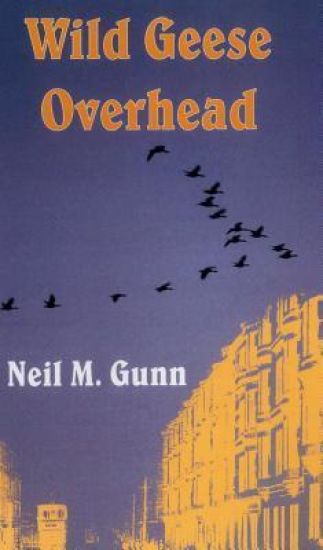
From this evocative title comes a powerful novel set in the city of Glasgow in 1939. This is indeed a bleak stage, and yet how does this title, with its implication of freedom and flight, meld with a depressed city at the outbreak of war? The main character, a journalist, finds that a glimpse of wild geese catalyses the development of his thinking on various levels - social, political and psychological. The contrast of urban and rural life, characteristically penetrating dialogue, remarkable insight, physical violence...all are included and take the reader on an absorbing and enlightening journey to the story's denouement. Another outstanding novel from the creative pen of Gunn.
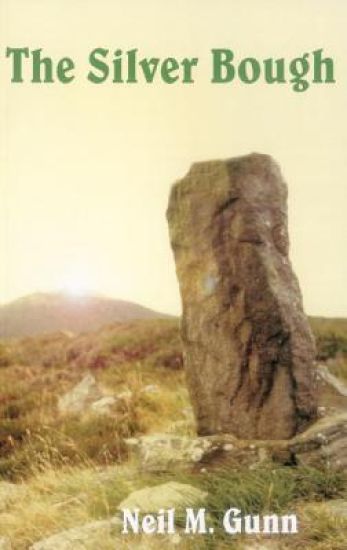
At the heart of The Silver Bough is a cairn on a knoll surrounded by standing stones. This is of professional interest to an archaeologist, around whom the story revolves. The life-enhancing qualities of the crofting family with whom he lodges and the quiet tenor of Highland life bear a curious similarity to his speculations on how 'the cairn people' lived in the distant past. His ideas spread outwards like ripples in a loch, fascinating his colleagues and giving some meaning to the life of a neighbouring landowner, who is mentally scarred from his experiences in the War. The plot of the book is imaginative and intricate, and includes the mystery of skeletons found in a cist in the cairn. As the dig proceeds, gold is discovered and then disappears. Has it been taken by the lad the archaeologist has been employing and, if so, where is it? The search is on and the standing stone claims its sacrificial victim.
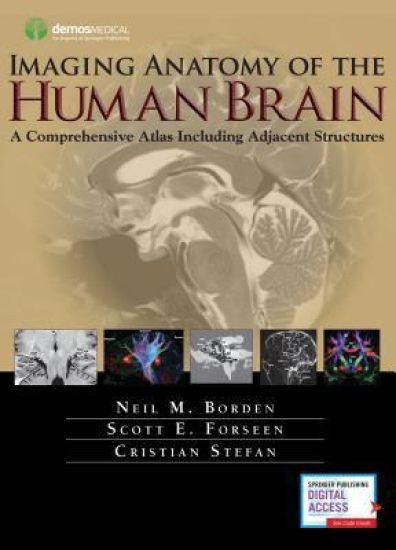
The most precise, cutting-edge images of normal cerebral anatomy available today are the centerpiece of this spectacular atlas for clinicians, trainees, and students in the neurologically-based medical and non-medical specialties. Truly an “atlas for the 21st century,” this comprehensive visual reference presents a detailed overview of cerebral anatomy acquired through the use of multiple imaging modalities including advanced techniques that allow visualization of structures not possible with conventional MRI or CT. Beautiful colour illustrations using 3-D modeling techniques based upon 3D MR volume data sets further enhances understanding of cerebral anatomy and spatial relationships. The anatomy in these colour illustrations mirror the black and white anatomic MR images presented in this atlas.Written by two neuroradiologists and an anatomist who are also prominent educators, along with more than a dozen contributors, the atlas begins with a brief introduction to the development, organization, and function of the human brain. What follows is more than 1,000 meticulously presented and labelled images acquired with the full complement of standard and advanced modalities currently used to visualize the human brain and adjacent structures—including MRI, CT, diffusion tensor imaging (DTI) with tractography, functional MRI, CTA, CTV, MRA, MRV, conventional 2-D catheter angiography, 3-D rotational catheter angiography, MR spectroscopy, and ultrasound of the neonatal brain. The vast array of data that these modes of imaging provide offers a wider window into the brain and allows the reader a unique way to integrate the complex anatomy presented. Ultimately the improved understanding you can acquire using this atlas can enhance clinical understanding and have a positive impact on patient care. Additionally, various anatomic structures can be viewed from modality to modality and from multiple planes.This state-of-the-art atlas provides a single source reference, which allows the interested reader ease of use, cross-referencing, and the ability to visualize high-resolution images with detailed labeling. It will serve as an authoritative learning tool in the classroom, and as an invaluable practical resource at the workstation or in the office or clinic.Key Features:Provides detailed views of anatomic structures within and around the human brain utilizing over 1,000 high quality images across a broad range of imaging modalitiesContains extensively labeled images of all regions of the brain and adjacent areas that can be compared and contrasted across modalitiesIncludes specially created colour illustrations using computer 3-D modeling techniques to aid in identifying structures and understanding relationshipsGoes beyond a typical brain atlas with detailed imaging of skull base, calvaria, facial skeleton, temporal bones, paranasal sinuses, and orbitsServes as an authoritative learning tool for students and trainees and practical reference for clinicians in multiple specialties
Science now reveals the true cause of the dam breach flood that destroyed Johnstown in 1889. The tragic loss of more than 2200 lives was preventable; the initial investigation of the flood was hijacked, delayed, and distorted by powerful members of the industrial elite. This book bridges the gap between history and science, reexamining eyewitness accounts of the flood and historic documents about the investigation, and applying new LiDAR, GPS, and hydraulic studies to solve the mystery – what caused the Great Flood of 1889? The book includes a notable chapter on the “sister” of the South Fork Dam, “The Forgotten Dam” at Hollidaysburg, PA.
Celebrity and Mediated Social Connections is a critical examination of the multiple realities of the mediated culture we traverse, extending from our imaginary inner worlds to the imagined communities of digital media. Chapters explore the dialogic at work when we connect with celebrities and internalize aspects of their personas due to the various social roles they serve within our everyday lives. What might begin as strong identification and internalization within our imaginary worlds, in this digital age, sometimes seeps out as we connect to celebrities, their fans, friends and followers in ways that were not formerly possible. The book contains topics that range from the degradation of micro-celebrities, the role of celebrities in promoting prescription drugs and their role in contemporary social movements. The common thread that runs through the book presents a mediated world that paradoxically allows if not encourages people to daydream, engage in stream of consciousness thinking and fantasize about celebrities, all while concurrently compelling us to engage in a digitally based objective world. The possibility of interaction on and through digital media intensifies the emotional connection between celebrity and fan. The more personal details one gives up, the closer we feel we become—digital intimacy based on the excessive self. Digital media entice us to engage and remain tethered to technology, staying continuously connected so as not to miss the latest post or meme. To suggest we should build a proverbial wall between the two—imaginary and objective worlds—runs counter to the reality of an always on, always connected culture in which we presently live.
Celebrity and Mediated Social Connections is a critical examination of the multiple realities of the mediated culture we traverse, extending from our imaginary inner worlds to the imagined communities of digital media. Chapters explore the dialogic at work when we connect with celebrities and internalize aspects of their personas due to the various social roles they serve within our everyday lives. What might begin as strong identification and internalization within our imaginary worlds, in this digital age, sometimes seeps out as we connect to celebrities, their fans, friends and followers in ways that were not formerly possible. The book contains topics that range from the degradation of micro-celebrities, the role of celebrities in promoting prescription drugs and their role in contemporary social movements. The common thread that runs through the book presents a mediated world that paradoxically allows if not encourages people to daydream, engage in stream of consciousness thinking and fantasize about celebrities, all while concurrently compelling us to engage in a digitally based objective world. The possibility of interaction on and through digital media intensifies the emotional connection between celebrity and fan. The more personal details one gives up, the closer we feel we become—digital intimacy based on the excessive self. Digital media entice us to engage and remain tethered to technology, staying continuously connected so as not to miss the latest post or meme. To suggest we should build a proverbial wall between the two—imaginary and objective worlds—runs counter to the reality of an always on, always connected culture in which we presently live.
Science now reveals the true cause of the dam breach flood that destroyed Johnstown in 1889. The tragic loss of more than 2200 lives was preventable; the initial investigation of the flood was hijacked, delayed, and distorted by powerful members of the industrial elite. This book bridges the gap between history and science, reexamining eyewitness accounts of the flood and historic documents about the investigation, and applying new LiDAR, GPS, and hydraulic studies to solve the mystery – what caused the Great Flood of 1889? The book includes a notable chapter on the “sister” of the South Fork Dam, “The Forgotten Dam” at Hollidaysburg, PA.
This book has been considered by academicians and scholars of great significance and value to literature. This forms a part of the knowledge base for future generations. So that the book is never forgotten we have represented this book in a print format as the same form as it was originally first published. Hence any marks or annotations seen are left intentionally to preserve its true nature.
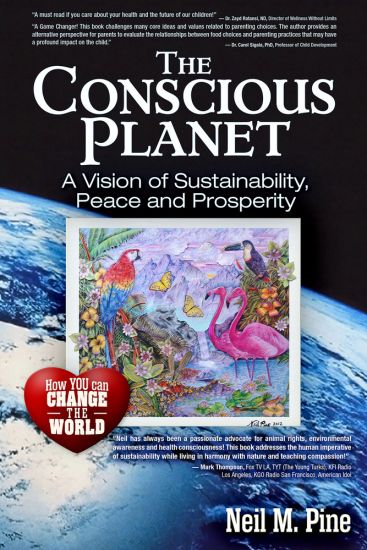
The Conscious Planet represents the prerequisite for the future of humanity! It’s a powerful polemic against all things wrong with our modern western culture. This salient and cutting-edge vision of reality projects way out beyond the horizon. All of this critically important information (while formally being highly controversial and provocative subjects), is now all coming to fruition with more public concern and awareness than ever. The truth about pandemics & vaccine horror! Meat recalls and dangerous zoonotic diseases. Extreme weather and climate change. Nuclear power dangers, GMOs, and the nefarious bee killing and cancer-causing herbicides from Monsanto, rainforest destruction, drought, famine, and endangered species, including bees! It’s everything the government, and the multinational corporations that control it, don’t want you to know. Furthermore, The Conscious Planet exposes a legacy of demagoguery and corporate plutocracy used by our politicians and big industry to cover up the truth about environmental negligence by mitigating or eschewing the facts (Refer to chapter 4 “Peace and Prosperity” ).Over the years, the truth has become obscured by a maelstrom of this mass government and corporate subreption. I also published an article in the Spring of 2010 in Vision Magazine, warning people about the dangers of nuclear power. Contingent upon this article, just one month later, I gave a 20 min speech about non sustainable practices at the University of California, in Riverside and received an Eco Hero Award. And only 1 year later we experienced the worst nuclear disaster in history at Fukushima Japan! (Refer to chapter “The Insidious Nature of Nuclear Power”). This goes way beyond any self-help book. Not only does this information improve your health and psychology, but it will also dramatically reduce your carbon footprint, thus ameliorating all external environment factors surrounding you, making the world a better place for everyone. No other book presents such a dynamic and broad spectrum of subjects and neatly ties them in all together. Animal agriculture represents the most significant factor in the destruction of our planet due to man’s ongoing greed and lust for dead flesh. Eating meat is not only terrible for the environment and your health, but it also patronizes evil and inhumane, Auschwitz style slaughterhouse conditions. “Does something have to die in order for you to live?” You have to be some kind of a prima donna to think so. There is a certain pride in knowing that you can live and thrive while not destroying the environment or killing other living creatures. Once you realize this inner truth an enormous burden of guilt may be lifted off your shoulders. Now you are truly living in harmony with nature and you may begin to feel an illumination of spirit. Living without this cycle of death we automatically become more humane, and therefore more human: More Humane … Less Beastly, More Compassionate … Less Barbaric, More Gentle … Less Brutal, More Assertive … Less Aggressive, More Ethical … Less Deceitful
New Jersey’s Natures takes up the challenge of expanding academic and popular conceptions of New Jersey and its landscapes through the lens of environmental history. Scholars’ essays showcase the ways in which nature is integral to understandings of the state and its past as well as its future. These essays show that New Jersey should no longer solely be known as a place where pollution and suburbanization run amok, but rather a place where history happens. The contributors investigate how nature and history are intertwined within this small but mighty state, covering topics from the colonial period to the present across North, South, and Central Jersey. They investigate natural features like the Delaware River and Bay, the Pinelands, and the unforgettable Jersey Shore. In this book you will find: indigenous Americans making meaning as settlers threaten their ways of life, Governor William Livingston considering Central Jersey’s features as he fights in the American Revolution, farmers building the state’s industrial agriculture, a foreign diplomat planting an arboretum, squatters in the swampy Meadowlands subverting social and economic norms, activists fighting for parks, forests, and beaches across two centuries, and much more.
New Jersey’s Natures takes up the challenge of expanding academic and popular conceptions of New Jersey and its landscapes through the lens of environmental history. Scholars’ essays showcase the ways in which nature is integral to understandings of the state and its past as well as its future. These essays show that New Jersey should no longer solely be known as a place where pollution and suburbanization run amok, but rather a place where history happens. The contributors investigate how nature and history are intertwined within this small but mighty state, covering topics from the colonial period to the present across North, South, and Central Jersey. They investigate natural features like the Delaware River and Bay, the Pinelands, and the unforgettable Jersey Shore. In this book you will find: indigenous Americans making meaning as settlers threaten their ways of life, Governor William Livingston considering Central Jersey’s features as he fights in the American Revolution, farmers building the state’s industrial agriculture, a foreign diplomat planting an arboretum, squatters in the swampy Meadowlands subverting social and economic norms, activists fighting for parks, forests, and beaches across two centuries, and much more.
People still believe that any behaviour is permitted so long as they can get away with it. This attitude makes our current moral situation both confusing and discouraging. In addition, society has lost confidence in traditional methods of strengthening morality, be it the family, the schools, religion, or the law. Our failure to create a peaceful, moral world is all the more disturbing when compared to the tremendous strides we have made in science and its application to business and industry, medicine, communications, transportation, and agriculture. In "The Morality Maze", Neil M Daniels expands the concept of morality by assigning it a scientific base in biology. In the past, each individual immoral behaviour was described and defined, but we failed to discern what they have in common, other than being forbidden. Daniels reveals one simple moral factor that pervades all moral and immoral behaviour. This "common denominator" is a bioenvironmental fact of human ecology. The human ecosystem artefact common to all forms of morality is "property," an innovative component of moral ecology theory that has revolutionary implications for moral philosophy, law, education, and daily life.