Kirjojen hintavertailu. Mukana 11 627 067 kirjaa ja 12 kauppaa.

Kirjahaku

Etsi kirjoja tekijän nimen, kirjan nimen tai ISBN:n perusteella.

1000 tulosta hakusanalla Nicholas B. Wainwright

The Passage of Time: Stories of Nicholas County, West Virginia

The Passage of Time: Stories of Nicholas County, West Virginia

Robert B. Campbell; Anna L. Campbell

Jetlaunch
2020
nidottu
Pioneer life and local history have been a passion for Robert and Anna Campbell, lifelong residents of Nicholas County, West Virginia. They were amazed at how Irish, English, and Scottish ancestors survived in the mountains for generations. Robert was known as a storyteller. Family and friends would sit on the porch or in the living room for hours and listen to his detailed accounts of family and life in the central West Virginia mountains. One of Robert's favorite stories was telling how his grandfather Campbell built a dynamo to produce electricity for the family's mill on Muddlety Creek and was instrumental in getting electricity to the town of Summersville. Anna loves history and writing. She enjoys talking and corresponding with others to learn more about ancestors and families who settled in the area.The Campbells were approached by the owner of The Nicholas Chronicle to write stories for a weekly newspaper column, The Passage of Time, published from 2008-2012. They received positive response to the stories and had several requests that the stories be published in a book. Robert passed away in 2015, but the stories that he and Anna cherished and shared with others will continue to live on. The stories with pictures portray the culture, character, creativity, Christian values, and the caring people that made Nicholas County, West Virginia a unique place to live for generations.Some of the families in the stories include: Starbuck, Campbell, Reynolds, Murphy, Gregory, Breckinridge, Alderson, Brown, Cavendish, Harlow, McClung, Tyree, Bays, Duffy, Bryant, Baker, Hill, Sebert, Whitman, Beirne, Dorsey, Cummings, and Grose. The stories loosely trace the roots of Nicholas County residents from the 1600's to 2012. Events such as World War II and how it impacted the people of Nicholas County are featured in several stories. Businesses such as Campbell Electric Company, Walker Brothers (brick and pottery), Peters Creek Coal Company, and Ely-Thomas Lumber Company are featured in the stories. Other stories focus on community establishments such as schools, churches, cemeteries, and notable buildings. Pioneer life stories on aprons; quilts and coverlets; wash day in Appalachia; crocks, churns, and stone jars; handwritten letters and cards; home deliveries; and children's games provide insights into earlier times.Robert and Anna Campbell turned their appreciation of those who preceded them into a gift for the people of Nicholas County and beyond. The stories are the threads that bind the past to the present to create a tapestry that provides context for the future.
Fabianism and Fabianist Morals in G.B. Shaw's Widowers' Houses, Arms and the Man and The Devil's Disciple
Seminar paper from the year 2007 in the subject English - Literature, Works, grade: 1,3, University of Heidelberg (Anglistisches Seminar), course: PS II Literaturwissenschaft - Shaws Fr he Dramen, language: English, abstract: This essay shall aim at portraying Shaw's Fabian thought and morality in his early plays, i.e. Widowers' Houses, Arms and the Man, and The Devil's Disciple. Such a task automatically renders the essay no more than an attempt at finding traces, for there are no socialists in the plays mentioned. Instead, socialist thought is conveyed implicitly, i.e. by means of the plot, by method of showing, or by confronting a Victorian theatre audience with realities they would only too well like to ignore. Widower's Houses is a good case in point: it is highly unlikely any tenants living in the sort of substandard accommodation portrayed in the play could afford a night out in Covent Garden, and it is equally unlikely the theatre-going audience would ever bother to visit them in "their" rundown houses. Consequently, Shaw forced the reality upon the audience and explicitly tried to use drama as a means of propaganda (Grene: 1987: 15 and 3). However, here one could critically add that Shaw - like most Fabians - had as little contact with the working class as those he criticised for the same reasons (Ballay 1980: 237). I shall focus on Widowers' Houses, Arms and the Man, and The Devil's Disciple, for reasons I will explain in the conclusion. The essay follows a hypothesis, which is as written above: Shaw forced upon his audience realities they would like to ignore, and he wished to radicalise his audience (Gahan: 13). The second assumption this essay follows is that morality is as much part of Fabianism as politics are. In his economic and political writings, Shaw made a strong connection between economics and morality (Griffith: 29f.). His opposition to capitalism rooted very much in the fact that he rejected it morally. Hence, according to Fabian logic, the
A B C Et Cetera

A B C Et Cetera

Alexander Humez; Nicholas Humez

TAYLOR FRANCIS LTD
2026
sidottu
In classic abecedarian fashion A B C Et Cetera, originally published in 1985, takes from the rich Roman cornucopia more than enough to demonstrate the fact that sixty percent of our working vocabulary descends directly from the Latin. Nothing in Roman culture – and Romance – is beyond the measure and mischief of the brothers Humez: not unicorns, Vestal Virgins, and maledicta balloons; not Roman nomenclature, dating systems and numbering; not Roman religion, education, humor, law, slavery, literature, and not, of course, the gluttonous Ampersand.
Revolutionary Correspondence of Governor Nicholas Cooke, 1775-1781

Revolutionary Correspondence of Governor Nicholas Cooke, 1775-1781

Nicholas Cooke; Matt B. Jones

Literary Licensing, LLC
2011
sidottu
The Revolutionary Correspondence Of Governor Nicholas Cooke, 1775-1781 is a historical book that features a series of letters written by Governor Nicholas Cooke during the American Revolution. The book contains a collection of letters that were exchanged between Cooke and various individuals, including military officers, political leaders, and other important figures of the time.The letters cover a wide range of topics, including military strategy, political developments, and personal matters. They provide a unique insight into the challenges and struggles that faced the American colonies during the Revolutionary War.Governor Nicholas Cooke was a prominent figure during the American Revolution, serving as the Governor of Rhode Island from 1775 to 1786. He was a strong supporter of the American cause and played a significant role in the war effort.The book is a valuable resource for historians, scholars, and anyone interested in the history of the American Revolution. It offers a firsthand account of the events and people that shaped this pivotal period in American history.Extracted From Proceedings Of The American Antiquarian Society V36, No. 2.This scarce antiquarian book is a facsimile reprint of the old original and may contain some imperfections such as library marks and notations. Because we believe this work is culturally important, we have made it available as part of our commitment for protecting, preserving, and promoting the world's literature in affordable, high quality, modern editions, that are true to their original work.
Some of the Descendants of Robert and Jane ( ) McCune, of Bourbon and Nicholas County, Kentucky

Some of the Descendants of Robert and Jane ( ) McCune, of Bourbon and Nicholas County, Kentucky

Alfred Averill B. 1868 Knapp; Amy Edna Ramey B. 1875 McCune

Hassell Street Press
2021
sidottu
This work has been selected by scholars as being culturally important and is part of the knowledge base of civilization as we know it.This work is in the public domain in the United States of America, and possibly other nations. Within the United States, you may freely copy and distribute this work, as no entity (individual or corporate) has a copyright on the body of the work.Scholars believe, and we concur, that this work is important enough to be preserved, reproduced, and made generally available to the public. To ensure a quality reading experience, this work has been proofread and republished using a format that seamlessly blends the original graphical elements with text in an easy-to-read typeface.We appreciate your support of the preservation process, and thank you for being an important part of keeping this knowledge alive and relevant.
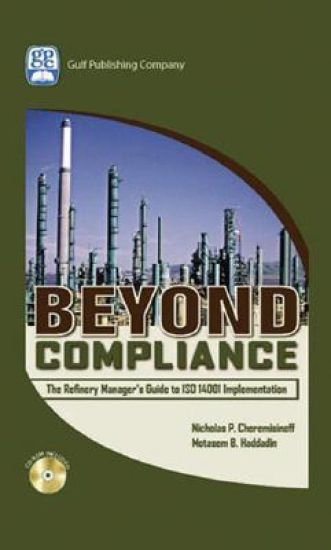
Beyond Compliance

Beyond Compliance

Nicholas Cheremisinoff; Motasem B. Haddadin

Gulf Publishing Company
2006
sidottu
This book offers refineries a practical guide for implementing environmental management systems (EMS). The author, who has implemented hundreds of successful EMS programs throughout North America, Europe, Russia and the Middle East, provides a detailed explanation of what an EMS is and how it can benefit refinery operations in complying with environmental laws and improving the overall efficiency of their operations. The author’s approach has been internationally recognized as an integrated model that captures improved compliance and financial savings by reducing operating costs through dedicated pollution prevention programs.
Laboratory Experiments Using Microwave Heating

Laboratory Experiments Using Microwave Heating

Nicholas E. Leadbeater; Cynthia B. McGowan

CRC Press Inc
2013
nidottu
Allowing many chemical reactions to be completed within minutes, microwave heating has revolutionized preparative chemistry. As a result, this technology has been widely adopted in both academic and industrial laboratories. Integrating microwave-assisted chemistry into undergraduate laboratory courses enables students to perform a broader range of reactions in the allotted lab period. As a result, they can be introduced to chemistry that would otherwise have been inaccessible due to time constraints (for example, the need for an overnight reflux). Laboratory Experiments Using Microwave Heating provides 22 experiments encompassing organic, inorganic, and analytical chemistry performed using microwave heating as a tool, making them fast and easy to accomplish in a laboratory period. Utilizing the time-saving experiments described in this book also permits students to repeat experiments if necessary or attempt additional self-designed experiments during the lab course.A number of the chemical transformations use water as a solvent in lieu of classical organic solvents. This contributes to greener, more sustainable teaching strategies for faculty and students, while maintaining high reaction yields. All the experiments have been tested and verified in laboratory classes, and many were even developed by students. Each chapter includes an introduction to the experiment and two protocols—one for use with a smaller monomode microwave unit employing a single reaction vessel and one for use with a larger multimode microwave unit employing a carousel of reaction vessels.
The Conifers: Genomes, Variation and Evolution

The Conifers: Genomes, Variation and Evolution

David B. Neale; Nicholas C. Wheeler

Springer International Publishing AG
2019
sidottu
This book is the first comprehensive volume on conifers detailing their genomes, variations, and evolution. The book begins with general information about conifers such as taxonomy, geography, reproduction, life history, and social and economic importance. Then topics discussed include the full genome sequence, complex traits, phenotypic and genetic variations, landscape genomics, and forest health and conservation. This book also synthesizes the research included to provide a bigger picture and suggest an evolutionary trajectory. As a large plant family, conifers are an important part of economic botany. The group includes the pines, spruces, firs, larches, yews, junipers, cedars, cypresses, and sequoias. Of the phylum Coniferophyta, conifers typically bear cones and evergreen leaves. Recently, there has been much data available in conifer genomics with the publication of several crop and non-crop genome sequences. In addition to their economic importance,conifers are an important habitat for humans and animals, especially in developing parts of the world. The application of genomics for improving the productivity of conifer crops holds great promise to help provide resources for the most needy in the world.
Plum and Posner's Diagnosis and Treatment of Stupor and Coma

Plum and Posner's Diagnosis and Treatment of Stupor and Coma

Jerome B. Posner; Clifford B. Saper; Nicholas D. Schiff; Jan Claassen

Oxford University Press Inc
2019
sidottu
Plum and Posner's Diagnosis and Treatment of Stupor and Coma, 5th edition, is a major update of the classic work on diagnosing the cause of coma, with the addition of completely new sections on treatment of comatose patients, by Dr. Jan Claassen, the Director of the Neuro-ICU at Columbia New York Presbyterian Hospital. The first chapter of the book provides an up-to-date review on the brain mechanisms that maintain a conscious state in humans, and how lesions that damage these mechanisms cause loss of consciousness or coma. The second chapter reviews the neurological examination of the comatose patient, which provides the basis for determining whether the patient is suffering from a structural brain injury causing the coma, or from a metabolic disorder of consciousness. The third and fourth chapters review the pathophysiology of structural lesions causing coma, and the specific disease states that result in coma. Chapter five is a comprehensive treatment of the many causes of metabolic coma. Chapter 6 review psychiatric causes of unresponsiveness and how to identify and treat them. Chapters 7 and 8 review the overall emergency treatment of comatose patients, followed by the treatment of specific causes of coma. Chapter 9 examines the long term outcomes of coma, including the minimally conscious state and the persistent vegetative state, and how they can be distinguished, and their implications for eventual useful recovery. Chapter 10 reviews the topic of brain death and the standards for examination of a patient that are required to make the determination of brain death. The final chapter 11 is by J.J. Fins, a medical ethicist who was invited by the other authors to write an essay on the ethics of diagnosis and treatment of patients who, by definition, have no way to approve of or communicate about their wishes. While providing detailed background for neurological and neurosurgical specialists, the practical nature of the material in this book has found its greatest use among Internists, Emergency Medicine, and Intensive Care specialists, who deal with comatose patients frequently, but who may not have had extensive neurological training.
Monitoring the Worker for Exposure and Disease

Monitoring the Worker for Exposure and Disease

Nicholas A. Ashford; Christine J. Spadafor; Dale B. Hattis; Charles C. Caldart

Johns Hopkins University Press
1990
pokkari
Human monitoring as a supplement to or replacement for environmental monitoring of toxic substances in the workplace has become an increasingly important issue within the last decade, leading to Congressional hearings, governmental studies, and scientific conferences around the world. Just as the purposes for undertaking human monitoring are diverse and sometimes conflicting, so too are the concerns-- medical, legal, and ethical-- such testing has generated. The authors begin by providing precise characterizations of the types of monitoring now in use and a clear account of the legal basis for OSHA monitoring requirements. They then turn to scientific and technical concerns that have evolved around monitoring, including the frequency and timing of examinations, human variability, and the distinctions that exist between high-risk and sensitive groups. Specific legal and ethical problems of conducting monitoring tests on workers are then covered in full, including the consequences for the worker of medical removal from the workplace, the conflict between human monitoring and personal privacy, access to medical records, and the use and possible misuse of test results. The volume concludes with policy recommendations for the use of human monitoring, recommendations for the use of human monitoring, recommendations that would achieve the goal of reducing occupational disease and injury while remaining within the bounds of a supportable ethical framework.