Norm Shulman's relationship with his stepson Greg Levenson had always been stable and warm, but it altered when Greg decided to enlist in the Air Force at age 27. This unexpected decision brought them even closer together, and Norm came to realize that his whole family history had much support to offer Greg. Cognizant of past anti-Semitic stereotypes persisting about Jewish participation in the military, Norm wanted to help prepare Greg to feel comfortable in his own identity. So, Norm decided to write letters that connected Greg to the many Jewish military heroes who had preceded him. From Judah Maccabee to fighter pilots from today's recent history, these profiles in courage and heroism brought Greg foundation and strength, and they offer readers a breadth of knowledge from every corner of Jewish history. Norm's letters to Greg make up one core of Love, Norm; the other is Norm's own multigenerational story of Jewish military heroes. As the son of Jewish immigrants whose place in America was hard-won, Norm chronicles what it was like to feel his identity pulled in different directions and how to hold fast to it nonetheless. Love, Norm is a multifaceted retelling of inspirational profiles of famous Jewish fighters from across history, and it is also the singular story of how one man dug into his own past and found pieces to preserve his Jewish identity. Together, empathetically channeled through his heartfelt letters and remembrances, Love, Norm shares a collected wisdom with the next generation.
Norm Shulman's relationship with his stepson Greg Levenson had always been stable and warm, but it altered when Greg decided to enlist in the Air Force at age 27. This unexpected decision brought them even closer together, and Norm came to realize that his whole family history had much support to offer Greg. Cognizant of past anti-Semitic stereotypes persisting about Jewish participation in the military, Norm wanted to help prepare Greg to feel comfortable in his own identity. So, Norm decided to write letters that connected Greg to the many Jewish military heroes who had preceded him. From Judah Maccabee to fighter pilots from today's recent history, these profiles in courage and heroism brought Greg foundation and strength, and they offer readers a breadth of knowledge from every corner of Jewish history. Norm's letters to Greg make up one core of Love, Norm; the other is Norm's own multigenerational story of Jewish military heroes. As the son of Jewish immigrants whose place in America was hard-won, Norm chronicles what it was like to feel his identity pulled in different directions and how to hold fast to it nonetheless. Love, Norm is a multifaceted retelling of inspirational profiles of famous Jewish fighters from across history, and it is also the singular story of how one man dug into his own past and found pieces to preserve his Jewish identity. Together, empathetically channeled through his heartfelt letters and remembrances, Love, Norm shares a collected wisdom with the next generation.
Norm Shulman's relationship with his stepson Greg Levenson had always been stable and warm, but it altered when Greg decided to enlist in the Air Force at age 27. This unexpected decision brought them even closer together, and Norm came to realize that his whole family history had much support to offer Greg.Cognizant of past anti-Semitic stereotypes persisting about Jewish participation in the military, Norm wanted to help prepare Greg to feel comfortable in his own identity. So, Norm decided to write letters that connected Greg to the many Jewish military heroes who had preceded him. From Judah Maccabee to fighter pilots from today's recent history, these profiles in courage and heroism brought Greg foundation and strength, and they offer readers a breadth of knowledge from every corner of Jewish history.Norm's letters to Greg make up one core of Love, Norm; the other is Norm's own multigenerational story of Jewish military heroes. As the son of Jewish immigrants whose place in America was hard-won, Norm chronicles what it was like to feel his identity pulled in different directions and how to hold fast to it nonetheless.Love, Norm, newly revised, is a multifaceted retelling of inspirational profiles of famous Jewish fighters from across history, and it is also the singular story of how one man dug into his own past and found pieces to preserve his Jewish identity. Together, empathetically channeled through his heartfelt letters and remembrances, Love, Norm shares a collected wisdom with the next generation.
Genocide occurs in every time period and on every continent. Using the 1948 U.N. definition of genocide as its departure point, this book examines the main episodes in the history of genocide from the beginning of human history to the present. Norman M. Naimark lucidly shows that genocide both changes over time, depending on the character of major historical periods, and remains the same in many of its murderous dynamics. He examines cases of genocide as distinct episodes of mass violence, but also in historical connection with earlier episodes. Unlike much of the literature in genocide studies, Naimark argues that genocide can also involve the elimination of targeted social and political groups, providing an insightful analysis of communist and anti-communist genocide. He pays special attention to settler (sometimes colonial) genocide as a subject of major concern, illuminating how deeply the elimination of indigenous peoples, especially in Africa, South America, and North America, influenced recent historical developments. At the same time, the "classic" cases of genocide in the twentieth Century - the Armenian Genocide, the Holocaust, Rwanda, and Bosnia -- are discussed, together with recent episodes in Darfur and Congo.
Genocide occurs in every time period and on every continent. Using the 1948 U.N. definition of genocide as its departure point, this book examines the main episodes in the history of genocide from the beginning of human history to the present. Norman M. Naimark lucidly shows that genocide both changes over time, depending on the character of major historical periods, and remains the same in many of its murderous dynamics. He examines cases of genocide as distinct episodes of mass violence, but also in historical connection with earlier episodes. Unlike much of the literature in genocide studies, Naimark argues that genocide can also involve the elimination of targeted social and political groups, providing an insightful analysis of communist and anti-communist genocide. He pays special attention to settler (sometimes colonial) genocide as a subject of major concern, illuminating how deeply the elimination of indigenous peoples, especially in Africa, South America, and North America, influenced recent historical developments. At the same time, the "classic" cases of genocide in the twentieth Century - the Armenian Genocide, the Holocaust, Rwanda, and Bosnia -- are discussed, together with recent episodes in Darfur and Congo.
Nora M. Alter argues that the essay film is a hybrid genre that fuses three major categories of film: feature, art, and documentary. Much like the written essay, its literary predecessor, the essay film draws on a variety of forms and approaches, fundamentally altering the shape of cinema. Alter traces the essay film's origins to early silent cinema, charting the genre's evolution with the advent of sound, its emergence as a recognized category of film in the postwar period, and the ways the genre developed in the later twentieth century. In addition to exploring the broader history of the essay film, Alter discusses the work of artists including Robert Smithson, Martha Rosler, Isaac Julien, John Akomfrah, Harun Farocki, and Hito Steyerl.
Nora M. Alter argues that the essay film is a hybrid genre that fuses three major categories of film: feature, art, and documentary. Much like the written essay, its literary predecessor, the essay film draws on a variety of forms and approaches, fundamentally altering the shape of cinema. Alter traces the essay film's origins to early silent cinema, charting the genre's evolution with the advent of sound, its emergence as a recognized category of film in the postwar period, and the ways the genre developed in the later twentieth century. In addition to exploring the broader history of the essay film, Alter discusses the work of artists including Robert Smithson, Martha Rosler, Isaac Julien, John Akomfrah, Harun Farocki, and Hito Steyerl.
Harun Farocki was one of the world’s most celebrated experimental filmmakers at the time of his death in 2014. In a career spanning over fifty years, the German artist produced more than one hundred works, including political cinema, nonfiction film and video, and art installations, which have been exhibited globally. After his early politically engaged films in Super 8 and 16 mm, Farocki spent many years making independent films and commissions for German public television. In the last phase of his career, he transitioned to creating digital and multichannel installations. He also collaborated with the director Christian Petzold on a dozen films. In addition to his prolific media-making career, Farocki was an incisive critic and editor.This groundbreaking book is an incisive and comprehensive analysis of Farocki’s oeuvre, shedding new light on his media experimentation and writings across platforms and venues. Nora M. Alter examines how Farocki’s work investigates film and media images: their history, nature, manipulation, changing function, and strategic use. Focusing on interconnected ideas surrounding labor, critique, and war, she shows how his politically committed art is informed by pedagogical strategies that drive viewers to perceive how the media world they inhabit functions. Alter also argues that Farocki’s career provides a lens on the history of avant-garde and experimental filmmaking amid shifts in materials and exhibition platforms. Tracing the transformations of Farocki’s artistic practice and thought, this book offers new insight into the body of work of one of the most significant media makers of the late twentieth century.
Harun Farocki was one of the world’s most celebrated experimental filmmakers at the time of his death in 2014. In a career spanning over fifty years, the German artist produced more than one hundred works, including political cinema, nonfiction film and video, and art installations, which have been exhibited globally. After his early politically engaged films in Super 8 and 16 mm, Farocki spent many years making independent films and commissions for German public television. In the last phase of his career, he transitioned to creating digital and multichannel installations. He also collaborated with the director Christian Petzold on a dozen films. In addition to his prolific media-making career, Farocki was an incisive critic and editor.This groundbreaking book is an incisive and comprehensive analysis of Farocki’s oeuvre, shedding new light on his media experimentation and writings across platforms and venues. Nora M. Alter examines how Farocki’s work investigates film and media images: their history, nature, manipulation, changing function, and strategic use. Focusing on interconnected ideas surrounding labor, critique, and war, she shows how his politically committed art is informed by pedagogical strategies that drive viewers to perceive how the media world they inhabit functions. Alter also argues that Farocki’s career provides a lens on the history of avant-garde and experimental filmmaking amid shifts in materials and exhibition platforms. Tracing the transformations of Farocki’s artistic practice and thought, this book offers new insight into the body of work of one of the most significant media makers of the late twentieth century.
The maverick filmmaker's personal and political relationships with film Best known in the United States for his visionary short film La Jetée, Chris Marker spearheaded the bourgeoning Nouvelle Vague scene in the late 1950s. His distinctive style and use of still images place him among the postwar era's most influential European filmmakers. His fearless political cinema, meanwhile, provided a bold model for other activist filmmakers. Nora M. Alter investigates the core themes and motivations behind an unpredictable and transnational career that defies easy classification. A photographer, multimedia artist, writer, broadcaster, producer, and organizer, Marker cultivated an artistic dynamism and always-changing identity. ""I am an essayist,"" Marker once said, and his 1953 debut filmic essay The Statues Also Die (with Alain Resnais) exposed the European art market's complicity in atrocities in the former Belgian Congo. Ranging geographically as well as artistically, Marker's travels led to films like the classic Sans Soleil and Sunday in Peking. His decades-long struggle against global injustice involved him with Night and Fog, Le Joli Mai, Far from Vietnam, Le fond du l'air est Rouge, and Prime Time in the Camps. Insightful and revealing, Chris Marker includes interviews with the notoriously private director.
The maverick filmmaker's personal and political relationships with film Best known in the United States for his visionary short film La Jetée, Chris Marker spearheaded the bourgeoning Nouvelle Vague scene in the late 1950s. His distinctive style and use of still images place him among the postwar era's most influential European filmmakers. His fearless political cinema, meanwhile, provided a bold model for other activist filmmakers. Nora M. Alter investigates the core themes and motivations behind an unpredictable and transnational career that defies easy classification. A photographer, multimedia artist, writer, broadcaster, producer, and organizer, Marker cultivated an artistic dynamism and always-changing identity. ""I am an essayist,"" Marker once said, and his 1953 debut filmic essay The Statues Also Die (with Alain Resnais) exposed the European art market's complicity in atrocities in the former Belgian Congo. Ranging geographically as well as artistically, Marker's travels led to films like the classic Sans Soleil and Sunday in Peking. His decades-long struggle against global injustice involved him with Night and Fog, Le Joli Mai, Far from Vietnam, Le fond du l'air est Rouge, and Prime Time in the Camps. Insightful and revealing, Chris Marker includes interviews with the notoriously private director.
". . . a thoughtful and important treatment of the international tensions of the period as they were embodied in theatre practice. It is the only book of its kind on the subject, and a valuable source of production information." —Theatre Journal " . . . an excellent discussion of the aesthetics of theater." —Choice The escalation of the war in Vietnam in the mid-1960s unleashed worldwide protest. Playwrights grappled with the complexities of post-imperialist politics and with the problems of creating effective political theatre in the television age. The ephemeral theatre these writers created, today little-known and rarely studied, provides an important window on a complex moment in culture and history.
This bibliography collects and summarizes published observations, research findings, opinions, and conclusions of mental health professionals, social scientists, and other trained observers regarding the effects of the Vietnam War on those Americans who fought in it. The 851 citations span the years from 1965, when large numbers of U.S. combat troops were first committed in Vietnam, through 1987. The authors have included primarily psychiatric, social, and behavioral science publications. These are augmented with personal narratives of those who served, descriptions by and reactions of war correspondents, and historical reviews of the war and the period, including observations and analyses of the war's effect on the combat soldier. Although selections were limited to materials in generally accessible sources--periodicals, journals, books, monographs, and government reports--articles from the popular press were included if they were written by behavioral science professionals or firsthand observations from Vietnam of an especially insightful nature. The volume is arranged topically and is divided into three major parts: service in Vietnam, veteran adaptation, and social and institutional context. Of particular value are the abstracts that succinctly highlight each publication's critical findings, observations, and opinions. From these, the reader can easily survey the psychosocial impact of the war through the panorama of professional study and interpretation. Besides being of interest to behavioral science researchers and military historians, this unique guide to the psychosocial impact of the Vietnam War will be welcomed by medical, psychiatric, and social service workers who deal with veterans as well as the military planners, administrators, and policy makers who determine their fate. In fact, anyone interested in the repercussions of the Vietnam War will find Stress, Strain, and Vietnam a valuable reference and digest.
This book provides practical evidence-based strategies that will help clinicians across a broad range of disciplines to address and discuss the main issues an aging person is likely to face and overcome if they are to maintain a sense of well-being as they age. Based on an extensive body of research, the relevant up-to-date knowledge for each topic is concisely presented, followed by practical, concrete, evidence-based suggestions as to how a healthcare provider might acknowledge and create a partnership with their clients to help the person increase their sense of well-being. Each chapter contains a list of key terms, a summary, and case examples that illustrate in realistic and humanistic ways how a person might present the concern being addressed and intervene. The specific challenges associated with aging that are addressed include: anxiety attached to an increasing awareness of mortality; retirement; the increasing number of losses of significant others; regrets; memory loss; the arrival of old-old age and feelings of loneliness, mattering insufficiently, and a loss of purpose; and finally, dealing with imminent death.This book is suitable for all health professionals who provide clinical services or advice to older adults including physicians (i.e. particularly in the specialties of internal medicine, family medicine, geriatrics, and geriatric psychiatry), nurses, social workers, psychologists, physical therapists, occupational therapists, and audiologists.
This book provides practical evidence-based strategies that will help clinicians across a broad range of disciplines to address and discuss the main issues an aging person is likely to face and overcome if they are to maintain a sense of well-being as they age. Based on an extensive body of research, the relevant up-to-date knowledge for each topic is concisely presented, followed by practical, concrete, evidence-based suggestions as to how a healthcare provider might acknowledge and create a partnership with their clients to help the person increase their sense of well-being. Each chapter contains a list of key terms, a summary, and case examples that illustrate in realistic and humanistic ways how a person might present the concern being addressed and intervene. The specific challenges associated with aging that are addressed include: anxiety attached to an increasing awareness of mortality; retirement; the increasing number of losses of significant others; regrets; memory loss; the arrival of old-old age and feelings of loneliness, mattering insufficiently, and a loss of purpose; and finally, dealing with imminent death.This book is suitable for all health professionals who provide clinical services or advice to older adults including physicians (i.e. particularly in the specialties of internal medicine, family medicine, geriatrics, and geriatric psychiatry), nurses, social workers, psychologists, physical therapists, occupational therapists, and audiologists.
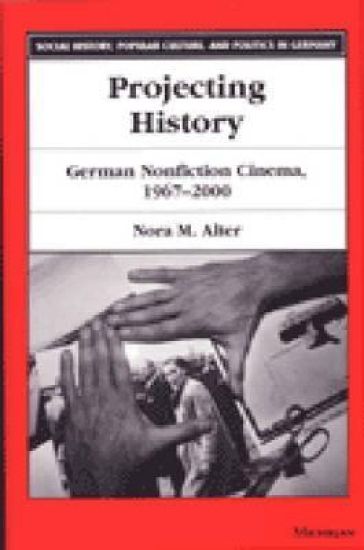
Between 1967 and 2000, film production in Germany underwent a number of significant transformations, including the birth and death of New German Cinema as well as the emergence of a new transnational cinematic practice. In Projecting History, Nora M. Alter explores the relationship between German cinematic practice and the student protests in both East and West Germany against the backdrop of the U.S. war in Vietnam in the sixties, the outbreak of terrorism in West Germany in the seventies, West Germany's rise as a significant global power in the eighties, and German reunification in the nineties.Although a central tendency of New German Cinema in the 1970s was to reduce the nation's history to the product of individuals, the films addressed in Projecting History focus not on individual protagonists, but on complex socioeconomic structures. The films, by Rainer Werner Fassbinder, Harun Farocki, Alexander Kluge, Ulrike Ottinger, Wim Wenders and others, address basic problems of German history, including its overall "peculiarity" within the European context, and, in particular, the specific ways in which the National Socialist legacy continues to haunt Germans.Nora M. Alter is Associate Professor of German, Film and Media Studies, and Women and Gender Studies at the University of Florida. A specialist in twentieth-century film, comparative literature, and cultural studies, Alter has been the recipient of a National Endowment for the Humanities Fellowship and a Howard Foundation Fellowship. She is also the author of Vietnam Protest Theatre: The Television War on Stage.
This is an advanced study of systems of propositional logic which offers a comprehensive account of a wide variety of logical systems and which encourages students to take a critical stance towards the subject. A great variety of systems and subsystems are defined and compared as regards their deductive power and relation to their model theory. Interesting features include a more refined treatment of modal logic and the special attention given to the weakenings of classical logic. Useful appendices provide a topical bibliography and review of basic set theory.