Standing as the most comprehensive reference on oral cancer reconstruction, this handbook serves as an all-encompassing compendium of surgical and cosmetic strategies for the reconstruction of bone, muscles, nerves, arteries, and anatomical structures of the oral cavity- covering wounds extending from the lips to the pharynx with detailed illustrations depicting the exact techniques utilized for functional and cosmetic repair and optimization of quality of life.
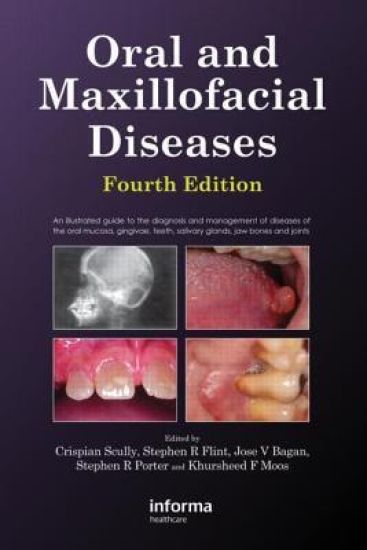
This latest edition of an esteemed reference is one of the most comprehensive illustrated books available of the oral and maxillofacial manifestations of diseases. The fourth edition has now been revised and further expanded to include problems with newer classes of drugs and systemic diseases.Topics include: Viral and Bacterial infections and MycosesNeoplasms and immune disordersEndocrine, nutritional, and metabolic diseasesDiseases of the blood and blood-forming organsMental disordersDiseases of the nervous, circulatory, and respiratory systemsDisorders of teeth and salivary disordersGastrointestinal disorders and diseases of the liverDiseases of the genito-urinary system and issues regarding pregnancy and menopauseDiseases of the skin and subcutaneous tissuesDiseases of connective tissue, bone, and jointsCongenital, developmental, and systemic disordersChemical, pharmaceutical, and physical agentsEffects of radiation Clearly organized by systems of the body, this volume is a cogent examination of the most significant pathologies with oral and maxillofacial ramifications
This book delivers an admirably comprehensive and rigorous analysis of African oral literatures and performance.Gathering insights from distinguished scholars in the field, the book provides a range of contemporary interdisciplinary perspectives in the study of oral literature and its transformations in everyday life, fiction, poetry, popular culture, and postcolonial politics. Topics discussed include folklore and folklife; oral performance and masculinities; intermediated orality, modern transformations, and globalisation; orality and mass media; spoken word and imaginative writing. The book also addresses research methodologies and the thematic and theoretical trajectories of scholars of African oral literatures, looking back to the trailblazing legacies of Ruth Finnegan, Harold Scheub, and Isidore Okpewho.Ambitious in scope and incisive in its analysis, this book will be of interest to students and scholars of African literatures and oral performance as well as to general readers interested in the dynamics of cultural production.
This book introduces 'performed' oral storytelling into the debate, using data from traditional and contemporary storytellers in French to explore the narrative tenses, the discourse-pragmatic effects of tense switching, as well as broader questions concerning the nature of oral discourse.
This book delivers an admirably comprehensive and rigorous analysis of African oral literatures and performance.Gathering insights from distinguished scholars in the field, the book provides a range of contemporary interdisciplinary perspectives in the study of oral literature and its transformations in everyday life, fiction, poetry, popular culture, and postcolonial politics. Topics discussed include folklore and folklife; oral performance and masculinities; intermediated orality, modern transformations, and globalisation; orality and mass media; spoken word and imaginative writing. The book also addresses research methodologies and the thematic and theoretical trajectories of scholars of African oral literatures, looking back to the trailblazing legacies of Ruth Finnegan, Harold Scheub, and Isidore Okpewho.Ambitious in scope and incisive in its analysis, this book will be of interest to students and scholars of African literatures and oral performance as well as to general readers interested in the dynamics of cultural production.
Oral History and Qualitative Methodologies: Educational Research for Social Justice examines oral history methodological processes involved in the doing of oral history as well as the theoretical, historical, and knowledge implications of using oral history for social justice projects. Oral history in qualitative research is an umbrella term that integrates history, life history, and testimony accounts. Oral history draws from various social science disciplines, including educational studies, history, indigenous studies, sociology, anthropology, ethnic studies, women’s studies, and youth studies. The book argues for the further development of a pedagogical culture related to oral history for educational research as part of the effort to diversify the range of human experiences educators, community members, and policy makers incorporate into knowledge-making and knowledge-using processes. Early career researchers, novice researchers, as well as experienced researchers are invited to join social science educational researchers in developing their own oral history projects using all of the tools, dispositions, and epistemologies affiliated with qualitative inquiry. The book will be of use in courses on qualitative research methods, history, anthropology, women’s studies, and education disciplines as well as by community organizations who want to use oral history to preserve the history of communities and advance social justice projects.
Oral History and Qualitative Methodologies: Educational Research for Social Justice examines oral history methodological processes involved in the doing of oral history as well as the theoretical, historical, and knowledge implications of using oral history for social justice projects. Oral history in qualitative research is an umbrella term that integrates history, life history, and testimony accounts. Oral history draws from various social science disciplines, including educational studies, history, indigenous studies, sociology, anthropology, ethnic studies, women’s studies, and youth studies. The book argues for the further development of a pedagogical culture related to oral history for educational research as part of the effort to diversify the range of human experiences educators, community members, and policy makers incorporate into knowledge-making and knowledge-using processes. Early career researchers, novice researchers, as well as experienced researchers are invited to join social science educational researchers in developing their own oral history projects using all of the tools, dispositions, and epistemologies affiliated with qualitative inquiry. The book will be of use in courses on qualitative research methods, history, anthropology, women’s studies, and education disciplines as well as by community organizations who want to use oral history to preserve the history of communities and advance social justice projects.
Northeast India is home to many distinct communities and is an area of incredible ethnic, religious, and linguistic diversity. This book explores the shared cultural heritage among the highland and river valley communities of Northeast India and mainland South East Asia, including South China, through oral traditions. It looks at these shared cultural traditions and suggests new ways of understanding and interpreting the heritage of Northeast India. Oral traditions often bring forward an unexpected twist in understanding historical and cultural links, and this volume explores this using local knowledge and innovative engagements with oral traditions in multiple ways, from folklore and language to performative traditions. The essays in this volume examine how communities build new meanings from old traditions, often as a recognition of the tension between conservation and creation, between individual interpretation and social consensus. They offer interesting parallels on how oral traditions behave in different socio-economic contexts, and also examine how oral traditions and memory interact with the digital world’s penetration in the remote areas. This volume will be useful for scholars and researchers of Northeast India, sociology, sociology of culture, cultural studies, ethnic studies, anthropology, folkloristics, and political sociology.
Oral Forms of Nigerian Autobiography and Life Stories discusses the oral life stories and poems that Africans, particularly the Yoruba people, have told about the self and community over hundreds of years.Disproving the Eurocentric argument that Africans didn’t produce stories about themselves, the author showcases a vibrant literary tradition of oral autobiographies in Africa and the diaspora. The oral auto/biographies studied in this book show that stories and poems about individuals and their communities have always existed in various African societies and they were used to record, teach, and document history, culture, tradition, identity, and resistance. Genres covered in the book include the panegyric, witches’ and wizards’ narratives, the epithalamium tradition, the hunter’s chant, and Udje of the Urhobo.Providing an important showcase for oral narrative traditions this book will be of interest to students, scholars, and researchers in African and Africana studies, literature and auto/biographical studies.
Oral Forms of Nigerian Autobiography and Life Stories discusses the oral life stories and poems that Africans, particularly the Yoruba people, have told about the self and community over hundreds of years.Disproving the Eurocentric argument that Africans didn’t produce stories about themselves, the author showcases a vibrant literary tradition of oral autobiographies in Africa and the diaspora. The oral auto/biographies studied in this book show that stories and poems about individuals and their communities have always existed in various African societies and they were used to record, teach, and document history, culture, tradition, identity, and resistance. Genres covered in the book include the panegyric, witches’ and wizards’ narratives, the epithalamium tradition, the hunter’s chant, and Udje of the Urhobo.Providing an important showcase for oral narrative traditions this book will be of interest to students, scholars, and researchers in African and Africana studies, literature and auto/biographical studies.
This book introduces business historians to oral history methodologies and approaches.Using four distinct oral history case studies to explore ideas of disruption and continuity in business history over the second half of the twentieth century, Robert Crawford and Matthew Bailey demonstrate how critical engagement with oral history approaches serves to enhance and enliven business history as well as its relationship with other historical fields. The focus on disruption is used to encompass a broad set of processes such as technological change, the impact of external forces, informal business networks, social constructions of gender, knowledge transfer, firm adaptability and cultural change. The use of oral histories to interpret responses to disruption in the past, and to explore the features characterising business continuity, provides an opportunity to consider the human dimensions, subjective experiences and personal insights of workplace, firm and industry change. It also sheds light on the ways that people and firms respond to disruptive forces through innovation and adaptation – both successfully and unsuccessfully.This succinct and accessible account is essential reading for business historians with little experience in using oral history, as well as those looking to gain deeper insights from their oral history data.
This book introduces business historians to oral history methodologies and approaches.Using four distinct oral history case studies to explore ideas of disruption and continuity in business history over the second half of the twentieth century, Robert Crawford and Matthew Bailey demonstrate how critical engagement with oral history approaches serves to enhance and enliven business history as well as its relationship with other historical fields. The focus on disruption is used to encompass a broad set of processes such as technological change, the impact of external forces, informal business networks, social constructions of gender, knowledge transfer, firm adaptability and cultural change. The use of oral histories to interpret responses to disruption in the past, and to explore the features characterising business continuity, provides an opportunity to consider the human dimensions, subjective experiences and personal insights of workplace, firm and industry change. It also sheds light on the ways that people and firms respond to disruptive forces through innovation and adaptation – both successfully and unsuccessfully.This succinct and accessible account is essential reading for business historians with little experience in using oral history, as well as those looking to gain deeper insights from their oral history data.
The study of oral traditions and verbal arts leads into an area of human culture to which anthropologists are increasingly turning their attention. Oral Traditions and the Verbal Arts provides up-to-date guidance on how to approach the study of oral form and their performances, treating both the practicalities of fieldwork and the methods by which oral texts and performances can be observed, collected or analysed. It also relates to those current controversies about the nature of performance and of 'text'.Designed as a practical and systematic introduction to the processes and problems of researching in this area, this is an invaluable guide for students, and lecturers of anthropology and cultural studies and also for general readers who are interested in enjoying oral literature for its own sake.
Oral History, Health and Welfare discusses the significance of oral history to the history of the development of health and welfare provisions. It includes discussion on:* the end of the workhouse * professional education and training of midwives * HIV and Aids * birth control * the role of the community pharmacist * pioneers of geriatric medicine * oral history and the history of learning disability.
This latest edition of an esteemed reference is one of the most comprehensive illustrated books available of the oral and maxillofacial manifestations of diseases. The fourth edition has now been revised and further expanded to include problems with newer classes of drugs and systemic diseases.Topics include: Viral and Bacterial infections and MycosesNeoplasms and immune disordersEndocrine, nutritional, and metabolic diseasesDiseases of the blood and blood-forming organsMental disordersDiseases of the nervous, circulatory, and respiratory systemsDisorders of teeth and salivary disordersGastrointestinal disorders and diseases of the liverDiseases of the genito-urinary system and issues regarding pregnancy and menopauseDiseases of the skin and subcutaneous tissuesDiseases of connective tissue, bone, and jointsCongenital, developmental, and systemic disordersChemical, pharmaceutical, and physical agentsEffects of radiationClearly organized by systems of the body, this volume is a cogent examination of the most significant pathologies with oral and maxillofacial ramifications
This field guide to oral history in Latin America addresses methodological, ethical, and interpretive issues arising from the region’s unique milieu. With careful consideration of the challenges of working in Latin America – including those of language, culture, performance, translation, and political instability – David Carey Jr. provides guidance for those conducting oral history research in the postcolonial world. In regions such as Latin America, where nations that have been subjected to violent colonial and neocolonial forces continue to strive for just and peaceful societies, decolonizing research and analysis is imperative. Carey deploys case studies and examples in ways that will resonate with anyone who is interested in oral history.
This field guide to oral history in Latin America addresses methodological, ethical, and interpretive issues arising from the region’s unique milieu. With careful consideration of the challenges of working in Latin America – including those of language, culture, performance, translation, and political instability – David Carey Jr. provides guidance for those conducting oral history research in the postcolonial world. In regions such as Latin America, where nations that have been subjected to violent colonial and neocolonial forces continue to strive for just and peaceful societies, decolonizing research and analysis is imperative. Carey deploys case studies and examples in ways that will resonate with anyone who is interested in oral history.
From 2011 to 2014, the Australian Generations Oral History Project recorded 300 interviews with Australians born between 1920 and 1989. The contributions to this book, a result of this project, reflect on the practice of oral history and how interviews can illuminate Australian social and cultural history. Three of the chapters consider oral history innovations: focusing on the potential for oral history in a digital age, the pioneering technologies that underpinned Australian Generations and the ethical issues posed by online digital oral history, and the challenges and opportunities for radio oral history. In addition, four chapters demonstrate how oral history interviews can be used as rich evidence for historical research: examining the interconnections between class, social equity, and higher education in post-war Australia; how life histories can transform understandings of mental ill-health; considering how oral history interviews with Australians of all ages confound stereotypical notions about generations; and investigating the ways in which family relationships mediate identities and how remembered places and objects provide points of anchor in a rapidly changing world. This book was originally published as a special issue of Australian Historical Studies.
Written in the proven Secrets® question-and-answer format, Oral and Maxillofacial Surgery Secrets, 4th Edition is an authoritative resource for the safe and effective practice of oral and maxillofacial surgery (OMFS) - and the ideal preparation tool for clinical rotations, exams, and board certification. Thoroughly revised and updated with the most current clinical information, this new edition provides you with practical tips, answers, and secrets from OMFS experts. Best of all, it fits in your lab coat pocket so you can consult it wherever you go! NEW! Chapters cover key topics, including the opioid epidemic and SUD/pain management; oral and maxillofacial surgery during the pandemic; capnoography and pulse oximetry; complications in OMFS; the business side of oral and maxillofacial surgery; ethics in OMFS; evidence-based surgery; and the application and interview process for oral and maxillofacial surgery NEW! Expert co-editors and contributors bring fresh perspectives and extensive clinical expertise to the content, making this an authoritative resource for the safe and effective practice of OMFS NEW! Enhanced art program features new color images that visually reinforce key concepts NEW! Enhanced eBook version, included with every new print purchase, allows digital access to all the text, figures, and references, with the ability to search, customize content, make notes and highlights, and have content read aloud UPDATED! Substantially revised chapters and expanded content provide the most current clinical information to keep you up to date on key advances in the practice of oral and maxillofacial surgery More than 2,300 questions and answers offer valuable pearls, tips, and memory aids from oral and maxillofacial surgery experts in a concise, easy-to-read format High-quality figures, tables, and boxes build on key concepts in the text Convenient size enables you to carry and consult this essential guide wherever you go