Kirjojen hintavertailu. Mukana 11 244 527 kirjaa ja 12 kauppaa.

Kirjahaku

Etsi kirjoja tekijän nimen, kirjan nimen tai ISBN:n perusteella.

416 tulosta hakusanalla Ovidia Yu

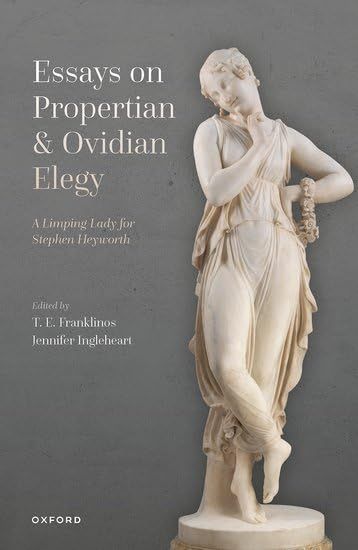
Essays on Propertian and Ovidian Elegy
This volume brings together eleven chapters on the genre of Latin elegy by leading scholars in the field. Latin elegy is typically thought to have flourished for a brief period at Rome between c. 40 BC and the early decades of the first century AD; it was the pre-eminent vehicle for writing about amatory matters in this period and among its principal exponents were Propertius and Ovid, whose works constitute the focus of this volume. Their poems and poetic collections were, however, by no means restricted to the themes of love, even if amatory concerns often surface at unexpected moments in texts that are not ostensibly concerned with love. Both poets were alive to their precursors' writings in elegiacs, and so aetiological themes and reflection on contemporary political circumstances form an integral part of their poetry. Such concerns are explored in some of the chapters on Propertius, on Ovid's Fasti and exile poetry, and also in a Renaissance elegy that looks closely to its literary heritage as it comments on the concerns of its day. Some contributions to this volume also shed new light on the typically elegiac conceit of separation, notably in amatory and exilic texts, while others look to conceptions of Roman identity and the relationship between the natural world and the cultural, political and literary spheres. All of the chapters share an interest in the close-reading of texts as the basis for drawing broader conclusions about these fascinating authors, their poetry, and their worlds.
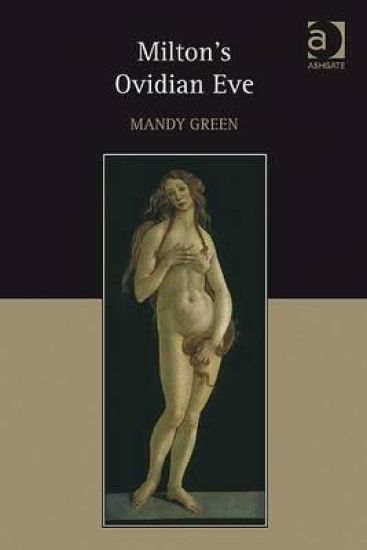
Milton's Ovidian Eve

Milton's Ovidian Eve

Mandy Green

Ashgate Publishing Limited
2009
sidottu
Milton's Ovidian Eve presents a fresh and thorough exploration of the classical allusions central to understanding Paradise Lost and to understanding Eve, one of Milton's most complex characters. Mandy Green demonstrates how Milton appropriates narrative structures, verbal echoes, and literary strategies from the Metamorphoses to create a subtle and evolving portrait of Eve. Each chapter examines a different aspect of Eve's mythological figurations. Green traces Eve's development through multiple critical lenses, influenced by theological, ecocritical, and feminist readings. Her analysis is gracefully situated between existing Milton scholarship and close textual readings, and is supported by learned references to seventeenth-century writing about women, the allegorical tradition of Ovidian commentary, hexameral literature, theological contexts and biblical iconography. This detailed scholarly treatment of Eve simultaneously illuminates our understanding of the character, establishes Milton's reading of Ovid as central to his poetic success, and provides a candid synthesis and reconciliation of earlier interpretations.
Tu Nombre Hebreo Ovadia: עובדיה
El nombre propio no s lo identifica a la persona, tambi n es el ente que conecta con el alma y con la propia esencia. Y en las letras del nombre hay mucha informaci n transcendental que es conveniente conocer.Pues el nombre de la persona contiene todas las caracter sticas esenciales de su personalidad. Tambi n la informaci n del car cter, los rasgos innatos que puede desarrollar, los puntos d biles, y todos sus dones. Ya que el nombre conecta con el alma, que es la esencia del ser humano. Y los sabios ancestrales conoc an esos secretos que permiten acceder a esa informaci n tan trascendental para poder aprehenderla y desarrollarla.Y esas ense anzas, que muchas de ellas fueron incluidas en los libros ancestrales en forma abreviada, fueron ampliadas y desarrolladas por el rabino Aharon Shlezinger, para acceder a la informaci n en forma m s amplia.En este libro hallar is informaci n relevante del nombre Ovadia a partir de lo que revelan sus letras.
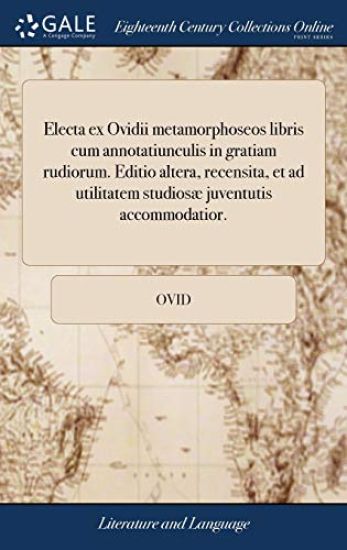
Electa ex Ovidii metamorphoseos libris cum annotatiunculis in gratiam rudiorum. Editio altera, recensita, et ad utilitatem studiosæ juventutis accommodatior.
The 18th century was a wealth of knowledge, exploration and rapidly growing technology and expanding record-keeping made possible by advances in the printing press. In its determination to preserve the century of revolution, Gale initiated a revolution of its own: digitization of epic proportions to preserve these invaluable works in the largest archive of its kind. Now for the first time these high-quality digital copies of original 18th century manuscripts are available in print, making them highly accessible to libraries, undergraduate students, and independent scholars.Western literary study flows out of eighteenth-century works by Alexander Pope, Daniel Defoe, Henry Fielding, Frances Burney, Denis Diderot, Johann Gottfried Herder, Johann Wolfgang von Goethe, and others. Experience the birth of the modern novel, or compare the development of language using dictionaries and grammar discourses. ++++The below data was compiled from various identification fields in the bibliographic record of this title. This data is provided as an additional tool in helping to insure edition identification: ++++Bodleian Library (Oxford)T185274The final 'o' in the word 'metamorphoseos' on the titlepage is an omega. With a final advertisement leaf. Horizontal chain lines.Eton excudit T. Pote, 1791. iv,332, 4]p.; 8
Spenser's Ovidian Poetics

Spenser's Ovidian Poetics

M. L. Stapleton

University of Delaware Press
2009
sidottu
No history of the longstanding critical tradition of exploring the Spenser-Ovid relationship has been written. In this book Professor Stapleton constructs such a critical history: the annotations of E. K. in The Shepheardes Calender (1579), the Enlightenment editions of The Faerie Queene, the philological mode of the Spenser Variorum (1932–57), and the recent, innovative work of Harry Berger and Colin Burrow. Aside from occasional articles, no truly comprehensive analysis of their kinship as love poets exists, either. The author explores Spenser’s emulation of Ovid’s amatory poetics. His humanist education trained him to find or construct analogues and etiological patterns in classical texts. Therefore, his early study of translation, intensive reading, and "versifying" as an interrelated process guaranteed a densely allusive, metamorphic Ovidian poetics as a natural result. The author's predecessors focus almost exclusively on the Metamorphoses as intertext, but do not often distinguish between early modern Latin editions of the poem and translations such as Arthur Golding's. Although Spenser read Ovid in his native language, during the quarter-century of his writing career, his countrymen such as Shakespeare, Donne, and Lodge imitate and recast the ancient author. During this English aetas Ovidiana, a translation industry arises simultaneously so that the entire corpus is rendered into English, from Golding's Metamorphoses (1567) to Wye Saltonstall's Ex Ponto (1638). Since the sixteenth century did not often read or hear a Roman poet in prose renditions, the author uses Renaissance poetical verse translations (with the Latin text) to explore Spenser's variegated use of Ovid: how he sounded as early modern English poetry. The introduction traces a history of the Spenser-Ovid site then accounts for the importance of imitatio and moralization to Spenser's developing poetics. The first four chapters analyze the influence of the Tristia, Heroides, and Metamorphoses on the 1590 Faerie Queene and The Shepheardes Calender. The concluding chapters demonstrate the presence of the Ars amatoria and Amores in Amoretti and Epithalamion and Fowre Hymnes. Spenser's Ovidian Poetics is intended to complement works such as Leonard Barkan's The Gods Made Flesh, Jonathan Bate's Shakespeare and Ovid, Raphael Lyne's Ovid's Changing Worlds: English Metamorphoses 1567–1632, and important essays by Colin Burrow. In the words of Paul Alpers, Professor Stapleton does not wish "to oppose the historical aesthetic" but to understand Spenser's "claim to relative autonomy" in his emulation and reconfiguration of his predecessors.
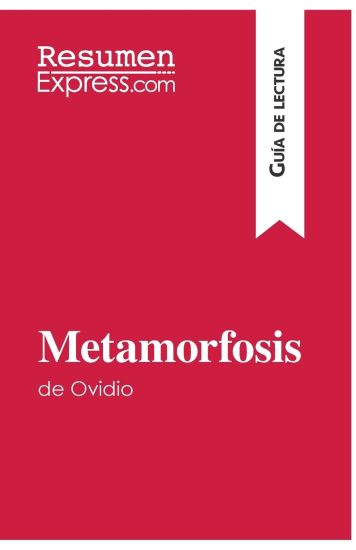
Metamorfosis de Ovidio (Guía de lectura)
ResumenExpress.com presenta y analiza en esta gu a de lectura Metamorfosis de Ovidio. En esta obra maestra de la literatura romana, Ovidio nos desvela los or genes del mundo y recorre toda la historia de la humanidad hasta su poca. Adem s, nos ofrece una clase magistral de mitolog a, y todo marcado con un toque de originalidad: no hay muertes ni desapariciones, solamente transformaciones. Ya no tienes que leer y resumir todo el libro, nosotros lo hemos hecho por ti Esta gu a incluye: - Un resumen completo del libro - Un estudio de los personajes - Las claves de lectura - Pistas para la reflexi n Por qu elegir ResumenExpress.com? Para aprender de forma r pida. Porque nuestras publicaciones est n escritas con un estilo claro y conciso que te ayudar a ganar tiempo y a entender las obras sin esfuerzo. Disponibles en formato impreso y digital, te acompa ar n en tu aventura literaria. Toma una dosis de literatura acelerada con ResumenExpress.com