This book, the first of its kind, examines how the phonology and grammar of the ancient Egyptian language changed over more than three thousand years of its history, from the first appearance of written documents, c.3250 BC, to the Coptic dialects of the second century AD and later. Part One discusses phonology, working backward from the vowels and consonants of Coptic to those that can be deduced for earlier stages of the language. Part Two is devoted to grammar, including both basic components such as nouns and the complex history of the verbal system. The book thus provides both a synchronic description of the five major historical stages of ancient Egyptian and a diachronic analysis of their development and relationship.
A companion volume to the third edition of the author's popular Middle Egyptian, this book contains eight literary works from the Middle Kingdom, the golden age of Middle Egyptian literature. Included are the compositions widely regarded as the pinnacle of Egyptian literary arts, by the Egyptians themselves as well as by modern readers. The works are presented in hieroglyphic transcription, transliteration and translation, accompanied by notes cross-referenced to the third edition of Middle Egyptian. These are designed to give students of Middle Egyptian access to original texts and the tools to practise and perfect their knowledge of the language. The principles of ancient Egyptian verse, in which all the works are written, are discussed, and the transliterations and translations are versified, giving students practice in this aspect of Egyptian literature as well. Consecutive translations are also included for reference and for readers more concerned with Middle Egyptian literature than language.
A companion volume to the third edition of the author's popular Middle Egyptian, this book contains eight literary works from the Middle Kingdom, the golden age of Middle Egyptian literature. Included are the compositions widely regarded as the pinnacle of Egyptian literary arts, by the Egyptians themselves as well as by modern readers. The works are presented in hieroglyphic transcription, transliteration and translation, accompanied by notes cross-referenced to the third edition of Middle Egyptian. These are designed to give students of Middle Egyptian access to original texts and the tools to practise and perfect their knowledge of the language. The principles of ancient Egyptian verse, in which all the works are written, are discussed, and the transliterations and translations are versified, giving students practice in this aspect of Egyptian literature as well. Consecutive translations are also included for reference and for readers more concerned with Middle Egyptian literature than language.
In Ancient Egyptian Phonology. James Allen studies the sounds of the language spoken by the ancient Egyptians through application of the most recent methodological advances for phonological reconstruction. Using the internal evidence of the language, he proceeds from individual vowels and consonants to the sound of actual ancient Egyptian texts. Allen also explores variants, alternants, and the development of sound in texts, and touches on external evidence from Afroasiatic cognate languages. The most up to date work on this topic, Ancient Egyptian Phonology is an essential resource for Egyptologists and will also be of interest to scholars and linguists of African and Semitic languages.
In Ancient Egyptian Phonology. James Allen studies the sounds of the language spoken by the ancient Egyptians through application of the most recent methodological advances for phonological reconstruction. Using the internal evidence of the language, he proceeds from individual vowels and consonants to the sound of actual ancient Egyptian texts. Allen also explores variants, alternants, and the development of sound in texts, and touches on external evidence from Afroasiatic cognate languages. The most up to date work on this topic, Ancient Egyptian Phonology is an essential resource for Egyptologists and will also be of interest to scholars and linguists of African and Semitic languages.
"Biophysical Chemistry is an outstanding book that delivers both fundamental and complex biophysical principles, along with an excellent overview of the current biophysical research areas, in a manner that makes it accessible for mathematically and non-mathematically inclined readers."Journal of Chemical Biology, February 2009 This text presents physical chemistry through the use of biological and biochemical topics, examples and applications to biochemistry. It lays out the necessary calculus in a step by step fashion for students who are less mathematically inclined, leading them through fundamental concepts, such as a quantum mechanical description of the hydrogen atom rather than simply stating outcomes. Techniques are presented with an emphasis on learning by analyzing real data. Presents physical chemistry through the use of biological and biochemical topics, examples and applications to biochemistryLays out the necessary calculus in a step by step fashion for students who are less mathematically inclinedPresents techniques with an emphasis on learning by analyzing real dataFeatures qualitative and quantitative problems at the end of each chapterAll art available for download online and on CD-ROM
A Grammar of the Ancient Egyptian Pyramid Texts is designed as a six-volume study of the earliest comprehensive corpus of ancient Egyptian texts, inscribed in the pyramids of five pharaohs of the Old Kingdom (ca. 2325–2150 BC) and several of their queens. The first volume, devoted to the earliest corpus, that of Unis, is based on a database that allows for detailed analysis of the orthography of the texts and every aspect of their grammar; it includes a complete hieroglyphic lexicon of the texts and a consecutive transcription and translation on facing pages. The grammatical analysis incorporates both the most recent advances in the understanding of Egyptian grammar and a few new interpretations published here for the first time.
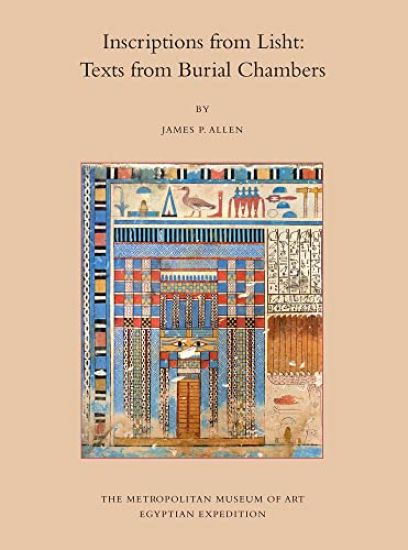
This volume incorporates all of the inscribed material associated with more than one hundred burial chambers and graves found at Lisht North and Lisht South, two sites excavated by the Egyptian Expedition of The Metropolitan Museum of Art from 1907 until 1934 and from 1984 to 1991. The inscribed objects found in or close to the burial chambers of Middle Kingdom officials and others provide an important addition to our appreciation of ancient Egyptian funerary culture. These include the coffins and sarcophagi as well as canopic chests and jars, mummy masks, ivory wands, miniature coffins, and shawabtis. Two kings, members of the royal family and many elite persons, as well as a community of middle-class people, found their resting place in and around the royal pyramids at Lisht, which served as the principal cemetery for Egypt's capital during the Middle Kingdom (ca. 2030-1650 B.C.). The material published here represents a sequence of seven chronological phases at Lisht that range from the reigns of the kings Amenemhat I and Senwosret I through the late Dynasty XIII and the Second Intermediate Period. The inscribed texts presented here are transliterated and translated, and are accompanied by extensive drawings that meticulously detail these texts, as well as annotations to some previously published material. The lavishly illustrated volume includes heretofore unpublished photographs from the Department of Egyptian Art's archives. Each object has been assigned a code referring to the primary individual associated with it, and its description includes transliterations of the deceased's name(s) and title(s). Because the location of an inscription on a coffin or sarcophagus is usually significant and because some of these include multiple texts, the author has designed a system of references that reflects the location on the object. Further, the catalogue of objects draws on Museum archives and also provides information concerning the findspot and current location of the object as well as relevant archival material and bibliography.
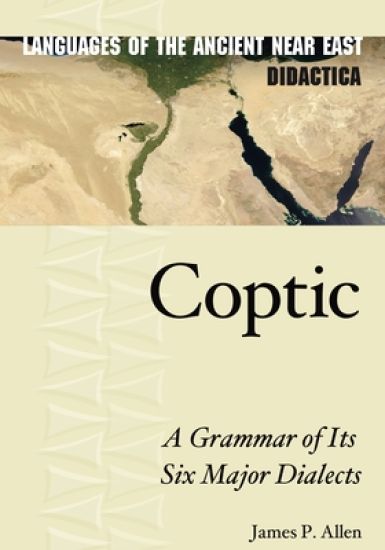
Coptic is the final stage of the ancient Egyptian language, written in an alphabet derived primarily from Greek instead of hieroglyphs. It borrows some vocabulary from ancient Greek, and it was used primarily for writing Christian scriptures and treatises. There is no uniform Coptic language, but rather six major dialects.Unlike previous grammars that focus on just two of the Coptic dialects, this volume, written by senior Egyptologist James P. Allen, describes the grammar of the language in each of the six major dialects. It also includes exercises with an answer key, a chrestomathy, and an accompanying dictionary, making it suitable for teaching or self-guided learning as well as general reference.
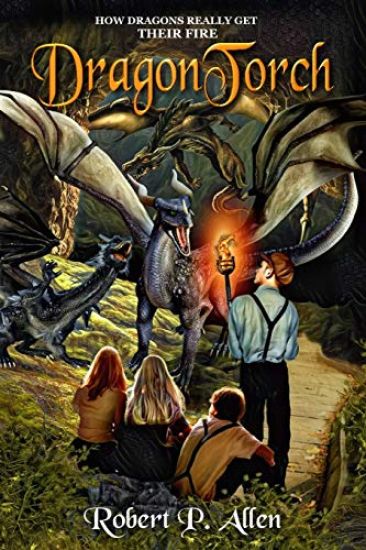
A cry for help from a friend who moved away suddenly arrives. The only clue was to gather information about dragons. Not sure what that means, Drake and Jan enlist the help of Billy, a local bully but expert on dragons, and off they go. The adventure begins by trying to locate Kate, and then getting there. On the way, they meet Pepper, a traveling merchant. They also cross paths with Francis, an old crusty caretaker and healer of any and all animals who provides them shelter when they need it most. Once they arrive, our four must sort out the problem and discover that the local mean guy has been using dragons to mine gold without understanding the risks, and the patience of the dragons is rapidly running out. Drake acquires the torch almost by chance and discovers some remarkable things about himself and dragons. Drake must help the town by devising a ceremony to give the dragons what they want. Will he be able to delay the dragons long enough to give the people of the town time to escape from the dragon's rage? Will the power of the DragonTorch overwhelm Drake? Will Drake be able to calm the anger of the dragons and escape alive?
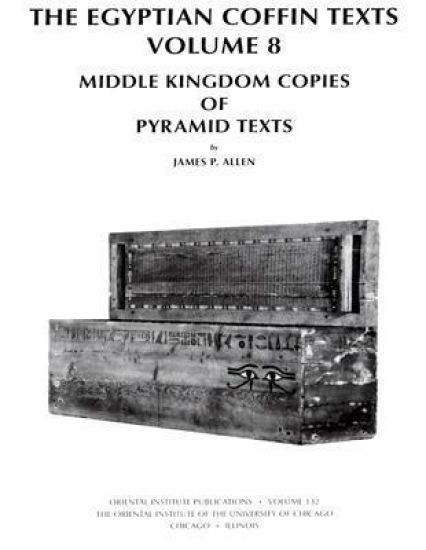
With the appearance of this volume, the Oriental Institute marks the true completion of the Egyptian Coffin Texts Project , an international cooperative program begun by James Henry Breasted and Alan H. Gardiner in 1922 and edited by Adriaan de Buck from 1935 until his death in 1959. When published in 1961, Volume 7, de Buck's final volume, was announced as "the last volume of the autographed Coffin Texts in the contemplated Project" (p. vii), although the Oriental Institute had never produced the autographed edition of Pyramid Texts within the Coffin Text corpus that had been explicitly promised in the introduction to Volume 1. Assumed to comprise a "distinct" and "foreign body" within the Coffin Texts, these long-lived spells were "reserved for later" (p. xi). After a lapse of forty years, a formally renewed Coffin Texts Project was authorised by the Director of the Oriental Institute in 2001, with the goal of completing the Oriental Institute's outstanding commitments. The translation volume once envisioned and entrusted to Tjalling Bruinsma had been rendered unnecessary by the publications of Robert O. Faulkner in 1969 ( Pyramid Texts ) and 1973-1978 ( Coffin Texts ), which serve to engage scholars and laymen alike. Glossaries, bibliographies, symposia, and detailed textual studies appeared, but the critical edition of Middle Kingdom Pyramid Texts remained unaccomplished. By careful examination of the Oriental Institute's original collation sheets and unpublished sources from Lisht, James P. Allen, after years of concentrated study, has now fulfilled the task admirably. It is hoped that the new edition stimulates discussion not only of the longevity of the Pyramid Texts, but of the nature of the Coffin Texts themselves. While Breasted insisted that the Pyramid Texts were "sharply distinguished" from the Coffin Texts, the frequent appearance of "Pyramid Texts" on coffins (among the narrowly defined "Coffin Texts") leaves this opinion open to question. Ironically, the one coffin acquired in Chicago by Breasted for study by the Coffin Texts Project (OIM 12072) contained only "Pyramid Texts" and was therefore excluded from the initial seven volumes. Now at last these Middle Kingdom texts on a coffin can be examined among the "Coffin Texts" (Robert K. Ritner, Director, The Egyptian Coffin Texts Project, 2001-05).
We examine the existence of inertial propulsion devices that must violate conservation of momentum (by definition), and then show just where this principle can fail even for cases where the device's moving parts move too slowly to involve Eric Laithwaite's "mass transfer" or his "variable inertial mass". This the fifth edition.
This book will summarize what we know about technology and inequality across disciplines, and seek out new ways to analyze this relationship based on technology and business practices, with the objective of restoring digital technology as an engine of opportunity. Besides the unique focus on the role of technology in inequality, the book will have a unifying theme of tracing wealth creation and wealth capture in the technology sector, and relating specific practices—what technology companies actually do—to larger shifts in wealth and power. A clear conceptual framework will be used to analyze key industry case studies: search engines, social media, and the ‘sharing’ economy.