Kirjojen hintavertailu. Mukana 11 342 296 kirjaa ja 12 kauppaa.

Kirjahaku

Etsi kirjoja tekijän nimen, kirjan nimen tai ISBN:n perusteella.

677 tulosta hakusanalla Pamental Jason

Parental Incarceration
Parental Incarceration makes available personal stories by adults who have had the childhood experience of parental incarceration. These stories help readers better understand the complex circumstances that influence these children’s health and development, as well as their high risk for intergenerational crime and incarceration. Denise Johnston examines her own children’s experience of her incarceration within the context of what the research and her 30 years of practice with prisoners and their children has taught her, arguing that it is imperative to attempt to understand parental incarceration within a developmental framework. Megan Sullivan, a scholar in the Humanities, examines the effects of her father’s incarceration on her family, and underscores the importance of the reentry process for families. The number of arrested, jailed, and imprisoned persons in the United States has increased since 1960, most dramatically between 1985 and 2000. As the majority of these incarcerated persons are parents, the number of minor children with an incarcerated parent has increased alongside, peaking at an estimated 2.9 million in 2006. The impact of the experience of parental incarceration has garnered attention by researchers, but to date attention has been focused on the period when parents are actually in jail or prison. This work goes beyond that to examine the developmental impact of children’s experiences that extend long beyond that timeframe. A valuable resource for students in corrections, human services, social work, counseling, and related courses, as well as practitioners, program/agency administrators, policymakers, advocates, and others involved with families of the incarcerated, this book is testimony that the consequences of mass incarceration reach far beyond just the offender.
Parental Incarceration
Parental Incarceration makes available personal stories by adults who have had the childhood experience of parental incarceration. These stories help readers better understand the complex circumstances that influence these children’s health and development, as well as their high risk for intergenerational crime and incarceration. Denise Johnston examines her own children’s experience of her incarceration within the context of what the research and her 30 years of practice with prisoners and their children has taught her, arguing that it is imperative to attempt to understand parental incarceration within a developmental framework. Megan Sullivan, a scholar in the Humanities, examines the effects of her father’s incarceration on her family, and underscores the importance of the reentry process for families. The number of arrested, jailed, and imprisoned persons in the United States has increased since 1960, most dramatically between 1985 and 2000. As the majority of these incarcerated persons are parents, the number of minor children with an incarcerated parent has increased alongside, peaking at an estimated 2.9 million in 2006. The impact of the experience of parental incarceration has garnered attention by researchers, but to date attention has been focused on the period when parents are actually in jail or prison. This work goes beyond that to examine the developmental impact of children’s experiences that extend long beyond that timeframe. A valuable resource for students in corrections, human services, social work, counseling, and related courses, as well as practitioners, program/agency administrators, policymakers, advocates, and others involved with families of the incarcerated, this book is testimony that the consequences of mass incarceration reach far beyond just the offender.
Parental Obligations and Bioethics

Parental Obligations and Bioethics

Bernard G. Prusak

Routledge
2016
nidottu
This book examines the question of what parental obligations procreators incur by bringing children into being. Prusak argues that parents, as procreators, have obligations regarding future children that constrain the liberty of would-be parents to do as they wish. Moreover, these obligations go beyond simply respecting a child’s rights. He addresses in turn the ethics of adoption, child support, gamete donation, surrogacy, prenatal genetic enhancement, and public responsibility for children.
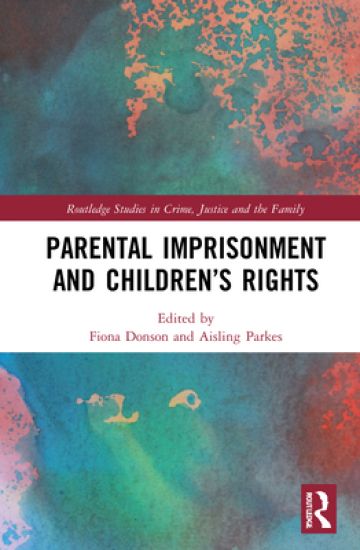
Parental Imprisonment and Children’s Rights
This book brings together internationally renowned academics and professionals from a variety of disciplines who, in a variety of ways, seek to understand the legal, conceptual and practical consequences of parental imprisonment through a children’s rights lens. Children whose parents have been incarcerated are often referred to as "invisible victims of crime and the penal system." It is well accepted that the imprisonment of a parent, even for a short period of time, not only negatively affects the lives of children but it can also result in a gross violation of their fundamental human rights, such as the right of access to their parent and the right to have an input into decision-making processes affecting them, the outcomes of which will without doubt affect the life of the child concerned. This collection foregrounds the voice of these children as it explores transdisciplinary boundaries and examines the practice and development of the rights of both children and their families within the wider dynamic of criminal justice and penology practice. The text is divided into three parts which are dedicated to 1) hearing the voices of children with parents in prison, 2) understanding to what extent children’s rights informs prison policy, and 3) demonstrating how law in the form of children’s rights can help frame both court sentencing and prison practice in a way that minimises the harm that contact with the prison system can cause. The research drawn upon in this book has been conducted in a number of European countries and demonstrates both good and bad practice as far as the implementation of children’s rights is concerned in the context of parental incarceration. An accessible and compelling read, this book will appeal to students and scholars of law, children’s rights, criminology, sociology, social work, psychology, penology and all those interested in, and working towards, protecting the rights of children who have a parent in prison.
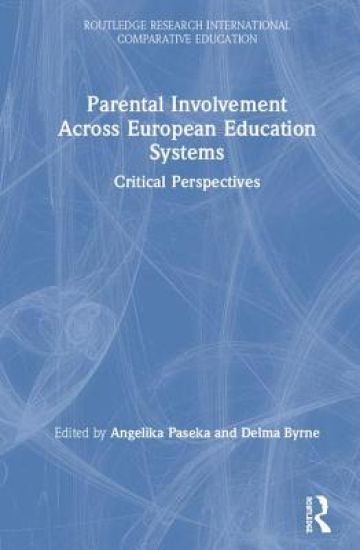
Parental Involvement Across European Education Systems
This book addresses central questions regarding parental involvement across European educational systems; exploring the commonalities and differences across European countries and the extent to which current policy and practice pertaining to parental involvement is inclusive of diversity.Adopting an interdisciplinary approach that draws from the fields of education, sociology and psychology, it presents a description of the policy context and empirical research on critical perspectives relating to parental involvement. Comprising a rich varied cross-section of national experiences from eleven European countries and the contexts surrounding them, case studies provide insights into parental involvement across Europe and identify challenges in the field.This volume’s in-depth approach and comprehensive interrogation of parental involvement across European education systems make it an ideal resource for parents, teachers and academics, researchers and post-graduate students in the fields of education policy and comparative education, as well as teacher educators and policy makers.
Parental Vigilant Care

Parental Vigilant Care

Haim Omer

Routledge
2017
sidottu
This volume presents the concept of vigilant care as a protective and non-intrusive parental attitude to risky behaviors of children and adolescents. The effective component in vigilant care is not control, but parental presence. Vigilant care is a flexible attitude in which parents shift between levels of open attention, focused attention, and protective action, according to the alarm signals they detect. The author presents a detailed theoretical, empirical, and clinical rationale for the model that deals with potentially problematic parental attitudes or parent-child processes such as overparenting, psychological control, disregard of legitimate personal domains or of the child's need for self-determination, parent-child mutual distancing, and escalation.
Parental Vigilant Care

Parental Vigilant Care

Haim Omer

Routledge
2017
nidottu
This volume presents the concept of vigilant care as a protective and non-intrusive parental attitude to risky behaviors of children and adolescents. The effective component in vigilant care is not control, but parental presence. Vigilant care is a flexible attitude in which parents shift between levels of open attention, focused attention, and protective action, according to the alarm signals they detect. The author presents a detailed theoretical, empirical, and clinical rationale for the model that deals with potentially problematic parental attitudes or parent-child processes such as overparenting, psychological control, disregard of legitimate personal domains or of the child's need for self-determination, parent-child mutual distancing, and escalation.
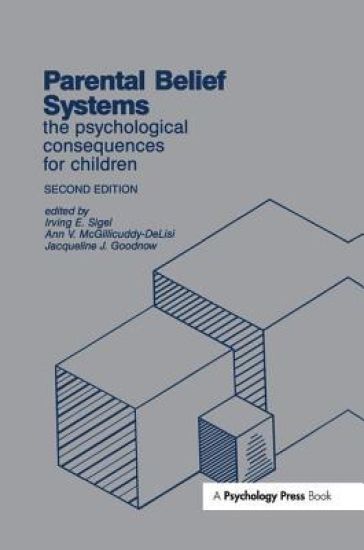
Parental Belief Systems

Parental Belief Systems

Psychology Press Ltd
2016
nidottu
Research on the topic of parent beliefs, or parent cognition, has increased tremendously since the original publication of this volume in 1985. For this revised second edition, the editors sought to reflect some of the new directions that research on parent cognition has taken. By offering a greater variety of topics, it gives evidence of the intellectual concerns that now engage researchers in the field and testifies to the expanding scope of their interests. Although a unique collection because it reflects the diversity that exists among major researchers in the field, it evinces a common theme -- that the ideas parents have regarding their children and themselves as parents have an impact on their actions. This emphasis on parents' ideas shifts the focus on sources of family influence to ideas or beliefs as determinants of family interactions. The implication of this way of thinking for practitioners is that it suggests the shift to ideas and thoughts from behavior and attitudes.
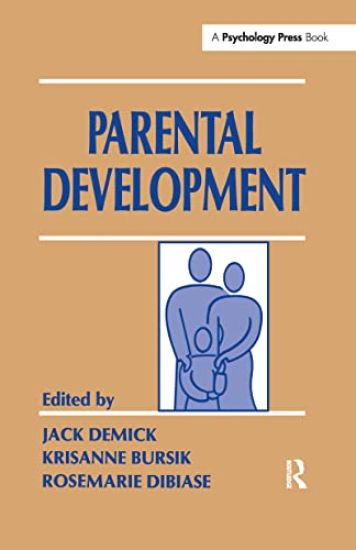
Parental Development

Parental Development

Psychology Press Ltd
2016
nidottu
This volume seeks to identify and define the parameters of a relatively new problem area -- parental development. Drawing on the grand developmental theories of Sigmund Freud, Lawrence Kohlberg, Jean Piaget, Lev Vygotsky, Heinz Werner, and their descendants, this book has the potential to generate an area of common concern for those interested in either child/adolescent or adult development through the novel application of developmental principles and considerations to the ecological context of parenting. To that end, this volume brings together theory and research from the subfields of adult and child/adolescent development. Chapter authors place the problem area of parental development in theoretical context and examine selected psychological part-processes implicated by focusing on cognitive and psychosocial development. The authors then deal with a range of issues that are perhaps less traditional and/or more in line with the complex character of everyday life. That is, they utilize either relatively novel comparison groups or treat parents at later stages of development rather than those in young adulthood as is often the case. Finally, the authors uncover both similarities and differences among their theoretical perspectives with an eye toward delineating some possible future research directions.
Parental Super Vision

Parental Super Vision

Vinson Ballard

Lulu.com
2014
nidottu
For a large part of my career, learning and witnesses, many parents have asked me for some degree of direction to help them deal with some of these challenges faced when dealing with their youth. In that momentum, this work is dedicated to that very focus and genuinely attempts to bring that reality to light for the best results. Furthermore, this work is independent of any entity that I may have previously interacted with, but it is simply my separate commentary and a genuine effort to assist all individuals who are willing to grasp the notion of favorable parental supervision.
Parental Involvement - the Efforts of an Evolving School Community
Parents are the child's first teacher. They set a foundation for learning that serves their child throughout their life. As children enter formal education settings-some as early as 3 years old, they come with a wealth of experiences and knowledge about how the world works and how to negotiate and navigate their current contexts. Parents and teacher share a mutual interest to make schools a warm and inviting place to help "our" child achieve success and maximize his/her fullest potential.
Parental Control

Parental Control

Titania Jordan

JOHN WILEY SONS INC
2025
sidottu
Practical strategies and tips to help raise and teach children in a digital-first world In Parental Control: A Guide to Raising Balanced Kids in the Digital Era, Titania Jordan, a renowned internet and social media safety specialist, tackles the urgent dilemmas of modern parenting head-on. As technology increasingly engulfs the lives of our children, this book emerges as a beacon for those looking to guide, protect, and connect with them in meaningful ways. Navigating the complex digital landscape, Jordan delves into the effects of social media and the internet on our kids. She uncovers the challenges of balancing screen time with real-life interactions and the erosion of offline social skills due to digital immersion. Yet, it's not all dire—Jordan's expert insights offer a pathway to turning potential digital pitfalls into educational opportunities. The book will help you: Learn how to educate and empower the next generation to navigate the internet safely and responsiblyDiscover actionable advice on setting boundaries, fostering offline interactions, and promoting healthy digital habits.Benefit from the latest internet safety data, trends, and tips to keep your children protected in the digital age Perfect for parents, educators, and caregivers, Parental Control is more than just a book. It's a roadmap to raising well-adjusted children in a technology-driven world. This guide provides the tools you need to ensure technology complements the lives of those you care about, rather than consuming them. If you're looking to navigate the challenges of modern-day parenting with confidence and create a safe, balanced digital environment for your children, then this book is for you.
Parental Support, Psychological Control and Behavioral Control

Parental Support, Psychological Control and Behavioral Control

Wiley-Blackwell (an imprint of John Wiley Sons Ltd)
2006
nidottu
What can parents, and others interested in adolescents, do to facilitate their healthy development? In many decades of work, researchers have continually identified three central dimensions of parenting: support, behavioral control, and psychological control, all of which have been associated consistently with either positive or negative indicators of adolescent functioning. Notwithstanding its volume, the research has been non specific as to the effects of these dimensions and has otherwise been limited by a predominant concentration on western families. This monograph reported on research that addressed these limitations by testing specific effects of the parenting dimensions and by doing with multiple analytic techniques on data from adolescents in 11 cultures across the world. In al sites, it was found that support was associated with higher adolescent social competence and lower depression; psychological control with higher depression and antisocial behavior; and behavioral control with lower antisocial behavior. Recommendations included considering that these dimensions are the parental contribution to relationship types or socialization conditions that, when achieved, (with parents or other significant person) are responsible for the effects.