Kirjojen hintavertailu. Mukana 11 244 527 kirjaa ja 12 kauppaa.

Kirjahaku

Etsi kirjoja tekijän nimen, kirjan nimen tai ISBN:n perusteella.

1000 tulosta hakusanalla Patrick Gildea

Patrick & Victoria

Patrick & Victoria

J J Flanagan

Livesey Books
2008
pokkari
Patrick and Victoria are two young people who through a chance meeting fall in love. Although their passion for each other develops an intensity that happens only once in a lifetime, they are faced with seemingly insurmountable difficulties beyond their control. Victoria is the daughter of one of the wealthiest and most powerful families of the Ascendancy, the Protestant English rulers of Ireland. Patrick, though well-educated, is a local fisherman's son from Ennismore, an island off County Clare's harsh but beautiful Atlantic coast. To repay a kindness Patrick is given a job at Ballinahich Castle, the home of Victoria's family, its wealth and splendor a stark contrast to the one-roomed island mud cottage he grew up in. Their love forbidden, their families divided by generations of hate, Patrick and Victoria are wrenched apart on opposite sides of the deadly and increasingly bitter conflict of the dawning of the Irish Republican Army. For more visit www.jj-flanagan.com
Patrick Henry: Patriot, Orator and Anti-Federalist: Non-Fiction Common Core Readings
The non-fiction Common Core aligned readings and primary source Document Pamphlet series: Discovering America is designed to help students read for information and think critically while forming their own ideas. Students and adults alike will discover history by looking at artifacts constructed by the people who shaped the United States of America. Perfect for any classroom, from Fifth Grade to college, this series engages students and prompts them to think for themselves, question, reflect and gain a deeper understanding of history. In this edition, students discover the prolific Patrick Henry -- who some historians credit as firing the first figurative shot of the Revolution in his fiery "Give Me Liberty or Give Me Death" speech. Read select letters written by Henry, engage in his oratory, learn about his life and decide for yourself the impetus behind a man called one of the greatest Patriots in the history of America.
Patrick McGrath

Patrick McGrath

Sue Zlosnik

University of Wales Press
2011
nidottu
Patrick McGrath is one of Britain's foremost contemporary novelists but very little has been written about his work to date. This new book offers readings of McGrath's fiction informed by recent scholarship and evaluates his creative contribution to the continuation of the Gothic tradition into the twenty-first century.
Passages from the Diary of General Patrick Gordon
This is a volume of selected passages from the extensive diary of General Gordon: the soldier of fortune, whose memoirs are now introduced to the SPALDING CLUB, had been but a short while dead when public attention was turned to the eight or ten thick quartos, in which, for forty years, he had recorded, day by day. the incidents of his eventful life. So early as 1724, a translation of the Journal from its original English into Russian. In printing these selections, an attempt has been made so far to connect them together, by an outline of Gordon's life in the interval, with occasional quotations from some of the more memorable pages of his Journal, such as those in which he notes the beginnings of his intimacy with Peter the Great or chronicles the prompt and vigorous acts by which he quelled the revolt of the Strelitzes.
Patrick Blackett
This edited volume comprises a series of essays about Patrick Maynard Stewart Blackett, one of the greatest scientists of the 20th century, as well as a prominent figure in the Royal Navy and British politics.
Patrick Henry-Onslow Debate
The disputed election of 1824 was one of the most important presidential elections in American history. After an indecisive electoral college vote, the House of Representatives selected John Quincy Adams as president over the more popular war hero, Andrew Jackson. As a result, John C. Calhoun ended up serving as vice-president under Adams. Neither man was comfortable in this situation as they were political rivals who held philosophically divergent views of American constitutional governance. The emerging personal and philosophical dispute between President Adams and Vice-President Calhoun eventually prompted the two men (and Adams’s political supporters) to take up their pens, using the pseudonyms “Patrick Henry” and “Onslow,” in a public debate over the nature of power and liberty in a constitutional republic. The great debate thus arrayed Calhoun’s Jeffersonian republican vision of constitutionally restrained power and local autonomy against Adams’s neo-Federalist republican vision which called for the positive use of inherent power—a view that would become increasingly compelling to future generations of Americans. In the course of this exchange some of the most salient issues within American politics and liberty are debated, including the nature of political order, democracy, and the diffusion of political power. The level of erudition and insight is remarkable. The “Patrick Henry”/”Onslow” Debate deserves a wider popular and scholarly audience.
Patrick Moore

Patrick Moore

Patrick Moore

The History Press Ltd
2005
nidottu
Throughout his distinguised career, Patrick Moore has, without a doubt, done more to raise the profile of astronomy amoung the British public than any other figure in the scientific world. As the presenter of The Sky at Night on BBC television for nearly 50 years he was honoured with an OBE in 1968 and a CBE in 1988. In 2001 he was knighted 'for services to the popularisation of science and to broadcasting'. The BBC first aired The Sky at Night in April 1957 and it is now in the record books as the world's longest running TV series with the same presenter. He is also the author of over 60 books on astronomy, all of which, including his autobiography have been written on his 1908 typewriter. Partly thanks to his larger-than-life personality, Sir Patrick's own fame extends far beyond astronomical circles. A self-taught musician and talented composer, he has displayed his xylophone-playing skills at the Royal Variety Performance and as a passionate supporter of cricket, he has played for the Lord's Taverners charity cricket team.
Patrick Bronte

Patrick Bronte

Dudley Green; Rowan Williams

The History Press Ltd
2010
nidottu
But he was a fascinating man in his own right and not nearly such an unsympathetic character as Elizabeth Gaskell's "Life of Charlotte Bronte" would have us believe. Born into poverty in Ireland, he won a scholarship to St John's College, Cambridge, and was ordained into the Church of England. He was perpetual curate of Haworth in Yorkshire for forty-one years, bringing up four children, founding a school and campaigning for a proper water supply. Although often portrayed as a somewhat fobidding figure, he was an opponent of capital punishment and the Poor Law Amendment Act, a supporter of limited Catholic emancipation and a writer of poetry. This is the first serious biography of Patrick Bronte for more than forty years.
Patrick O'Brian's Bodies at Sea

Patrick O'Brian's Bodies at Sea

Michael Leigh Sinowitz

McFarland Co Inc
2014
pokkari
An exploration of the complex roles that bodies--both literally and figuratively--play in the 21 volume Aubrey-Maturin series reveals much about the novels' many meditations on mind and body. Beginning with a consideration of genre norms and the bodies of the novels' main characters, the book's focus shifts to the ways the series offers interconnections between the human body and history. More literal considerations of the body examine O'Brian's depictions of drug use, particularly the opium addiction that afflicts Stephen Maturin, and human sexuality in its many guises. The work then focuses on Desolation Island, the fifth novel in the series, in light of the discussions above but also in terms of political and psychological tropes that draw upon the relationship of mind and body. Questions are examined about the relationship of reader to author, and what sustains such a long narrative and what continues to bring a reader back again and again.
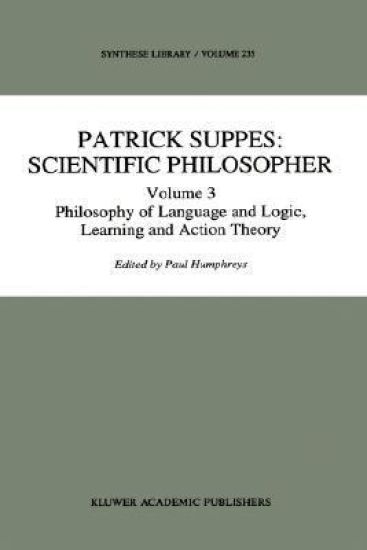
Patrick Suppes: Scientific Philosopher
Patrick Suppes is a philosopher and scientist whose contributions range over probability and statistics, mathematical and experimental psychology, the foundations of physics, education theory, the philosophy of language, measurement theory, and the philosophy of science. He has also been a pioneer in the area of computer assisted instruction. In each of these areas, Suppes has provided seminal ideas that in some cases led to shaping the direction of research in the field. The papers contained in this collection were commissioned with the mandate of advancing research in their respective fields rather than retrospectively surveying the contributions that Suppes himself has made. The authors form an interesting mixture of researchers in both formal philosophy of science and science itself all of whom have been inspired by his ideas. To maintain the spirit of constructive dialogue that characterizes Suppes's intellectual style, he has written individual responses to each article. In Volume 1: Probability and Probabilistic Causality, nineteen distinguished philosophers and scientists focus their attention on probabilistic issues. In Part I the contributors explore axiomatic representations of probability theory including qualitative and interval valued probabilities as well as traditional point valued probabilities. Belief structures and the dynamics of belief are also treated in detail. In Part II the rapidly growing field of probabilistic causation is assessed from both formal and empirical viewpoints. For probability theorists, statisticians, economists, philosophers of science, psychologists and those interested in the foundations of mathematical social science. In Volume 2: Philosophy of Physics, Theory Structure, and Measurement Theory, fifteen distinguished philosophers and scientists cover a wide variety of topics. Part III covers issues in quantum theory, geometry, classical mechanics, and computational physics. Part IV explores Suppes's well known set-theoretic account of scientific theories which has served him well throughout his career. Suppes's contributions to measurement theory have been widely used in mathematical psychology and elsewhere, and this material is the subject of Part V. For physicists, logicians, workers in mathematical social sicence, and philosophers of science. In Volume 3: Philosophy of Language and Logic, Learning and Action Theory, fourteen distinguished philosophers and scientists explore issues in the philosophy of language, logic, and philosophical psychology. Suppes's suggestions that quantum theory requires a rethinking of classical logic form a particularly sharp account of that controversial thesis, and Part VI deals with this issue together with topics in the philosophy of language and logic, including relational grammars and anaphora. Part VII deals with issues in psychology, action theory, and robotics, while Part VIII concludes with a general survey of Suppes's views in the philosophy of science. A comprehensive chronological and topical bibliography of Suppes's writings is included in this volume. For philosophers of language, theoretical linguists, logicians, workers in mathematical social sciences, and philosophers of science.
Patrick Suppes: Scientific Philosopher
Patrick Suppes is a philosopher and scientist whose contributions range over probability and statistics, mathematical and experimental psychology, the foundations of physics, education theory, the philosophy of language, measurement theory, and the philosophy of science. He has also been a pioneer in the area of computer assisted instruction. In each of these areas, Suppes has provided seminal ideas that in some cases led to shaping the direction of research in the field. The papers contained in this collection were commissioned with the mandate of advancing research in their respective fields rather than retrospectively surveying the contributions that Suppes himself has made. The authors form an interesting mixture of researchers in both formal philosophy of science and science itself all of whom have been inspired by his ideas. To maintain the spirit of constructive dialogue that characterizes Suppes's intellectual style, he has written individual responses to each article. In Volume 1: Probability and Probabilistic Causality, nineteen distinguished philosophers and scientists focus their attention on probabilistic issues. In Part I the contributors explore axiomatic representations of probability theory including qualitative and interval valued probabilities as well as traditional point valued probabilities. Belief structures and the dynamics of belief are also treated in detail. In Part II the rapidly growing field of probabilistic causation is assessed from both formal and empirical viewpoints. For probability theorists, statisticians, economists, philosophers of science, psychologists and those interested in the foundations of mathematical social science. In Volume 2: Philosophy of Physics, Theory Structure, and Measurement Theory, fifteen distinguished philosophers and scientists cover a wide variety of topics. Part III covers issues in quantum theory, geometry, classical mechanics, and computational physics. Part IV explores Suppes's well known set-theoretic account of scientific theories which has served him well throughout his career. Suppes's contributions to measurement theory have been widely used in mathematical psychology and elsewhere, and this material is the subject of Part V. For physicists, logicians, workers in mathematical social sicence, and philosophers of science. In Volume 3: Philosophy of Language and Logic, Learning and Action Theory, fourteen distinguished philosophers and scientists explore issues in the philosophy of language, logic, and philosophical psychology. Suppes's suggestions that quantum theory requires a rethinking of classical logic form a particularly sharp account of that controversial thesis, and Part VI deals with this issue together with topics in the philosophy of language and logic, including relational grammars and anaphora. Part VII deals with issues in psychology, action theory, and robotics, while Part VIII concludes with a general survey of Suppes's views in the philosophy of science. A comprehensive chronological and topical bibliography of Suppes's writings is included in this volume. For philosophers of language, theoretical linguists, logicians, workers in mathematical social sciences, and philosophers of science.
Patrick Suppes: Scientific Philosopher
Patrick Suppes is a philosopher and scientist whose contributions range over probability and statistics, mathematical and experimental psychology, the foundations of physics, education theory, the philosophy of language, measurement theory, and the philosophy of science. He has also been a pioneer in the area of computer assisted instruction. In each of these areas, Suppes has provided seminal ideas that in some cases led to shaping the direction of research in the field. The papers contained in this collection were commissioned with the mandate of advancing research in their respective fields rather than retrospectively surveying the contributions that Suppes himself has made. The authors form an interesting mixture of researchers in both formal philosophy of science and science itself all of whom have been inspired by his ideas. To maintain the spirit of constructive dialogue that characterizes Suppes's intellectual style, he has written individual responses to each article. In Volume 1: Probability and Probabilistic Causality, nineteen distinguished philosophers and scientists focus their attention on probabilistic issues. In Part I the contributors explore axiomatic representations of probability theory including qualitative and interval valued probabilities as well as traditional point valued probabilities. Belief structures and the dynamics of belief are also treated in detail. In Part II the rapidly growing field of probabilistic causation is assessed from both formal and empirical viewpoints. For probability theorists, statisticians, economists, philosophers of science, psychologists and those interested in the foundations of mathematical social science. In Volume 2: Philosophy of Physics, Theory Structure, and Measurement Theory, fifteen distinguished philosophers and scientists cover a wide variety of topics. Part III covers issues in quantum theory, geometry, classical mechanics, and computational physics. Part IV explores Suppes's well known set-theoretic account of scientific theories which has served him well throughout his career. Suppes's contributions to measurement theory have been widely used in mathematical psychology and elsewhere, and this material is the subject of Part V. For physicists, logicians, workers in mathematical social sicence, and philosophers of science. In Volume 3: Philosophy of Language and Logic, Learning and Action Theory, fourteen distinguished philosophers and scientists explore issues in the philosophy of language, logic, and philosophical psychology. Suppes's suggestions that quantum theory requires a rethinking of classical logic form a particularly sharp account of that controversial thesis, and Part VI deals with this issue together with topics in the philosophy of language and logic, including relational grammars and anaphora. Part VII deals with issues in psychology, action theory, and robotics, while Part VIII concludes with a general survey of Suppes's views in the philosophy of science. A comprehensive chronological and topical bibliography of Suppes's writings is included in this volume. For philosophers of language, theoretical linguists, logicians, workers in mathematical social sciences, and philosophers of science.
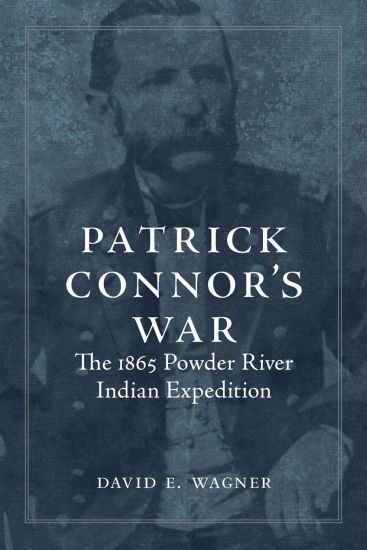
Patrick Connor's War

Patrick Connor's War

David E. Wagner

UNIVERSITY OF OKLAHOMA PRESS
2023
nidottu
The summer of 1865 marked the transition from the Civil War to Indian war on the western plains. With the rest of the country's attention still focused on the East, the U.S. Army began an often forgotten campaign against the Sioux, Cheyenne, and Arapaho. Led by Gen. Patrick Connor, the Powder River Indian Expedition into Wyoming sought to punish tribes for raids earlier that year. Patrick Connor's War describes the troops' movement into hostile territory while struggling with bad weather, supply shortages, and communication problems.David E. Wagner's carefully assembled account carries readers along the trail of Connor's men and allows soldiers to give firsthand impressions of the land and campaign. The author draws on journals, letters, and reports—especially the James H. Kidd Papers, a copy of Connor's expedition report previously believed burned, and the newly discovered C. M. Lee diary—to reconstruct a day-by-day chronology that finds the men trudging, sometimes barefoot and half starved, over unforgiving terrain. The thrill and danger of buffalo hunts and skirmishes with Indians punctuated an arduous trek across the northern plains.Copious maps tie narrative to topography by plotting Connor's route and the paths of the units under him. Also included is a detailed account of the civilian road-building expedition of James Sawyers, whose fate became intertwined with the Powder River expedition. Two dozen illustrations and biographical sketches of main players round out the work.This first major campaign of the post–Civil War Indian wars has been largely overlooked by historians—but should be no longer. Patrick Connor's War breaks new ground by bringing the expedition to life in fascinating detail that will satisfy scholars and engage general readers.
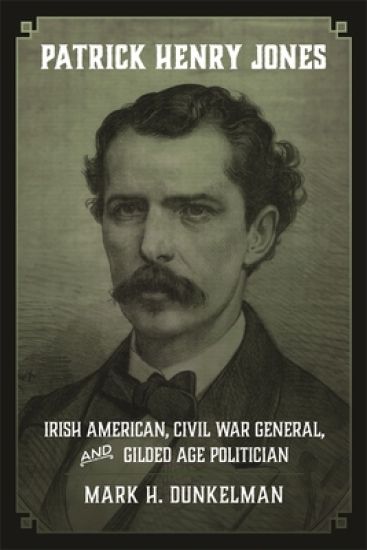
Patrick Henry Jones

Patrick Henry Jones

Mark H. Dunkelman

Louisiana State University Press
2015
sidottu
Patrick Henry Jones's obituary vowed that ""his memory shall not fade among men."" Yet in little more than a century, history has largely forgotten Jones's considerable accomplishments in the Civil War and the Gilded Age that followed. In this masterful biography, Mark H. Dunkelman resurrects Jones's story and restores him to his rightful standing as an exceptional military officer and influential politician of nineteenth-century America. Patrick Henry Jones (1830-1900), a poor Irish immigrant, began his career in journalism before gaining admittance to the New York bar. When the Civil War erupted in 1861, Jones volunteered for service in the Union Army. He rose steadily through the ranks of the 37th New York, became general of the 154th New York, and eventually attained the rank of brigadier general. Jones was one of only twelve native Irishmen ever to attain that rank in the federal forces. When the war ended, Jones's reputation as a military hero gave him an entry into politics under the mentorship of editor Horace Greeley and politician Reuben E. Fenton. He served in both elective and appointed offices in the state of New York, navigating the corruptions, scandals, and political upheavals of the Golden Age. Ultimately, his entanglement with one of the most sensational crimes of his era-a high-profile grave-robbing from the cemetery of St. Mark's Church-tainted his name and ruined his once-respectable career. In the first full-length biographical account of this important figure, Patrick Henry Jones tells the quintessentially American story of an immigrant who overcame both his humble origins and the rampant xenophobia of mid-nineteenth-century America to achieve a level of prominence equaled by few of his peers.
Patrick Pearse and the Politics of Redemption

Patrick Pearse and the Politics of Redemption

Sean Farrell Moran

The Catholic University of America Press
1997
nidottu
Patrick Pearse, an Irish journalist, educator, and artist, came to play a pivotal role in the Easter Rising of 1916. This text examines Pearse within the context of contemporary Irish politics and culture to explain how he became the spokesman of the violent forces within the nationalist movement.