Introduction to Compressible Fluid Flow, Second Edition offers extensive coverage of the physical phenomena experienced in compressible flow. Updated and revised, the second edition provides a thorough explanation of the assumptions used in the analysis of compressible flows. It develops in students an understanding of what causes compressible flows to differ from incompressible flows and how they can be analyzed. This book also offers a strong foundation for more advanced and focused study. The book begins with discussions of the analysis of isentropic flows, of normal and oblique shock waves and of expansion waves. The final chapters deal with nozzle characteristics, friction effects, heat exchange effects, a hypersonic flow, high-temperature gas effects, and low-density flows. This book applies real-world applications and gives greater attention to the supporting software and its practical application. Includes numerical results obtained using a modern commercial CFD (computer fluid dynamics) code to illustrate the type of results that can be obtained using such a code Replaces BASIC language programs with MATLAB® routines Avails COMPROP2 software which readers can use to do compressible flow computationAdditional problems have been added, and non-numerical problems illustrating practical applications have been included. A solutions manual that contains complete solutions to all of the problems in this book is available. The manual incorporates the same problem-solving methodology as adopted in the worked examples in this book. It also provides summaries of the major equations developed in each chapter. An interactive computer program also accompanies this book.
Mastering Leadership in the Digital EraDiscover the secrets of commanding authority in the rapidly evolving digital landscape. "The Digital Prince: Leadership Strategies for the Modern World" is your ultimate guide to navigating the complexities of leadership amidst technological advancement. Unlock the potential of digital influence as you delve into this comprehensive exploration of modern leadership dynamics.Uncover the nuances of digital power dynamics that define today's world. From identifying key influencers to crafting a compelling online persona, this book offers insights into leveraging social media and building trust in a virtual environment. Learn how to make informed decisions in an age flooded with information while addressing ethical challenges head-on. The art of modern persuasion is redefined as you explore strategies for effective communication tailored to the digital age.Imagine leading teams without borders, fostering collaboration across virtual platforms while maintaining engagement. This book equips you with the tools to navigate crises in real-time, champion innovation, and embrace the transformative potential of AI and automation. Discover how to command attention through digital channels and manage your online reputation with finesse.Are you ready to embody the future of leadership? With case studies from digital trailblazers and success stories that inspire, you'll learn to synthesize insights and build a lasting legacy. This is not just a book, but a strategic playbook for aspiring leaders poised to thrive in the digital epoch. Step into the future of leadership. Are you prepared to lead out of the shadows and into the spotlight of the digital realm?
Natural Convective Heat Transfer from Narrow Plates deals with a heat transfer situation that is of significant practical importance but which is not adequately dealt with in any existing textbooks or in any widely available review papers. The aim of the book is to introduce the reader to recent studies of natural convection from narrow plates including the effects of plate edge conditions, plate inclination, thermal conditions at the plate surface and interaction of the flows over adjacent plates. Both numerical and experimental studies are discussed and correlation equations based on the results of these studies are reviewed.
Get ready to experience an action filled Summer on the P Bar J Ranch. Long time Arizona rancher Jeff Dean is thinking back to a particular summer over 60 years ago. The time is 1952 and 11-year-old Jeff Dean is spending his first summer on the P Bar J Ranch in north central Arizona near Route 66. Jeff's parents are separated and his dad has recently become the manager of this large cattle ranch. The story takes place from June through August of that year and follows the adventures of Jeff (a big fan of Roy Rogers) and his friends, as well as the adults on the ranch, including the parents and cowboys. The summer begins with Jeff getting settled in, meeting & becoming friends with the ranch owners' 11 year old twins (Lenny & Lynda), getting to know the hired hands, and taking a bike ride with Lenny on their Schwinns to fish and explore.Readers will experience an action filled childhood summer on the P Bar J Ranch and in the process will pick up true bits of history, cowboy etiquette, tips on handling horses, and a feeling for the time and place. There are also shoot outs with bank robbers, and a good dose of early '50s nostalgia, e.g. Roy Rogers, cap guns, B westerns, and Schwinn bicycles.
In the wake of the 1588 destruction of the Spanish Armada, English Catholics launched an ingenious counterespionage effort to undermine the Tudor government's anti-Catholic machinations. This Jesuit-connected network secretly transmitted intelligence to Brussels, Antwerp, Madrid and Rome. Its central figure was William Sterrell, a brilliant Oxford philosopher. Sterrell moved at the highest levels of government, working for the ill-fated Earl of Essex and for the powerful 4th Earl of Worcester, secret sponsor of the Jesuits. This is the story of Sterrell's secret network--undetected for 400 years--brought to life in vivid detail, based on close examination of hundreds of original letters and documents never before transcribed or published.
Winter on the P Bar J Ranch is the second novel set on the P Bar J Ranch. It's wintertime in Northern Arizona and longtime Arizona rancher Jeff Dean is looking back at his first winter on the P Bar J Ranch. The story opens in early December 1952 following Jeff Dean's first summer on the P Bar J Ranch in north-central Arizona. Jeff's 12th birthday has come and gone and along with it a lot of the time for playing. Now he is becoming a real cowboy. Jeff and the Howard's twins, Lenny and Lynda, have had to assume more of the day-to-day work on the big cattle ranch run by Jeff's dad, Roy. This is especially true after the old hired hand, Jay, suffers injuries from a fall on a horse while the boys are helping him move a small bunch of cattle. Shortly afterwards Deputy Parker encounters three members of the Owsley family just north of the P Bar J Ranch. The Owsleys are back ... seeking stolen bank money and revenge. The approach of Christmas 1952 is a stressful time for Jeff since he is faced for the first time with the task of buying a present for a girl ... Lynda. Then as the New Year 1953 nears, a severe blizzard is headed for northern Arizona. As part of their cowboy chores Jeff and his friends take part in cattle drives, repair fences, pull stuck cows out of muddy water holes, and ride through snow to chop ice on troughs and tanks so cattle can get to water. Things won't be the same on the P Bar J Ranch after the winter of 1952-'53. Childhood is quickly coming to an end.
Poetry for Our Times is a collection of original poems written over many years. They address many aspects of life, but especially love. It could be the love between two people or even the love of nature and life. At the end of each poem, the author shares a story of how that poem came to be and its significance, not only in the author's life but also in the reader's life. He hopes you find inspiration in these words, especially if this is a season of challenge in your life. May you find the hope, peace, and encouragement you deserve and the strength that only comes from HIM above.
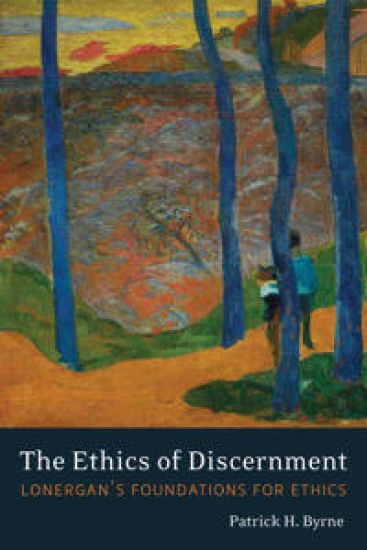
In The Ethics of Discernment, Patrick H. Byrne presents an approach to ethics that builds upon the cognitional theory and the philosophical method of self-appropriation that Bernard Lonergan introduced in his book Insight, as well as upon Lonergan’s later writing on ethics and values. Extending Lonergan’s method into the realm of ethics, Byrne argues that we can use self-appropriation to come to objective judgements of value. The Ethics of Discernment is an introspective analysis of that process, in which sustained ethical inquiry and attentiveness to feelings as “intentions of value” leads to a rich conception of the good. Written both for those with an interest in Lonergan’s philosophy and for those interested in theories of ethics who have only a limited knowledge of Lonergan’s work, Byrne’s book is the first detailed exposition of an ethical theory based on Lonergan’s philosophical method.