Kirjojen hintavertailu. Mukana 11 342 296 kirjaa ja 12 kauppaa.

Kirjahaku

Etsi kirjoja tekijän nimen, kirjan nimen tai ISBN:n perusteella.

1000 tulosta hakusanalla Paul Stuart McCormick

Validity in Educational and Psychological Assessment

Validity in Educational and Psychological Assessment

Paul E Newton; Stuart D Shaw

SAGE Publications Ltd
2014
sidottu
Validity is the hallmark of quality for educational and psychological measurement. But what does quality mean in this context? And to what, exactly, does the concept of validity apply? These apparently innocuous questions parachute the unwary inquirer into a minefield of tricky ideas. This book guides you through this minefield, investigating how the concept of validity has evolved from the nineteenth century to the present day. Communicating complicated concepts straightforwardly, the authors answer questions like: What does 'validity' mean?What does it mean to 'validate'?How many different kinds of validity are there?When does validation begin and end?Is reliability a part of validity, or distinct from it? This book will be of interest to anyone with a professional or academic interest in evaluating the quality of educational or psychological assessments, measurements and diagnoses.
Validity in Educational and Psychological Assessment

Validity in Educational and Psychological Assessment

Paul E Newton; Stuart D Shaw

SAGE Publications Ltd
2014
nidottu
Validity is the hallmark of quality for educational and psychological measurement. But what does quality mean in this context? And to what, exactly, does the concept of validity apply? These apparently innocuous questions parachute the unwary inquirer into a minefield of tricky ideas. This book guides you through this minefield, investigating how the concept of validity has evolved from the nineteenth century to the present day. Communicating complicated concepts straightforwardly, the authors answer questions like: What does 'validity' mean?What does it mean to 'validate'?How many different kinds of validity are there?When does validation begin and end?Is reliability a part of validity, or distinct from it? This book will be of interest to anyone with a professional or academic interest in evaluating the quality of educational or psychological assessments, measurements and diagnoses.
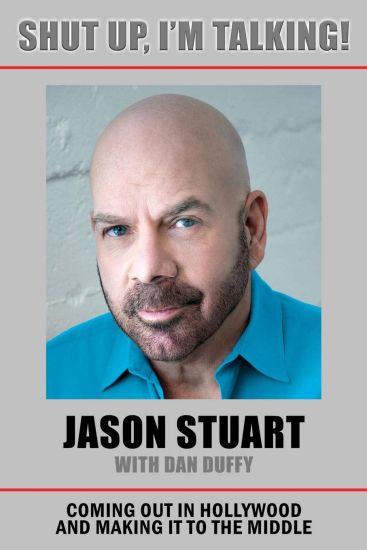
Shut Up, I'm Talking!

Shut Up, I'm Talking!

Jason Stuart; Alexandra Paul

CCB Publishing
2019
pokkari
Shut Up, I'm Talking chronicles the life and career of actor and comedian Jason Stuart. It's the funny, poignant story of a gay Jewish boy whose life changed after seeing Funny Girl at a second-run movie theatre in Hollywood. "I thought to myself, I'm in love with Omar Sharif - who am I left to be but Barbra Streisand And I'm a guy... Oy " It's about surviving a crazy family who survived the Holocaust and clearing up the wreckage of one's past while learning how to become a man. Jason has appeared in over 200 films and TV shows and has had a long and varied career, from his coming out in 1993 on the Geraldo Rivera Show to having a major supporting role in the historical drama The Birth of a Nation playing "Joseph Randall" a white, heterosexual, Christian, slave owner in 1891 while being a gay liberal Jew As a comedian he has headlined at all the major comedy clubs, appeared twice at prestigious Just for Laughs comedy festivals and did stand-up on Broadway with Joan Rivers and Sandra Bernhard. He was featured in Comedy Central's groundbreaking special Out There, and his own stand-up comedy special Making It to the Middle. Jason has acted with George Clooney, Faye Dunaway, Angelina Jolie, Angela Lansbury, John Lithgow, Laurie Metcalf, Alexandra Paul, Keanu Reeves, Arnold Schwarzenegger, Marisa Tomei, Jon Voight, Damon Wayans and they are all in the book His movies include Kindergarten Cop, Lost & Found, Vegas Vacation, Love Is Strange, Tangerine and on some of the most popular TV shows, Love, Sleepy Hollow, It's Always Sunny in Philadelphia, Will & Grace, The Closer, George Lopez, House, Charmed, My Wife & Kids, The Drew Carey Show and Murder, She Wrote. Jason lives alone in Hollywood, takes care of his mom and is still looking for Mr. Right. He wrote the book with Dan Duffy, a filmmaker and author of The Half Book.About the Authors: When you think of one of the most prolific character actors, who's also an outrageously openly gay stand-up comedian, one name comes to mind: Jason Stuart. He has a major role in The Birth of a Nation by filmmaker Nate Parker. Jason has also appeared in the award winning films Hank, Immortal, Tangerine, Love is Strange, Gia, with Kindergarten Cop and Vegas Vacation among his fan favorites. He has wowed TV audiences with guest roles on such shows as Swedish Dicks, Love, Sleepy Hollow, Real Rob, Entourage, The Closer, It's Always Sunny in Philadelphia, House, Everybody Hates Chris, George Lopez, Will & Grace, Charmed, and as the wildly popular "Dr. Thomas" on My Wife & Kids. As a stand-up comic, you have laughed with him on Gotham Comedy Life, Red Eye with Tom Shillue, One Night Stand Up, Wisecrack, Comics Unleashed with Byron Allen, Out There In Hollywood and his own comedy special Making It to the Middle. He currently resides in California... alone again.Dan Duffy has been working in film, television, and radio for over twenty-five years. In 2002, Dan was diagnosed with stage-three testicular cancer. He wanted to change the way people looked at a cancer diagnosis, so he has blogged extensively for Huffington Post and Medium, and wrote The Half Book: He's Taking His Ball and Going Home. Dan has shared his message throughout the country, including speaking at Stanford Medicine X in 2016 and 2017, keynoting at the American Cancer Society Cancer Action Network Conference, and speaking at TEDxSarasota in 2013. Dan and his wife Stephanie have been married since 2003, and they have two sons, Sam and Ben.
Doing Cultural Studies

Doing Cultural Studies

Paul Du Gay; Stuart Hall; Linda Janes; Anders Koed Madsen; Hugh Mackay; Keith Negus

SAGE Publications Ltd
2013
sidottu
Arguably the most famous book in its field... In theoretical terms, the legacy of Doing Cultural Studies confirms that this classic read is not just about the Walkman itself, but represents a series of clear observations about the symbolic meanings of culture. - LSE Review of Books Why think about the Walkman in the 21st century? Can the Walkman help us understand today’s media and cultural practices? Through the notion of the 'circuit of culture', this book teaches students to critically examine what culture means, and how and why it is enmeshed with the media texts and objects in their lives. Students will: Unpack the key concepts of contemporary culture, such as mobility, materiality, consumption and identityLearn to think about some of the cultural conundrums of the present and their relation to the past, such as branding cultureLook with fresh eyes at today's media world and the cultural practices it gives rise toGain practical experience with the historical comparative methodPractice their critical skills with up-to-date exercises and activities This book takes students on a journey between past and present, giving them the skills do to cultural analysis along the way. It remains the perfect 'how to' for students in media studies, cultural studies, design and sociology.
Doing Cultural Studies

Doing Cultural Studies

Paul Du Gay; Stuart Hall; Linda Janes; Anders Koed Madsen; Hugh Mackay; Keith Negus

SAGE Publications Ltd
2013
nidottu
Arguably the most famous book in its field... In theoretical terms, the legacy of Doing Cultural Studies confirms that this classic read is not just about the Walkman itself, but represents a series of clear observations about the symbolic meanings of culture. - LSE Review of Books Why think about the Walkman in the 21st century? Can the Walkman help us understand today’s media and cultural practices? Through the notion of the 'circuit of culture', this book teaches students to critically examine what culture means, and how and why it is enmeshed with the media texts and objects in their lives. Students will: Unpack the key concepts of contemporary culture, such as mobility, materiality, consumption and identityLearn to think about some of the cultural conundrums of the present and their relation to the past, such as branding cultureLook with fresh eyes at today's media world and the cultural practices it gives rise toGain practical experience with the historical comparative methodPractice their critical skills with up-to-date exercises and activities This book takes students on a journey between past and present, giving them the skills do to cultural analysis along the way. It remains the perfect 'how to' for students in media studies, cultural studies, design and sociology.
De la liberté de penser

De la liberté de penser

John Stuart Mill; Paul Janet

Editions Le Mono
2017
nidottu
Ce livre bas sur les travaux de Paul Janet et John Stuart Mill, traite de la libert de penser et d'exprimer sa pens e. On d nonce sans cesse les libres penseurs comme portant atteinte toutes les lois divines et humaines, comme mena ant les bases m mes de la soci t , comme effa ant la distinction du bien et du mal au profit de l'anarchie et du triomphe des passions. Il se trouve encore des esprits qui, m me dans l'ordre de la foi, voudraient que l' tat interv nt pour fixer ce qu'il faut croire et ce qu'il est permis de ne pas croire. Le retour au moyen- ge serait la vraie cons quence de ces d clamations, si elles se comprenaient elles-m mes, et quelques-uns ne reculeraient nullement devant cette cons quence... La libert de penser est donc le droit commun de toutes les coles philosophiques: elles ne sont philosophiques qu' cette condition. C'est l pour nous le premier principe, et par rapport cette condition fondamentale les dissidences ult rieures n'ont en quelque sorte qu'une importance secondaire... Une des formes de libert laquelle nous nous flattons de tenir le plus, pour laquelle nous nous d clarons pr ts aller en prison, qui est un trange aboutissement de la libert , ou dresser des barricades contre ceux qui ne pensent pas comme nous, c'est la libert de penser. (Franc-Nohain)
How Vocabulary Is Learned

How Vocabulary Is Learned

Stuart Webb; Paul Nation

Oxford University Press
2017
nidottu
How Vocabulary Is Learned presents the major issues that relate to the teaching and learning of vocabulary. Written by leading voices in the field of second language acquisition, the book evaluates a wide range of practical activities designed to help boost students' vocabulary learning.
The Politics of Consumer Credit in the UK, 1938-1992

The Politics of Consumer Credit in the UK, 1938-1992

Stuart Aveyard; Paul Corthorn; Sean O'Connell

Oxford University Press
2018
sidottu
As early as the 1930s, Britain had a highly innovative and profitable mortgage sector that promoted a major extension in home ownership. These controversial and risky offerings had an equivalent in numerous hire purchase agreements, with which new homes were furnished. Such developments were forerunners of the 'easy credit' regime more commonly associated with the 1980s. Taking a long-term perspective on this issue indicates that Britain's departure from European models of consumer credit markets was not simply a by-product of neoliberalism's influence on the Thatcher administration, and this book offers a much fuller explanation to the phenomenon. It explores debates within and between the major political parties; reveals the infighting amongst civil service departments over management of consumer demand; charts the varying degrees of influence wielded by the Bank of England and finance capital, as opposed to that of consumer durable manufacturers; reviews the perspectives of consumers and their representatives; and explains the role of contingency and path dependency in these historical events. The central focus of this book is on consumer credit, but this subject provides a case study through which to explore numerous other important areas of British history. These include debates on the issues of post-war consensus, the impact of rising home ownership and its impact on consumer credit and personal finance markets, the management of consumer society, political responses to affluence, the development of consumer protection policy, and the influence of neoliberalism.
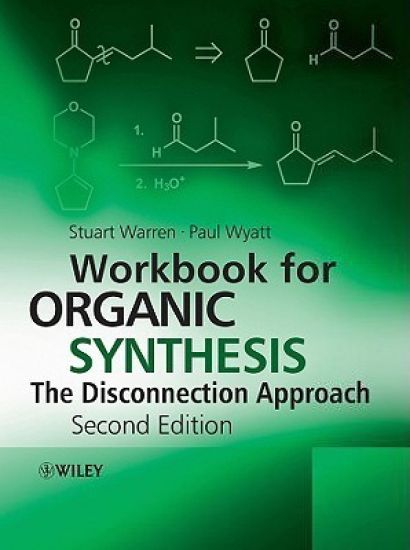
Workbook for Organic Synthesis: The Disconnection Approach

Workbook for Organic Synthesis: The Disconnection Approach

Stuart Warren; Paul Wyatt

John Wiley Sons Inc
2009
nidottu
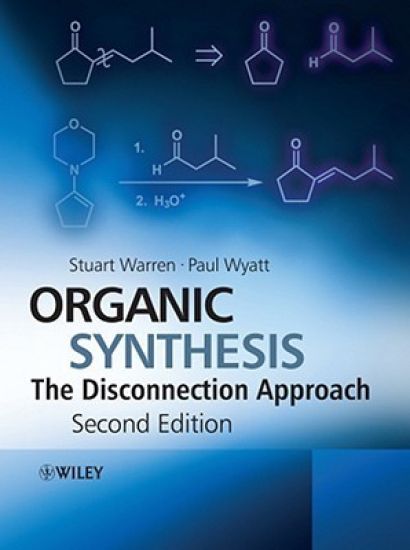
One approach to organic synthesis is retrosynthetic analysis. With this approach chemists start with the structures of their target molecules and progressively cut bonds to create simpler molecules. Reversing this process gives a synthetic route to the target molecule from simpler starting materials. This “disconnection” approach to synthesis is now a fundamental part of every organic synthesis course. Workbook for Organic Synthesis: The Disconnection Approach, 2nd Edition This workbook provides a comprehensive graded set of problems to illustrate and develop the themes of each of the chapters in the textbook Organic Synthesis: The Disconnection Approach, 2nd Edition. Each problem is followed by a fully explained solution and discussion. The examples extend the student’s experience of the types of molecules being synthesised by organic chemists, and the strategies they employ to control their syntheses. By working through these examples students will develop their skills in analysing synthetic challenges, and build a toolkit of strategies for planning new syntheses. Examples are drawn from pharmaceuticals, agrochemicals, natural products, pheromones, perfumery and flavouring compounds, dyestuffs, monomers, and intermediates used in more advanced synthetic work. Reasons for wishing to synthesise each compound are given. Together the workbook and textbook provide a complete course in retrosynthetic analysis. Organic Synthesis: The Disconnection Approach, 2nd Edition There are forty chapters in Organic Synthesis: The Disconnection Approach, 2nd Edition: those on the synthesis of given types of molecules alternate with strategy chapters in which the methods just learnt are placed in a wider context. The synthesis chapters cover many ways of making each type of molecule starting with simple aromatic and aliphatic compounds with one functional group and progressing to molecules with many functional groups. The strategy chapters cover questions of selectivity, protection, stereochemistry, and develop more advanced thinking via reagents specifically designed for difficult problems. In its second edition updated examples and techniques are included and illustrated additional material has been added to take the student to the level required by the sequel, Organic Synthesis: Strategy and Control. Several chapters contain extensive new material based on courses that the authors give to chemists in the pharmaceutical industry. Workbook for Organic Synthesis: The Disconnection Approach, 2nd edition, combined with the main textbook, provides a full course in retrosynthetic analysis for chemistry and biochemistry students, and a refresher course for organic chemists working in industry and academia.
Organic Synthesis

Organic Synthesis

Stuart Warren; Paul Wyatt

John Wiley Sons Inc
2008
nidottu
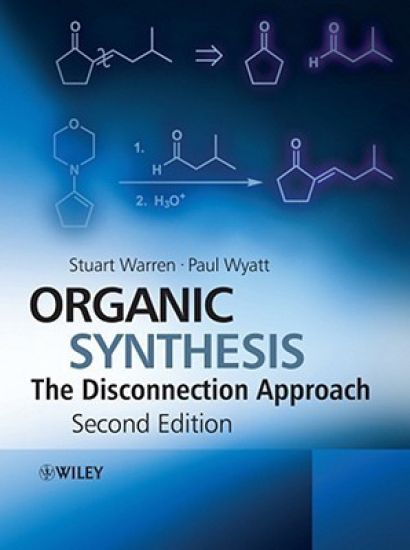
One approach to organic synthesis is retrosynthetic analysis. With this approach a chemist will start with the structure of their target molecule and progressively cut bonds to create simpler molecules. Reversing this process gives a synthetic route to the target molecule from simpler starting materials. This “disconnection” approach to synthesis is now a fundamental part of every organic synthesis course. Organic Synthesis: The Disconnection Approach, 2nd Edition introduces this important technique, to help students to design their own organic syntheses. There are forty chapters: those on the synthesis of given types of molecules alternate with strategy chapters in which the methods just learnt are placed in a wider context. The synthesis chapters cover many ways of making each type of molecule starting with simple aromatic and aliphatic compounds with one functional group and progressing to molecules with many functional groups. The strategy chapters cover questions of selectivity, protection, stereochemistry, and develop more advanced thinking via reagents specifically designed for difficult problems. Examples are drawn from pharmaceuticals, agrochemicals, natural products, pheromones, perfumery and flavouring compounds, dyestuffs, monomers, and intermediates used in more advanced synthetic work. Reasons for wishing to synthesise each compound are given. This second edition has been fully revised and updated with a modern look. Recent examples and techniques are included and illustrated additional material has been added to take the student to the level required by the sequel, “Organic Synthesis: Strategy and Control”. Several chapters contain extensive new material based on courses that the authors give to chemists in the pharmaceutical industry. Organic Synthesis: The Disconnection Approach, 2nd edition provides a full course in retrosynthetic analysis for chemistry and biochemistry students and a refresher for organic chemists working in industry and academia.
Organic Synthesis

Organic Synthesis

Stuart Warren; Paul Wyatt

John Wiley Sons Inc
2008
sidottu
One approach to organic synthesis is retrosynthetic analysis. With this approach a chemist will start with the structure of their target molecule and progressively cut bonds to create simpler molecules. Reversing this process gives a synthetic route to the target molecule from simpler starting materials. This “disconnection” approach to synthesis is now a fundamental part of every organic synthesis course. Organic Synthesis: The Disconnection Approach, 2nd Edition introduces this important technique, to help students to design their own organic syntheses. There are forty chapters: those on the synthesis of given types of molecules alternate with strategy chapters in which the methods just learnt are placed in a wider context. The synthesis chapters cover many ways of making each type of molecule starting with simple aromatic and aliphatic compounds with one functional group and progressing to molecules with many functional groups. The strategy chapters cover questions of selectivity, protection, stereochemistry, and develop more advanced thinking via reagents specifically designed for difficult problems. Examples are drawn from pharmaceuticals, agrochemicals, natural products, pheromones, perfumery and flavouring compounds, dyestuffs, monomers, and intermediates used in more advanced synthetic work. Reasons for wishing to synthesise each compound are given. This second edition has been fully revised and updated with a modern look. Recent examples and techniques are included and illustrated additional material has been added to take the student to the level required by the sequel, “Organic Synthesis: Strategy and Control”. Several chapters contain extensive new material based on courses that the authors give to chemists in the pharmaceutical industry. Organic Synthesis: The Disconnection Approach, 2nd edition provides a full course in retrosynthetic analysis for chemistry and biochemistry students and a refresher for organic chemists working in industry and academia.
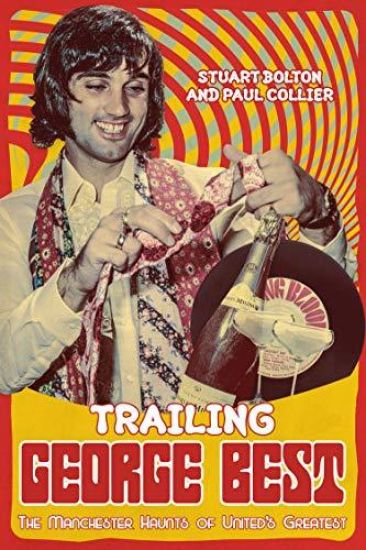
Trailing George Best

Trailing George Best

Stuart Bolton; Paul Collier

Pitch Publishing Ltd
2018
nidottu
Trailing George Best: The Manchester Haunts of United's Greatest takes a forensic look back at the locations in and around Manchester where George Best worked, rested, partied and played during the Swinging 60s and the dubiously stylish 70s. Despite the questionable fashions, it was the best of times. George Best lived in the city for nearly 15 years and this book chronicles, with numerous images, the places where he lived, the avenues and alleyways he explored, the boutiques he managed, the nightclubs he both frequented and helped to run, and of course the football grounds where he ran amok. Having tracked down the people who knew George best during this period - people who lived with Best, the pals he hung out with, colleagues who worked with him, his business partners and personal managers - lifelong Manchester United supporters Stuart Bolton and Paul Collier unearth the stories that other writers could not reach.
A Map of Making Dances

A Map of Making Dances

Stuart Hodes; Paul Taylor

Ardsley House Publishers Inc.,U.S.
1998
pokkari
This all-inclusive guide to the art of creating dance moves contains 247 projects guiding the user through a myriad of topics covering themes like inventing movement and improvisation to recommended excursions.
High Resolution Flow Modelling in Hydrology and Geomorphology

High Resolution Flow Modelling in Hydrology and Geomorphology

Paul D. Bates; Stuart N. Lane

John Wiley Sons Inc
2000
nidottu
High resolution hydraulic modelling is becoming accepted as a standard research methodology by hydrologists, geomorphologists and engineers. Recent advances in process understanding, numerical analysis techniques and improvements in available computer power have led to increases in both the space/time resolution and the dimensionality at which fluvial flow problems can be simulated. As a consequence of these developments there is now enormous potential to connect complex flow processes to the landforms they create in a rigorous, quantitative manner that has not, hitherto, been possible. This volume provides an integrated coverage of this topic, which has not previously been available either in the mathematical/engineering or environmental literature, and outlines recent major research developments that have taken place in this field. The book begins with an accessible introductory chapter on hydraulic theory. It then concentrates on high dimensional and high resolution approaches, detailing current research debates in hydraulic modelling. There is comprehensive coverage of an application scope for such techniques, including flow development, sediment transport, pollutant transport, catchment hydrology and landform development. This volume is of particular interest to lecturers and postgraduates in Geography, Engineering, Civil Engineering, Mathematics, Earth and Environmental Sciences, as well as to scientists in the public sector and commerce.
Developing Resource-informed Strategic Assessments and Recommendations

Developing Resource-informed Strategic Assessments and Recommendations

Paul K. Davis; Stuart E. Johnson; Duncan Long; David C. Gompert

RAND
2008
pokkari
A debate will likely occur in 2009 about U.S. global national-security strategy. The authors describe and illustrate a methodology to help frame and evaluate resource-informed strategies. The core is an integrated portfolio-analysis approach that compares options by their anticipated effectiveness, risks, and resource implications. Three illustrative grand strategies are compared, which deal in different ways with the problems of our time.The monograph describes a portfolio-analysis approach for integrated comparison of alternative strategies, in terms of effectiveness, risks, and resource implications.
Facing Extinction

Facing Extinction

Paul Donald; Nigel Collar; Stuart Marsden; Debbie Pain

Helm
2013
nidottu
An authoritative study of extinction in birds, with case studies of 20 critically endangered species and the research initiatives designed to save them.Almost two hundred species of birds have become extinct in the past 400 years, and a similar number today are in imminent danger of following them. The world's conservationists are leading the fight to prevent the demise of these remaining critically endangered birds, with a fair degree of success.This new book examines the process and issues concerning extinction - how and why it happens and what can be done about it. Whilst man is to blame for many of the causes, such as persecution and habitat loss, species have become extinct on a regular basis since life began.After several thought-provoking introductory chapters, the book showcases about 20 species on the brink of extinction from around the world and describes the work that is being undertaken to save them. Some are success stories, but a few are not.This is a subject close to the hearts of all birders and ornithologists and this book, written by a team of leading conservationists, will strike a chord in most of them.