

Kirjahaku
Etsi kirjoja tekijän nimen, kirjan nimen tai ISBN:n perusteella.
1000 tulosta hakusanalla Peder B. Skafsgaard




An Elementary Treatise On American Grape Culture And Wine Making
Peter B. Mead
Kessinger Pub
2007
pokkari

Captain Scraggs: Or The Green-Pea Pirates
Peter B. Kyne; Gordon (ILT) Grant
Kessinger Pub
2007
pokkari

An Elementary Treatise On American Grape Culture And Wine Making (1867)
Peter B. Mead
KESSINGER PUBLISHING, LLC
2008
sidottu

Packed with more than 60 photographs, DEA Reports of Investigation and de-classified documents, this book details a record-setting cocaine transportation deal from Colombia to Miami with connections to heroin traders in Afghanistan. It is the story of three real brothers - the youngest a Special Agent in the DEA, the middle one a contractor for the CIA and the eldest the Carrier Air Wing Commander aboard the USS Teddy Roosevelt - and how a series of unrelated events brings them together in the mountains of Pakistan.

The Bible I Thought I Knew: Does the Bible really say that?
Peter B. Nagy
Peter B. Nagy
2009
nidottu

Mavericks on Tap: creating organisations that deliver awesome outcomes
Peter B. Johns
Pbj Publishing
2015
nidottu
'Mavericks on Tap' provides an accessible combination of work-place stories, organisational theory and realistic business practices. It looks at the role of the Maverick and how harnessing the unique contributions of individuals can assist with innovation and change.Peter Johns has brought together decades of experiences working with organisations to create this practical reference for anyone seeking to improve the operation of their organisation and create awesome outcomes.The first part of the book looks at the nature of working together, the role and essence of the Maverick, and the integration of the Maverick within an organisation. The middle part discusses some theory around organisational boundaries, a model for the incorporation Mavericks within organisations, and managing transitions. The last part of the book examines the darker side of organisations, managing risks and the concept of organisational reflection.

We've all heard that a father's involvement enriches the lives of children. But how much have we heard about how having a child affects a father's life? As Peter Gray and Kermyt Anderson reveal, fatherhood actually alters a man's sexuality, rewires his brain, and changes his hormonal profile. His very health may suffer—in the short run—and improve in the long. These are just a few aspects of the scientific side of fatherhood explored in this book, which deciphers the findings of myriad studies and makes them accessible to the interested general reader.Since the mid-1990s Anderson and Gray, themselves fathers of young children, have been studying paternal behavior in places as diverse as Boston, Albuquerque, Cape Town, Kenya, and Jamaica. Their work combines the insights of evolutionary and comparative biology, cross-cultural analysis, and neural physiology to deepen and expand our understanding of fatherhood—from the intense involvement in childcare seen in male hunter-gatherers, to the prodigality of a Genghis Khan leaving millions of descendants, to the anonymous sperm donor in a fertility clinic.Looking at every kind of fatherhood—being a father in and out of marriage, fathering from a distance, stepfathering, and parenting by gay males—this book presents a uniquely detailed picture of how being a parent fits with men's broader social and work lives, how fatherhood evolved, and how it differs across cultures and through time.
British Monetary Policy and the Balance of Payments, 1951–1957
Peter B. Kenen
Harvard University Press
1960
sidottu
A detailed study of the revolution in Bank of England policy resulting from the government’s response to the 1954–55 balance-of-payments crisis, this is a first independent analysis. The author investigates the evolution of official thinking and appraises the impact of monetary policy in this crucial period. Peter Kenen reaches the unexpected conclusion that the Bank’s orthodox monetary policies played a relatively small part in the redress of payments disequilibrium, and that its most effective weapons were its most heterodox. Finally, he proposes ways in which the Bank of England can better control the credit base.


Evolution and Human Sexual Behavior
Peter B. Gray; Justin R. Garcia
Harvard University Press
2016
nidottu
Few things come more naturally to us than sex—or so it would seem. Yet to a chimpanzee, the sexual practices and customs we take for granted would appear odd indeed. He or she might wonder why we bother with inconveniences like clothes, why we prefer to make love on a bed, and why we fuss so needlessly over privacy. Evolution and Human Sexual Behavior invites us into the thought-experiment of imagining human sex from the vantage point of our primate cousins, in order to underscore the role of evolution in shaping all that happens, biologically and behaviorally, when romantic passions are aroused.Peter Gray and Justin Garcia provide an interdisciplinary synthesis that draws on the latest discoveries in evolutionary theory, genetics, neuroscience, comparative primate research, and cross-cultural sexuality studies. They are our guides through an exploration of the patterns and variations that exist in human sexuality, in chapters covering topics ranging from the evolution of sex differences and reproductive physiology to the origins of sexual play, monogamous unions, and the facts and fictions surrounding orgasm.Intended for generally curious readers of all stripes, this up-to-date, one-volume survey of the evolutionary science of human sexual behavior explains why sexuality has remained a core fascination of human beings throughout time and across cultures.
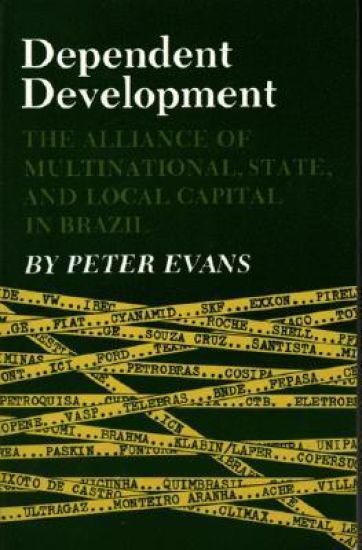
In order to analyze Brazil's recent accumulation of capital in the light of its continued dependence, Peter Evans focuses on the relationships among multinational corporations, local private entrepreneurs, and state-owned enterprises that have developed in Brazil over the last decade. He argues that while relations among the three kinds of capital continue to be contradictory, a triple alliance has been formed that provides the social structural basis for the pattern of local industrialization that has emerged. The author begins with a review of the theories of imperialism and dependency in the third world. Placing the Brazilian experience of the last twenty years in its historical context, he traces the country's evolution from the period of "classic dependence" at the turn of the century to the current stage of "dependent development." In conclusion, Professor Evans discusses the implications of the Brazilian model for other third world countries. Examining the nature of the triple alliance as it is manifested in such industries as pharmaceuticals, textiles, and petrochemicals, the author reveals the complex differentiation of the groups' roles in industrialization and lays bare the grounds for their collaboration and their conflict. He consequently shows how the differing interests, power, and capabilities of the three groups have combined to produce a system promoting industrialization that benefits the elite partnership but excludes the larger population from the rewards of growth.
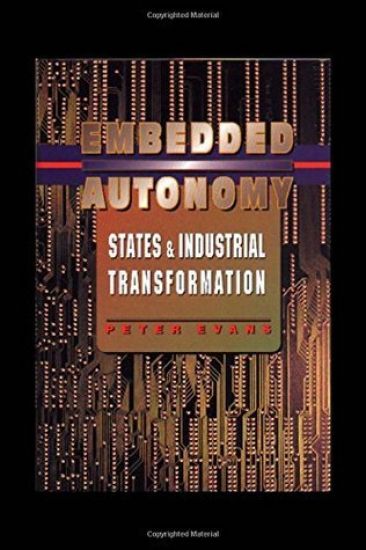
In recent years, debate on the state's economic role has too often devolved into diatribes against intervention. Peter Evans questions such simplistic views, offering a new vision of why state involvement works in some cases and produces disasters in others. To illustrate, he looks at how state agencies, local entrepreneurs, and transnational corporations shaped the emergence of computer industries in Brazil, India, and Korea during the seventies and eighties. Evans starts with the idea that states vary in the way they are organized and tied to society. In some nations, like Zaire, the state is predatory, ruthlessly extracting and providing nothing of value in return. In others, like Korea, it is developmental, promoting industrial transformation. In still others, like Brazil and India, it is in between, sometimes helping, sometimes hindering. Evans's years of comparative research on the successes and failures of state involvement in the process of industrialization have here been crafted into a persuasive and entertaining work, which demonstrates that successful state action requires an understanding of its own limits, a realistic relationship to the global economy, and the combination of coherent internal organization and close links to society that Evans called "embedded autonomy."
Written form 1957 through 1978 by one of the foremost authorities in the field of international economics, this collection of Peter Kenen's previously published essays deals with issues in the pure theory of international trade, international monetary theory, and international monetary reform. The essays in Part I, "Trade, Tariffs, and Welfare," concern the roles of tangible and human capital in the determination of trade patterns, the joint determination of demand conditions and trade patterns, the gains from international trade, and the effects of migration on economic welfare.Part II, "International Monetary Theory and Policy," contains essays on the theory of gold-exchange standard, the determination of forward exchange rates, the demand for international reserves, economic integration and the delineation of currency areas, and the process of balance of payments adjustment under pegged and floating exchange rates.The essays in Part III, "Monetary Reform and the Dollar," are arranged in chonological order, from 1963 through 1977, and focus on the problems and progress of international monetary reform and on the functioning of the present international monetary system.Peter B. Kenen is Walker Professor of Economics and International Finance at Princeton University.The Princeton Sereies of Collected Essays provides facsimile reprints, in paperback and in cloth, of important articles by leading scholars.Originally published in 1981.The Princeton Legacy Library uses the latest print-on-demand technology to again make available previously out-of-print books from the distinguished backlist of Princeton University Press. These editions preserve the original texts of these important books while presenting them in durable paperback and hardcover editions. The goal of the Princeton Legacy Library is to vastly increase access to the rich scholarly heritage found in the thousands of books published by Princeton University Press since its founding in 1905.