Kirjojen hintavertailu. Mukana 11 342 296 kirjaa ja 12 kauppaa.

Kirjahaku

Etsi kirjoja tekijän nimen, kirjan nimen tai ISBN:n perusteella.

1000 tulosta hakusanalla Peder Bundgaard

Early Christianity and Hellenistic Judaism
These studies break new ground in the exploration of early Christianity and Judaism towards the end of the Second Temple period.Professor Borgen introduces fresh perspectives on many central issues in the complexity of Judaism both within Palestine and in the Diaspora. He also examines the variety of tendencies which existed within Christianity as it emerged within Judaism and spread out into other nations.An invaluable study for all scholars, teachers and students of the New Testament in general and of Judaica, Classics and Hellenism
Imperial Ecology

Imperial Ecology

Peder Anker

Harvard University Press
2002
sidottu
From 1895 to the founding of the United Nations in 1945, the promising new science of ecology flourished in the British Empire. Peder Anker asks why ecology expanded so rapidly and how a handful of influential scientists and politicians established a tripartite ecology of nature, knowledge, and society.Patrons in the northern and southern extremes of the Empire, he argues, urgently needed tools for understanding environmental history as well as human relations to nature and society in order to set policies for the management of natural resources and to effect social control of natives and white settlement. Holists such as Jan Christian Smuts and mechanists such as Arthur George Tansley vied for the right to control and carry out ecological research throughout the British Empire and to lay a foundation of economic and social policy that extended from Spitsbergen to Cape Town.The enlargement of the field from botany to human ecology required a broader methodological base, and ecologists drew especially on psychology and economy. They incorporated those methodologies and created a new ecological order for environmental, economic, and social management of the Empire.
The Philo Index

The Philo Index

Peder Borgen; Richard E. Whitaker; Roald Skarsten

William B Eerdmans Publishing Co
1999
pokkari
The writings of Philo of Alexandria (20 B.C.E.-40 C.E.) are important for the light they shed on the development of both Hellenistic Judaism and early Christianity. This new reference work, designed specifically to aid with scholarly research on Philo, is the first and only available index to all the Greek words in the writings of Philo, main fragments included. This lemmatized and computer-generated concordance lists each Greek word alphabetically, then lists exhaustively every occurrence of the term within Philo's extensive body of work.
From Bauhaus to Ecohouse

From Bauhaus to Ecohouse

Peder Anker

Louisiana State University Press
2010
sidottu
Global warming and concerns about sustainability recently have pushed ecological design to the forefront of architectural study and debate. As Peder Anker explains in From Bauhaus to Ecohouse, despite claims of novelty, debates about environmentally sensitive architecture have been ongoing for nearly a century. By exploring key moments of inspiration between designers and ecologists from the Bauhaus projects of the interwar period to the eco-arks of the 1980s, Anker traces the historical intersection of architecture and ecological science and assesses how both remain intertwined philosophically and pragmatically within the still-evolving field of ecological design.The idea that science could improve human life attracted architects and designers who looked to the science of ecology to better their methodologies. Walter Gropius, the founder of the Bauhaus school, taught that designed form should follow the laws of nature in order to function effectively. With the Bauhaus movement, ecology and design merged and laid the foundation of modernist architecture. Anker discusses in detail how the former faculty members of the Bauhaus school -- including leia¡szleia³ Maholy-Nagy and Herbert Bayer -- left Nazi Germany in the mid-1930s and engaged with ecologists during their ""London period"" and in the U.S. A subsequent generation of students and admirers of Bauhaus, such as Richard Buckminster Fuller and Ian McHarg, picked up their program, and -- under the general banner of merging art and science in the design process -- Bauhaus-minded architects began to think ecologically while some ecologists lent their ideas to design. Anker charts complicated currents of ecological design thought spanning pre-- and post--World War II and through the cold war, including pivotal changes such as the emergence of space exploration and new theories on closed-system living in space capsules, space stations, and planetary colonies. Space ecology, Anker explains, inspired leading landscape designers of the 1970s, who used the imagined life of astronauts as a model for how humans should live in harmony with nature. Theories of how to design for extraterrestrial living impacted design and ecological thinking for earth-based living as well, as evidenced in Disney's Spaceship Earth attraction as well as in the Biosphere 2 experiments in Arizona in the early 1990s. Illuminating important connections between theories about the relationship between humans and the built environment, Anker's provocative study provides new insight into a critical period in the evolution of environmental awareness.
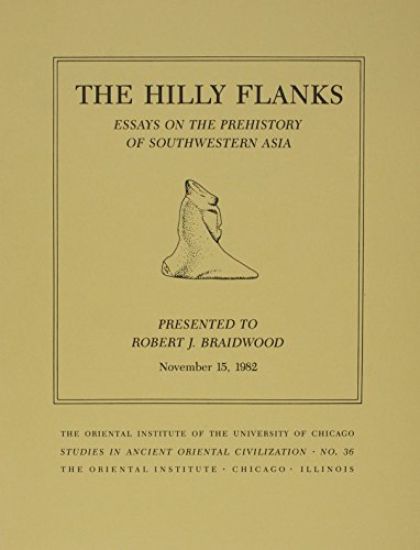
The Hilly Flanks and Beyond

The Hilly Flanks and Beyond

Peder Mortensen; Philip Smith; Cuyler Young

Oriental Institute of the University of Chicago
1983
nidottu
When editors of this volume began organizing a Festschrift in honor of Robert Braidwood, they hoped to interest scholars from a variety of different fields with a theme of the food-producing time range (10,000-4,000 B.C.). Many of the contributors have also incorporated in their discussions an important and controversial subject from Braidwood’s large corpus of research, the development of agriculture. The first part of the volume is devoted to articles under the general heading of Syro-Palestine. The theories of spatial analysis are applied in several articles in the Mesopotamian section. Genevieve Dollfus, using Iranian sites of the fifth millennium such as Choga Mish, tries to make comparisons with patterns of land use and settlements from more contemporary periods. This Festschrift is as diverse and interesting as the multifaceted Robert Braidwood. [From a review by Margaret C. Brandt in the Journal of Near Eastern Studies 47 (1988) 294-96]
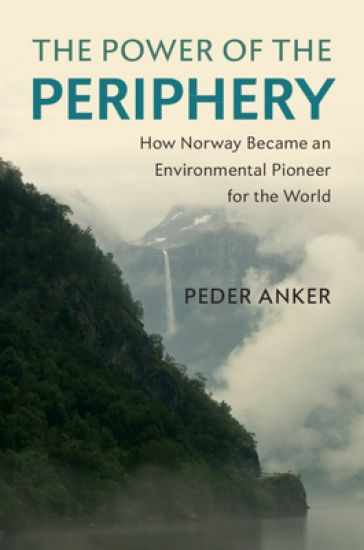
The Power of the Periphery

The Power of the Periphery

Peder Anker

Cambridge University Press
2020
sidottu
What is the source of Norway's culture of environmental harmony in our troubled world? Exploring the role of Norwegian scholar-activists of the late twentieth century, Peder Anker examines how they portrayed their country as a place of environmental stability in a world filled with tension. In contrast with societies dirtied by the hot and cold wars of the twentieth century, Norway's power, they argued, lay in the pristine, ideal natural environment of the periphery. Globally, a beautiful Norway came to be contrasted with a polluted world and fashioned as an ecological microcosm for the creation of a better global macrocosm. In this innovative, interdisciplinary history, Anker explores the ways in which ecological concerns were imported via Rachel Carson's Silent Spring in 1962, then to be exported from Norway back to the world at the Earth Summit in Rio de Janeiro in 1992. This title is also available as Open Access on Cambridge Core.
The Power of the Periphery

The Power of the Periphery

Peder Anker

Cambridge University Press
2022
pokkari
What is the source of Norway's culture of environmental harmony in our troubled world? Exploring the role of Norwegian scholar-activists of the late twentieth century, Peder Anker examines how they portrayed their country as a place of environmental stability in a world filled with tension. In contrast with societies dirtied by the hot and cold wars of the twentieth century, Norway's power, they argued, lay in the pristine, ideal natural environment of the periphery. Globally, a beautiful Norway came to be contrasted with a polluted world and fashioned as an ecological microcosm for the creation of a better global macrocosm. In this innovative, interdisciplinary history, Anker explores the ways in which ecological concerns were imported via Rachel Carson's Silent Spring in 1962, then to be exported from Norway back to the world at the Earth Summit in Rio de Janeiro in 1992. This title is also available as Open Access on Cambridge Core.
Green Solar Cities

Green Solar Cities

Peder Vejsig Pedersen; Jakob Klint; Karin Kappel; Katrine Vejsig Pedersen

Routledge
2017
sidottu
The Green Solar Cities, EU-Concerto project focuses on the practical large scale implementation of solar energy technologies in combination with new build and retrofit low energy building in the cities of Copenhagen, with its city part Valby, in Denmark and Salzburg in Austria. This book aims to influence decision makers in European cities towards a similar approach to the Green Solar Cities project, in close cooperation with leading building component suppliers, energy companies and engaged builders also working with local city officials. This book will benefit those in a situation where many cities aim at a "Smart City" development, but without clear policies of how to achieve that in practice. In Denmark there are similar policies, with an overall aim to be CO2 neutral by year 2025 in the city of Copenhagen. However, there is still a lack of understanding concerning, how solar energy as the worlds number one energy source can play a major role here and how this can be combined with energy efficiency policies, use of district heating and combined heat and power. The general aim is to introduce the international "Active House" standard and work on "Active Roofs" of the future. The connection between solar energy and low energy building and energy renovation is aimed to be ensured by help of the "Active House" standard which has been developed in cooperation with a number of leading building component manufacturers in Europe.
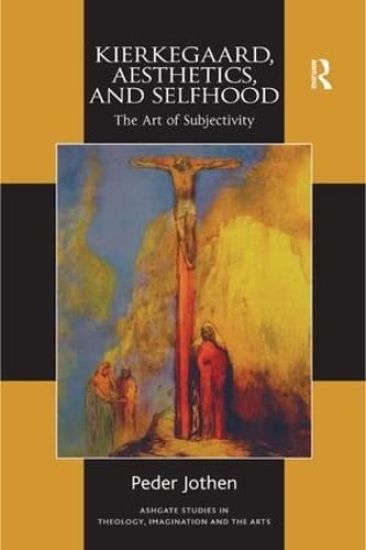
Kierkegaard, Aesthetics, and Selfhood
In the digital world, Kierkegaard's thought is valuable in thinking about aesthetics as a component of human development, both including but moving beyond the religious context as its primary center of meaning. Seeing human formation as interrelated with aesthetics makes art a vital dimension of human existence. Contributing to the debate about Kierkegaard's conception of the aesthetic, Kierkegaard, Aesthetics, and Selfhood argues that Kierkegaard's primary concern is to provocatively explore how a self becomes Christian, with aesthetics being a vital dimension for such self-formation. At a broader level, Peder Jothen also focuses on the role, authority, and meaning of aesthetic expression within religious thought generally and Christianity in particular.