Kirjojen hintavertailu. Mukana 12 390 323 kirjaa ja 12 kauppaa.

Kirjahaku

Etsi kirjoja tekijän nimen, kirjan nimen tai ISBN:n perusteella.

1000 tulosta hakusanalla Peter Conradi

Identity-Native Infrastructure Access Management

Identity-Native Infrastructure Access Management

Ev Kontsevoy; Sakshyam Shah; Peter Conrad

O'Reilly Media
2023
pokkari
Traditional secret-based credentials can't scale to meet the complexity and size of cloud and on-premises infrastructure. Today's applications are spread across a diverse range of clouds and colocation facilities, as well as on-prem data centers. Each layer of this modern stack has its own attack vectors and protocols to consider. How can you secure access to diverse infrastructure components, from bare metal to ephemeral containers, consistently and simply? In this practical book, authors Ev Kontsevoy, Sakshyam Shah, and Peter Conrad break this topic down into manageable pieces. You'll discover how different parts of the approach fit together in a way that enables engineering teams to build more secure applications without slowing down productivity. With this book, you'll learn: The four pillars of access: connectivity, authentication, authorization, and audit Why every attack follows the same pattern, and how to make this threat impossible How to implement identity-based access across your entire infrastructure with digital certificates Why it's time for secret-based credentials to go away How to securely connect to remote resources including servers, databases, K8s Pods, and internal applications such as Jenkins and GitLab Authentication and authorization methods for gaining access to and permission for using protected resources
Other Choices

Other Choices

Peter C Conrad

iUniverse
2002
pokkari
Other Choices is a fast moving story about Ed, a new kid in town who refuses to follow the crowd. He finds himself at odds with his classmates, especially Robert, a bully who is the captain of the hockey team. Ed refuses to be told what to do by his brother or by his classmates. Ignoring their threats, he does what he wants. When he is challenged, Ed discovers that he has the inner strength to do what he thinks is right.Ed’s story is about not giving in to peer pressure and bullying and about making other choices.
Improved Methods of Harvesting Grain Sorghum; B477

Improved Methods of Harvesting Grain Sorghum; B477

John P. (John Peter) 1893-1987 Conrad; E. J. (Edward James) 1892 Stirniman

Hassell Street Press
2021
nidottu
This work has been selected by scholars as being culturally important and is part of the knowledge base of civilization as we know it.This work is in the public domain in the United States of America, and possibly other nations. Within the United States, you may freely copy and distribute this work, as no entity (individual or corporate) has a copyright on the body of the work.Scholars believe, and we concur, that this work is important enough to be preserved, reproduced, and made generally available to the public. To ensure a quality reading experience, this work has been proofread and republished using a format that seamlessly blends the original graphical elements with text in an easy-to-read typeface.We appreciate your support of the preservation process, and thank you for being an important part of keeping this knowledge alive and relevant.
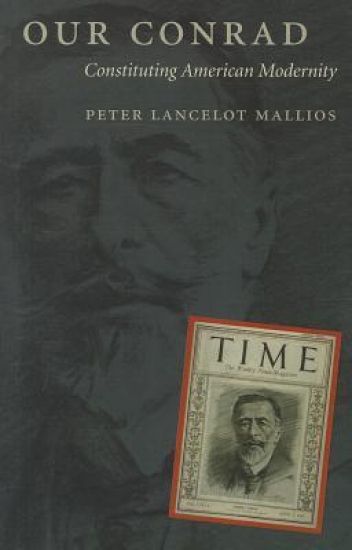
Our Conrad

Our Conrad

Peter Mallios

Stanford University Press
2010
sidottu
Our Conrad is about the American reception of Joseph Conrad and its crucial role in the formation of American modernism. Although Conrad did not visit the country until a year before his death, his fiction served as both foil and mirror to America's conception of itself and its place in the world. Peter Mallios reveals the historical and political factors that made Conrad's work valuable to a range of prominent figures—including Fitzgerald, Faulkner, Richard Wright, Woodrow Wilson, and Theodore and Edith Roosevelt—and explores regional differences in Conrad's reception. He proves that foreign-authored writing can be as integral a part of United States culture as that of any native. Arguing that an individual writer's apparent (national, gendered, racial, political) identity is not always a good predictor of the diversity of voices and dialogues to which he gives rise, this exercise in transnational comparativism participates in post-Americanist efforts to render American Studies less insular and parochial.
Our Conrad

Our Conrad

Peter Mallios

Stanford University Press
2011
pokkari
Our Conrad is about the American reception of Joseph Conrad and its crucial role in the formation of American modernism. Although Conrad did not visit the country until a year before his death, his fiction served as both foil and mirror to America's conception of itself and its place in the world. Peter Mallios reveals the historical and political factors that made Conrad's work valuable to a range of prominent figures—including Fitzgerald, Faulkner, Richard Wright, Woodrow Wilson, and Theodore and Edith Roosevelt—and explores regional differences in Conrad's reception. He proves that foreign-authored writing can be as integral a part of United States culture as that of any native. Arguing that an individual writer's apparent (national, gendered, racial, political) identity is not always a good predictor of the diversity of voices and dialogues to which he gives rise, this exercise in transnational comparativism participates in post-Americanist efforts to render American Studies less insular and parochial.
Joseph Conrad: Master Mariner

Joseph Conrad: Master Mariner

Peter Villiers

Sheridan House
2006
pokkari
Before he published his first novel in 1895, Joseph Conrad spent twenty years in the merchant navy, eventually obtaining his master's ticket and commanding the barque Otago, in which he sailed a notable passage from Sydney to Mauritius. This book traces his sea-career, and shows how Captain Jozef Konrad Korzeniowski, master mariner, became Joseph Conrad, master novelist. Conrad was injured on the Highland Forest, burned out of the Palestine, falsely censured for professional misconduct by the master of the Riversdale, survived a brief and dangerous posting as a river-boat captain on the Congo???and finally served as first officer on the famous Torrens, a passenger ship sailing between Adelaide and Great Britain.
Duce: The Contradictions of Power: The Political Leadership of Benito Mussolini
Eighty years after the fall of Benito Mussolini, controversy remains about what his dictatorship represented. This reflects the different sides to the Duce's leadership: while adept at nurturing and enforcing his personal political power, Mussolini's lack of insight into the requirements of governance prevented him from converting this power into influence to achieve his goals. His efforts to maintain the support of Italy's conservative elites--economic, social and political--also created tensions with his radical Fascist ambitions, diminishing the momentum behind his regime. Mussolini is frequently portrayed as a charismatic leader, but his rule was secured principally by coercion, violence and a 'spoils system'. Nonetheless, his personality cult had significant popular appeal, even if based upon a political myth. This enabled him to consolidate his position and to dominate his Fascist colleagues--but at a price of over-centralized, dysfunctional decision-making. In this book, the first comprehensive English-language study of Mussolini in nearly two decades, Peter J. Williamson brings to life the contradictions within the Duce's leadership. Using a wide range of sources, Williamson reveals how these conflicts impeded the dictator's ambitions, leaving him increasingly frustrated, all while most Italians endured the severe privations of both failure and Fascism.
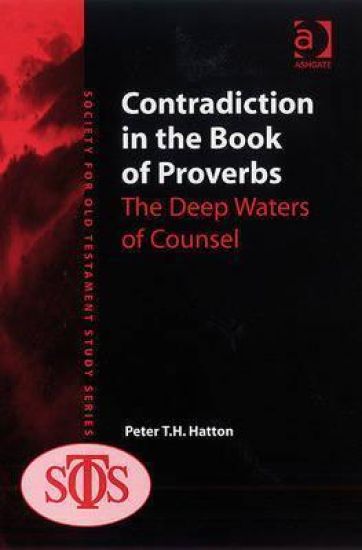
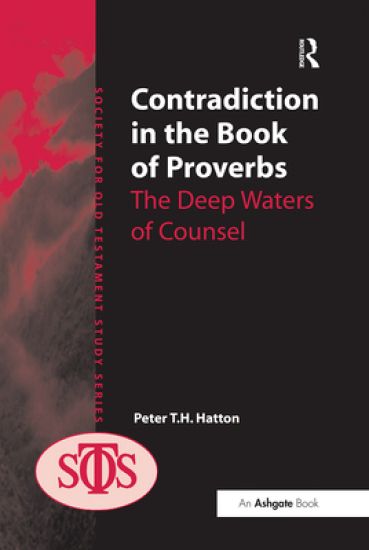
Contradiction in the Book of Proverbs

Contradiction in the Book of Proverbs

Peter Hatton

Ashgate Publishing Limited
2008
sidottu
Despite the welcome revival of scholarly interest in Biblical Wisdom, the Book of Proverbs remains neglected. It continues to be seen as a disorganised repository of traditional banalities, while Job and Qohelet are viewed as more exciting texts, in revolt against Proverbs' conventional wisdom. Contradiction in the Book of Proverbs argues that this misleading consensus owes more to scholarly presuppositions than to the content of Proverbs; it sees Proverbs as a challenging work, one that aims to provoke a critical appropriation of wisdom and in which diverse sources have been skilfully brought together by a creative final editor to form a complex unity. Many divergences from the Hebrew in the Greek witness to the translator's discomfort with his spikey, provocative original. Peter Hatton challenges many existing scholarly assumptions and calls for a re-evaluation of the role and significance of Proverbs in relation to the other biblical wisdom books and the whole canon.
Contradiction in the Book of Proverbs

Contradiction in the Book of Proverbs

Peter Hatton

Taylor Francis Ltd
2021
nidottu
Despite the welcome revival of scholarly interest in Biblical Wisdom, the Book of Proverbs remains neglected. It continues to be seen as a disorganised repository of traditional banalities, while Job and Qohelet are viewed as more exciting texts, in revolt against Proverbs' conventional wisdom. Contradiction in the Book of Proverbs argues that this misleading consensus owes more to scholarly presuppositions than to the content of Proverbs; it sees Proverbs as a challenging work, one that aims to provoke a critical appropriation of wisdom and in which diverse sources have been skilfully brought together by a creative final editor to form a complex unity. Many divergences from the Hebrew in the Greek witness to the translator's discomfort with his spikey, provocative original. Peter Hatton challenges many existing scholarly assumptions and calls for a re-evaluation of the role and significance of Proverbs in relation to the other biblical wisdom books and the whole canon.
Duce: The Contradictions of Power

Duce: The Contradictions of Power

Peter J. Williamson

C HURST CO PUBLISHERS LTD
2023
sidottu
Eighty years after the fall of Benito Mussolini, controversy remains about what his dictatorship represented. This reflects the different sides to the Duce's leadership: while adept at nurturing and enforcing his personal political power, Mussolini's lack of insight into the requirements of governance prevented him from converting this power into influence to achieve his goals. His efforts to maintain the support of Italy's conservative elites--economic, social and political--also created tensions with his radical Fascist ambitions, diminishing the momentum behind his regime. Mussolini is frequently portrayed as a charismatic leader, but his rule was secured principally by coercion, violence and a 'spoils system'. Nonetheless, his personality cult had significant popular appeal, even if based upon a political myth. This enabled him to consolidate his position and to dominate his Fascist colleagues--but at a price of over-centralised, dysfunctional decision-making. In this book, the first comprehensive English- language study of Mussolini in nearly two decades, Peter J. Williamson brings to life the contradictions within the Duce's leadership. Using a wide range of sources, Williamson reveals how these conflicts impeded the dictator's ambitions, leaving him increasingly frustrated, all while most Italians endured the severe privations of both failure and Fascism.
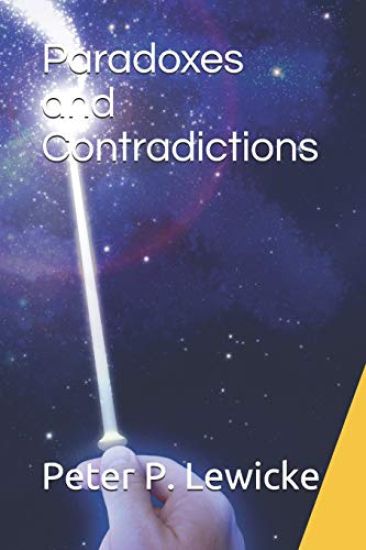
Paradoxes and Contradictions

Paradoxes and Contradictions

Peter P. Lewicke

Independently Published
2018
nidottu
Paradoxes and Contradictions is the sequel to Harry's Time Tours. It an an expansive and humorous overview of human development. Harry D. Black was born in 1982 in a different space-time. He studied Physics, programming, and time travel in college. After graduation, he was hired by Ouranos Corporation, the big time travel company, and he wrote software for them for several years, then he was transferred to training and troubleshooting. In 2014 for unknown reasons he was ejected from that space-time into this one. He arrived with a time machine and much of the documentation for it. This volume of Harry's activities is primarily about what happened subsequent to the Gods complaining about belligerent behavior of humans. Harry improved the matter, but physics required that what had happened couldn't be changed in this space-time.Paradoxes and Contradictions further details the life and activities of Harry and his partner, Mary. Highlights include bringing some people from the past into the Twenty-first century to cure them of what killed them, including Pope Joan, Edgar Allan Poe, and H. P. Lovecraft. The Gods asked how the universe could be improved. Harry's opinion was that it would be difficult or impossible to improve it, because of the deterministic nature of space-time. Harry's Interstellar subsidiary develops all of the Earth-like planets available, making Harry even wealthier. There is more potential in the Interstellar division, but it also produces problems, and as Earthers seek to escape Earth in greater numbers, there certainly will be more problems. In his centuries long career, remember the advantage of the pandemic virus, Harry changes history in the hope of improving the present, but he had already told the clients (the Gods) that it wouldn't work right; it only causes the space-time to bifurcate, so this space-time would be unchanged, but the newly created space-time would have the change. As you should remember, the Really Great Pandemic created the situation behind most of Harry's activities, when it eliminated more than ninety percent of the Earth's population, and the enhancements to Everett's Universal Wave Theory that Devlin made in many versions of apace-time provided the tools that Harry needed. For fun and profit, he plunders buried loot, and Lovecraft recovers the actual Ark of the Covenant. And he even added to evolution, by accident.But Harry is more interested in the how and why, rather than simply the actions. In the course of other events, readers will also learn more about the Gods and Goddesses, such as what is the story with Ekwamedha? And does Hebe actually make people younger?Also learn the truth about some events in antiquity: What really happened to Atlantis? And where was it? You may not care what will happen in the twenty-seventh century, but some of that history lies at your fingertips, and saving people who had died in the past can be interesting. Pope Joan was a woman of her time, the Dark Ages, but that didn't prevent her from becoming educated, taking holy orders in the ninth century and being elected Pope, but it also resulted in her going into labor during a procession a few years later, and she would have died from injuries inflicted by people who didn't want the Pope bearing children. But after the Really Great Pandemic, there will be demand for women as priests, but Christianity will be dying by then, and the old Faith has no trouble accommodating women, but imagine how Pope Joan will think about that. readers regret that Edgar Allan Poe died as he did; Harry and Mary did something about that. T hey saved him from that original death and brought him to the twenty-second century to cure him of the underlying problems, and he has lived happily since then. H.P. Lovecraft was treated similarly. Paradoxes and Contradictions will expand your understanding of the past, present, and future, and of the philosophical underpinnings of all.
Der «Allegorische Reichsadler» Von Conrad Celtis Und Hans Burgkmair
Gegenstand der vorliegenden Studie ist der sog. Allegorische Reichsadler, ein Einblattholzschnitt von betrachtlicher Groesse. Der Humanist Conrad Celtis (1459-1508) entwarf das ikonographische Programm, der Augsburger Kunstler Hans Burgkmair (1473-1531) sorgte fur die uberzeugende Darstellung. Kaiser Maximilian hatte im Oktober 1501 auf Wunsch und Drangen des Celtis an der Wiener Universitat ein Dichter- und Mathematikerkolleg gegrundet. Celtis, der Vorstand dieser innovativen Institution, brachte den Allegorischen Reichsadler wohl als Prasent in Umlauf, um fur sein Kolleg zu werben. Fur den heutigen Betrachter ist dieser Einblattholzschnitt ein "Ratselbild", die kleinteilige allegorische Darstellung gibt ihre Intentionen nicht ohne weiteres zu erkennen. Erst der Ruckgriff auf geeignete zeitgenoessische Dokumente verschafft uns Aufschluss uber Sinn und Bedeutung des Bildganzen wie seiner Details. Dabei zeigt sich, dass wir ein "Denkbild" mit programmatischem Anspruch vor Augen haben, das weit uber die Tagesaktualitat hinaus poetologische Grundpositionen in bildhaft-enigmatischer Kurze vor Augen stellt.