Kirjojen hintavertailu. Mukana 11 627 363 kirjaa ja 12 kauppaa.

Kirjahaku

Etsi kirjoja tekijän nimen, kirjan nimen tai ISBN:n perusteella.

1000 tulosta hakusanalla Philip Monk

Philip Kaufman

Philip Kaufman

Annette Insdorf

University of Illinois Press
2012
nidottu
American director Philip Kaufman is hard to pin down: a visual stylist who is truly literate, a San Franciscan who often makes European films, he is an accessible storyteller with a sophisticated touch. Celebrated for his vigorous, sexy, and reflective cinema, Kaufman is best known for his masterpiece The Unbearable Lightness of Being and the astronaut saga The Right Stuff. His latest film, Hemingway & Gellhorn(premiering May 2012 on HBO), stars Nicole Kidman and Clive Owen. In this study, Annette Insdorf argues that the stylistic and philosophical richness of Kaufman's cinema makes him a versatile auteur. She demonstrates Kaufman's skill at adaptation, how he finds the precise cinematic device for a story drawn from seemingly unadaptable sources, and how his eye translates the authorial voice from books that serve as inspiration for his films. Closely analyzing his movies to date (including Invasion of the Body Snatchers, The Wanderers, and Quills), Insdorf links them by exploring the recurring and resonant themes of sensuality, artistic creation, codes of honor, and freedom from manipulation. While there is no overarching label or bold signature that can be applied to his oeuvre, she illustrates the consistency of themes, techniques, images, and concerns that permeates all of Kaufman's works.
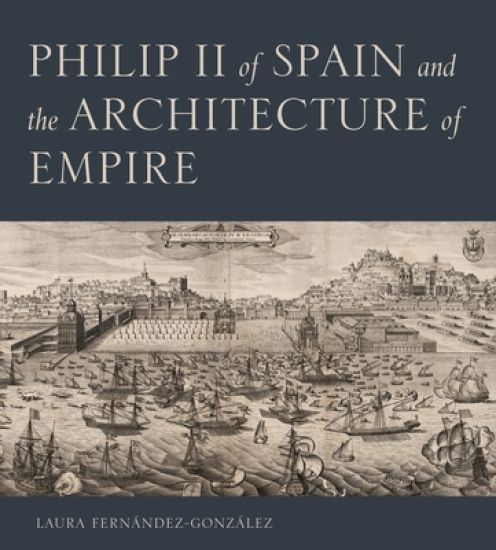
Philip II of Spain and the Architecture of Empire

Philip II of Spain and the Architecture of Empire

Laura Fernández-González

Pennsylvania State University Press
2021
sidottu
Philip II of Spain was a major patron of the arts, best known for his magnificent palace and royal mausoleum at the Monastery of San Lorenzo of El Escorial. However, neither the king’s monastery nor his collections fully convey the rich artistic landscape of early modern Iberia. In this book, Laura Fernández-González examines Philip’s architectural and artistic projects, placing them within the wider context of Europe and the transoceanic Iberian dominions.Philip II of Spain and the Architecture of Empire investigates ideas of empire and globalization in the art and architecture of the Iberian world during the sixteenth century, a time when the Spanish Empire was one of the largest in the world. Fernández-González illuminates Philip’s use of building regulations to construct an imperial city in Madrid and highlights the importance of his transformation of the Simancas fortress into an archive. She analyzes the refashioning of his imperial image upon his ascension to the Portuguese throne and uses the Hall of Battles in El Escorial as a lens through which to understand visual culture, history writing, and Philip’s kingly image as it was reflected in the funeral commemorations mourning his death across the Iberian world. Positioning Philip’s art and architectural programs within the wider cultural context of politics, legislation, religion, and theoretical trends, Fernández-González shows how design and images traveled across the Iberian world and provides a nuanced assessment of Philip’s role in influencing them. Original and important, this panoramic work will have a lasting impact on Philip II’s artistic legacy. Art historians and scholars of Iberia and sixteenth-century history will especially value Fernández-González’s research.
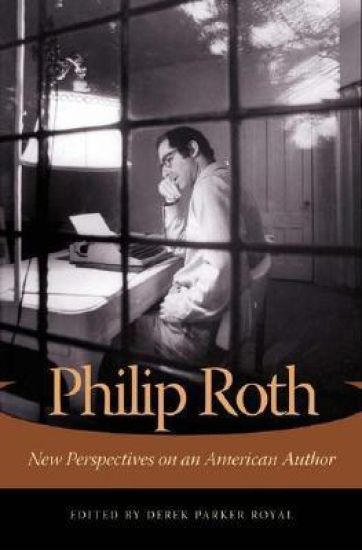
Philip Roth

Philip Roth

Derek Parker Royal

Praeger Publishers Inc
2005
sidottu
Of all contemporary American writers, Philip Roth is perhaps the most ambitious, yet he is one of the most underrepresented in terms of critical attention given his place in American letters. Unlike many aging novelists, whose production and creative mastery wane over time, Roth has demonstrated a unique ability not only to sustain his literary output, but also to surpass the scope and talent inherent in his previous writings. He has been awarded many literary honors, and in the 1990s alone he won every major American book award. This long-overdue collection of essays covers Roth's entire output and links themes across works, highlighting those thoughts and ideas that recur frequently. Unlike older introductions to Roth's writings, this volume will provide up-to-date coverage of all his works. Each chapter introduces the work or works under discussion, provides a brief summary of the story, and moves on to a lively analysis of its various literary elements and its significance in Roth's overall body of work. While each chapter focuses on the central issues in the specific work, several larger themes that run throughout many of his writings will be addressed, including the rise of suburbanization in post-war America, the problems and prominence of the family, American (Jewish) ethnicity, comedy and satire, the costs of literary celebrity, the promises and failures of the American dream, and others. Newcomers to and fans alike will find everything they need in this volume to build a better appreciation of Roth's work.
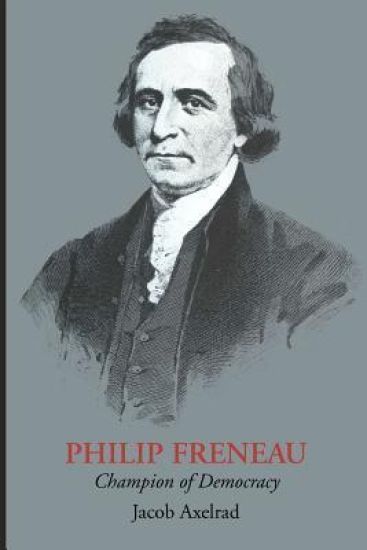
Philip Freneau

Philip Freneau

Jacob Axelrad

University of Texas Press
1966
pokkari
Philip Freneau was a poet, editor, and mariner. A graduate of Princeton, he was the roommate of James Madison and a classmate of Hugh Henry Brackenridge and Aaron Burr. When the colonies rebelled against England, he supported his newly born nation as a privateer, spending some time in a British prison as a result. He also served, more effectively, as “the poet of the Revolution.” Later he became the journalistic voice of the democrats. Ardently devoted to liberty, he believed himself to be a defender of the common man, for whom he fought selflessly and often vitriolicly throughout his life. In newspapers such as The Freeman’s Journal, The New York Daily Advertiser, The National Gazette, The Jersey Chronicle, and The Time-Piece, he published articles, letters, and poems, instructing the citizens of the new Republic about their rights, and attacking those who, he believed, were infringing on those rights. In the midst of the controversy in which he was so often involved, he also found time to write a small body of poetry whose sensitivity and beauty mark him as the poetic equal of his European contemporaries, and, in fact, as a precursor of the new Romantic movement In Philip Freneau: Champion of Democracy Jacob Axelrad provides a detailed biography of this pensman of the Revolution and early Republic. He gives a sympathetic, imaginative, perceptive, yet objective interpretation of Freneau and his place in history, and at the same time he presents a delightfully readable and clear picture of the period during which the poet lived. These pages not only re-create the battles between Whig and Tory, federalist and democrat, but they also are alive with the activities and philosophies of the men who made American history. James Madison, Thomas Jefferson, Alexander Hamilton, George Washington, John Adams, James Monroe go about the business of creating and shaping a new country, and as they do, they move into and out of the life of the poet of Monmouth, influencing him in a variety of ways. Above all, Axelrad brings to life for the reader the man Freneau: simple, direct, often uncritical in his devotion to the cause he believed in; courageous in sustaining his stand against strong opposition; disillusioned and pessimistic about human nature, yet boldly optimistic about the future of humanity and of his country. And always behind the furor the reader is aware of the man struggling to provide a living for himself and his family, and never quite succeeding.
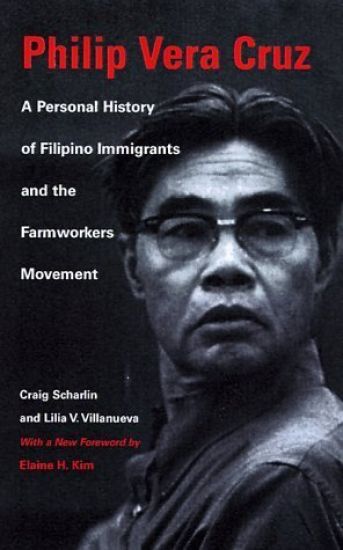
Philip Vera Cruz

Philip Vera Cruz

Craig Scharlin; Lilia Villanueva

University of Washington Press
2000
pokkari
Filipino farmworkers sat down in the grape fields of Delano, California, in 1965 and began the strike that brought about a dramatic turn in the long history of farm labor struggles in California. Their efforts led to the creation of the United Farm Workers union under Cesar Chavez, with Philip Vera Cruz as its vice-president and highest-ranking Filipino officer.Philip Vera Cruz (1904–1994) embodied the experiences of the manong generation, an enormous wave of Filipino immigrants who came to the United States between 1910 and 1930. Instead of better opportunities, they found racial discrimination, deplorable living conditions, and oppressive labor practices. In his deeply reflective and thought-provoking oral memoir, Vera Cruz explores the toll these conditions took on both families and individuals.Craig Scharlin and Lilia V. Villanueva met Philip Vera Cruz in 1974 as volunteers in the construction of Agbayani Village, the United Farm Workers retirement complex in Delano, California. This oral history, first published in 1992, is the product of hundreds of hours of interviews. Elaine H. Kim teaches Asian American studies at the University of California, Berkeley, and is the author of Asian American Literature: An Introduction to the Writings and Their Social Context.
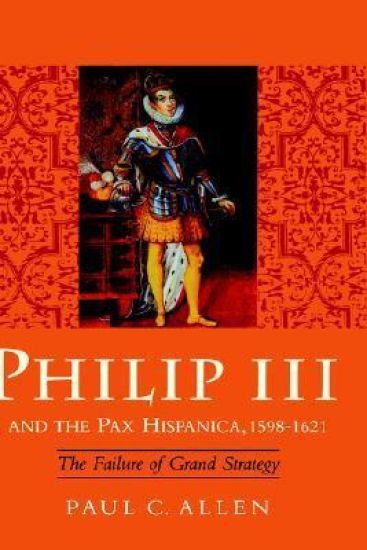
Philip III and the Pax Hispanica, 1598-1621

Philip III and the Pax Hispanica, 1598-1621

Paul Allen

Yale University Press
2000
sidottu
Impoverished and exhausted after fifty years of incessant warfare, the great Spanish Empire at the turn of the sixteenth century negotiated treaties with its three most powerful enemies: England, France, and the Netherlands. This intriguing book examines the strategies that led King Philip III to extend the laurel branch to his foes. Paul Allen argues that, contrary to widespread belief, the king’s gestures of peace were in fact part of a grand strategy to enable Spain to regain military and economic strength while its opponents were falsely lulled away from their military pursuits. From the outset, Allen contends, Philip and his advisers intended the Pax Hispanica to continue only until Spain was able to resume its battles—and defeat its enemies.Drawing on primary sources from the four countries involved, the book begins with a discussion of how Spanish foreign policy was formulated and implemented to achieve political and religious aims. The author investigates the development of Philip’s “peace” strategy, the Twelve Years’ Truce, and the decision to end the truce and engage in war with the Dutch, and then with the English and French. Renewed warfare was no failure of peace policy, Allen shows, but a conscious decision to pursue a consistent strategy. Nevertheless the negotiation for peace did represent a new diplomatic method with significant implications for both the future of the Spanish Empire and the practices of European diplomacy.
Philip of Spain

Philip of Spain

Henry Kamen

Yale University Press
1999
pokkari
"A historian’s biography of Philip II as Renaissance prince, refuting the Elizabethan propaganda picture of the spider of the Escorial."—New York Times Book Review (And Bear in Mind)"In humanizing a man too often viewed as a cardboard tyrant, Kamen has made a valuable contribution to European historiography."—Booklist Philip II of Spain—ruler of the most extensive empire the world had ever known—has been viewed in a harsh and negative light since his death in 1598. Identified with repression, bigotry, and fanaticism by his enemies, he has been judged more by the political events of his reign than by his person. This book, published four hundred years after Philip's death, is the first full-scale biography of the king. Placing him within the social, cultural, religious, and regional context of his times, it presents a startling new picture of his character and reign. Drawing on Philip's unpublished correspondence and on many other archival sources, Henry Kamen reveals much about Philip the youth, the man, the husband, the father, the frequently troubled Christian, and the king. Kamen finds that Philip was a cosmopolitan prince whose extensive experience of northern Europe broadened his cultural imagination and tastes, whose staunchly conservative ideas were far from being illiberal and fanatical, whose religious attitudes led him to accept a practical coexistence with Protestants and Jews, and whose support for Las Casas and other defenders of the Indians in America helped determine government policy. Shedding completely new light on most aspects of Philip's private life and, in consequence, on his public actions, the book is the definitive portrayal of Philip II.
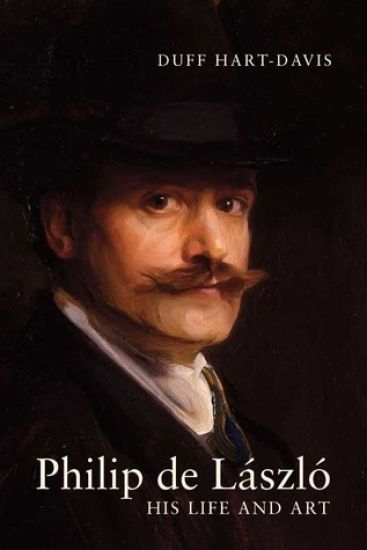
Philip de László

Philip de László

Duff Hart-Davis

Yale University Press
2010
sidottu
Philip de László (1869–1937) was born into a humble Hungarian family in Budapest and rose to become the preeminent portrait artist working in Britain between 1907 and 1937. He painted nearly 3,000 portraits, including those of numerous kings and queens, four American presidents, and countless members of the European nobility. “Has any one painter ever before painted so many interesting and historical personages?” asked his contemporaries. There has been no biography of him since 1939, and this new account of both his life and his work draws on previously untapped material from the family archive of over 15,000 documents, to which the author has had unrivaled access. It establishes the intrinsic importance of his art and re-positions him in his rightful place alongside his great contemporaries John Singer Sargent, Sir John Lavery, and Giovanni Boldini.
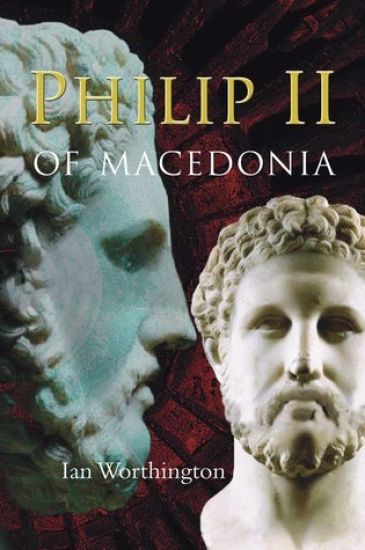
Philip II of Macedonia

Philip II of Macedonia

Ian Worthington

Yale University Press
2010
pokkari
Alexander the Great is remembered as a brilliant conqueror, but his father’s achievements as a leader were greater still Alexander the Great is probably the most famous ruler of antiquity, and his spectacular conquests are recounted often in books and films. But what of his father, Philip II, who united Macedonia, created the best army in the world at the time, and conquered and annexed Greece? This landmark biography is the first to bring Philip to life, exploring the details of his life and legacy and demonstrating that his achievements were so remarkable that it can be argued they outshone those of his more famous son. Without Philip, Greek history would have been entirely different.Taking into account recent archaeological discoveries and reinterpreting ancient literary records, Ian Worthington brings to light Philip’s political, economic, military, social, and cultural accomplishments. He reveals the full repertoire of the king’s tactics, including several polygamous diplomatic marriages, deceit, bribery, military force, and a knack for playing off enemies against one another. The author also inquires into the king’s influences, motives, and aims, and in particular his turbulent, unraveling relationship with Alexander, which may have ended in murder. Philip became in many ways the first modern regent of the ancient world, and this book places him where he properly belongs: firmly at the center stage of Greek history.
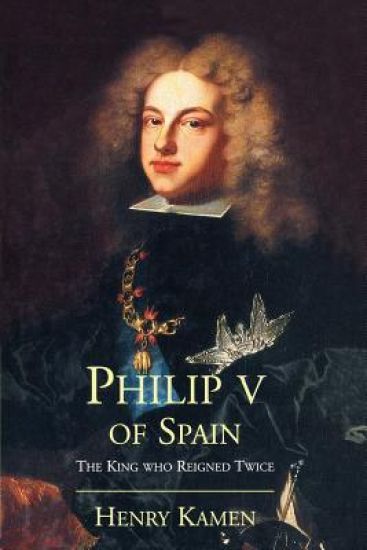
Philip V of Spain

Philip V of Spain

Henry Kamen

Yale University Press
2011
pokkari
Philip V, who reluctantly assumed the Spanish throne in 1700, was the first of the Bourbon dynasty which continues to reign today. Philip’s forty-six-year reign, briefly curtailed in 1724 when he abdicated in favor of his short-lived son, Louis I, was one of the most important in the country’s history. This highly readable account is the first biography of Philip V in English.Previous writing on Philip has been largely negative, dismissing him as comic, stupid, and indolent. Henry Kamen demonstrates here, however, that the king initiated significant developments in politics, imperial policy, finance, government, and the army that laid the basis of the modern Spanish state. Philip also encouraged literature, the creative arts, and music in ways that brought Spanish culture closer in touch with Europe, and he dealt authoritatively with issues concerning the autonomy of the provinces of Spain and the role of the monarchy itself. Drawing on both contemporary sources and fresh archival sources, Kamen discusses Philip’s character, decisions, and policies. Kamen’s account of Philip as king provides an essential introduction to the study of early eighteenth-century Spain and the Bourbon monarchy.
Philip Roth

Philip Roth

Steven J. Zipperstein

YALE UNIVERSITY PRESS
2026
sidottu
A landmark biography of one of our most prominent chroniclers of American life In this groundbreaking literary biography, Steven J. Zipperstein captures the complex life and astonishing work of Philip Roth (1933–2018), one of America’s most celebrated writers. Born in Newark, New Jersey—where his short stories and books were often set—Roth wrote with ambition and awareness of what was required to produce great literature. No writer was more dedicated to his craft, even as he was rubbing shoulders with the Kennedys and engaging in a spate of famous and infamous romances. And yet, as much as Roth wrote about sex and self, he viewed himself as socially withdrawn, living much like an “unchaste monk” (his words). Zipperstein explores the unprecedented range of Roth’s work—from “Goodbye, Columbus” and Portnoy’s Complaint to the Pulitzer Prize–winning American Pastoral and The Plot Against America. Drawing on extensive archival materials and over one hundred interviews, including conversations with Roth about his life and work, Zipperstein provides an intimate and insightful look at one of the twentieth century’s most influential writers, placing his work in the context of his obsessions, as well as American Jewishness, freedom, and sexuality.
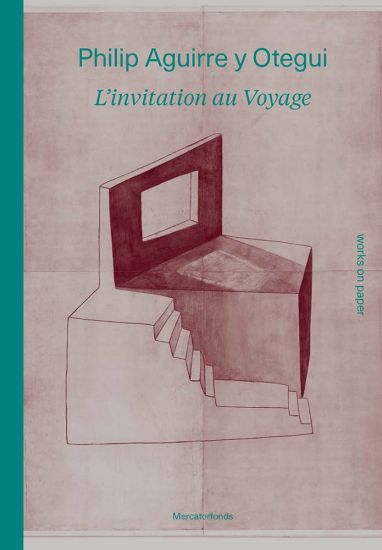
Philip Aguirre y Otegui: L’invitation au voyage

Philip Aguirre y Otegui: L’invitation au voyage

Simon Njami

YALE UNIVERSITY PRESS
2023
sidottu
Multitalented artist Philip Aguirre sees his prints as completed products. His drawings, however, serve a very different purpose within his work. He views these drawings as the start of a thought process, forming a consistent thread throughout what is, for him, a vitally important method of creation. In that process, it is not unusual to see historic heritage as a source of his inspiration. Thus, his work engages with reoccurring themes such as the spring and water in the world, immigration and refugees, and the story of Africa threading throughout his oeuvre. This book focuses on the broad palette of disciplines that Aguirre practices, reflecting on these important reoccurring themes that have been present throughout his career, as well as the role played by printmaking in his work. It also highlights the selection of prints and drawings from the rich oeuvre that he has built up over the last 40 years, which he recently donated to the collection of modern prints and drawings for the Plantin Moretus Museum print cabinet. Distributed for MercatorfondsExhibition Schedule:Plantin Moretus Museum, Antwerp, Belgium. The Print Cabinet. 27 0ctober 2022 – February 2023.
Philip K. Dick

Philip K. Dick

Samuel J. Umland

Praeger Publishers Inc
1995
sidottu
This book contains 11 essays and a comprehensive bibliography. The essays reveal the extent to which Philip K. Dick's personal obsessions pre-figured postmodernist concerns with humanity's self-alienation, cultural and personal paranoia, and the politics of simulation, deceit, and self-deception. The contributors reveal how Dick's ontological concerns, stated in his repeated questioning of What is real?, are also political concerns. Thus, they examine the philosophical and religious foundations on which his work rests, offering much-needed arguments which reveal both his philosophical depth and the extent to which he drew from esoteric and occult religions. His cultural critique also receives significant exposition, as the contributors reveal how Dick's fiction enacts the larger cultural struggles of cold war America, with its conflicting private visions and public realities, and its personal and political loyalties. The contributors argue for the significance of heretofore neglected or marginalized texts of Dick as well, including in their discussions many early short stories from the early 1950s and neglected novels of the mid-1960s, arguing that there is a need to understand how Dick shaped (or misshaped) his fictions so as to reimagine the life of his society.
Philip Larkin and English Poetry

Philip Larkin and English Poetry

T. Whalen

Palgrave Macmillan
1990
sidottu
Philip Larkin and English Poetry is a practical criticism of Larkin's poetry which discusses the poet's views on poetry as they are made visible in his prose writings and his interviews, Larkin's affinities with a series of other English poets (including Dr Samuel Johnson, D.H. Lawrence and the Imagists, and Ted Hughes, Thom Gunn and R.S. Thomas) which have been overlooked by previous critics are referred to, and Terry Whalen provides close readings of the individual poems that will appeal to both the first-time reader of Larkin's works and those who are seasoned readers of England's finest poet. Whalen stresses the depth and integrity of the `other' Larkin, the poet of beauty and of witness who explores the world of observation with a hunger for meaning and a sense of wonder which earlier reviewers and critics have tended to ignore.
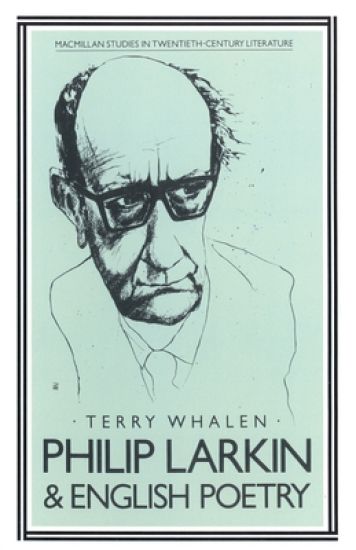
Philip Larkin and English Poetry

Philip Larkin and English Poetry

T. Whalen

Palgrave Macmillan
1990
nidottu
Philip Larkin and English Poetry is a practical criticism of Larkin's poetry which discusses the poet's views on poetry as they are made visible in his prose writings and his interviews, Larkin's affinities with a series of other English poets (including Dr Samuel Johnson, D.H. Lawrence and the Imagists, and Ted Hughes, Thom Gunn and R.S. Thomas) which have been overlooked by previous critics are referred to, and Terry Whalen provides close readings of the individual poems that will appeal to both the first-time reader of Larkin's works and those who are seasoned readers of England's finest poet. Whalen stresses the depth and integrity of the `other' Larkin, the poet of beauty and of witness who explores the world of observation with a hunger for meaning and a sense of wonder which earlier reviewers and critics have tended to ignore.
Philip Larkin

Philip Larkin

Stephen Regan

Red Globe Press
1997
nidottu
Since his death in 1985, Philip Larkin's reputation as a writer has undergone a profound and dramatic transformation. With the publication of a candid biography, a controversial collection of letters and a comprehensive edition of the poems, the abiding interests and concerns of Larkin criticism have been radically altered. At the same time, the impact of literary theory has brought a new set of critical perspectives and approaches to bear on the poetry. The essays in this volume abandon the tired cliches of an older critical consensus and offer a lively, provocative response to such issues as sexual politics, national identity and post-colonialism in the work of a writer widely regarded as the best Poet Laureate Britain never had.
Philip II

Philip II

Patrick Williams

Red Globe Press
2001
nidottu
Four hundred years after his death, Philip II remains one of the most controversial figures in history, admired and reviled in equal measure. He is a figure of global importance, the first ruler on whose territories the sun never set. He led Europe in its defence against the seemingly irresistable power of the Ottoman Empire and many of the nations of Western Europe were forged in part by their responses to his ambitions - Portugal was conquered and most of Italy was controlled by him, while the Low Countries, England and France fought long and bitter wars against him. Philip proclaimed himself the leader of Catholic Europe but quarrelled incessantly with the popes of the Counter-Reformation. In consolidating his monarchy in Spain, Philip used the arts as a political tool; Titian and Palestrina did some of their greatest work for him.This new study traces the development of Philip II and of a kingship that lay at the heart of European political, religious and cultural evolution. It looks in detail at the ministers who worked with this most demanding of kings and at the government that evolved during his reign. It deals also with the pressures of a tortured private life and explores the paradox of a man who as a young ruler was deeply prudent but who became extraordinarily aggressive in his old age and who by his successes and failures - both of them on an epic scale - re-shaped the world in which he lived.
Philip Yancey Recommends: Orthodoxy

Philip Yancey Recommends: Orthodoxy

G K Chesterton

Hodder Stoughton
1999
pokkari
'Why anyone would pick up a book with that formidable title eludes me,' writes Philip Yancey of G. K. Chesterton's Orthodoxy. 'But one day I did so and my faith has never recovered. I was experiencing a time of spiritual dryness in which everything seemed stale, warmed over, lifeless. Orthodoxy brought freshness and, above all, a new spirit of adventure.''We direly need another Chesterton today, I think. In a time when culture and faith have drifted even further apart, we could use his brilliance, his entertaining style, and above all his generous and joyful spirit. He managed to propound the Christian faith with as much wit, good humour and sheer intellectual force as anyone in this century.'Since its first publication in 1908, this classic work has represented a pivotal step in the adoption of a credible faith by many other Christian thinkers, including C. S. Lewis. Written as a spiritual autobiography, it stands as a remarkable and inspirational apologetic for Christianity.
Philip Skippon and the British Civil Wars
Philip Skippon was the third-most senior general in parliament’s New Model Army during the British Civil Wars. A veteran of European Protestant armies during the period of the Thirty Years’ War and long-serving commander of the London Trained Bands, no other high-ranking parliamentarian enjoyed such a long military career as Skippon. He was an author of religious books, an MP and a senior political figure in the republican and Cromwellian regimes. This is the first book to examine Skippon’s career, which is used to shed new light on historical debates surrounding the Civil Wars and understand how military events of this period impacted upon broader political, social and cultural themes.
Philip Doddridge and the Shaping of Evangelical Dissent
Evangelical Dissent in the early eighteenth century had to address a variety of intellectual challenges. How reliable was the Bible? Was traditional Christian teaching about God, humanity, sin and salvation true? What was the role of reason in the Christian faith? Philip Doddridge (1702-51) pastored a sizeable evangelical congregation in Northampton, England, and ran a training academy for Dissenters which prepared men for pastoral ministry. Philip Doddridge and the Shaping of Evangelical Dissent examines his theology and philosophy in the context of these and other issues of his day and explores the leadership that he provided in evangelical Dissent in the first half of the eighteenth century. Offering a fresh look at Doddridge’s thought, the book provides a criticial examination of the accepted view that Doddridge was influenced in his thinking primarily by Richard Baxter and John Locke. Exploring the influence of other streams of thought, from John Owen and other Puritan writers to Samuel Clarke and Isaac Watts, as well as interaction with contemporaries in Dissent, the book shows Doddridge to be a leader in, and shaper of, an evangelical Dissent which was essentially Calvinistic in its theology, adapted to the contours and culture of its times.