Kirjojen hintavertailu. Mukana 11 448 380 kirjaa ja 12 kauppaa.

Kirjahaku

Etsi kirjoja tekijän nimen, kirjan nimen tai ISBN:n perusteella.

1000 tulosta hakusanalla Phillip Good

Theology of Money

Theology of Money

Philip Goodchild

Duke University Press
2009
pokkari
Theology of Money is a philosophical inquiry into the nature and role of money in the contemporary world. Philip Goodchild reveals the significance of money as a dynamic social force by arguing that under its influence, moral evaluation is subordinated to economic valuation, which is essentially abstract and anarchic. His rigorous inquiry opens into a complex analysis of political economy, encompassing markets and capital, banks and the state, class divisions, accounting practices, and the ecological crisis awaiting capitalism. Engaging with Christian theology and the thought of Carl Schmitt, Georg Simmel, Karl Marx, Adam Smith, and many others, Goodchild develops a theology of money based on four contentions, which he elaborates in depth. First, money has no intrinsic value; it is a promise of value, a crystallization of future hopes. Second, money is the supreme value in contemporary society. Third, the value of assets measured by money is always future-oriented, dependent on expectations about how much might be obtained for those assets at a later date. Since this value, when realized, will again depend on future expectations, the future is forever deferred. Financial value is essentially a degree of hope, expectation, trust, or credit. Fourth, money is created as debt, which involves a social obligation to work or make profits to repay the loan. As a system of debts, money imposes an immense and irresistible system of social control on individuals, corporations, and governments, each of whom are threatened by economic failure if they refuse their obligations to the money system. This system of debt has progressively tightened its hold on all sectors and regions of global society. With Theology of Money, Goodchild aims to make conscious our collective faith and its dire implications.
Rethinking Philosophy of Religion

Rethinking Philosophy of Religion

Philip Goodchild

Fordham University Press
2002
sidottu
"Philosophy of religion," in recent decades, has been the study of the rationality, coherence, and truth-claims of classical theism. Yet philosophical reflection on religion has included much more than this: it has been the creative construction of a religious philosophy; it has critically examined claims for religious authority and certainty; it has explored the principles underlying religious thought and life; it has exposed domination, deception, and illusion, it has explored the subjective, practical, and spiritual dimensions of religion. This collection brings together essays by a variety of contemporary philosophers who are working in this broader tradition: Pamela Sue Anderson, Gary Banham, Bettina Bergo, John Caputo, Matthew Haltman, Wayne Hudson, Grace Jantzen, Donna Jowett, Greg Sadler, Graham Ward, and Edith Wyschogrod.
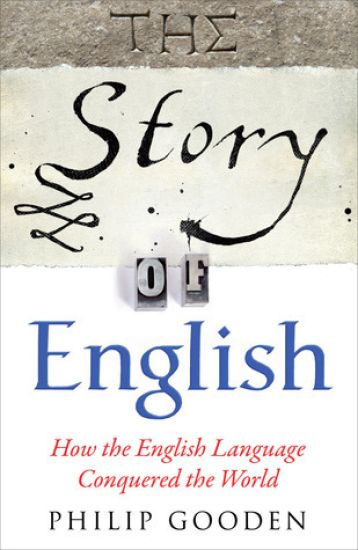
The Story of English

The Story of English

Philip Gooden

Quercus Publishing
2011
pokkari
Born as a Germanic tongue with the arrival in Britain of the Anglo-Saxons in the early medieval period, heavily influenced by Norman French from the 11th century, and finally emerging as modern English from the late Middle Ages, the English language has grown to become the linguistic equivalent of a superpower, and is now sometimes described as the world's lingua franca. Worldwide some 380 million people speak English as a first language and some 600 million as a second language. A staggering one billion people are believed to be learning it. English is the premier international language in communications, science, business, aviation, entertainment, and diplomacy and also on the Internet. It has been one of the official languages of the United Nations since its founding in 1945. It is considered by many good judges to be well on the way to becoming the world's first universal language. Author Philip Gooden tells the story of the English language in all its richness and variety. From the intriguing origins and changing definitions of common words such as 'OK', 'beserk', 'curfew', 'cabal' and 'pow-wow', to the massive transformations wrought in the vocabulary and structure of the language by Anglo-Saxon and Norman conquest, through to the literary triumphs of Beowulf, The Canterbury Tales and the works of Shakespeare. The Story of English is a fascinating tale of linguistic, social and cultural transformation, and one that is accessibly and authoritatively told by an author in perfect command of his material.
On the Frontiers of the Indian Ocean World

On the Frontiers of the Indian Ocean World

Philip Gooding

Cambridge University Press
2022
sidottu
This is the first interdisciplinary history of Lake Tanganyika and of eastern Africa's relationship with the wider Indian Ocean World during the nineteenth century. Philip Gooding deploys diverse source materials, including oral, climatological, anthropological, and archaeological sources, to ground interpretations of the better-known, European-authored archive in local epistemologies and understandings of the past. Gooding shows that Lake Tanganyika's shape, location, and distinctive lacustrine environment contributed to phenomena traditionally associated with the history of the wider Indian Ocean World being negotiated, contested, and re-imagined in particularly robust ways. He adds novel contributions to African and Indian Ocean histories of urbanism, the environment, spirituality, kinship, commerce, consumption, material culture, bondage, slavery, Islam, and capitalism. African peoples and environments are positioned as central to the histories of global economies, religions, and cultures.
On the Frontiers of the Indian Ocean World

On the Frontiers of the Indian Ocean World

Philip Gooding

Cambridge University Press
2025
pokkari
This is the first interdisciplinary history of Lake Tanganyika and of eastern Africa's relationship with the wider Indian Ocean World during the nineteenth century. Philip Gooding deploys diverse source materials, including oral, climatological, anthropological, and archaeological sources, to ground interpretations of the better-known, European-authored archive in local epistemologies and understandings of the past. Gooding shows that Lake Tanganyika's shape, location, and distinctive lacustrine environment contributed to phenomena traditionally associated with the history of the wider Indian Ocean World being negotiated, contested, and re-imagined in particularly robust ways. He adds novel contributions to African and Indian Ocean histories of urbanism, the environment, spirituality, kinship, commerce, consumption, material culture, bondage, slavery, Islam, and capitalism. African peoples and environments are positioned as central to the histories of global economies, religions, and cultures.
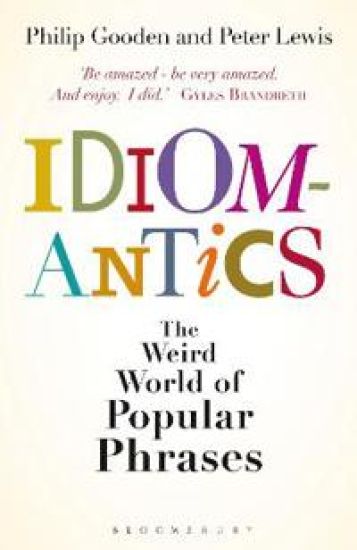
Idiomantics: The Weird World of Popular Phrases

Idiomantics: The Weird World of Popular Phrases

Philip Gooden; Peter Lewis

A C Black Publishers Ltd
2012
sidottu
Idiomantics is a unique exploration of the world of idiomatic phrases. The very etymology of the word 'idiom' reveals what's so endlessly fascinating about the wide range of colourful phrases we use in everyday speech: their peculiarity. They're peculiar both in the sense of being particular or unique to the culture from which they originate, and in the sense of being downright odd. To cite three random examples - from American English, Dutch and Italian - what on Earth are a snow job, a monkey sandwich story, and Mr Punch's secret? Fascinating and illuminating, Idiomantics explains all...The ideal gift for word buffs and in fact, anyone who enjoys a good yarn, this playful book looks at 12 groups of idioms around the world, looking at subjects such as fun and games, gastronomic delights and the daily grind.
Sleep of Death

Sleep of Death

Philip Gooden

Constable
2020
pokkari
'Highly entertaining' Sunday TimesIn the last decade of Elizabeth I's reign, Nick Revill, an aspiring young actor, comes to London seeking fame and fortune. Once there he gains employment with the Chamberlain's Men.Thrown out of his digs over an unfortunate accident, Nick is offered lodgings at a wealthy Thameside mansion by a black-clad youth whose father has just died and whose mother has remarried his uncle. Pondering on the similarities between the young man's story and William Shakespeare's newest tragedy, Hamlet, Nick is charged with the task of finding out whether foul play was involved in the death of the old man and hasty remarriage of his young, lusty wife.As Nick works his way ever closer to the truth, the finger of suspicion begins to point to his enigmatic employer Mr William Shakespeare - actor, author and shareholder in the Chamberlain's Men . . .The first gripping historical mystery in the Nick Revill series, set in the bustling theatrical world of William Shakespeare.Praise for Philip Gooden:'Another clever criminal plunge into history' Guardian'The witty narrative, laced with puns and word play so popular in this period, makes this an enjoyable racy tale' Sunday Telegraph 'The book has much in common with the film Shakespeare in Love - full of colourful characters . . . but the book has an underlying darkness' Crime Time'Historical mystery fans are in for a treat' Publishers Weekly
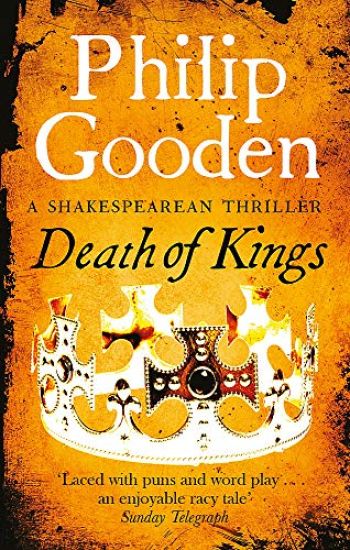
Death of Kings

Death of Kings

Philip Gooden

Constable
2020
pokkari
'Another clever criminal plunge into history' GuardianElizabeth I is nearing the end of her reign with no direct heir and plots and rumours of rebellion abound. The Queen's former favourite, the Earl of Essex, appears to be eager to protect the throne, but some believe he intends to seize it. In the world of the theatre, the Chamberlain's Men are approached by a member of Essex's inner circle.He offers them money to put on a special performance of Shakespeare's "Richard II" - the treasonous drama of monarchy deposed and murdered. And player Nick Revill finds himself forced to act as a government spy and keep watch on his own company. But then the murders start.The second historical murder mystery in the Nick Revill series, set in the bustling theatrical world of William Shakespeare.Praise for Philip Gooden:'Highly entertaining' Sunday Times'The witty narrative, laced with puns and word play so popular in this period, makes this an enjoyable racy tale' Sunday Telegraph'The book has much in common with the film Shakespeare in Love - full of colourful characters . . . but the book has an underlying darkness' Crime Time'Historical mystery fans are in for a treat' Publishers Weekly
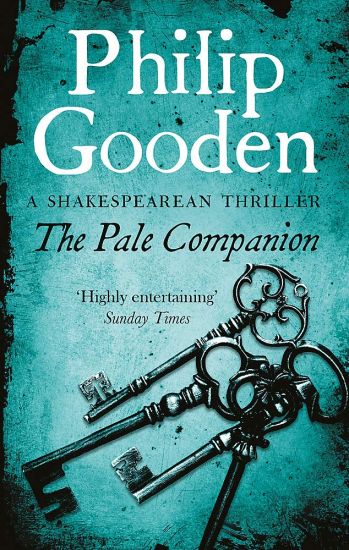
The Pale Companion

The Pale Companion

Philip Gooden

Constable
2020
pokkari
'Highly entertaining' Sunday TimesMidsummer 1601. Nick Revill and his fellow actors in the Chamberlain's Men are journeying across the Wiltshire Downs for a country-house presentation of Shakespeare's A Midsummer Night's Dream.It should be a pleasant, well-paid jaunt to celebrate a noble marriage, but when the actors arrive at their destination, Instede House, they enter a tense atmosphere. Lord Elcombe is pushing his older son into a marriage that the son seems set against, while in the nearby woods a wild man called Robin talks in riddles of long-hidden family secrets. In another quarter of the great estate lodges a travelling band of fire-and-brimstone morality players called the Paradise Brothers. The first death, when it occurs, looks like suicide, but Nick isn't so sure . . . Then a second murder happens right under his nose . . . and turns the Dream into a nightmare.The third Shakespearean murder mystery in the Nick Revill series, set during the reign of the formidable Elizabeth I.Praise for Philip Gooden:'Another clever criminal plunge into history' Guardian'The witty narrative, laced with puns and word play so popular in this period, makes this an enjoyable racy tale' Sunday Telegraph'The book has much in common with the film Shakespeare in Love - full of colourful characters . . . but the book has an underlying darkness' Crime Time'Historical mystery fans are in for a treat' Publishers Weekly
Alms for Oblivion

Alms for Oblivion

Philip Gooden

Constable
2021
pokkari
'Another clever criminal plunge into history' GuardianOn a foggy morning in 1602, a boyhood friend of Nick Revill arrives in London. When Peter Agate announces that he wants to try his hand at acting, what can Nick do but offer him a part with his own company, the Chamberlain's Men, who are putting on a private production of Shakespeare's Troilus and Cressida for the lawyers of Middle Temple.Yet within days Peter Agate is dead, stabbed to death at Nick's lodgings - the beginning of a sequence of violent deaths, each somehow implicating Nick himself. To avoid the hangman's noose Nick must discover the real murderer among a cast of suspects, including an aristocratic brother and sister, a troublemaker from a rival company and an ex-actor who once saw the Devil himself on stage...The fourth historical murder mystery in the Nick Revill series, set in the bustling theatrical world of William Shakespeare.Praise for Philip Gooden:'Highly entertaining' Sunday Times'The witty narrative, laced with puns and word play so popular in this period, makes this an enjoyable racy tale' Sunday Telegraph'The book has much in common with the film Shakespeare in Love - full of colourful characters . . . but the book has an underlying darkness' Crime Time'Historical mystery fans are in for a treat' Publishers Weekly
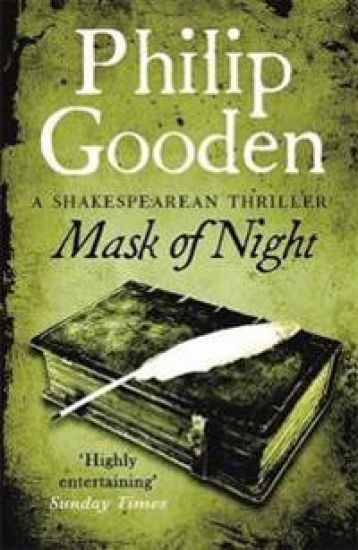
Mask of Night

Mask of Night

Philip Gooden

Constable
2021
pokkari
'Another clever criminal plunge into history' GuardianElizabeth I approaches the end of her illustrious reign, the plague is raging in London, and the Privy Council has ordered the theaters closed. Still, author Philip Gooden's fifth novel in the popular Shakespearean series brings us a great mystery as actor-sleuth Nick Revill and the Chamberlain's Men travel to Oxford, where a local physician, Dr. Hugh Fern, has commissioned a private performance of Romeo and Juliet.While Fern's motive is obscure-an attempt to reconcile two feuding families to the prospect of a marriage, perhaps; or maybe simply a ploy to get himself a role in the production-his fate is not. Indeed, he is decidedly dead, when his body is discovered during a performance at the Golden Cross Inn. No matter that the deceased lies inside a locked room or that the pestilence has followed the Chamberlain troupe from London, Revill is convinced Fern has not succumbed to natural causes.Nor is Fern's death the only one that rouses Revill's suspicions. The mysteries multiply as a strange band of men in cowls patrols the town at night, a simple carter meets a baffling end, and a corpse changes its shoes.The fifth Shakespearean murder mystery in the Nick Revill series, set during the reign of the formidable Elizabeth I.Praise for Philip Gooden:'Highly entertaining' Sunday Times'The witty narrative, laced with puns and word play so popular in this period, makes this an enjoyable racy tale' Sunday Telegraph'The book has much in common with the film Shakespeare in Love - full of colourful characters . . . but the book has an underlying darkness' Crime Time'Historical mystery fans are in for a treat' Publishers Weekly
An Honourable Murderer

An Honourable Murderer

Philip Gooden

Constable
2021
nidottu
'Highly entertaining' Sunday TimesIt's the summer of 1604 and the Spanish are in London. Many years after the ill-fated Armada, they are negotiating a peace treaty with the English. Nick Revill's acting company is given a ceremonial role at the celebrations, but not everybody welcomes this outbreak of peace. In the shifting world of the court there are factions. In the Tower of London sits that implacable enemy of the Spanish, Sir Walter Raleigh, and he has friends on the outside who may try to sabotage the negotiations.Nick, meanwhile, is trying to get on with his playing. Invited by Shakespeare's rival, Ben Jonson, to take part in a masque at Somerset House where the Spanish are lodged, Nick is caught up in a conspiracy. During a rehearsal the courtier Sir Philip Blake dies an apparently accidental death when he tumbles from a 'Deus ex machina' chair which is lowering him to the stageThe sixth Shakespearean murder mystery in the Nick Revill series, set during the reign of the formidable Elizabeth I.Praise for Philip Gooden:'Another clever criminal plunge into history' Guardian'The witty narrative, laced with puns and word play so popular in this period, makes this an enjoyable racy tale' Sunday Telegraph'The book has much in common with the film Shakespeare in Love - full of colourful characters . . . but the book has an underlying darkness' Crime Time'Historical mystery fans are in for a treat' Publishers Weekly
Bad Words

Bad Words

Philip Gooden

Robinson
2019
sidottu
Once upon a time, the worst words you could utter were short, simple and tended to be four letters in length. Now things are more complicated. To be insulted as a 'snowflake' or an 'expert' is arguably worse than being called a **** or a **** or even a ****.So what are today's 'bad words' and how are they different from yesterday's taboo expressions? This entertaining guide to the shifting sands of bad language is indispensable in an increasingly divided world in which abuse becomes ever more widespread and vituperative.Philip Gooden shows how and why taboo words and contentious expressions, including those four-letter ones, were first used in English. He discusses the ways such words have changed over the years and explores how a single syllable or two may possess an almost magical power to offend, distress or infuriate. Bad Words investigates the most controversial and provocative words in the English language in a way that is both anecdotal and analytical. Combining intrigue and scandal, the book delves into expressions connected to religion, ethnicity, nationality, politics, swearing and oaths, and includes contemporary issues like political correctness and elitism.
My Target Was Leningrad

My Target Was Leningrad

Philip Goodall

Fonthill Media
2015
sidottu
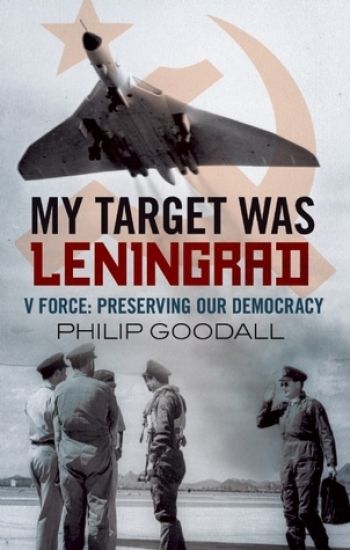
On 6 August and 8 August 1945, the world changed forever with the release of two atomic bombs on Hiroshima and Nagasaki in Japan. In January 1947, the United States informed the British Government that they would not provide technical data for the production of nuclear weapons. It was therefore decided that Britain would produce its own bombs. In July 1944, the first operational jet aircraft, the Meteor, entered service in the RAF and the Government decided to develop jet-powered aircraft capable of dropping nuclear weapons, resulting in the development of the 'V' bombers: Valiant, Vulcan and Victor. As a result of the deteriorating relationship with Russia, the United States, as part of NATO, worked with the UK and co-operated in nuclear operational planning with US bomber aircraft based in the UK. Later, as a result of the development of nuclear power, submarines were fitted with nuclear weapons which resulted in the deterrent role passing from the RAF to the Royal Navy. However, the Cold War provided a unique role and responsibility for the RAF.My Target was Leningrad - V Force: Preserving our Democracy is unique in that it is a human story, not just a list of technical facts and bomber data. With many previously unpublished photographs from the author's private collection, this is the chilling story of what really happened and how close the world came to World War III and a nuclear apocalypse. Unlike other military historians, author Philip Goodall not only flew the mighty V bombers in action, but was also tasked to drop the bomb on Leningrad.
Credit and Faith

Credit and Faith

Philip Goodchild

Rowman Littlefield International
2019
sidottu
In line with the development of political theology and economic theology in contemporary European thought, Credit and Faith offers a critical account of the faith structures within economic life and institutions. Goodchild’s ground-breaking work provides a philosophical appropriation of the economic dimension of the New Testament and fresh theological, philosophical and economic perspectives on the present. Covering the theological roots of the way economic life was, and is, articulated, the philosophical roots of value and debt and the economic roots of credit and creation, this book charts the emergence of early theories of capital and banking through a consideration of credit. It draws on some neglected historical figures, as well as Jules Lagneau, Simone Weil, the Kantian problem of freedom and necessity and a critical reading of the early Marx and of Nietzsche’s genealogy; through this Goodchild explains how the Financial Revolution was able to conceal the credit economy which was its foundation and foster the pursuit of self-interest instead of the common good. This innovative interweaving of theology, philosophy and economics constructs a new metaphysical framework for a critical account of the faith structures within economic life and institutions and returns to the practice of philosophy as a way of life – a practical, engaged, worldy discipline.
Credit and Faith

Credit and Faith

Philip Goodchild

Rowman Littlefield International
2019
nidottu
In line with the development of political theology and economic theology in contemporary European thought, Credit and Faith offers a critical account of the faith structures within economic life and institutions. Goodchild’s ground-breaking work provides a philosophical appropriation of the economic dimension of the New Testament and fresh theological, philosophical and economic perspectives on the present. Covering the theological roots of the way economic life was, and is, articulated, the philosophical roots of value and debt and the economic roots of credit and creation, this book charts the emergence of early theories of capital and banking through a consideration of credit. It draws on some neglected historical figures, as well as Jules Lagneau, Simone Weil, the Kantian problem of freedom and necessity and a critical reading of the early Marx and of Nietzsche’s genealogy; through this Goodchild explains how the Financial Revolution was able to conceal the credit economy which was its foundation and foster the pursuit of self-interest instead of the common good. This innovative interweaving of theology, philosophy and economics constructs a new metaphysical framework for a critical account of the faith structures within economic life and institutions and returns to the practice of philosophy as a way of life – a practical, engaged, worldy discipline.
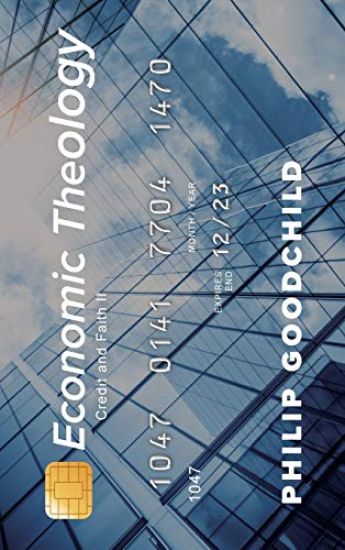
Economic Theology

Economic Theology

Philip Goodchild

Rowman Littlefield International
2020
sidottu
In Economic Theology, Goodchild offers a philosophical analysis of the contemporary economy in terms of the way it structures credit and faith. The Great Financial Crisis of 2007 and onwards has exposed the extent to which the economy functions as a network of credits and debts. Credit and debt may now be understood as the driving force of economic behaviour.In this analysis, economic theories of markets and money are also ways of ordering trust. Similarly, the institutions of money, finance and banking provide the framework enabling trust and cooperation. Goodchild explores how reliance on such theories and institutions produces disequilibrium dynamics, growing inequalities, increasing enclosure, resource depletion and breakdown. Nevertheless, the failures of the system only intensify efforts to extend the system itself.Building on and extending Goodchild’s Theology of Money, the author exposes the extent to which humanity has become enslaved within theories and institutions of its own making. As the second volume in his Credit and Faith trilogy, Goodchild explains how the economy itself is a way of shaping time and attention, care and evaluation, trust and cooperation, so directly assuming a theological role. This volume extends the theological critique of the dynamics of financial capitalism.