Kirjojen hintavertailu. Mukana 12 390 323 kirjaa ja 12 kauppaa.

Kirjahaku

Etsi kirjoja tekijän nimen, kirjan nimen tai ISBN:n perusteella.

1000 tulosta hakusanalla Philo Pratt

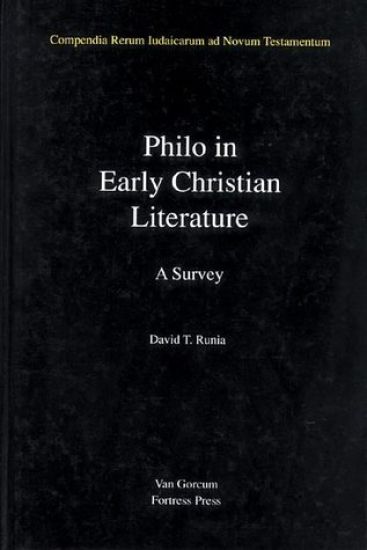
Philo in Early Christian Literature

Philo in Early Christian Literature

David T Runia

Fortress Press,U.S.
1993
sidottu
It is a remarkable fact that the writings of Philo, the Jew from Alexandria, were preserved because they were taken up in the Christian tradition. But the story of how this process of reception and appropriation took place has never been systematically research. In this book the author first examines how Philo's works are related to the New Testament and the earliest Chritian writing, and then how they were used by Greek and Latin church fathers up to 400 c.e., with special attention to the contributions of Clement, Origen, Didymus, Eusebius, Gregory of Nyssa, Ambrose, and Augstine. Philo in Early Christian Literature is a valuable guide to the state of scholarly research on a subject that has thus far been investigated in a rather piecemeal fashion.
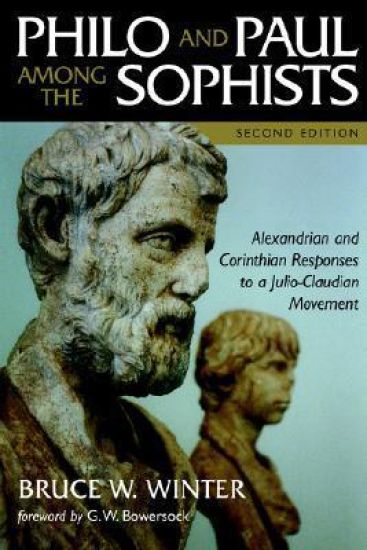
Philo and Paul among the Sophists

Philo and Paul among the Sophists

Winter Bruce W.

William B Eerdmans Publishing Co
2001
pokkari
In this highly acclaimed work, Bruce Winter gathers for the first time all the available evidence on the first-century sophistic movement from two major centers of learning in the East. Together with the writings of the contemporary Hellenistic Jews, Philo and Paul, he discusses all the protagonists and antagonists of this movement in Alexandria and Corinth. This study provides important insights into the problems that this elitist movement created for Diaspora Jews in Alexandria and for Christians in Corinth. It also traces the origins of the Second Sophistic to the reign of Nero. Substantially revised and including a new foreword by G. W. Bowersock, this volume is also supported by a web site -- www.sophists.info -- featuring additional archaeological evidence and photographs.
Philo, Josephus, and the Testaments on Sexuality

Philo, Josephus, and the Testaments on Sexuality

William Loader

William B Eerdmans Publishing Co
2011
nidottu
Philo, Josephus, and the Testaments on Sexuality is the fourth of five volumes by William Loader exploring attitudes toward sexuality in Judaism and Christianity during the Greco-Roman era. In this volume Loader examines three substantial and historically important sets of documents the writings of Philo of Alexandria, the histories of Josephus, and the Testaments of the Twelve Patriarchs. For each set of writings, he provides an in-depth introduction, detailed analysis highlighting each writer's position on a broad range of matters pertaining to sexuality, and a summary conclusion."
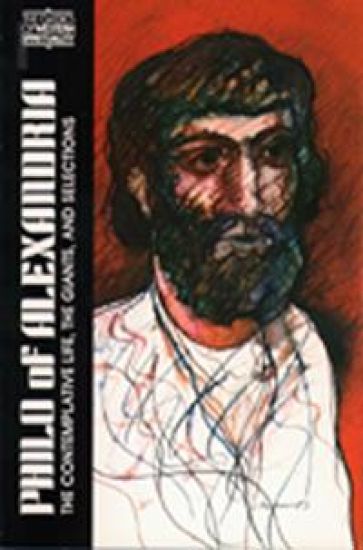
Philo of Alexandria

Philo of Alexandria

Paulist Press International,U.S.
1980
nidottu
"Classics in a classic collection...clearly a must for all libraries, from the university to the small town, and for all readers interested in spirituality." Religious Studies Review Philo of Alexandria: The Contemplative Life, Giants and Selections translation and introduction by David Winston preface by John Dillon "For he wishes to represent the sage's soul as a replica of heaven, or if one may speak hyperbolically, a heaven on earth, containing within itself, as does the author, pure forms of being, ordered movements, harmonious circuits, divine revolutions, beams of virtues utterly star-like and dazzling." Philo of Alexandria, c. 20 BCE-50 CE Available for the first time in one volume is the basic vision of Philo, the greatest Jewish mystic, philosopher, and theologian of the Greco-Roman period. This book lets Philo speak in his own words. Since the corpus of his writings is immense and his style diffuse, no one treatise or small group of treatises exhibits his full perspective on any given spiritual theme; thus and anthology was necessary. The volume is edited by David Winston, Professor of Hellenistic and Judaic Studies and Director of the center for Judaic Studies at the Graduate Theological Union, Berkeley, California. In his Introduction he summarizes the latest findings of Philonic scholarship and offers a new and more balanced appreciation of Philo's thought than was available before, based on a new full-scale study of Philo's religious philosophy which he is now in the process of preparing. In this volume Philo's The Contemplative Life and The Giants are translated in full. Selections from the other treatises are presented under the following themes: Allegorical Method; Creation, Time and Eternity; Divine Transcendence; The Mystic's Way to God; The Intermediary World; Logos, Ideas, Powers, and Daemons; The Soul; Preexistence and Immortality; Theory of Knowledge; Reason and Faith; Prophetic Revelation; and others. Professor Winston says, "Philo of Alexandria stands at the apex of the cultural activity of the Jewish-Alexandrian community, his literary work climaxing a long chain of Jewish-Hellenistic writings whose aim was to establish the validity and integrity of Jewish religious thought in the face of counter claims of the intellectually powerful Greek tradition." John Dillon in his Preface to the book says, " This excellent selection of his works will give the reader a vivid picture of the essential Philo in all his aspects." †
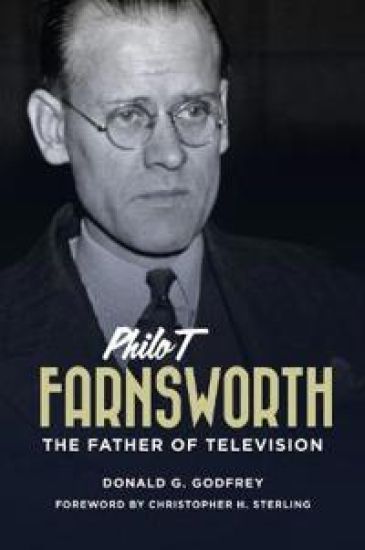
Philo T Farnsworth

Philo T Farnsworth

Donald G. Godfrey

University of Utah Press,U.S.
2017
nidottu
Philo T. Farnsworth (1906–1971) has been called the “forgotten father of television.” He grew up in Utah and southern Idaho, and was described as a genius by those who knew and worked with him. With only a high school education, Farnsworth drew his first television schematic for his high school teacher in Rigby, Idaho. Subsequent claims and litigation notwithstanding, he was the first to transmit a television image.Farnsworth filed ten patents between 1927 and 1929 for camera tubes (transmitting), circuitry, and the cathode ray tube (viewing). After his early years as an inventor in San Francisco, he worked as an engineer, doing battle with RCA in the 1930s over patent rights, formed the Farnsworth Television Company in the 1940s, and worked for IT&T after their purchase of the Farnsworth enterprises. Every television set sold utilized at least six of his basic patents.Donald Godfrey examines the genius and the failures in the life of Philo Farnsworth as he struggled to be both inventor and entrepreneur.
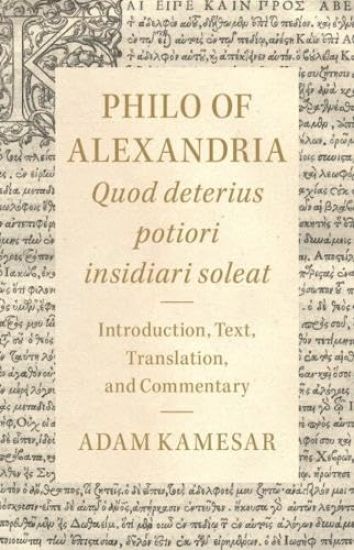
Philo of Alexandria: Quod deterius potiori insidiari soleat
Philo's Quod deterius is a discussion of the Cain and Abel episode in the Bible. Philo follows the Greek translation of the Septuagint, not the Hebrew text, although he may have known traditions that relied on the Hebrew. His treatment of the text is unique, combining elements of traditional Greek commentary on literary texts, moralizing diatribe in highly wrought rhetorical language, midrashic-like exegesis involving the extensive use of other biblical passages, and philosophical theory. The present commentary illuminates these various components of Philo's discussion, especially by means of parallel texts, pagan, Jewish, and Christian, from across antiquity. Using these sources and paying attention to ancient exegetical thinking, Adam Kamesar attempts to trace the overall direction and coherence of what Philo is saying. This kind of treatment of Philo's allegorical treatises has rarely been undertaken before on this scale. The volume also includes a new English translation of the work.
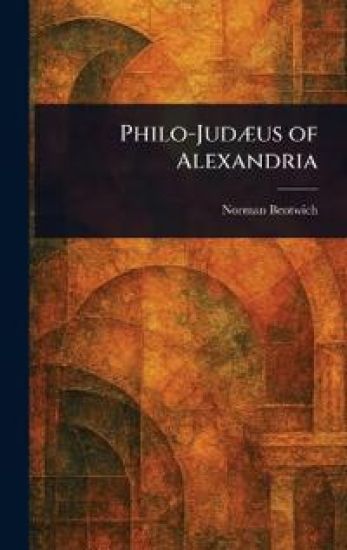
Philo-Judæus of Alexandria

Philo-Judæus of Alexandria

Norman Bentwich

Anson Street Press
2025
pokkari
Explore the life and thought of "Philo-Judaeus of Alexandria" with this insightful biography by Norman Bentwich. Philo, a pivotal figure in Hellenistic Judaism, stands at the intersection of Jewish tradition and Greek philosophy. This meticulously prepared edition illuminates Philo's profound influence on religious thought, examining his unique synthesis of faith and reason. Delve into the world of ancient Alexandria and discover how Philo navigated the complexities of his time, leaving an enduring legacy for Jewish philosophy and religious discourse. This volume offers a comprehensive look at Philo's contributions to the intellectual landscape of his era, making it an invaluable resource for anyone interested in religious biography, Jewish history, or the history of philosophy. A timeless exploration of a brilliant mind.This work has been selected by scholars as being culturally important, and is part of the knowledge base of civilization as we know it.This work is in the public domain in the United States of America, and possibly other nations. Within the United States, you may freely copy and distribute this work, as no entity (individual or corporate) has a copyright on the body of the work.Scholars believe, and we concur, that this work is important enough to be preserved, reproduced, and made generally available to the public. We appreciate your support of the preservation process, and thank you for being an important part of keeping this knowledge alive and relevant.