Que d'angles dans cette mansarde Un g om tre y e t retrouv toutes les figures du cours le plus complet, mais c' tait mon premier domicile de libre gar on, et j'en pris possession avec un orgueil, une joie indicibles. Mon p re l'avait choisie en bon air, donnant sur la place du march , au-dessus d'une boutique de p tisserie tenue par deux antiques demoiselles, comme nous de la secte des ind pendants, avec l'arri re-pens e que ma conduite et mes principes religieux seraient s v rement contr l s par les misses Dinah et Hannah Dawson, en compagnie de qui je devais prendre mes repas. Lui-m me, faisant tr ve ses obstin s travaux et endossant pour la premi re fois, je crois, son habit des dimanches un jour ouvrable, tait venu me pr senter au patron sous les ordres duquel je devais d buter.
L'action de Ma cousine Phillis se situe dans une petite ville imaginaire, cette fois baptis e Eltham. Il ne s'agit pourtant pas dans cette novella de la vie de vieilles demoiselles entre invitations boire le th et ragots sur le compte des voisins, mais plut t de la vie de famille dans une ferme isol e, entre travaux de la ferme pour les messieurs, travaux d'aiguille pour les dames, et lecture pour celles et ceux qui en ont le go t...
Classics for Your Collection: goo.gl/U80LCr --------- Cousin Phillis is a lovely little novella about a young man's coming of age and his growing friendship with his cousin Phillis who lives on a farm in Northern England and his boss Holdsworth who is an engineer. Gaskell is a wonderful painter of words and with deft strokes of her brush is able to impart to a contemporary reader what life in pastoral England in the mid-nineteenth century was like. She is able to convey in such a short book what life on a farm is like but also what life is like for the servants, the clergy, the upper classes and the professionals. She paints sympathetic portraits of all her characters and with compassion is able to see the world through their eyes which is mitigated by class, upbringing, gender, education and spiritual leanings. Against this lovely backdrop is the development of a quasi love triangle among young Paul, his cousin Phillis and the intelligent roguish Holdsworth. There are elements of restrained homosexual desire, heterosexual passions and the fine lines between platonic and romantic love. All this and there is not one passionate kiss among any of the trio. Characters Paul Manning (the narrator, Phillis's cousin) Mr Manning (Paul's father) Mr Edward Holdsworth Mr Holman (independent church minister) Mrs Holman Miss Phillis Holman Mr Ellison (Mr Manning's business partner) Miss Lucille Ventadur (at last Mr Holdsworth's wife) Betty (the servant at Holman house) Scroll Up and Get Your Copy Timeless Classics for Your Bookshelf (Available at Amazon's CreateSpace) Classic Books for Your Inspiration and Entertainment Visit Us at: goo.gl/0oisZU
Cousin Phillis (1864) is a novel by Elizabeth Gaskell. It was published in four parts, though a fifth and sixth part were planned. The story is about 19-year-old Paul Manning, A 1] who moves to the country and befriends his mother's family and his (second) cousin Phillis Holman, who is confused by her own placement at the edge of adolescence. Most critics agree that Cousin Phillis is Gaskell's crowning achievement in the short novel. The story is uncomplicated; its virtues are in the manner of its development and telling. Cousin Phillis is also recognized as a fitting prelude for Gaskell's final and most widely acclaimed novel, Wives and Daughters, which ran in Cornhill Magazine from August 1864 to January 1866. Characters: Paul Manning (the narrator, Phillis's cousin) Mr Manning (Paul's father) Mr Edward Holdsworth Mr Holman (independent church minister) Mrs Holman Miss Phillis Holman Mr Ellison (Mr Manning's business partner) Miss Lucille Ventadur (at last Mr Holdsworth's wife) Betty (the servant at Holman house) Elizabeth Cleghorn Gaskell, (n e Stevenson; 29 September 1810 - 12 November 1865), often referred to as Mrs Gaskell, was an English novelist and short story writer. Her novels offer a detailed portrait of the lives of many strata of Victorian society, including the very poor, and are of interest to social historians as well as lovers of literature. Her first novel, Mary Barton, was published in 1848. Gaskell's The Life of Charlotte Bront , published in 1857, was the first biography of Bront . Some of Gaskell's best known novels are Cranford (1851-53), North and South (1854-55), and Wives and Daughters (1865). Gaskell was born Elizabeth Cleghorn Stevenson on 29 September 1810 in Lindsey Row, Chelsea, at the house which is now 93 Cheyne Walk. She was the youngest of eight children; only she and her brother John survived infancy. Her father, William Stevenson, a Unitarian from Berwick-upon-Tweed, was minister at Failsworth, Lancashire, but resigned his orders on conscientious grounds and moved to London in 1806 with the intention of going to India after he was appointed private secretary to the Earl of Lauderdale, who was to become Governor General of India. That position did not materialise, however, and instead Stevenson was nominated Keeper of the Treasury Records. His wife, Elizabeth Holland, came from a family from the English Midlands that was connected with other prominent Unitarian families, including the Wedgwoods, the Martineaus, the Turners and the Darwins. When she died 13 months after giving birth to her youngest daughter, she left a bewildered husband who saw no alternative for Elizabeth but to be sent to live with her mother's sister, Hannah Lumb, in Knutsford, Cheshire. While she was growing up, Elizabeth's future was uncertain, as she had no personal wealth and no firm home, though she was a permanent guest at her aunt and grandparents' house. Her father married Catherine Thomson in 1814 and they had a son, William (born 1815), and a daughter, Catherine (born 1816). Although Elizabeth spent several years without seeing her father, to whom she was devoted, her older brother John often visited her in Knutsford. John was destined for the Royal Navy from an early age, like his grandfathers and uncles, but he had no entry and had to join the Merchant Navy with the East India Company's fleet. John went missing in 1827 during an expedition to India.......
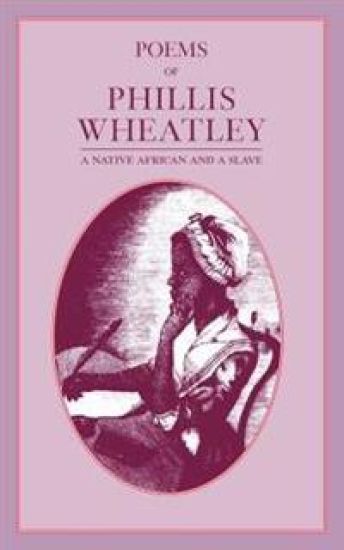
Phillis Wheatley was America's first published Black poet. Her poems were published before the Revolutionary War and were recognized throughout the English speaking world. She was born in Africa, sold as a slave in America, and became a celebrity in Europe. In addition to the poems of Phillis Wheatley, this volume contains a short and poignant memoir of her life.
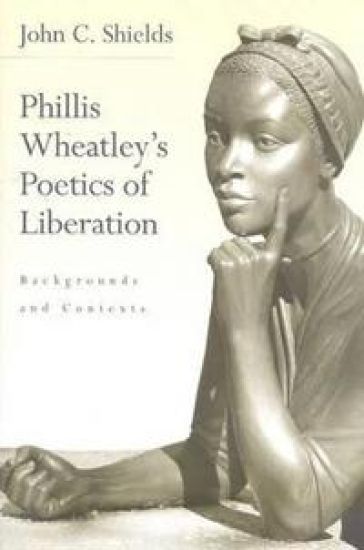
Phillis Wheatley's Poetics of Liberation is a groundbreaking scholarly study of one of America_s most important and most controversial writers. Wheatley (1753-1784) was the first African American to publish a book on any subject in the new country, and America_s second woman to do so. There is probably no other American writer who has produced such critical controversy as Phillis Wheatley. In this new volume, John C. Shields-one of the foremost scholars of Wheatley- demonstrates that much of the negative response to her writings has been based on false assumptions and myths about her and her work. Much of this criticism began more than a century ago and has been passed on without dissent by generations of readers. Here, Shields sets a course for Wheatley scholars that will redefine the direction of future writing about her. Shields begins this volume with an incisive analysis of more than two hundred years of complicated and often misinformed scholarship and commentary about Wheatley. In following chapters, he explores Wheatley_s background and the cultural context in which she wrote. Shields provides new and subtle readings for a great many of her poems. He shows that Wheatley_s writing was deeply imbedded in several literary traditions, demonstrating that her work is the result of an African inheritance, a complex relationship with a Congregationalist religious heritage, and an intense involvement with classical literature. Read closely, Wheatley's works show she deserves credit for creating a liberationist aesthetic-the full implications of which are still to be worked out. This important new study is certain to become the standard in the field. Phillis Wheatley's Poetics of Liberation is essential for all students and scholars of American literature, African American literature, women_s literature, and multicultural literature. John C. Shields is the editor of The Collected Works of Phillis Wheatley and the author of The American Aeneas: Classical Origins of the American Self, which won a Choice Outstanding Academic Book award and an honorable mention in the Harry Levin Prize competition, sponsored by the American Comparative Literature Association. He is Distinguished Professor of English and Director of the Center for Classicism in American Culture at Illinois State University.
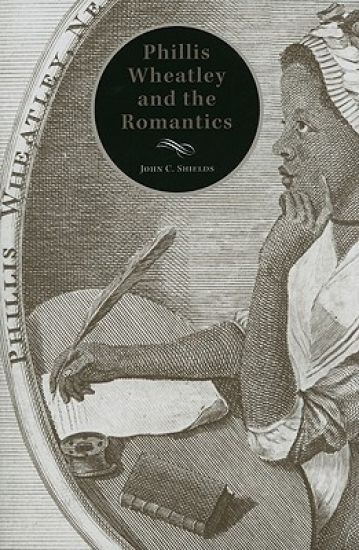
Phillis Wheatley was the first African American to publish a book. Born in Gambia in 1753, she came to America aboard a slave ship, the Phillis. From an early age, Wheatley exhibited a profound gift for verse, publishing her first poem in 1767. Her tribute to a famed pastor, “On the Death of the Rev. Mr. George Whitefield,” followed in 1770, catapulting her into the international spotlight, and publication of her 1773 Poems on Various Subjects Religious and Moral in London created her an international star.Despite the attention she received at the time, history has not been kind to Wheatley. Her work has long been neglected or denigrated by literary critics and historians. John C. Shields, a scholar of early American literature, has tried to help change this perception, and Wheatley has begun to take her place among the elite of American writers.In Phillis Wheatley and the Romantic Age, Shields contends that Wheatley was not only a brilliant writer but one whose work made a significant impression on renowned Europeans of the Romantic age, such as Samuel Taylor Coleridge, who borrowed liberally from her works, particularly in his famous distinction between fancy and imagination. Shields shows how certain Wheatley texts, particularly her “Long Poem,” consisting of “On Recollection,” “Thoughts on the Works of Providence,” and “On Imagination,” helped shape the face of Romanticism in the late eighteenth and nineteenth centuries.Phillis Wheatley and the Romantic Age helps demolish the long-held notion that literary culture flowed in only one direction: from Europe to the Americas. Thanks to Wheatley’s influence, Shields argues, the New World was influencing European literary masters far sooner than has been generally understood.
No one could have imagined that the frail, enslaved, seven-year-old girl who arrived in Boston, Massachusetts, in 1761 would become the first published African American, achieving fame for her poetry in both America and England. After arriving, Phillis quickly learned to read the Bible and other classic literature, publishing her first poem in 1767 when she was thirteen and a book of poetry in 1773. Her poetry encouraged freedom for all people, and she proved to a doubting generation that intelligence and creativity are not limited to a particular ethnicity. Through Phillis's story, young readers will learn the importance of trusting God's plan while standing up for justice and the good of other human beings. Table of Contents: Introduction Chapter 1 - Kidnapped Chapter 2 - A Gifted Girl Chapter 3 - International Fame Chapter 4 - The Cost of Freedom Chapter 5 - Through the War Chapter 6 - Making Ends Meet Chapter 7 - Legacy
Cousin Phillis (1864) is a novel by Elizabeth Gaskell. It was published in four parts, though a fifth and sixth part were planned. The story is about 19-year-old Paul Manning, who moves to the country and befriends his mother's family and his (second) cousin Phillis Holman, who is confused by her own placement at the edge of adolescence.Most critics agree that Cousin Phillis is Gaskell's crowning achievement in the short novel. The story is uncomplicated; its virtues are in the manner of its development and telling. Cousin Phillis is also recognized as a fitting prelude for Gaskell's final and most widely acclaimed novel, Wives and Daughters, which ran in Cornhill Magazine from August 1864 to January 1866. (wikipedia.org)
Cousin Phillis (1864) is a novel by Elizabeth Gaskell. It was published in four parts, though a fifth and sixth part were planned. The story is about 19-year-old Paul Manning, who moves to the country and befriends his mother's family and his (second) cousin Phillis Holman, who is confused by her own placement at the edge of adolescence.Most critics agree that Cousin Phillis is Gaskell's crowning achievement in the short novel. The story is uncomplicated; its virtues are in the manner of its development and telling. Cousin Phillis is also recognized as a fitting prelude for Gaskell's final and most widely acclaimed novel, Wives and Daughters, which ran in Cornhill Magazine from August 1864 to January 1866. (wikipedia.org)
Cousin Phillis (1864) is a novel by Elizabeth Gaskell. It was published in four parts, though a fifth and sixth part were planned. The story is about 19-year-old Paul Manning, who moves to the country and befriends his mother's family and his (second) cousin Phillis Holman, who is confused by her own placement at the edge of adolescence. Most critics agree that Cousin Phillis is Gaskell's crowning achievement in the short novel. The story is uncomplicated; its virtues are in the manner of its development and telling. Cousin Phillis is also recognized as a fitting prelude for Gaskell's final and most widely acclaimed novel, Wives and Daughters, which ran in Cornhill Magazine from August 1864 to January 1866.