
Kirjahaku
Etsi kirjoja tekijän nimen, kirjan nimen tai ISBN:n perusteella.
1000 tulosta hakusanalla Pierre Heber Suffrin

Songs And Sonnets Of Pierre De Ronsard: Gentleman Of Vendomois
Pierre De Ronsard; Curtis Hidden (TRN) Page
Kessinger Pub
2007
pokkari
Life, Letters And Travels Of Father Pierre-Jean De Smet Among The Wild Tribes Of The North American Indians
Pierre-Jean De Smet; Hiram Martin Chittenden; Alfred Talbot Richardson
Kessinger Pub
2008
pokkari
Genre: Biographical comedy Characters: 3 males, 2 females Scenery: Interior In a small laboratory in Paris in the 1800s, Pierre and Marie Curie discover uranium, radium and their love. This intelligent comedy is equal parts science, history and riotously charming comedy. A blunt nanny, a profi teering scientist and a dull, ambitious academic department head round out the company. "An engaging, amusing and educational account of Pierre and Marie Curie's personal and professional lives... Laugh out loud funny." - Variety "Charming, funny and scientifi c... It makes you laugh til you cry." - France Soir "It radiates with good humor, freshness and youth." - Le Figaro Magazine

"Pierre the Peacock was a handsome young bird, preened and polished but a little absurd.He was pompous and proud, incredibly haughtyand, given the chance, he could be rather naughty."Join Pierre the Peacock in all his misadventures ... swatting, stinging, squealing and squawking, flicking, flipping, flapping and flailing, hooting, hopping, hissing and honking A delightful book about one very pesky peacock and the hens who try to keep him out of mischief
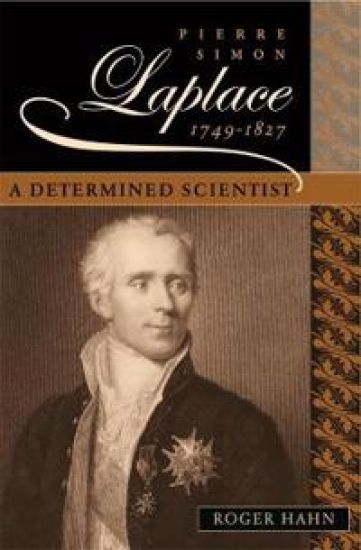
Often referred to as the Newton of France, Pierre Simon Laplace has been called the greatest scientist of the late eighteenth and early nineteenth centuries. He affirmed the stability of the solar system and offered a powerful hypothesis about its origins. A skillful mathematician and popular philosopher, Laplace also did pioneering work on probability theory, in devising a method of inverse probabilities associated with his classic formulation of physical determinism in the universe. With Lavoisier and several younger disciples, he also made decisive advances in chemistry and mathematical physics.Roger Hahn, who has devoted years to researching Laplace's life, has compiled a rich archive of his scientific correspondence. In this compact biography, also based in part on unpublished private papers, Hahn follows Laplace's journey from would-be priest in the provinces to Parisian academician, popularizer of science during the French Revolution, religious skeptic, and supporter of Napoleon. By the end of his life, Laplace had become a well-rewarded dean of French science.In this first full-length biography, Hahn illuminates the man in his historical setting. Elegantly written, Pierre Simon Laplace reflects a lifetime of thinking and research by a distinguished historian of science on the fortunes of a singularly important figure in the annals of Enlightenment science.
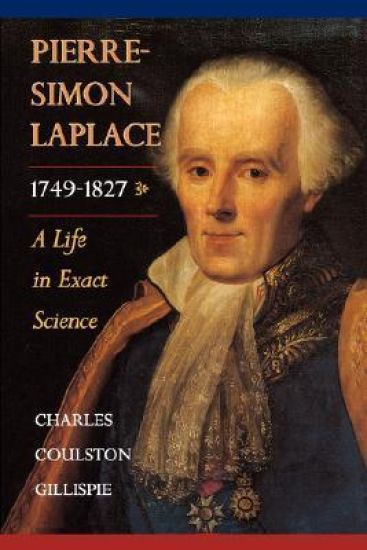
Pierre-Simon Laplace was among the most influential scientists in history. Often referred to as the lawgiver of French science, he is known for his technical contributions to exact science, for the philosophical point of view he developed in the presentation of his work, and for the leading part he took in forming the modern discipline of mathematical physics. His two most famous treatises were the five-volume Traite de mecanique celeste (1799-1825) and Theorie analytique des probabilites (1812). In the former he demonstrated mathematically the stability of the solar system in service to the universal Newtonian law of gravity. In the latter he developed probability from a set of miscellaneous problems concerning games, averages, mortality, and insurance risks into the branch of mathematics that permitted the quantification of estimates of error and the drawing of statistical inferences, wherever data warranted, in social, medical, and juridical matters, as well as in the physical sciences. This book traces the development of Laplace's research program and of his participation in the Academy of Science during the last decades of the Old Regime into the early years of the French Revolution. A scientific biography by Charles Gillispie comprises the major portion of the book. Robert Fox contributes an account of Laplace's attempt to form a school of young physicists who would extend the Newtonian model from astronomy to physics, and Ivor Grattan-Guinness summarizes the history of the scientist's most important single mathematical contribution, the Laplace Transform.


Correspondance De Pierre Bayle: Avril 1696 - Juillet 1697, Lettres 1100-1280 v. 10
Pierre Bayle
Voltaire Foundation
2013
sidottu
Correspondance de Pierre Bayle: Janvier 1703-1706: No. 13
Pierre Bayle
Voltaire Foundation
2016
sidottu
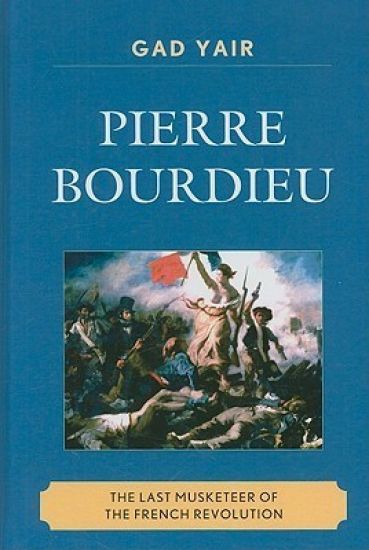
Pierre Bourdieu: The Last Musketeer of the French Revolution argues that Bourdieu appointed himself as the representative of the French people and acted as its National Assembly. In that capacity, he set himself to work with the charter of the preamble toThe Declaration of the Rights of Man and the Citizen to remind the members of the social body of their rights and obligations; to monitor the legislative and executive powers and compare them with the Republican purposes of ideal political and social agendas decreed by the revolutionaries of 1789; and, overall, to maintain the tenets of the French constitution. In that sense, like d'Artagnan in Dumas'The Three Musketeers, Bourdieu took it upon himself to be the fighter for true France, namely the keeper of the Republican tradition of the French Revolution. Bourdieu's entire oeuvre was indeed motivated by the failed promise of the French Revolution and by the demise of its most noble ideals. His passionate analyses—of educational stratification, cultural production and consumption, gender relations, the social structure of the economy, and the effects of globalization—were always carried out with the moral benchmark of the revolution in mind. Bourdieu was indeed passionately tied to the values of the French Revolution, notably to liberty and meritocracy, to social equality and to the democratization and universalization of government. But wherever he looked, he saw those values betrayed by the very people who argued for their implementation, and by the governmental bodies which were devised in order to guarantee their effectiveness. Committed to the values of the Declaration, he was constantly frustrated by the betrayals of universalization by the Fifth Republic.
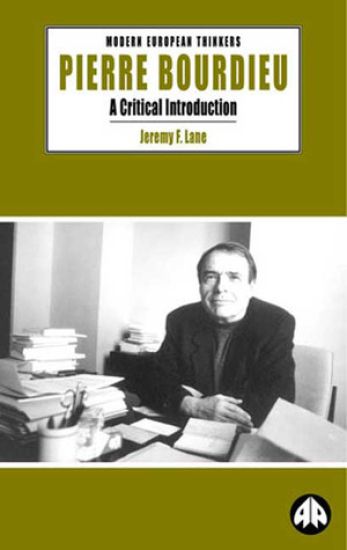
'This beautifully written and lucidly argued study is the most persuasive account of Bourdieu's work yet to be published. Lane illuminates much that can puzzle a foreign readership by expertly situating Bourdieu within a French context. At the same time he points to those aspects of Bourdieu's writing which are of particular relevance to contemporary debates on questions of citizenship and globalisation. He gives a fascinating account of Bourdieu's astonishingly prescient analyses of the impact of the expansion of higher education, the influence of the mass media, the growth of the culture industries, and the changing nature of political and social elites, not just in France, but in the western world.' - Professor Jill Forbes, Queen Mary and Westfield, University of London
Pierre Bourdieu and Democratic Politics
Polity Press
2005
sidottu
Pierre Bourdieu was a brilliant sociologist and social thinker; he was also an intensely political man whose work is of profound significance for rethinking democracy. This original volume presents and develops Bourdieu’s distinctive contribution to the theory and practice of democratic politics. It explicates and illustrates his core concepts of political field and field of power, his historical model of the bureaucratic state, and his influential analyses of the practices and institutions involved in the paradoxical phenomenon of political representation – starting with the enigma of delegation, or what he called the “mystery of ministry.” The fruitfulness of Bourdieu’s approach is demonstrated in a series of integrated studies of voting, public opinion polls, party dynamics, class rule, and state-building, as well as by careful analyses of Bourdieu’s own civic engagements and his theoretical treatment of the politics of reason and recognition in contemporary society. Charting the connections between Bourdieu’s political views, the main nodes of his sociology of democratic representation, and the implications of this sociology for progressive civic thought and action, this book will be of interest to students and scholars across the gamut of disciplines as well as to citizens concerned with renewing struggles for social justice.
Pierre Bourdieu and Democratic Politics
Polity Press
2005
nidottu
Pierre Bourdieu was a brilliant sociologist and social thinker; he was also an intensely political man whose work is of profound significance for rethinking democracy. This original volume presents and develops Bourdieu’s distinctive contribution to the theory and practice of democratic politics. It explicates and illustrates his core concepts of political field and field of power, his historical model of the bureaucratic state, and his influential analyses of the practices and institutions involved in the paradoxical phenomenon of political representation – starting with the enigma of delegation, or what he called the “mystery of ministry.” The fruitfulness of Bourdieu’s approach is demonstrated in a series of integrated studies of voting, public opinion polls, party dynamics, class rule, and state-building, as well as by careful analyses of Bourdieu’s own civic engagements and his theoretical treatment of the politics of reason and recognition in contemporary society. Charting the connections between Bourdieu’s political views, the main nodes of his sociology of democratic representation, and the implications of this sociology for progressive civic thought and action, this book will be of interest to students and scholars across the gamut of disciplines as well as to citizens concerned with renewing struggles for social justice.