Kirjojen hintavertailu. Mukana 12 390 323 kirjaa ja 12 kauppaa.

Kirjahaku

Etsi kirjoja tekijän nimen, kirjan nimen tai ISBN:n perusteella.

1000 tulosta hakusanalla R D Wingfield

R.D.Congo "objectivo 2040"

R.D.Congo "objectivo 2040"

Modeste Mbonigaba; Crispin N'Landa; Félix Kabuya

Edicoes Nosso Conhecimento
2023
pokkari
Foi em 1977 - h mais de 40 anos - que foram publicadas as conclus es de um importante estudo sobre o subdesenvolvimento, encomendado pelas Na es Unidas. Realizado por uma equipa de especialistas de renome, liderada pelo famoso economista-estat stico Wassily Leontief (da o nome "Leontief's Expertise" dado a este importante trabalho), o estudo chegou a conclus es t o ousadas que pelo menos uma delas deveria ter sido uma bomba. Eis a conclus o: "Os verdadeiros obst culos ao desenvolvimento do Terceiro Mundo, em geral, e da frica Subsariana, em particular, n o s o f sicos (ou seja, n o est o relacionados com o clima, o relevo, a presen a ou aus ncia de grandes rios...); pelo contr rio, esses obst culos s o humanos (ou seja, est o relacionados com a organiza o pol tica, social e institucional)". Por outras palavras, a chave do desenvolvimento destas regi es n o est directamente nas m os do Deus Criador, mas sim nas m os dos ... dos seus filhos que a vivem
R&D Management

R&D Management

K B Akhilesh

Springer, India, Private Ltd
2014
sidottu
This book contributes towards the integration of the R&D function with regard to societies, nations, industries and organizations, as well as to leaders within organizations. It covers the management aspects and approaches to R&D management and provides information on the major contexts of R&D such as in production, HR, marketing and finance – functions that are essential to attracting, developing and retaining scientific manpower. The book further elaborates on organizations’ human strategic prospectives. It also suggests various types of practices to help organizations achieve their objectives and analyzes how R&D can contribute to technology, innovation and science to improve organizations’ productivity. In closing, it discusses some of the challenges faced by developing countries and presents R&D management from a global perspective.
R&D Management

R&D Management

K B Akhilesh

Springer, India, Private Ltd
2016
nidottu
This book contributes towards the integration of the R&D function with regard to societies, nations, industries and organizations, as well as to leaders within organizations. It covers the management aspects and approaches to R&D management and provides information on the major contexts of R&D such as in production, HR, marketing and finance – functions that are essential to attracting, developing and retaining scientific manpower. The book further elaborates on organizations’ human strategic prospectives. It also suggests various types of practices to help organizations achieve their objectives and analyzes how R&D can contribute to technology, innovation and science to improve organizations’ productivity. In closing, it discusses some of the challenges faced by developing countries and presents R&D management from a global perspective.
Frida, or, The Lover's Leap, A Legend Of The West Country From "Slain By The Doones" By R. D. Blackmore
This book "" Frida, or, The Lover's Leap, A Legend Of The West Country From ""Slain By The Doones"" By R. D. Blackmore "", has been considered important throughout the human history, and so that this work is never forgotten we have made efforts in its preservation by republishing this book in a modern format for present and future generations. This whole book has been reformatted, retyped and designed. These books are not made of scanned copies and hence the text is clear and readable.
R&d Investment Of Multinational Corporations And China's Independent Innovation

R&d Investment Of Multinational Corporations And China's Independent Innovation

Wen Xiao; Jiadong Pan; Gaobang Lin

World Scientific Publishing Co Pte Ltd
2020
sidottu
China has attracted a huge amount of investment in R&D internationalization of multi-national corporations (MNCs), which is playing an important role in its economy. Constrained by natural resources, China has to attach more importance to technological progress and indigenous innovation in order to move beyond the old economic growth model. Technology seems inaccessible to outsiders, which prevents others from doing research in a comprehensive and systematic manner. In this book, technology is regarded as a factor of production that is allocated by MNCs across the world to maximize profits. Such rational economic behavior serves as our entry point to enhance existing theoretical achievements on R&D internationalization.
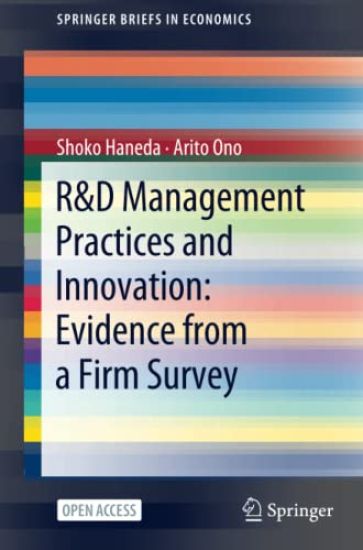
R&D Management Practices and Innovation: Evidence from a Firm Survey

R&D Management Practices and Innovation: Evidence from a Firm Survey

Shoko Haneda; Arito Ono

SPRINGER VERLAG, SINGAPORE
2022
nidottu
This Open Access book provides a detailed account of firms’ research and development (R&D) management practices, and whether and how R&D management practices are associated with the success and the nature (explorative or exploitive) of innovation, using a unique survey of firms in Japan. While there is wide agreement that innovation is a key determinant for growth of firms, there are few studies that systematically and quantitatively investigate what firms do in their R&D management to create innovation. Utilizing insights from theoretical and empirical studies on innovation, the authors focus on the following four aspects of R&D management: the organizational structure of R&D, staged project management for R&D projects, compensation and incentive schemes for R&D personnel, and a firm’s risk preferences and corporate culture. The authors examine whether and how R&D management practices are linked to the likelihood of firms’ success in making product innovations and the choice between explorative and exploitive innovation. The book furnishes vital information that can be used as a reference for future theoretical and empirical analyses of R&D management practices and innovation. This monograph is highly recommended to academics and practitioners who seek an in-depth and detailed analysis of R&D management.This is an open access book.
R.D. Burman

R.D. Burman

VDM Publishing House
2010
nidottu
Observera att förlaget som ger ut denna produkt baserar innehållet i sina produkter på fria källor som Wikipedia. Boken är med stor sannolikhet endast ett utdrag ur dessa informationskällor, alltså inte en vanlig bok i den bemärkelsen.
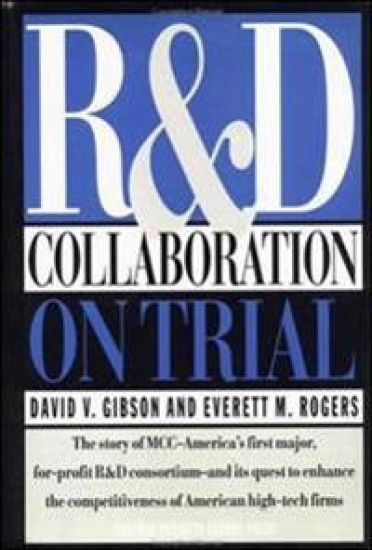
R&D Collaboration on Trial

R&D Collaboration on Trial

Everett M. Rogers

Harvard Business Review Press
1994
sidottu
Shaken by the dramatic inroads made by Japanese competitors into high-tech electronics, a number of U.S. electronic firms joined forces in 1982 to form the first U.S. for-profit research consortium: MCC (Microelectronics and Computer Technology Corp.). Since then more than 200 other consortia have been formed in a variety of industries. The authors describe MCC's formation, the problems it encountered, and its progress from its rocky inception under Admiral Bobby Inman through its recent past under Dr. Craig Fields. At the same time, they examine the crucial role that public/private alliances at the local level played in the choice of Austin, Texas as the site for MCC and, more generally, in the rise of Texas high-tech industry and the emergence of Austin as a computer and technology center. The authors also address the important management issues that this very new kind of business organization raises. These include questions about the ability of competing companies to work together successfully; about their ability to transfer R&D findings to members; and about the implications of these consortia for national and international competitiveness.
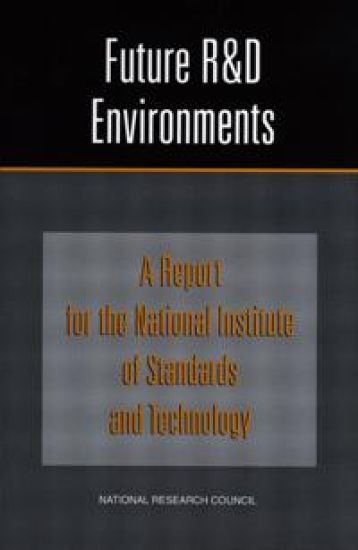
Future R&D Environments

Future R&D Environments

National Academies Press
2002
nidottu
In September 2000, the National Institute of Standards and Technology (NIST) asked the National Research Council to assemble a committee to study the trends and forces in science and technology (S&T), industrial management, the economy, and society that are likely to affect research and development as well as the introduction of technological innovations over the next 5 to 10 years. NIST believed that such a study would provide useful supporting information as it planned future programs to achieve its goals of strengthening the U.S. economy and improving the quality of life for U.S. citizens by working with industry to develop and apply technology, measurements, and standards. Table of Contents Front Matter Executive Summary 1 Introduction 2 Push Factors 3 Contextual Factors 4 Pull Factors 5 Conclusions Appendix A: Biographical Sketches of Committee Members Appendix B: Workshop Agenda Appendix C: Workshop Participants Appendix D: Workshop Summary Appendix E: Recent Reports on Future Trends in Science and Technology Appendix F: Trends in the Economy and Industrial Strength Appendix G: Innovation's Quickening Pace: Summary and Extrapolation of Frontiers of Science/ Frontiers of Engineering Papers and Presentations Appendix H: Trends in Science and Technology Appendix I: Trends in Industrial R&D Management and Organization
Global R&D in China
The volume focuses on the issue of globalization of research and development (R&D) in China.China has become the number one choice of R&D for multination corporations (MNCs), according to a recent survey. Many of the largest MNCs in the world, such as Microsoft, GE, GM, HP, Motorola, and Lucent, among hundred of others, have established R&D facilities. The phenomenon has become a hot issue among policy debates in many countries regarding job outsourcing, national and regional competitiveness, and China. This book examines the issue of foreign R&D, particularly, those from MNCs in China: the drivers, missions, locations, management challenges, policies, and implications for China’s innovation system.This book was previously published as a special issue of the Asian Pacific Business Review.
Global R&D in China
The volume focuses on the issue of globalization of research and development (R&D) in China.China has become the number one choice of R&D for multination corporations (MNCs), according to a recent survey. Many of the largest MNCs in the world, such as Microsoft, GE, GM, HP, Motorola, and Lucent, among hundred of others, have established R&D facilities. The phenomenon has become a hot issue among policy debates in many countries regarding job outsourcing, national and regional competitiveness, and China. This book examines the issue of foreign R&D, particularly, those from MNCs in China: the drivers, missions, locations, management challenges, policies, and implications for China’s innovation system.This book was previously published as a special issue of the Asia Pacific Business Review.
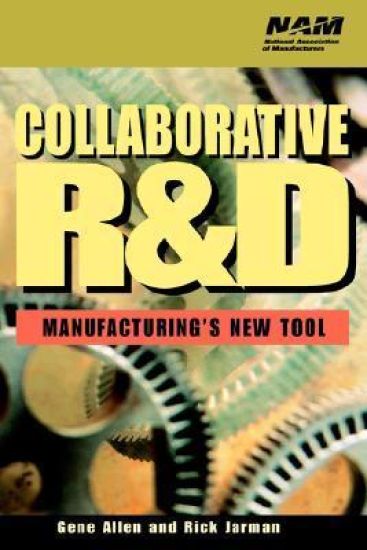
Collaborative R&D

Collaborative R&D

Gene Allen; Rick Jarman

John Wiley Sons Inc
1999
sidottu
The ability to collaborate, particularly in new manufacturing technology development, is becoming a corporate competence that will determine which companies survive in the next decade. With the advent of the telecommunications and information infrastructure realized in the 1990s, companies that can effectively collaborate to get new technologies applied will stand a greater chance of remaining competitive in today's market. Collaborative R&D offers the methods and metrics for developing collaborative technology programs and partnerships, both within the industry and between major competitors. R&D experts Allen and Jarman provide a complete map for collaboration, taken from their collective years of experience in creating, promoting, and managing many collaborative R&D initiatives over the past decade. They include the guidelines for determining what technology development areas are appropriate for collaboration, and what ingredients need to be in place for it to be successful. The authors' experiences are detailed in a format that walks the reader through the process of identifying, starting, and managing collaborative R&D programs. Having developed these programs with companies like Ford, Texas Instruments, Boeing, AT&T, and Kodak, Allen and Jarman include numerous real-world examples, which show how to choose collaborative partners, how to use the government in establishing R&D programs, successful management techniques, means of addressing intellectual property, and how to address accounting concerns. The book also illustrates the significant benefits of collaborative R&D, helping managers and technology professionals realize its value by enabling them to make the most knowledgeable decisions and take the best actions possible, in any given situation. Among some of the benefits that have resulted from the authors' collaborative programs: *Pratt & Whitney developed software tools that enabled them to keep one of their plants from closing. *Ford reduced a two-week design process to four hours. *An acceleration by at least a year in 32 key Printed Wiring Board research tasks resulted in research savings of about $35.5 million. Collaborative R&D is valuable reading for any business that plans to thrive in a new global economy where all available financial and human assets will need to be leveraged for the greatest return—and with minimal risk. "R&D means innovation, productivity, and growth—the three things our economy needs the most. This important new book explains how and why the R&D revolution is transforming American industry, a theme everyone who cares about the future of our economy should understand." —Jerry Jasinowski, President, National Association of Manufacturers. "Allen and Jarman provide the definitive pathway to competitive advantage through collaborative R&D, the new tool for cost-effective innovation in the twenty-first century." —Leo Reddy, President, National Coalition for Advanced Manufacturing. "Collaboration among companies is very new in American industry. Most companies are still striving to have their own employees collaborate with each other. This book portrays the strength and power of intercompany collaboration." —Jack E. Swindle, Senior Vice President, Texas Instruments. "This is a must read for any entrepreneur thinking of becoming involved in cross-organizational collaboration, for any corporate executive concerned about how cross-organizational R&D collaboration will help his company to remain competitive in the future, and for any manager who is responsible for managing people involved in cross-organizational collaborative efforts." —Dr. Ann Majchrzak, Professor of Information Systems, Marshall School of Business, University of Southern California "Collaborative R&D is mandatory reading for any enterprise leader looking to expand and leverage market influence." —Mike McEvoy, Vice President, Advanced Engineering and Design Center, Baxter Healthcare Corporation.
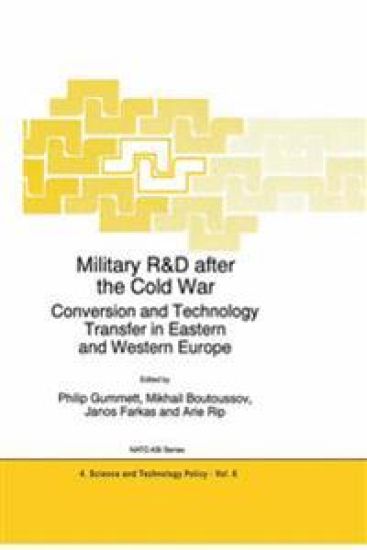
Military R&D after the Cold War
Countries establish defence industries for various reasons. Chief among these are usually a concern with national security, and a desire to be as independent as possible in the supply of the armaments which they believe they need. But defence industries are different from most other industries. Their customer is governments. Their product is intended to safeguard the most vital interests of the state. The effectiveness of these products (in the real, rather than the experimental sense) is not normally tested at the time of purchase. If, or when, it is tested, many other factors (such as the quality of political and military leadership) enter into the equation, so complicating judgments about the quality of the armaments, and about the reliability of the promises made by the manufacturers. All of these features make the defence sector an unusually political industrial sector. This has been true in both the command economies of the former Soviet Union and its satellites, and in the market or mixed economies of the west. In both cases, to speak only a little over-generally, the defence sector has been particularly privileged and particularly protected from the usual economic vicissitudes. In both cases, too, its centrality to the perceived vital interests of the state has given it an unusual degree of political access and support.
Evaluating R&D Impacts: Methods and Practice
A critical issue in research and development (R&D) management is the structure and use of evaluative efforts for R&D programs. The book introduces the different methods that may be used in R&D evaluation and then illustrates these methods by describing actual evaluation in practice using those methods. The book is divided into two sections. The first section provides an introduction and details on several popular methodologies used in the evaluation of research and development activities. The second half of the book focuses on evaluation in practice and is comprised of several chapters offering the perspectives of individuals in different types of organizations. The book concludes with an annotated bibliography of selected R&D evaluation literature, focusing on post-1985 literature, on research evaluation.
The R&D Workers

The R&D Workers

Philip Shapira

Praeger Publishers Inc
1995
sidottu
Selecting, training, and managing the scientists, engineers, and technologists who develop new products and apply new technologies is a critical challenge for managers and policymakers worldwide. Nine analysts from universities and research centers in four major industrialized nations find that while companies maintain distinctive approaches to managing their R&D workers, the pressures of technological change and global competition are forcing them to rethink the entire operation. To be taken into consideration now are such factors as group dynamics, intra- and intercompany linkages, research authority and flexibility, research sources, career paths, reward systems, and personal and team development—all of which are covered here. An unusual comparative study for top management and their human resource and planning staffs, and for academics concerned with all aspects of organizational behavior, training, and development.The scientists, engineers, and technologists who develop new products and apply new technologies—collectively, the R&D workers—are vital in today's competitive and technologically demanding business environment. Of critical importance is how these R&D workers are selected, trained, and managed, and how their activities are linked to other aspects of production. Using a variety of methods, eight analysts from the International Research Group on R&D Management, a unique interdisciplinary group of researchers from universities and research centers in four major industrialized nations, examine the organization and management of R&D workers in and between their respective countries.Drawing on data provided by more than 1,800 engineers and scientists in 23 companies, the authors find that while companies maintain distinctive approaches to managing their R&D workers, the pressures of technological change and global competition are forcing them to rethink their R&D methods. To be taken into consideration now are such factors as the underlying technical skills of the workers, group dynamics, intra- and intercompany linkages, research authority and flexibility, research resources, career paths, reward systems, and personal and team development—all of which are covered here, succinctly and readably. The result is a useful comparative study for top management and their human resource and planning staffs, R&D policymakers, and those concerned with all aspects of organizational behavior, training, and development.