Kirjojen hintavertailu. Mukana 11 244 527 kirjaa ja 12 kauppaa.

Kirjahaku

Etsi kirjoja tekijän nimen, kirjan nimen tai ISBN:n perusteella.

1000 tulosta hakusanalla RICHARD EDW DENNETT

Richard Posner

Richard Posner

William Domnarski

Oxford University Press Inc
2016
sidottu
Judge Richard Posner is one of the great legal minds of our age, on par with such generation-defining judges as Holmes, Hand, and Friendly. A judge on the U.S. Court of Appeals for the Seventh Circuit and the principal exponent of the enormously influential law and economics movement, he writes provocative books as a public intellectual, receives frequent media attention, and has been at the center of some very high-profile legal spats. He is also a member of an increasingly rare breed-judges who write their own opinions rather than delegating the work to clerks-and therefore we have unusually direct access to the workings of his mind and judicial philosophy. Now, for the first time, this fascinating figure receives a full-length biographical treatment. In Richard Posner, William Domnarski examines the life experience, personality, academic career, jurisprudence, and professional relationships of his subject with depth and clarity. Domnarski has had access to Posner himself and to Posner's extensive archive at the University of Chicago. In addition, Domnarski was able to interview and correspond with more than two hundred people Posner has known, worked with, or gone to school with over the course of his career, from grade school to the present day. The list includes among others members of the Harvard Law Review, colleagues at the University of Chicago, former law clerks over Posner's more than thirty years on the United States Court of Appeals for the Seventh Circuit, and even other judges from that court. Richard Posner is a comprehensive and accessible account of a unique judge who, despite never having sat on the Supreme Court, has nevertheless dominated the way law is understood in contemporary America.
Richard II

Richard II

Christopher Fletcher

Oxford University Press
2008
sidottu
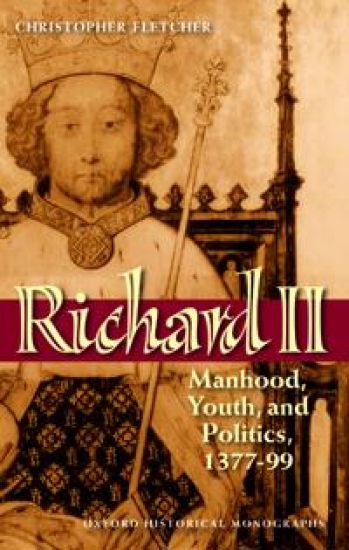
Richard II (1377-99) has long suffered from an unusually unmanly reputation. Over the centuries, he has been habitually associated with lavish courtly expenditure, absolutist ideas, Francophile tendencies, and a love of peace, all of which have been linked to the king's physical effeminacy. Even sympathetic accounts have essentially retained this picture, merely dismissing particular facets of it, or representing Richard's reputation as evidence of praiseworthy dissent from accepted norms of masculinity. Christopher Fletcher takes a radically different approach, setting the politics of Richard II's reign firmly in the context of late medieval assumptions about the nature of manhood and youth. This makes it possible not only to understand the agenda of the king's critics, but also to suggest a new account of his actions. Far from being the effeminate tyrant of historical imagination, Richard was a typical young nobleman, trying to establish his manhood-and hence his authority to rule-by thoroughly conventional means; first through a military campaign, and then, fatally, through violent revenge against those who attempted to restrain him. The failure of Richard's subjects to support this aspiration produced a sequence of conflicts with the king, in which his opponents found it convenient to ascribe to him the conventional faults of youth. These critiques derived their force not from the king's real personality, but from the fit between certain contemporary assumptions about youth, effeminacy, and masculinity on the one hand, and the actions of Richard's government-constrained by difficult and complex circumstances-on the other.
Richard II

Richard II

Christopher Fletcher

Oxford University Press
2010
nidottu
Richard II (1377-99) has long suffered from an unusually unmanly reputation. Over the centuries, he has been habitually associated with lavish courtly expenditure, absolutist ideas, Francophile tendencies, and a love of peace, all of which have been linked to the king's physical effeminacy. Even sympathetic accounts have essentially retained this picture, merely dismissing particular facets of it, or representing Richard's reputation as evidence of praiseworthy dissent from accepted norms of masculinity. Christopher Fletcher takes a radically different approach, setting the politics of Richard II's reign firmly in the context of late medieval assumptions about the nature of manhood and youth. This makes it possible not only to understand the agenda of the king's critics, but also to suggest a new account of his actions. Far from being the effeminate tyrant of historical imagination, Richard was a typical young nobleman, trying to establish his manhood, and hence his authority to rule, by thoroughly conventional means; first through a military campaign, and then, fatally, through violent revenge against those who attempted to restrain him. The failure of Richard's subjects to support this aspiration produced a sequence of conflicts with the king, in which his opponents found it convenient to ascribe to him the conventional faults of youth. These critiques derived their force not from the king's real personality, but from the fit between certain contemporary assumptions about youth, effeminacy, and masculinity on the one hand, and the actions of Richard's government, constrained by difficult and complex circumstances, on the other.
Richard II: The Oxford Shakespeare

Richard II: The Oxford Shakespeare

William Shakespeare

Oxford University Press
2011
nidottu
The Oxford Shakespeare General Editor: Stanley Wells The Oxford Shakespeare offer authoritative texts from leading scholars in editions designed to interpret and illuminate the plays for modern readers - a new, modern-spelling text, collated and edited from the early texts - wide-ranging introduction discusses the play's historical contexts, political significance, characters, sources, and language - detailed stage history designed to meet the needs of students and theatre professionals - on-page commentary and notes explain meaning, allusions, staging, and much else - illustrated with production photographs, historical portraits, textual facsimiles, and map - full index to introduction and commentary - durable sewn binding for lasting use 'not simply a better text but a new conception of Shakespeare' Times Literary Supplement ABOUT THE SERIES: For over 100 years Oxford World's Classics has made available the widest range of literature from around the globe. Each affordable volume reflects Oxford's commitment to scholarship, providing the most accurate text plus a wealth of other valuable features, including expert introductions by leading authorities, helpful notes to clarify the text, up-to-date bibliographies for further study, and much more.
Richard Morris's Prick of Conscience

Richard Morris's Prick of Conscience

Ralph Hanna; Sarah Wood

Oxford University Press
2013
sidottu
This mid fourteenth-century poem, a discussion of the 'contempt of the world' and the 'Four Last Things', was one of the most popular Middle English texts in its time, as indicated by the large number of extant copies, and illustrations of it in the windows of All Saints, North Street, in York. It was a widely influential compendium of religious instruction, originating in Yorkshire, but more widely disseminated, and thus representing this important regional culture, as well as its absorption into a nationwide religious culture. The only edition, by Richard Morris (1863), is now generally unavailable outside research libraries. The present edition revises Morris's text extensively and offers full modern annotation, including extensive discussion of the poem's sources. Morris's text, although based on an exceptionally good manuscript copy, has been fully collated with the principal early manuscripts; this information is presented in a separate textual commentary. There is an introduction presenting the poem in its context and a Glossary.
Richard Hofstadter

Richard Hofstadter

David S. Brown

University of Chicago Press
2007
nidottu
Richard Hofstadter (1916-70) was America's most distinguished historian of the twentieth century. The author of several groundbreaking books, including "The American Political Tradition", he was a vigorous champion of the liberal politics that emerged from the New Deal. During his career, Hofstadter fought public campaigns against liberalism's most dynamic opponents, from McCarthy in the 1950s to Barry Goldwater and the Sun Belt conservatives in the 1960s. His opposition to the extreme politics of postwar America marked him as one of the nation's most important and prolific public intellectuals. In this masterly biography, David S. Brown explores Hofstadter's life within the context of the rise and fall of American liberalism. A fierce advocate of academic freedom, racial justice, and political pluralism, Hofstadter charted in his works the changing nature of American society from a provincial Protestant foundation to one based on the values of an urban and multiethnic nation. According to Brown, Hofstadter presciently saw in rural America's hostility to this cosmopolitanism signs of an anti-intellectualism that he believed was dangerously endemic in a mass democracy. By the end of a life cut short by leukemia, Hofstadter had won two Pulitzer Prizes and his books had attracted international attention. Yet the Vietnam years, as Brown shows, culminated in a conservative reaction to his work that is still with us. Whether one agrees with Hofstadter's critics or his fans, the importance of this seminal thinker cannot be denied.
Richard McKeon

Richard McKeon

George Kimball Plochmann

University of Chicago Press
1990
sidottu
In the contemporary atmosphere of concern with the problems of relativism, cultural pluralism, and textuality, the time is ripe for rediscovery of the thought of Richard McKeon, one of the most important but neglected American philosophers of this century. This study by George Kimball Plochmann, a former student of McKeon's, is the first book-length treatment of the ideas of this legendary teacher, scholar, and diplomat who outlined a profound and creative vision for the reorganization of all knowledge and discourse.
Richard Rorty

Richard Rorty

Neil Gross

University of Chicago Press
2019
pokkari
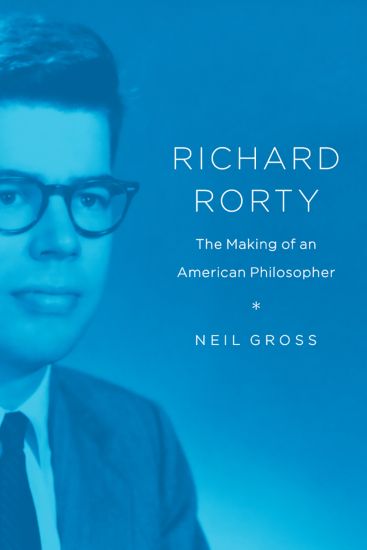
On his death in 2007, Richard Rorty was heralded by the New York Times as "one of the world's most influential contemporary thinkers." Controversial on the left and the right for his critiques of objectivity and political radicalism, Rorty experienced a renown denied to all but a handful of living philosophers. In this masterly biography, Neil Gross explores the path of Rorty's thought over the decades in order to trace the intellectual and professional journey that led him to that prominence. The child of a pair of leftist writers who worried that their precocious son "wasn't rebellious enough," Rorty enrolled at the University of Chicago at the age of fifteen. There he came under the tutelage of polymath Richard McKeon, whose catholic approach to philosophical systems would profoundly influence Rorty's own thought. Doctoral work at Yale led to Rorty's landing a job at Princeton, where his colleagues were primarily analytic philosophers. With a series of publications in the 1960s, Rorty quickly established himself as a strong thinker in that tradition--but by the late 1970s Rorty had eschewed the idea of objective truth altogether, urging philosophers to take a "relaxed attitude" toward the question of logical rigor. Drawing on the pragmatism of John Dewey, he argued that philosophers should instead open themselves up to multiple methods of thought and sources of knowledge--an approach that would culminate in the publication of Philosophy and the Mirror of Nature, one of the most seminal and controversial philosophical works of our time. In clear and compelling fashion, Gross sets that surprising shift in Rorty's thought in the context of his life and social experiences, revealing the many disparate influences that contribute to the making of knowledge. As much a book about the growth of ideas as it is a biography of a philosopher, Richard Rorty will provide readers with a fresh understanding of both the man and the course of twentieth-century thought.
Richard Wright

Richard Wright

Hazel Rowley

University of Chicago Press
2008
nidottu
Consistently an outsider - a child of the fundamentalist South with an eighth-grade education, a self-taught intellectual, a black man married to a white woman - Richard Wright nonetheless became the unparalleled voice of his time. The first full-scale biography of the author best known for his searing novels Black Boy and Native Son, Richard Wright: The Life and Times brings the man and his work - in all their complexity and distinction - to vibrant life. Acclaimed biographer Hazel Rowley chronicles Wright's unprecedented journey from a sharecropper's shack in Mississippi to Chicago's South Side to international renown as a writer and outspoken critic of racism.Drawing on journals, letters, and eyewitness accounts, Richard Wright probes the author's relationships with Langston Hughes and Ralph Ellison, his attraction to Communism, and his so-called exile in France. Skillfully interweaving quotes from Wright's own writings, Rowley deftly portrays a passionate, courageous, and flawed man who would become one of our most enduring literary figures.
Richard Owen

Richard Owen

Nicolaas A. Rupke

University of Chicago Press
2009
nidottu
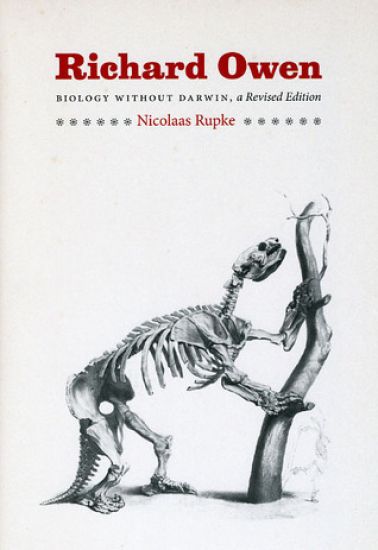
In the mid-1850s, no scientist in the British Empire was more visible than Richard Owen. Mentioned in the same breath as Newton and championed as Britain's answer to France's Cuvier and Germany's von Humboldt, Owen was, as the "Times" declared in 1856, the most 'distinguished man of science in the country'. But a century and a half later, Owen remains largely obscured by the shadow of the most famous Victorian naturalist of all, Darwin. Publicly marginalized by his contemporaries for his critique of natural selection, Owen suffered personal attacks that undermined his credibility long after his name faded from history. With this innovative biography, Nicolaas Rupke resuscitates Owen's reputation. Arguing that Owen should no longer be judged by the evolution dispute that figured in only a minor part of his work, Rupke stresses context, emphasizing the importance of places and practices in the production and reception of scientific knowledge. Dovetailing with the recent resurgence of interest in Owen's life and work, Rupke's book brings the forgotten naturalist back into the canon of the history of science and demonstrates how much biology existed with, and without, Darwin.
Richard Wagner's Political Ecology

Richard Wagner's Political Ecology

Kirsten S. Paige

THE UNIVERSITY OF CHICAGO PRESS
2026
sidottu
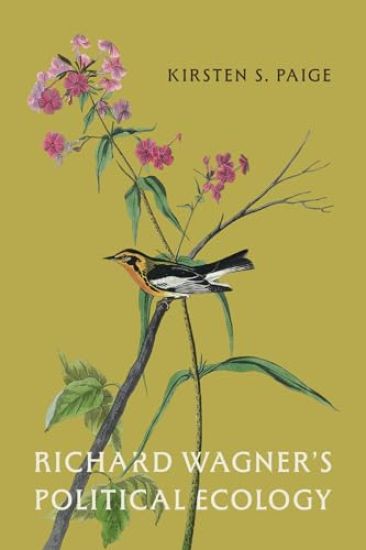
A study of the deep history of the Wagnerian environmental imagination. Richard Wagner’s operas are bursting with environmental imagery, from tittering birds to flowing rivers to towering trees. In Richard Wagner’s Political Ecology, Kirsten S. Paige asks where Wagner’s environmental imagination came from, how it was received by audience members and reconceived by stage directors, and how it refracts his politics and shapes their legacies. By tracing ecological dimensions of the composer’s essays and dramas, Paige reveals how Wagner’s environmental imagination was inextricable from broader political concerns of his time. The book begins by examining the way Wagner’s political ecology shape-shifted across its rhetorical, musical, scenographic, and technological permutations. Although Wagner’s essays and dramas invite a range of interpretations, for Paige, they point to an all-encompassing image of music drama-as-climate. The book then turns to the ways Wagnerian drama—and opera more generally—at once participates in the industrial-technological lineage of climate change and helps spectators grapple with the challenges of living in a warming world. In providing the first close examination of Wagner’s artistic thought, practice, and reception in relation to nineteenth-century climate theory and the early history of environmentalism, Richard Wagner’s Political Ecology considers what it might mean to reimagine opera around ethical mandates of sustainability.
Richard Wagner

Richard Wagner

Martin Geck

University of Chicago Press
2013
sidottu
Best known for the challenging four-opera cycle The Ring of the Nibelung, Richard Wagner (1813-83) was a conductor, librettist, theater director, and essayist, in addition to being the composer of some of the most enduring operatic works in history, such as The Flying Dutchman, Tannhauser, and Tristan and Isolde. Though his influence on the development of European music is indisputable, Wagner was also quite outspoken on the politics and culture of his time. To befit such a dynamic figure, acclaimed biographer Martin Geck offers here a Wagner biography unlike any other, one that strikes a unique balance between the technical musical aspects of Wagner's compositions and his overarching understanding of aesthetics. There are few, if any, scholars today who know more about Wagner and his legacy than Geck, who builds upon his extensive research and considerable knowledge as one of the editors of the Complete Works and the Complete Letters to offer a distinctive appraisal of the composer and his operas. Geck explores key ideas in Wagner's life and works, while always keeping the music in the foreground. This year will mark the bicentennial of Wagner's birth, and there is no better testament to the composer's enduring influence than this fresh, vivid, and authoritative work. Richard Wagner: A Life in Music is a landmark study of one of music's most important figures, offering something new to opera enthusiasts, Wagnerians, and anti-Wagnerians alike.
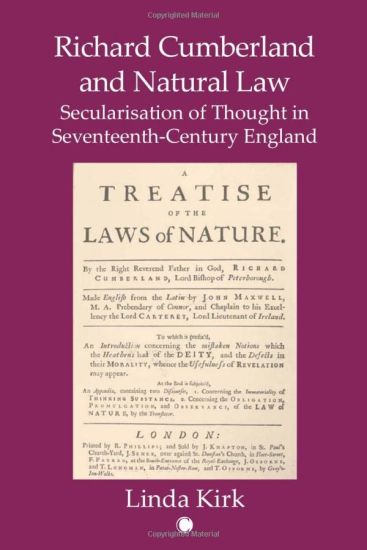
Richard Cumberland and Natural law

Richard Cumberland and Natural law

Linda Kirk

James Clarke Co Ltd
2022
nidottu
Richard Cumberland and Natural Law represents the first major biographical sketch of Cumberland to appear in English. A critic and antagonist of Thomas Hobbes, a proto-Utilitarian and a man of the cloth, Richard Cumberland may be England's least recognised seventeenth century polymath, often overshadowed by the likes of John Bramhall and John Wallis. His magnum opus, De Legibus Naturae (On Natural Laws) stands in quality amongst the greatest works of natural philosophy and ethics of his time period. Here Kirk outlines Cumberland's significant philosophical contributions as well as situating him in his intellectual and historical context. She describes his life, his work as Bishop of Peterborough, and his pioneering contributions to natural law theory. Kirk also includes a chapter on the various editions of Cumberland's masterwork and the praise it received from his contemporaries. Richard Cumberland and Natural Law remains the foremost collection of biographical information of Richard Cumberland, as well as offering a comprehensive discussion of his theories.
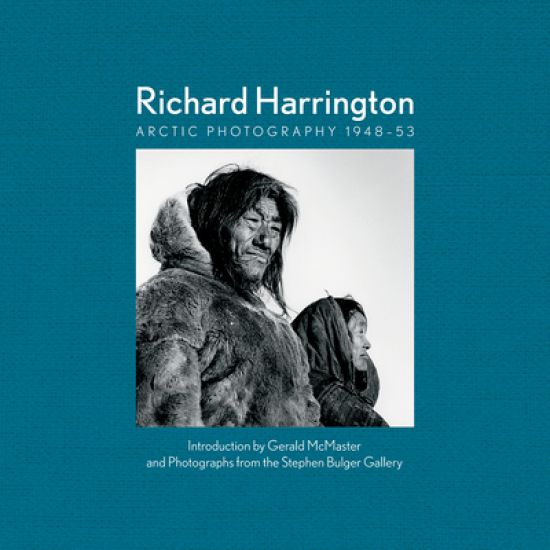
Richard Harrington

Richard Harrington

FIREFLY BOOKS LTD
2023
sidottu
“I am often asked what is the most memorable photograph I have ever taken. This is difficult to decide because many photos meant personal involvement. My Inuit photos to me are most meaningful. They were taken under difficult conditions. I came to know the people. We lived together and shared hardships.” —Richard Harrington, 1998. German-born Richard Harrington (1911–2005) was a renowned documentary photographer. He traveled to more than 120 countries, and his work has appeared in the Toronto Star, Life, Look, National Geographic, Paris Match, Der Stern and Parade Magazine. Some of his most memorable photographs were captured between 1948 and 1953, when Harrington took five expeditions to the Arctic. His work documents not only the transitioning lifestyles of the locals, as western influences encroached on traditional ways of living, but also a terrible famine that struck the Padleimuit in the Northwest Territories in 1950 — when the caribou, the main source of food for the Padleimuit, did not follow their usual migration path. The moving photographs from this series document dignity, acceptance and love in the face of starvation. Richard Harrington: Arctic Photography is a curated selection of some of Harrington’s most stirring and compelling photographs from his years in the Arctic. With an introduction by renowned curator and artist Gerald McMaster and a short biography written by Stephen Bulger, the primary representative of Harrington’s estate, this collection of masterful photographs is an important and timely re-examination of Harrington’s work in the face of a changing climate and renewed Indigenous activism.
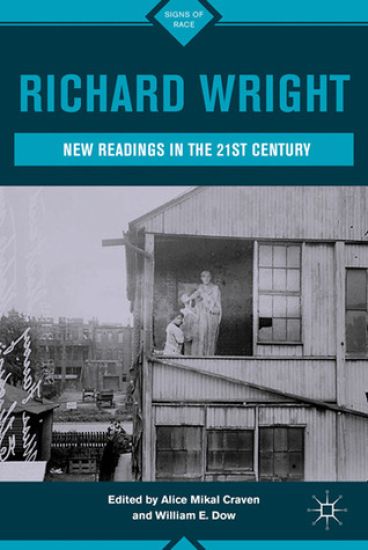
Richard Wright

Richard Wright

Palgrave Macmillan
2011
sidottu
This wide-ranging collection of essays contains unexplored themes and theoretical orientations centering on racism and spatial dimensions; the transnational and political Wright; Wright and masculinity, Wright and the American 1950s and 1960s; and some of the first analyses of Wright's recently published A Father ' s Law (2008).
Richard III

Richard III

Eric Rasmussen; Jonathan Bate

Red Globe Press
2008
nidottu
From the Royal Shakespeare Company – a definitive, fresh new look at Shakespeare’s most compelling villain. With an expert introduction by Sir Jonathan Bate, this unique edition presents a historical overview of Richard III in performance, takes a detailed look at specific productions, and recommends film versions. Included in this edition are interviews with an actor, a director and a designer – Simon Russell Beale, Bill Alexander and Tom Piper – providing an illuminating insight into the extraordinary variety of interpretations that are possible. This edition also includes an essay on Shakespeare’s career and Elizabethan theatre, and enables the reader to understand the play as it was originally intended – as living theatre to be enjoyed and performed. Ideal for students, theatre-goers, actors and general readers, the RSC Shakespeare editions offer a fresh, accessible and contemporary approach to reading and rediscovering Shakespeare’s works for the twenty-first century.
Richard II

Richard II

Eric Rasmussen; Jonathan Bate

Red Globe Press
2010
nidottu
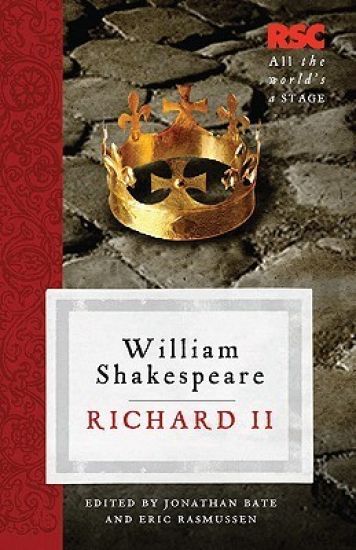
From the Royal Shakespeare Company – a modern, definitive edition of Shakespeare's tragic history of a ruler losing his grip on power. With an expert introduction by Sir Jonathan Bate, this unique edition presents a historical overview of Richard II in performance, takes a detailed look at specific productions, and recommends film versions. Included in this edition are interviews with two leading directors and an acclaimed actress/director – Michael Boyd, Claus Peymann and Fiona Shaw – providing an illuminating insight into the extraordinary variety of interpretations that are possible. This edition also includes an essay on Shakespeare’s career and Elizabethan theatre, and enables the reader to understand the play as it was originally intended – as living theatre to be enjoyed and performed. Ideal for students, theatre-goers, actors and general readers, the RSC Shakespeare editions offer a fresh, accessible and contemporary approach to reading and rediscovering Shakespeare’s works for the twenty-first century.
Richard II

Richard II

Jeremy Lopez

Red Globe Press
2008
sidottu
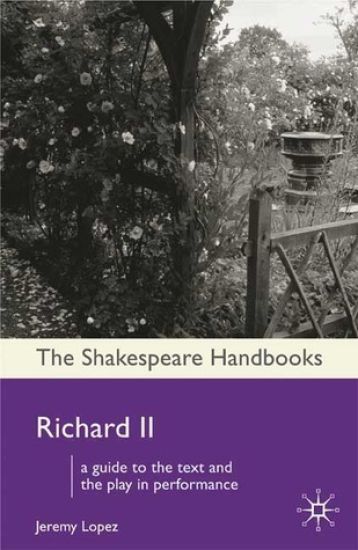
This Handbook provides an introductory guide to Richard II offering a scene-by-scene theatrically aware commentary, contextual documents, a brief history of the text and first performances, case studies of three or four key performances and productions, a survey of film and TV adaptations, a wide sampling of critical opinion and further reading.
Richard II

Richard II

Jeremy Lopez

Red Globe Press
2008
nidottu
This Handbook provides an introductory guide to Richard II offering a scene-by-scene theatrically aware commentary, contextual documents, a brief history of the text and first performances, case studies of three or four key performances and productions, a survey of film and TV adaptations, a wide sampling of critical opinion and further reading.