Kirjojen hintavertailu. Mukana 11 244 527 kirjaa ja 12 kauppaa.

Kirjahaku

Etsi kirjoja tekijän nimen, kirjan nimen tai ISBN:n perusteella.

1000 tulosta hakusanalla Rahul

A Zen Quote A Day

A Zen Quote A Day

Rahul Karn

Rahul Karn
2021
pokkari
Zen Masters are known to say things which appear to be shocking, but are used as devices which can suddenly bring you to the present moment. This collection includes 365 Existential Zen Quotes by various Zen Masters and philosophers which will take you on a contemplative and philosophical journey. The quotes presented here are simple but are pregnant with deep-meaning and subtlety that makes them worth reading again and again. They will also motivate you to meditate. Start your day with a Zen Quote, and have a Zensational day ahead
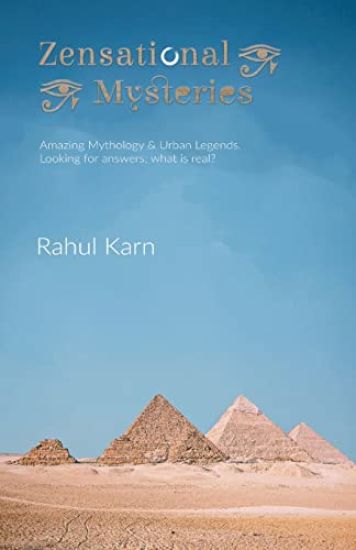
Zensational Mysteries

Zensational Mysteries

Rahul Karn

Rahul Karn
2021
pokkari
Our world has been explored through and through. Yet, there are still phenomena without scientific answers. Some things are fascinating, and some are terrifying.But it never stopped the most curious minds from searching for explanations.If you ever wondered about what is real in mythology and urban legends, this book is for you. It is a fun adventure. So get ready to be amazed. You may have guessed some things and had suspicions about the others. But now you will have all the keys to the doors that never have been open before. This book goes down the mystery lane looking for the truth. It presents a thorough collection of the clues and helps to create a clear picture of the puzzle. So, you will finally get to the bottom of it all.You will get to determine what part of the mystery is actual and what is just fiction. But, of course, it is easier when you have all the cards in your deck.Don't fret if science or Zen is not your strongest skill. This book is a perfect co-pilot for the journey into the unknown. It provides clear and straightforward information. And it is up to you to decide the rest.Do you think you can handle the ride?
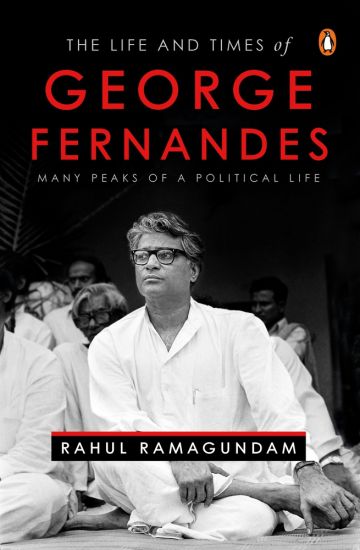
The Life and Times of George Fernandes

The Life and Times of George Fernandes

Rahul Ramagundam

Penguin Putnam Inc
2022
sidottu
Since the time he left his coastal town of Mangalore and came to Bombay (now, Mumbai), more than seven decades ago, George Fernandes's was a life lived with passion, but more importantly, of struggle against all odds. From those early years of fighting for the rights of dock and municipal workers of Bombay to this last decade as a bed-ridden, afflicted with Alzheimer's, but keenly watchful of his own slow bodily degeneration, his fights were always persistent and single-handed. Chronicling the story of George, who rose from the streets of Bombay to straddle the power corridor, The Life and Times of George Fernandes: Many Peaks of a Political Life opens a window to the life of George Fernandes and traces the course of the Socialist Party in India from its inception in 1930s to its dissolution into the Janata Party in the late nineteen-seventies. With nineteen-eighty as the dividing line, the book explores India's post-independence politics. It focuses particularly on a trail of opposition parties that worked to displace the long-ruling Congress Party from its preeminent position. Thought provoking, comprehensive and absolutely unputdownable, this first definitive biography of George Fernandes is a tour de force.
Secrets and Leaks

Secrets and Leaks

Rahul Sagar

Princeton University Press
2013
sidottu
Secrets and Leaks examines the complex relationships among executive power, national security, and secrecy. State secrecy is vital for national security, but it can also be used to conceal wrongdoing. How then can we ensure that this power is used responsibly? Typically, the onus is put on lawmakers and judges, who are expected to oversee the executive. Yet because these actors lack access to the relevant information and the ability to determine the harm likely to be caused by its disclosure, they often defer to the executive's claims about the need for secrecy. As a result, potential abuses are more often exposed by unauthorized disclosures published in the press. But should such disclosures, which violate the law, be condoned? Drawing on several cases, Rahul Sagar argues that though whistleblowing can be morally justified, the fear of retaliation usually prompts officials to act anonymously--that is, to "leak" information. As a result, it becomes difficult for the public to discern when an unauthorized disclosure is intended to further partisan interests. Because such disclosures are the only credible means of checking the executive, Sagar writes, they must be tolerated. However, the public should treat such disclosures skeptically and subject irresponsible journalism to concerted criticism.
Secrets and Leaks

Secrets and Leaks

Rahul Sagar

Princeton University Press
2016
pokkari
Secrets and Leaks examines the complex relationships among executive power, national security, and secrecy. State secrecy is vital for national security, but it can also be used to conceal wrongdoing. How then can we ensure that this power is used responsibly? Typically, the onus is put on lawmakers and judges, who are expected to oversee the executive. Yet because these actors lack access to the relevant information and the ability to determine the harm likely to be caused by its disclosure, they often defer to the executive's claims about the need for secrecy. As a result, potential abuses are more often exposed by unauthorized disclosures published in the press. But should such disclosures, which violate the law, be condoned? Drawing on several cases, Rahul Sagar argues that though whistleblowing can be morally justified, the fear of retaliation usually prompts officials to act anonymously--that is, to "leak" information. As a result, it becomes difficult for the public to discern when an unauthorized disclosure is intended to further partisan interests. Because such disclosures are the only credible means of checking the executive, Sagar writes, they must be tolerated, and, at times, even celebrated. However, the public should treat such disclosures skeptically and subject irresponsible journalism to concerted criticism.
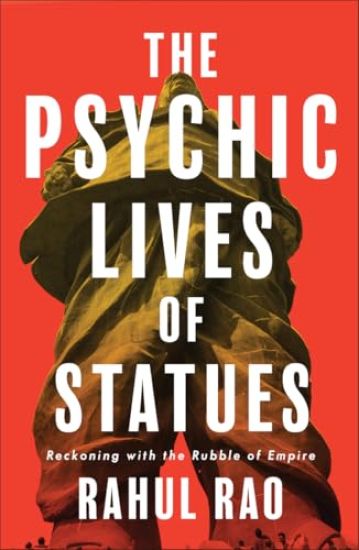
The Psychic Lives of Statues

The Psychic Lives of Statues

Rahul Rao

PLUTO PRESS
2025
sidottu
From Cape Town to Bristol and Richmond, statues have become sites of resistance and contestation of our imperial past and postcolonial present. The Psychic Lives of Statues by Rahul Rao offers an insightful exploration of these global controversies, demonstrating that beneath their surface lie deeper struggles over race, caste, and the politics of decolonisation. Rao takes readers on a journey through South Africa, England, the US, Ghana, India, Australia, and Scotland, revealing how statue controversies have dramatically rearranged the canon of anticolonial political thought. By examining these debates through a personal and literary lens, Rao addresses the multifaceted issues of justice, cultural memory, and belonging. The Psychic Lives of Statues examines both the toppling of colonial statues and the raising of postcolonial ones, demonstrating that the statue form as a medium of representation and a bid for immortality is by no means obsolete. Engaging with artists, scholars, and activists, Rao provides fresh perspectives on how societies grapple with and reinterpret the past and present through iconography.
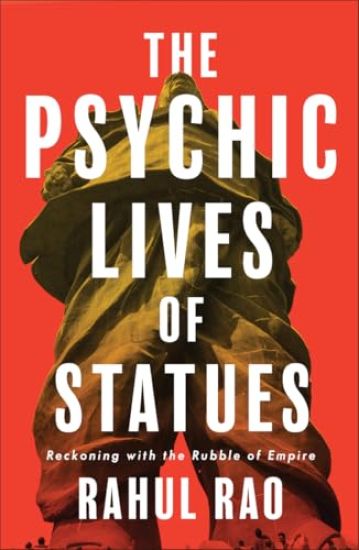
The Psychic Lives of Statues

The Psychic Lives of Statues

Rahul Rao

PLUTO PRESS
2026
nidottu
'An unimpeachable, erudite jewel of a book, showing how tenaciously the shadows of colonialism reach into our lives' - Neel Mukherjee, Booker Prize shortlisted author of The Lives of Others 'Compulsively readable. The struggle over statues is about how we live with and relate to one another, and the fight over equality and dignity' - Laleh Khalili, author of Extractive Capitalism 'Powerfully grounded and eminently thoughtful. Rao's account of how we grapple with the imperial past and present will stand even as statues rise and fall' - Priyamvada Gopal, author of Insurgent Empire Statues around the world have become lightning rods for public debates over the meaning of our imperial past and postcolonial present. The Psychic Lives of Statues is an insightful exploration of these global controversies, demonstrating that beneath their surface lie deeper struggles over race, caste and the politics of decolonisation. Rahul Rao takes readers on an international journey, revealing how these controversies have dramatically rearranged anticolonial political thought through the multifaceted lenses of justice, cultural memory and belonging. The Psychic Lives of Statues explores both the toppling of colonial statues and the erection of postcolonial ones, illuminating how statues remain powerful and compelling forms of memorialisation. Engaging with artists, scholars and activists, Rao offers a fresh and exciting perspective on how we understand our past and present through iconography.
100 Questions & Answers About Spine Disorders

100 Questions & Answers About Spine Disorders

Rahul Jandial; Henry E. Aryan

Jones and Bartlett Publishers, Inc
2008
nidottu
Empower Yourself!Whether you're a newly diagnosed patient, a survivor, or loved one of someone suffering from a spine disorder, this book offers help. The only text available to provide both the doctor's and patient's views, Questions amp Answers About Spine Disorders, provides practical, authoritative answers to of the most common questions asked. Written with commentary from actual patients, this is an invaluable resource for anyone struggling with the medical, physical, and emotional turmoil of this disease. This book includes sections on: The healthy spine Spine tumors Spinal cord tumors Spine trauma and fractures Spine degenerative disease (disc herniation and canal narrowing) Scoliosis Spine surgery Spine surgery-minimally invasive Spine infections Pediatric spine diseases Pediatric scoliosis Pediatric spine surgery Non-surgical spine procedures (injections) Spine rehabilitation exercises
Feeding the Ghosts

Feeding the Ghosts

Rahul Mehta

THE UNIVERSITY PRESS OF KENTUCKY
2024
nidottu
_Find the beauty._ In 2017, writer and educator Rahul Mehta began a writing practice to find solace and beauty—in the natural world, in their family and friends, and in everyday simplicities—during a time of political tensions, environmental disasters, a global pandemic, and personal disappointment. From the vibrant color of a blade of grass, to their dog sleeping quietly in the corner, to delicate petals fallen from a rose, a mindfulness of the beauty in their surroundings helped offset the feelings of fear, outrage, and helplessness. The result of this exercise is a profoundly moving poetry collection that explores Mehta's South Asian and Appalachian culture, their Queerness, their relationships with self and others, race, privilege, and a deep admiration of nature and the spiritual realm. With the ear of a poet and a novelist's understanding of narrative motion, Mehta draws in the reader through humor, tenderness, and complexity. This debut poetry collection from the Lambda Literary Award–winning writer is a magnificent celebration of our own ordinary yet miraculous daily lives—an acknowledgment of the "messy beauty… ugly beauty" in the world.
Staging Civilization

Staging Civilization

Rahul Markovits

University of Virginia Press
2021
sidottu
Eighteenth-century France is understood to have been the dominant cultural power on that era's international scene. Considering the emblematic case of the theater, Rahul Markovits goes beyond the idea of "French Europe" to offer a serious consideration of the intentions and goals of those involved in making this so. Drawing on extensive archival research, Staging Civilization reveals that between 1670 and 1815 at least twenty-seven European cities hosted resident theater troupes composed of French actors and singers who performed French-language repertory. By examining the presence of French companies of actors in a wide set of courts and cities throughout Europe, Markovits uncovers the complex mechanisms underpinning the dissemination of French culture. The book ultimately offers a revisionist account of the traditional Europe française thesis, engaging topics such as transnational labor history, early-modern court culture and republicanism, soft power, and cultural imperialism.
Consensualism in Principle

Consensualism in Principle

Rahul Kumar

CRC Press Inc
2001
sidottu
This book presents and argues for a suitably articulated version of consensualism as a form of Kantian moral theory with an ability to powerfully illuminate the moral intuitions to which Kantian and utilitarian theories have traditionally appealed.
Polyphasic Systematics of Marine Bacteria

Polyphasic Systematics of Marine Bacteria

Rahul Mawlankar

Self Publisher
2023
pokkari
"Polyphasic Systematics of Marine Bacteria" by Rahul Mawlankar is a comprehensive book that delves into the diverse world of marine bacteria, their taxonomy, and their potential applications in various fields. The book highlights the importance of polyphasic systematics, which involves using a combination of phenotypic, genotypic, and chemotaxonomic approaches for bacterial identification and classification. The author emphasizes the significance of 16S rRNA gene sequencing and phylogenetic analysis in determining the evolutionary relationships and taxonomic classification of marine bacteria. The book also provides detailed insights into the microbial diversity of marine environments, bacterial taxonomy, and the various methods used for bacterial identification, including phenotypic and genotypic characterization. Furthermore, the book covers several analytical techniques, including fatty acid profiling, polar lipid profiling, menaquinone profiling, and polyamine profiling, which are used for microbial characterization. It also includes DNA-DNA hybridization and DNA G+C content for assessing the relatedness between different bacterial strains. The author highlights the importance of marine bacteria in bioprospecting, natural products, secondary metabolites, and bioactive compounds, which have potential applications in drug discovery, marine biotechnology, industrial applications, and bioremediation. The book also covers various aspects of marine ecology, biogeography, microbial evolution, adaptation, genetics, and genomics, including culture-dependent and culture-independent methods, molecular techniques, high-throughput sequencing, and bioinformatics. Finally, the book explores the intricate interplay between microbial communities, interactions, symbiosis, quorum sensing, and communication in the marine environment, highlighting the significance of microbial ecology and biogeography. Overall, this book is an invaluable resource for researchers and students interested in marine microbiology and its potential applications in various fields.
Bhopal

Bhopal

Rahul Varma

Playwrights Canada Press
2006
nidottu
The characters who inhabit Varma's play are all seeking the common good. But they are not guided by the same priorities. To get what they want, they must negotiate with each other. Each time they do, something is lost. And these losses ultimately add up to disaster. This play--a pitiless analysis of the stakes of globalization--explores how this happens.
The Political Life of Memory

The Political Life of Memory

Rahul Ranjan

Cambridge University Press
2023
sidottu
This book examines the representation of Birsa's political life, memory politics and the making of anticolonialism in contemporary Jharkhand. It offers contrasting features of political imaginations deployed in developing memorial landscapes. Framing of Birsa in the heroic narrative through a grand scale of memorialisation, often in the form of the built environment, curates a selective version. This isolates the scope of elaborating his political ideas outside the confines of atypical historical records and their relevance in the contemporary context. The book argues that everyday politics through affective sites such as memorials and statues produce political visions, emotions, and opportunities. It shows how such symbolic sites are often strategically placed and politically motivated to inscribe ideologies. This process outlines how the state and Adivasi use memory as a political tool to lay claims to the past of the Birsa Movement.