

Kirjahaku
Etsi kirjoja tekijän nimen, kirjan nimen tai ISBN:n perusteella.
1000 tulosta hakusanalla Rajesh Kumar





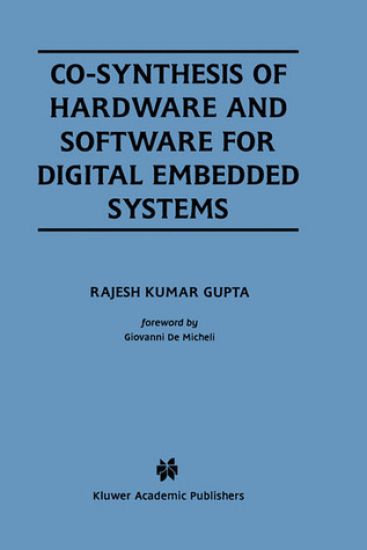
Co-Synthesis of Hardware and Software for Digital Embedded Systems
Rajesh Kumar Gupta
Springer
1995
sidottu
Co-Synthesis of Hardware and Software for Digital Embedded Systems, with a Foreword written by Giovanni De Micheli, presents techniques that are useful in building complex embedded systems. These techniques provide a competitive advantage over purely hardware or software implementations of time-constrained embedded systems. Recent advances in chip-level synthesis have made it possible to synthesize application-specific circuits under strict timing constraints. This work advances the state of the art by formulating the problem of system synthesis using both application-specific as well as reprogrammable components, such as off-the-shelf processors. Timing constraints are used to determine what part of the system functionality must be delegated to dedicated application-specific hardware while the rest is delegated to software that runs on the processor. This co-synthesis of hardware and software from behavioral specifications makes it possible to realize real-time embedded systems using off-the-shelf parts and a relatively small amount of application-specific circuitry that can be mapped to semi-custom VLSI such as gate arrays. The ability to perform detailed analysis of timing performance provides the opportunity of improving the system definition by creating better phototypes. Co-Synthesis of Hardware and Software for Digital Embedded Systems is of interest to CAD researchers and developers who want to branch off into the expanding field of hardware/software co-design, as well as to digital system designers who are interested in the present power and limitations of CAD techniques and their likely evolution.
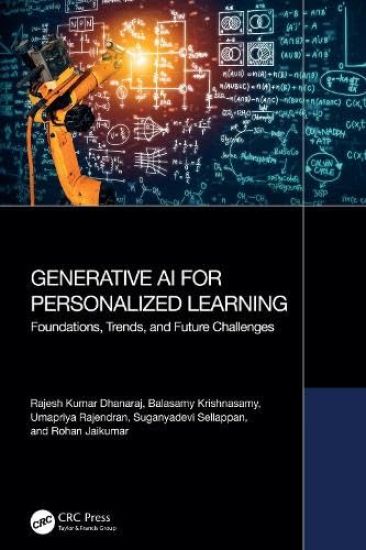
Generative AI for Personalized Learning
Rajesh Kumar Dhanaraj; Balasamy Krishnasamy; Umapriya Rajendran; Suganyadevi Sellappan; Rohan Jaikumar
TAYLOR FRANCIS LTD
2025
sidottu
The rapid evolution of Generative AI (GenAI) is reshaping education, making personalized learning more adaptive, accessible, and effective than ever before. This book explores the profound ways in which GenAI-driven tools—such as GPT-4, Transformers, and GANs—are transforming traditional teaching and learning paradigms. From real-time curriculum adaptation to AI-powered tutors, GenAI is not just enhancing education—it is redefining it.Through in-depth analysis and real-world case studies from Finland, Singapore, Japan, and the United States, this book examines how AI-driven learning environments foster student engagement and improve outcomes. It highlights the shift from one-size-fits-all education to truly individualized learning paths, where AI dynamically adjusts content, pacing, and feedback to each learner’s needs. Teachers, rather than being replaced, are empowered with intelligent tools that enhance their instructional strategies.The rise of AI in education also brings critical challenges. This book does not shy away from discussing ethical concerns, data privacy issues, and the risks of bias in AI-driven education. It provides a balanced perspective, offering strategies to ensure that GenAI serves all students equitably, promoting fairness and inclusivity in the classroom. Whether you are an educator, researcher, policymaker, or technology leader, Generative AI in Personalized Learning offers valuable insights into the future of education. It presents a forward-thinking vision—one where AI and human expertise work in harmony to create a more responsive, scalable, and learner-centric educational experience.The future of learning is not coming—it is already here. This book is your essential guide to understanding and navigating this transformation.
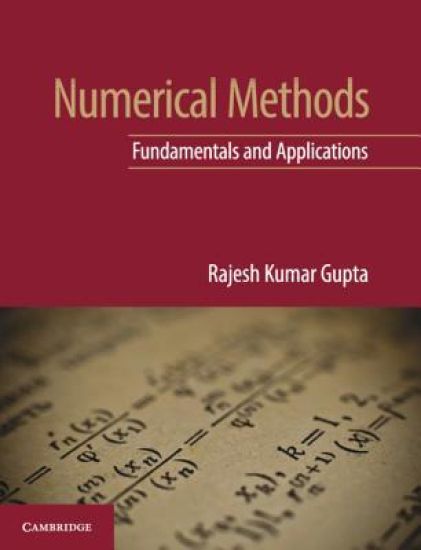
Written in an easy-to-understand manner, this comprehensive textbook brings together both basic and advanced concepts of numerical methods in a single volume. Important topics including error analysis, nonlinear equations, systems of linear equations, interpolation and interpolation for Equal intervals and bivariate interpolation are discussed comprehensively. The textbook is written to cater to the needs of undergraduate students of mathematics, computer science, mechanical engineering, civil engineering and information technology for a course on numerical methods/numerical analysis. The text simplifies the understanding of the concepts through exercises and practical examples. Pedagogical features including solved examples and unsolved exercises are interspersed throughout the book for better understanding.

The aim of this book is to analyze the nature of European and North American firms' business experience in India with a particular emphasis on understanding the causes of their successes and failure. Part of this is due to the fact that although India resembles the West in some ways, the institutional environment is radically different from that of Euro-American societies. Differences in culture, politics, the economy, and business structure all make it difficult for a Western manager to act accordingly. This book strives to offer Western managers the knowledge they will need to succeed in business in India.
The book presents the current standards of digital multiplexing, called synchronous digital hierarchy, including analog multiplexing technologies. It is aimed at telecommunication professionals who want to develop an understanding of digital multiplexing and synchronous digital hierarchy, in particular, and the functioning of practical telecommunication systems, in general. The text includes all relevant fundamentals and provides a handy reference for problem solving or defining operations and maintenance strategies. The author covers digital conversion and TDM principles, line coding and digital modulation, signal impairments, and synchronization, as well as emerging systems.
The aim of this book is to analyze the nature of European and North American firms' business experience in India with a particular emphasis on understanding the causes of their successes and failure. Part of this is due to the fact that although India resembles the West in some ways, the institutional environment is radically different from that of Euro-American societies. Differences in culture, politics, the economy, and business structure all make it difficult for a Western manager to act accordingly. This book strives to offer Western managers the knowledge they will need to succeed in business in India.
Co-Synthesis of Hardware and Software for Digital Embedded Systems
Rajesh Kumar Gupta
Springer-Verlag New York Inc.
2012
nidottu
Co-Synthesis of Hardware and Software for Digital Embedded Systems, with a Foreword written by Giovanni De Micheli, presents techniques that are useful in building complex embedded systems. These techniques provide a competitive advantage over purely hardware or software implementations of time-constrained embedded systems. Recent advances in chip-level synthesis have made it possible to synthesize application-specific circuits under strict timing constraints. This work advances the state of the art by formulating the problem of system synthesis using both application-specific as well as reprogrammable components, such as off-the-shelf processors. Timing constraints are used to determine what part of the system functionality must be delegated to dedicated application-specific hardware while the rest is delegated to software that runs on the processor. This co-synthesis of hardware and software from behavioral specifications makes it possible to realize real-time embedded systems using off-the-shelf parts and a relatively small amount of application-specific circuitry that can be mapped to semi-custom VLSI such as gate arrays. The ability to perform detailed analysis of timing performance provides the opportunity of improving the system definition by creating better phototypes. Co-Synthesis of Hardware and Software for Digital Embedded Systems is of interest to CAD researchers and developers who want to branch off into the expanding field of hardware/software co-design, as well as to digital system designers who are interested in the present power and limitations of CAD techniques and their likely evolution.
The book presents the current standards of digital multiplexing, called synchronous digital hierarchy, including analog multiplexing technologies. It is aimed at telecommunication professionals who want to develop an understanding of digital multiplexing and synchronous digital hierarchy, in particular, and the functioning of practical telecommunication systems, in general. The text includes all relevant fundamentals and provides a handy reference for problem solving or defining operations and maintenance strategies. The author covers digital conversion and TDM principles, line coding and digital modulation, signal impairments, and synchronization, as well as emerging systems.
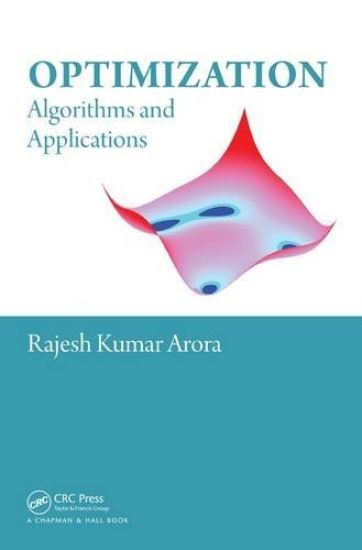
Choose the Correct Solution Method for Your Optimization ProblemOptimization: Algorithms and Applications presents a variety of solution techniques for optimization problems, emphasizing concepts rather than rigorous mathematical details and proofs. The book covers both gradient and stochastic methods as solution techniques for unconstrained and constrained optimization problems. It discusses the conjugate gradient method, Broyden–Fletcher–Goldfarb–Shanno algorithm, Powell method, penalty function, augmented Lagrange multiplier method, sequential quadratic programming, method of feasible directions, genetic algorithms, particle swarm optimization (PSO), simulated annealing, ant colony optimization, and tabu search methods. The author shows how to solve non-convex multi-objective optimization problems using simple modifications of the basic PSO code. The book also introduces multidisciplinary design optimization (MDO) architectures—one of the first optimization books to do so—and develops software codes for the simplex method and affine-scaling interior point method for solving linear programming problems. In addition, it examines Gomory’s cutting plane method, the branch-and-bound method, and Balas’ algorithm for integer programming problems.The author follows a step-by-step approach to developing the MATLAB® codes from the algorithms. He then applies the codes to solve both standard functions taken from the literature and real-world applications, including a complex trajectory design problem of a robot, a portfolio optimization problem, and a multi-objective shape optimization problem of a reentry body. This hands-on approach improves your understanding and confidence in handling different solution methods. The MATLAB codes are available on the book’s CRC Press web page.

Susu Alphabets Book: Susu Book
Rajesh Kumar Shukla
Createspace Independent Publishing Platform
2016
nidottu

The author has understood science and spirituality are different and problems of the people in this world are mostly involved in them. This book depicts a lot of different types of religion, love, humanity, satire and happiness. This is his prayer to God that he should always be true to his expectations and at the same time, if there is an error in his writing, one can inform him, so that he can make a better presentation.

Digital libraries are much more than we can ever imagine. If you have the link then you have the material needed at hand, whether it is books, videos, art, etc. it may be there. Then you have the people behind the scenes, working hard to push out content at a rapid pace. They must have a management system, a device to run the software on, and the material to digitize (if they have the copyright), etc. Going even further back, we have the people who helped shape what digital libraries are today. Vannevar Bush and J.C.R. Licklider’s ideas sparked a digital revolution. You have the men who made the digital libraries that are used today popular. You also have the men who made the first mouse, the first computer, and the first keyboard. The reason these three are mentioned is because how else can we view our digital libraries today if these devices were never invented. Also, the guy who created the World Wide Web (WWW). They all are founders of the technology we use today.In this book, digital libraries will be explained, introducing things you may not have known, from the history to the future of digital libraries. What has changed? Where will it go from here?