Kirjahaku
Etsi kirjoja tekijän nimen, kirjan nimen tai ISBN:n perusteella.
1000 tulosta hakusanalla Ramesh Jare; Vilas Balgaonkar
The AIDS pandemic threatens to kill millions in the next ten years. No one should be silent about speaking to the issue or reading about the complexity of the problem. Dr. Ramesh Deosarran was courageous in his decision to present his readers with both the historical context of the epidemic, as well as the contemporary possibilities of approaches for the Christian community. Churches have the ability to influence the values and actions of not only the congregations, but also wider segments of the community. In this important work Ramesh acknowledges the need for a clearer "roadmap" for developing effective HIV prevention ministries that are sensitive to the church's "cultural" values and norms. A healthy embrace of the contents of this book will enable Christians to avoid the strident moralism that is often the prevailing attitude.

Can't sleep because your thoughts won't switch off? Does a constant stream of unnecessary chatter run thought your head? Mediation is a simple practice that can help you address these common experiences. Through scientifically based research SILENCE YOUR MIND shows how meditation can fit into your busy schedule to improve your sense of wellbeing, help you reach your potential in sport, work and creative pursuits, and increase the quality of your life. For just 10 minutes a day you can feel the benefits that meditation brings to your mental and physical health. Australia s world-leading expert on meditation, Dr Ramesh Manocha, writes in a clear, straight forward way that will appeal to people who wouldn't normally consider meditation, as well as those who want to make it part of their daily lives.

The new, scientifically proven approach to meditation that will enhance your wellbeingperformance - in just 10 minutes a day. OVER 10 000 COPIES SOLD.
J.M.E. McTaggart seeks to critically expound and appraise the British philosopher’s thought with respect to three principal themes of his philosophy: substance, self, and immortality. Ramesh Kumar Sharma guides the reader through the labyrinths of McTaggart’s intricate arguments and defends many of McTaggart’s highly unorthodox doctrines and conclusions. While doing this, Sharma draws on the works of, among others, Berkeley, Hegel, and Leibniz, and at the same time attacks numerous modern-day physicalist theories that propound mind-brain identity as against the presumed reality of the self and consciousness. This work is thus recommended both for philosophers and researchers interested in: (1) such perennial metaphysical subjects as reality, existence, possibility, the basic ontological categories of substance, qualities, and relations (universals); (2) the question of the reality of the self; (3) McTaggart’s overall vision of the universe or Absolute, and his rejection of the more or less predominant view that the Absolute is God; (4) McTaggart’s unique doctrine, after Plato, of the immortality of the self combined with (the self ’s) pre-existence, post-existence, and plurality of lives; and (5) his extraordinary, but important, views on perception.
Twenty-First-Century World Powers and Changing Alignments
Ramesh N. Raizada
University Press of America
2011
nidottu
Twenty-First Century World Powers and Changing Alignments provides an in-depth analysis of global political relations that exist between the most powerful countries of the world such as United States, Russia, England, China and others. It also describes the rationale behind the current and future political alignments amongst different countries. The threats and potentially dangerous situations presented by Iran and North Korea have been discussed in the book. What strategies should be followed to handle this explosive and difficult political Pandora’s box? It is not an easy task to lay out sustainable and achievable plans of action; however, some straightforward ideas have been outlined within this book. After the tragic events of 9/11, Muslim countries have garnered a great deal of attention. The book highlights where these countries stand in relation to terrorism and other political agenda. A brief synopsis of Arab Spring, a revolutionary movement in Arab countries, is included to spotlight the dramatic movement of democracy through out the world.
Survivable Networks: Algorithms for Diverse Routing provides algorithms for diverse routing to enhance the survivability of a network. It considers the common mesh-type network and describes in detail the construction of physically disjoint paths algorithms for diverse routing. The algorithms are developed in a systematic manner, starting with shortest path algorithms appropriate for disjoint paths construction. Key features of the algorithms are optimality and simplicity. Although the algorithms have been developed for survivability of communication networks, they are in a generic form, and thus applicable in other scientific and technical disciplines to problems that can be modeled as a network. A notable highlight of this book is the consideration of real-life telecommunication networks in detail. Such networks are described not only by nodes and links, but also by the actual physical elements, called span nodes and spans. The sharing of spans (the actual physical links) by the network (logical) links complicates the network, requiring new algorithms. This book is the first one to provide algorithms for such networks. Survivable Networks: Algorithms for Diverse Routing is a comprehensive work on physically disjoint paths algorithms. It is an invaluable resource and reference for practicing network designers and planners, researchers, professionals, instructors, students, and others working in computer networking, telecommunications, and related fields.
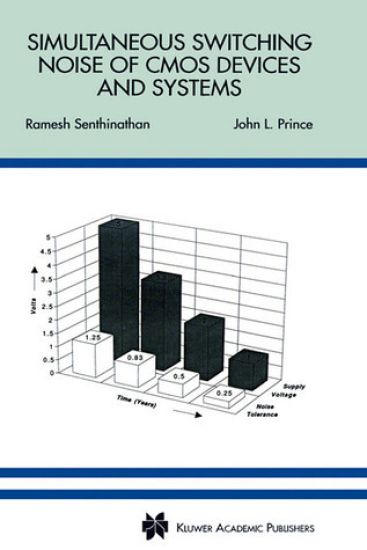
Simultaneous Switching Noise of CMOS Devices and Systems
Ramesh Senthinathan; John L. Prince
Springer
1993
sidottu
This monograph presents our recent research on Simultaneous Switching Noise (SSN) and related issues for CMOS based systems. Although some SSN related work was previously reported in the literature, it were mainly for Emitter Coupled Logic (ECL) gates using Bipolar Junction Transistors (BJTs). This present work covers in-depth analysis on estimating SSN and its impact for CMOS based devices and systems. At present semiconductor industries are moving towards scaled CMOS devices and reduced supply voltage. SSN together with coupled noise may limit the packing density, and thereby the frequency of operation of packaged systems. Our goal is to provide efficient and yet reliable methodologies and algorithms to estimate the overall noise containment in single chip and multi-chip package assemblies. We hope that the techniques and results described in this book will be useful as guides for design, package, and system engineers and academia working in this area. Through this monograph, we hope that we have shown the necessity of interactions that are essential between chip design, system design and package design engineers to design and manufacture optimal packaged systems. Work reported in this monograph was partially supported by the grant from Semiconductor Research Corporation (SRC Contract No. 92-MP-086).
Preparing Expository Sermons – A Seven–Step Method for Biblical Preaching
Ramesh Richard
Baker Books, a division of Baker Publishing Group
2001
nidottu
"The Bible is what God has made. Sermons are what we make with what God has made." This is the foundation for developing expository messages, according to Ramesh Richard. His method, explained in Preparing Expository Sermons, has been field-tested in training seminars for thousands of preachers around the world.Richard's book is a simple do-it-yourself resource for developing and preaching expository sermons. It guides the reader through a seven-step process, with many practical suggestions and illustrative charts along the way. In addition, there are eleven appendixes that include information on:o how to choose a texto preaching narrativeso understanding your audienceo forms of sermon introductionA comprehensive sermon evaluation questionnaire is included as well.Preparing Expository Sermons, an updated and expanded version of Scripture Sculpture, is ideal for beginning preachers, lay preachers without formal training, or any pastor who is looking for a refresher course in expository sermon preparation.
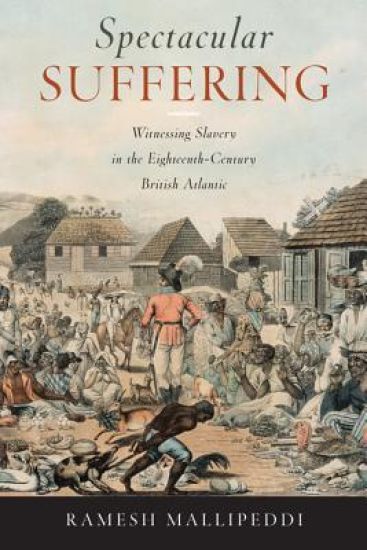
Offering an engaging account of the representation of slavery in eighteenth-century British literature, Spectacular Suffering challenges the dominant conceptions of slave agency and of sentimentalism in the works of prominent writers from the period. In this book, Ramesh Mallipeddi seeks to map the conditions under which slave distress emerged as a topic of emotional concern and political intervention in the long eighteenth century. Concentrating on two defining features of Atlantic slavery?commodification and punishment?alongside the literary methods of sentimentality, Mallipeddi investigates how melancholy sentiment mediated colonial relations between English citizens and Caribbean slaves. Specifically, he asks how the extension of sympathy was shaped by literary forms such as the prose romance, periodical essay, heroic epistle, sentimental novel, and slave narrative.Focusing on the way that writers such as Aphra Behn, Richard Steele, Laurence Sterne, Olaudah Equiano, and Mary Prince deploy the conventions of sympathy, the author also examines how the black slave emerges both as an object of compassion and as a sympathetic witnessing subject. Mallipeddi’s careful, considered accounting of primary texts and his syntheses of important historical and critical work combine to offer nuanced and persuasive insights into a broad range of texts from throughout the long eighteenth century.
The Indian Pharmaceutical Sector
Ramesh Govindaraj; Gnanaraj Chellaraj
World Bank Publications
2002
nidottu
This book offers an analysis of the gap between the benefits of pharmaceuticals and the reality that for millions of poor people in India, these medicines are often inaccessible, unaffordable or improperly used. It details several strategic options that have the potential to strengthen India's ability to ensure the availability, affordability, and the proper use of essential medicines on a sustainable basis.
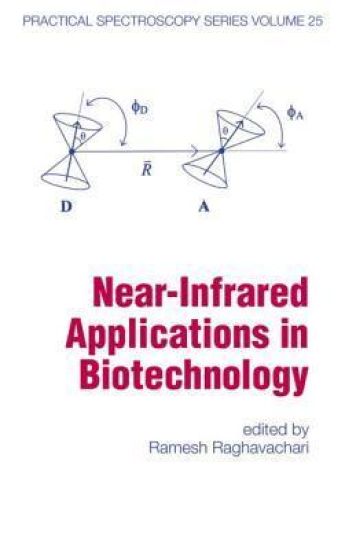
This volume explores developments in techniques in diagnostics, DNA sequencing, bioanalysis of immunoassays, and single-molecule detection. It promotes the measurement, identification, monitoring, analysis, and application of near-infrared spectroscopy (NIR) to medical and pharmaceutical advances. The text also considers noninvasive methods of NIR for successful, cost-effective, and prompt diagnoses of diseases.

This book offers an explanation of the specific ways that biocatalysis outperforms chemical catalysis by: utilizing ambient temperature and atmospheric pressure to minimize problems of isomerization, racemization, and epimerization; employing microbial cells and enzymes that can be immobilized and reused over many cycles; and overexpressing enzymes for greater economy and efficiency.
"I have been a student of M&R for many years, though always in non-technical positions as a professional marketer for products and services companies in the industrial space. I realized whenever I studied Maintenance and Reliability Best Practices in preparation for the CMRP exam, that I was on the right track. Thank you for allowing me to successfully pass the exam as a result of your book on top of the nearly eight years I've been in the industry. I appreciate you very much. I just received notice that I passed the CMRP from The Society for Maintenance and Reliability Professionals! Thank you for the opportunity to learn from you and for your encouragement. I'm very proud to be a CMRP! Amy Campbell, CMRP OverviewWinner of first prize (Gold Award) in the RGVA book competition in Maintenance & Reliability at MARTS/Chicago in 2011.The first edition of this award-winning book immediately became one of the most widely read texts by maintenance, reliability, operations, and safety professionals. It is also being used at many colleges and universities throughout the world. It has become a standard reference for anyone preparing for maintenance and reliability professional exams. In the time since original publication, this book has become a must-have guide and reference. It helps everyone ensure that their organization’s assets are operating as and when needed and at reasonable cost.FeaturesFeatures a streamlined flow for easier study and reference.Includes self-assessment questions at the end of each chapter.One of the first books to discuss asset management related standards, including the new ‘ISO-55000 Asset Management Standards.Provides new material on corrosion control, risk management, and operator-driven reliability.A separate Workbook (ISBN 9780831134358) has been prepared with the assistance of Christopher Mears.“I have been a student of M&R for many years, though always in non-technical positions as a professional marketer for products and services companies in the industrial space. I realized whenever I studied Maintenance and Reliability Best Practices in preparation for the CMRP exam, that I was on the right track. Thank you for allowing me to successfully pass the exam as a result of your book on top of the nearly eight years I’ve been in the industry. I appreciate you very much. I just received notice that I passed the CMRP from The Society for Maintenance and Reliability Professionals! Thank you for the opportunity to learn from you and for your encouragement. I’m very proud to be a CMRP!”—Amy Campbell, CMRP“I enjoyed your book tremendously and after reading it several times (along with 20 years of maintenance experience), I was able to take and pass the CMRP certification. Thank you!” —Steve J. Firko, CMRP Ramesh Gulati is currently Asset Management and Reliability Planning Manager with the Aerospace Testing Alliance at Arnold Engineering Development Center (AEDC), Arnold AFB, TN. He is responsible for creating a reliability culture across AEDC and for building and designing reliability into new systems. Previously, he held various maintenance, engineering, and management positions at AEDC, Carrier Air Conditioning Corp., True Temper Corp., Bethlehem Steel, and Heavy Engineering Corporation’s Foundry Forge Plant.Ramesh is a Certified Maintenance & Reliability Professional (CMRP), Certified Reliability Engineer (CRE), and a registered Professional Engineer (PE). He holds BSME, MSIE, and MBA degrees, is very active in professional societies and has authored many professional papers. Currently, for SMRP, he serves as Certification Committee chair and was director of Certification and Standards, Best Practices, Body of Knowledge, and a Board member. He also serves as an advisory Board member for the University of Tennessee’s Reliability & Maintenance Center (RMC). He is a member of Association of Maintenance Professionals (AMP) and a Fellow of the Institute of Industrial Engineering (IIE). Recently, Ramesh served as a U.S. delegate to the ISO/PC251 committee, supporting development of a new Asset Management Standard. Maintenance and Reliability Best Practices, Second Editionby Ramesh GulatiForeword to the Second EditionBy Terence O'Hanlon, CMRPPublisher, Reliabilityweb.com, Uptime MagazineJuly 2012 I first met Ramesh when we were both volunteering at a Society of Maintenance & Reliability Professionals executive board meeting. The first thing I noticed was his intensity. He was intensely interested in contributing what he knew to the best practices being collected by the organization. He was intensely working to connect people who might be able to help each other. He was interested in making sure those around him were not simply passively supportive of a reliability-based maintenance strategy. They had to be fully committed to a reliability-based way of life! I eventually made it to the Air Force base where Ramesh worked, and I noticed something completely different about the way maintenance was regarded. I could not detect the usual sense of maintenance as a "necessary evil" or a "cost center," even from the base's leadership. Instead, maintenance was viewed as an important enabler of the mission. Reliability was the context and aim of the maintenance program. Since that day almost ten years ago, I have been privileged to work with Ramesh, who taught me that one can only gain through contributing. I've also learned from his entire team, including a series of leaders over the last decade that represent the best of what America is all about. There is a common thread I have found from all the best practice programs like the one where Ramesh works. That is the thread of sharing. You would expect best practice organizations to be learning organizations, like knowledge sponges absorbing every bit of beneficial information they can find. Instead, it is almost the exact opposite. These organizations share and teach everything they know and everything they have learned; somehow this contributes to their getting better and improving even more. Before this book appeared, only those who worked and volunteered with Ramesh or those who heard him at an industry conference, had been touched by his work. With this book, and now this new edition, the wider world will have a chance to benefit from his experience and knowledge. If you are a maintenance professional, dive in and savor this book. Try not to make too many dog-eared pages because I suggest that you lend it to your boss as soon as you are done with it or, better yet, buy him or her a copy. Then ask your boss to pass it up the line so everyone can start to see the important work done by some of the best people on the planet -- maintenance professionals. In the second edition, you will benefit from a streamlined flow to allow easier study and reference. In addition there are now "assessment" questions at the end of each chapter to test how well you absorbed the material. This is one of the first books to discuss the asset-management-related standards -- including the new "ISO-55000 Asset Management Standard," which Ramesh has been developing with a global team from 24 nations. Other new material includes corrosion control, risk management and operator-driven reliability. This award-winning book has become one of the de facto standards for those preparing to sit for maintenance-reliability professional exams. It is also used in college-level courses throughout the world. If the lights are on as you read this book -- you owe thanks to a maintenance professional. I know I owe thanks to Ramesh for being a personal and professional mentor for me. I am a much better person as a result of having him as a friend. Terence O'Hanlon Excerpt from Maintenance and Reliability Best Practices Chapter 1.3 What Do Best Practices Have to Do with Maintenance and Reliability? In any organization, assets are needed to produce products or provide services. An item or asset, as defined here, could be an electronic or mechanical hardware component or device, a software product, or a manufacturing system or process. The objective of performing better maintenance and improving reliability of assets in an organization is to ensure that the assets are available to perform required functions, when needed, in a cost-effective manner. The performance of an asset is based on three factors (see Figure 1.1): Inherent reliability — how it was designed?Operating environment — how it will be operated?Maintenance plan — how it will be maintained? Usually assets are designed with a certain level of reliability. This designed-in (or built-in) reliability is the result of individual components’ reliability and the way they are configured. This level of reliability is called inherent reliability. We cannot change or improve the reliability of an asset after it has been installed without replacing or modifying it with better and improved components (with the exception of redesigning it). The second factor, the operating environment of the asset, considers operating conditions under which the asset has to operate along with the operator’s skills. Several studies have indicated that 40% or more failures are the result of operational errors. Organizations need to ensure that operators are appropriately educated and trained in operating these assets without causing operational errors that lead to failures. In fact, operators should be the first line of defense in monitoring the asset’s performance and any abnormal conditions, and in initiating timely corrective actions. The third factor is a maintenance plan that defines how the asset will be maintained. The objective of a good maintenance plan is to sustain asset reliability and to improve its availability. The plan should include the necessary maintenance and service-type actions needed to detect potential failures before they lead to unscheduled downtime. So what do best practices have to do with these principles of maintenance and reliability? Throughout the many years of the maintenance and reliability industry, good and bad practices have been identified. These good and bad practices have been briefed at international conferences, discussed in person and over the airwaves, and written in magazines, books, websites, and blogs. The best of these practices are now becoming more accepted and published throughout local, national, and international industries, becoming the benchmarks that companies seek to achieve. Throughout this book, we will be discussing these factors and what best practices can be used to improve asset performance. Introducing Best PracticesIntroduction: What Is a Best Practice?Key Terms and DefinitionsWhat Do Best Practices Have to Do with Maintenance and Reliability?Examples of Maintenance and Reliability BenchmarksBasic Test on Maintenance and Reliaility KnowledgeSummarySelf Assessment Questions References and Suggested ReadingsCulture and LeadershipIntroductionKey Terms and DefinitionsLeadership and Organizational CultureStrategic Framework: Vision, Mission, and GoalsChange ManagementReliability CultureMeasures of PerformanceSummarySelf Assessment QuestionsReferences and Suggested ReadingUnderstanding MaintenanceIntroductionKey Terms and DefinitionsMaintenance ApproachesMaintenance Practices: OthersMaintenance Management System: CMMSMaintenance QualityMaintenance Assessment and ImprovementSummarySelf Assessment QuestionsReferences and Suggested ReadingWork Management: Planning and SchedulingIntroductionKey Terms and DefinitionsWork Flow and RolesWork Classification and PrioritizationPlanning ProcessScheduling ProcessTurnarounds and ShutdownsMeasures of PerformanceSummarySelf Assessment QuestionsReferences and Suggested ReadingMaterials, Parts, and Inventory ManagementIntroductionKey Terms and DefinitionsTypes of InventoryPhysical Layout and Storage EquipmentOptimizing Tools and TechniquesMeasures of PerformanceSummarySelf Assessment QuestionsReferences and Suggested ReadingMeasuring and Designing for Reliability and MaintainabilityIntroductionKey Terms and DefinitionsDefining and Measuring Reliability and Other TermsDesigning and Building for Maintenance and ReliabilitySummarySelf Assessment QuestionsReferences and Suggested ReadingOperator Driven ReliabilityIntroductionKey Terms and DefinitionsThe Role of OperationsTotal Productive Maintenance (TPM)Workplace Organization: 5SOverall Equipment Effectiveness (OEE)Measures of PerformanceSummarySelf Assessment QuestionsReferences and Suggested ReadingMaintenance OptimizationIntroductionKey Terms and DefinitionsUnderstanding Failures and Maintenance StrategiesMaintenance Strategy — RCMMaintenance Strategy — CBMOther Maintenance StrategiessSummarySelf Assessment QuestionsReferences and Suggested ReadingManaging PerformanceIntroductionKey Terms and DefinitionsIdentifying Performance MeasuresData Collection and Data QualityBenchmarking and BenchmarksSummarySelf Assessment QuestionsReferences and Suggested ReadingWorkforce ManagementIntroductionKey Terms and DefinitionsEmployee Life CycleUnderstanding the Generation GapCommunication SkillsPeople DevelopmentResource Management and Organization StructureMeasures of PerformanceSummarySelf Assessment QuestionsReferences and Suggested ReadingMaintenance Analysis and Improvement ToolsIntroductionKey Terms and DefinitionsMaintenance Root Cause Analysis ToolSix Sigma and Quality Maintenance ToolsLean Maintenance ToolsOther Analysis and Improvement ToolsSummary 11.8 Self Assessment QuestionsReferences and Suggested ReadingCurrent Trends and PracticesIntroductionKey Terms and DefinitionsEnergy Management, Sustainability, and the Green InitiativePersonnel, Facility, and Arc Flash SafetyRisk ManagementCorrosion ControlSystems Engineering and Configuration ManagementStandards and StandardizationSummarySelf Assessment QuestionsReferences and Suggested ReadingAppendix for Chapter 1Best Practices Q–A: Answer Key and ExplanationIndex
Workbook to Accompany Maintenance & Reliability Best Practices
Ramesh Gulati
Industrial Press Inc.,U.S.
2013
pokkari
This softbound workbook is the ideal guide for readers of Gulati's Maintenance and Reliability Best Practices, 2nd edition, as well as for students in a classroom or seminar/workshop setting. Each chapter provides extensive Powerpoint-style summaries of important vocabulary and essential concepts, in a format that encourages students to write additional notes and evaluations of the content.Includes reviews of chapter objectives and summaries.Provides readers with answers to the main text's assessment exercises as well as additional questions to direct their study.Each chapter concludes with a set of independent research questions; these questions help readers expand their understanding of the content as they prepare to apply best practices.
Touted by maintenance and reliability professionals around the world as a “must-read for anyone who wants to stay competitive in today’s industrial environment,” and “By far the best book on maintenance management,” Maintenance and Reliability Best Practices is an even more useful resource in its new 3rd edition. Now in 2-colors to clearly identify main ideas and emphasize important data in illustrations, the book also includes additional self-assessment questions in each chapter. The entire work has been updated to reflect the latest developments in technology and thinking, with innovative material related to leadership, change management, ISO standards, maintenance optimization, and communication, while sticking to the practical, common-sense approach that led readers to call it “a great book for developing a road map to reliability,” and “the perfect guide for setting up an effective maintenance program.” For anyone in the fields of engineering, purchasing, finance, maintenance, reliability, or production, and especially for those preparing to sit for a professional maintenance and reliability certification, there’s simply no better tool or resource than renowned Ramesh Gulati’s Maintenance and Reliability Best Practices, 3e. Features40% additional questions throughout the book, making it easier for those preparing to sit for a professional maintenance and reliability exam to learn and study pertinent topics.New chapter on standards, with particular focus on ISO 55000.Discussion of new and future trends, such as Industry 4.0, Maintenance 4.0, IIOT, and their impact on productivity.An affiliated Workbook is available for sale separately (978-0-8311-3648-2).“I have been a student of M&R for many years, though always in non-technical positions as a professional marketer for products and services companies in the industrial space. I realized whenever I studied Maintenance and Reliability Best Practices in preparation for the CMRP exam, that I was on the right track. Thank you for allowing me to successfully pass the exam as a result of your book on top of the nearly eight years I’ve been in the industry. I appreciate you very much. I just received notice that I passed the CMRP from The Society for Maintenance and Reliability Professionals! Thank you for the opportunity to learn from you and for your encouragement. I’m very proud to be a CMRP!”—Amy Campbell, CMRP“All you need to do is open this book to any page, and the powerful wisdom of Ramesh Gulati is readily available! Make sure you get the new third edition loaded with bonus knowledge and experience.”— Terrence O’Hanlon“I enjoyed your book tremendously and after reading it several times (along with 20 years of maintenance experience), I was able to take and pass the CMRP certification. Thank you!” —Steve J. Firko, CMRPRamesh Gulati, PE, CRE, CRL, CAMA, CMRP, CMRT, has been in the maintenance and reliability and asset management field for more than 50 years, and because of his incredible contributions, was given the appropriate nickname of the “Reliability Sherpa.” Mr. Gulati is active in professional societies, and has received numerous accolades for his hard work, including a Lifetime Achievement Award at the Reliability Conference in 2019, the 2014 CMRP of the Year Award, and the Gold Book award at Maintenance Technology for Maintenance and Reliability Best Practices in 2011.1. Introducing Best Practices; 2. Culture and Leadership; 3. Understanding Maintenance; 4. Work Management: Planning and Scheduling; 5. Materials, Parts, and Inventory Management; 6. Measuring and Designing for Reliability and Maintainability; 7. Operator Driven Reliability; 8. Maintenance Optimization; 9. Managing Performance; 10. Workforce Management; 11. Problem Solving and Improvement Tools; 12. Standards, Standardization, and Certification; 13. Current Trends and Practices. Appendix A. Best Practices Q&A Answer Key and Explanation.
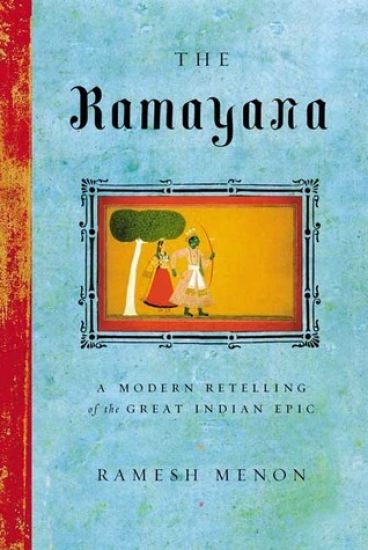
The Ramayana: A Modern Retelling of the Great Indian Epic
Ramesh Menon
North Point Press
2004
nidottu
The grand Indian epic is translated into lively, vivid English prose in an attempt to bring the great story to life for modern American readers. Reprint.