

Kirjahaku
Etsi kirjoja tekijän nimen, kirjan nimen tai ISBN:n perusteella.
1000 tulosta hakusanalla Rashid Ergener


After Spain's re-conquest of East-Florida, mestizo migrants from South America settled between St. Augustine and Saint Marys River (the border with the United States). Rahul, his wife Damaris, their children, and their servant Yuliya, settled in an abandoned village at the border. Rahul trained new soldiers, Damaris opened her own shop and Yuliya made American friends. Sudden events caused Damaris to doubt whether their family's migration was a good idea to begin with...

All hell broke loose after Kevin, Louisa's brother, disappeared. The case revealed much hidden conflict in the migrant community of Cuba. Meanwhile, Louisa's friends noticed that the young American lady needed a fresh new start. This fresh new start came after she suddenly left Santa Clara, her place of birth. However, she figured out the hard way that escaping would not be that easy...

Sixteen years after Fiona Rodrigues moved to Quilmes, local society shunned the (former) Spanish duchess. To make peace, she pledged allegiance to the Argentine Confederation. For a moment, it appeared as if she was accepted by the community. However, soon the public demanded a sacrifice from her to prove her loyalty...

A lot of people fantasise about building wealth that will last for generations. But... what if worldly power is a trap that comes with many side effects that can harm an entire family (or a whole community) for multiple generations? In this bundle, we'll see both the benefits as the dark side of the prosperity of Dagmar's extended family-the good, the bad, the ugly and violence that haunted them from within covered by the deceptive glitter, glamour and fame they ''enjoyed'' according to society. Always remember: not everything that glitters is gold

The wife of Danilo (the head of the lvarez cartel) left him for a Brazilian lover. She also robbed half of the cartel's money before she vanished! Vincente, to both console his father-in-law and to bring closure for the family, searched for someone to replace Danilo's ex-wife. The cartel's financial woes caused the collapse of the economy. Civil unrest, riots and lootings followed within days. The viceroy of New Granada threatened to annex the colony if the (local) politicians failed to solve the crisis. At the yearly vice-regal beauty pageant, Vincente selected Giovana--who won the beauty contest of the Margarita province earlier that year. As the 'trophy wife' and new 'lady of the house' of society's ruling family, she enjoyed many privileges and a life of ease. At least, that is what it seemed unto outsiders...

During the early 1860s, some of the Guaj n merchants sailed to Japan. Victoria (from the Portuguese community), and some of her Spanish friends, joined the business trip. In Tokyo, however, they were drawn into a local political conflict between the supporters and opposers of the Meiji reforms. They were arrested, on false charges, and scattered throughout the country. While the conflict escalated further, Victoria adapted to her new life in a remote village in the Japanese Alps. She joined a temple choir and she even made two friends. There was a dark side to this: her success, as a foreigner, also made her a target...

Following the defeat of Napoleon, many Frenchmen, who fled to the Americas, return to their homeland. Several families from Bordeaux, Nantes and Toulouse remained in Guatemala where they settled near Tegucigalpa. The French migrants rent land from Amalia, the widow of a Spanish knight. Amalia spend her days, with her pets, wandering in her castle and private gardens. Her life suddenly changed when some of her renters were arrested for planning a coup d'etat against Spain.

After the successful expedition of Malaspina, many mestizos from New Spain and Peru migrated to the southwestern pacific to populate the Spanish settlements. The viceroy of Peru appointed an audiencia, led by a captain, to govern the Spanish towns in Nova Zeelandia. Lydia, the niece of the captain, usurped and eventually replaced her paternal uncle when she realised the natives had a tradition of a female-centred leadership. Can she handle the conflicts between the Spanish settlers, the British competitors and the natives?
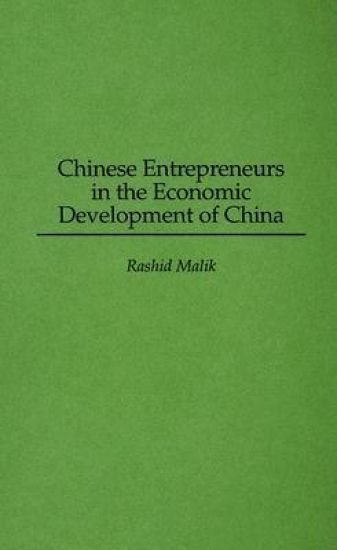
Chinese Entrepreneurs in the Economic Development of China
Rashid Malik
Praeger Publishers Inc
1997
sidottu
The entrepreneurs of China are dynamic and contributing positively to economic development, but unlike Western entrepreneurs, they are uncertain and insecure about government policies and their position in society. This book shows that in the history of China and in the politics of the 1980s, all are influenced by culture and have created an entrepreneurial class that is ambiguous and fragile. Yet the entrepreneurs are moving China toward economic development, and this is giving rise to a new economic culture which honors profit-making ventures. The Chinese Communist Party is making room for entrepreneurs and consumers in the economic arena. The study supports the idea that entrepreneurship is the key to economic development, but it also shows that private entrepreneurship influences government policy and traditional values. It also points out the vital role of the consumer.

Passage to Dusk deals with the Lebanese civil war of the 1970s in a postmodern, poetic style. The narrative focuses on the deranged, destabilized, confused, and hyper-perceptive state of mind created by living on the scene through a lengthy war. The story is filled with details that transcend the willed narcissism of the main character, while giving clues to the culture of the time. It is excellent fiction, written in a surrealistic mode, but faithful to the characters of the people of Lebanon, their behavior during the war, and their contradictions. Issues of gender and identity are acutely portrayed against Lebanon's shifting national landscape. The English-language reader has not been much exposed to Lebanese literature in translation, and Rashid al-Daif is one of Lebanon's leading writers. He has been translated into eight languages, including French, German, Italian, Polish, and Spanish. Translator Nirvana Tanoukhi manages to preserve Daif's unusual, moving, and at times humorous style in her English rendition.

Rashid al-Daif’s provocative novel Who’s Afraid of Meryl Streep? takes an intimate look at the life of a recently married Lebanese man. Rashoud and his wife struggle as they work to negotiate not only their personal differences but also rapidly changing attitudes toward sex and marriage in Lebanese culture. As their fragile bond disintegrates, Rashoud finds television playing a more prominent role in his life; his wife uses the presence of a television at her parents’ house as an excuse to spend time away from her new home. Rashoud purchases a television in the hopes of luring his wife back home, but in a pivotal scene, he instead finds himself alone watching Kramer vs. Kramer. Without the aid of subtitles, he struggles to make sense of the film, projecting his wife’s behavior onto the character played by Meryl Streep, who captivates him but also frightens him in what he sees as an effort to take women’s liberation too far.Who’s Afraid of Meryl Streep? offers a glimpse at evolving attitudes toward virginity, premarital sex, and abortion in Lebanon and addresses more universal concerns such as the role of love and lust in marriage. The novel has found wide success in Arabic and several European languages and has also been dramatized in both Arabic and French.

In 2003, Lebanese writer Rashid al-Daif spent several weeks in Germany as part of the “West-East Divan” program, a cultural exchange effort meant to improve mutual awareness of German and Middle Eastern cultures. He was paired with German author Joachim Helfer, who then returned the visit to al-Daif in Lebanon. Following their time together, al-Daif published in Arabic a literary reportage of his encounter with Helfer in which he focuses on the German writer’s homosexuality. His frank observations have been variously read as trenchant, naïve, or offensive. In response, Helfer provided an equally frank point-by-point riposte to al-Daif’s text. Together these writers offer a rare exploration of attitudes toward sex, love, and gender across cultural lines. By stretching the limits of both fiction and essay, they highlight the importance of literary sensitivity in understanding the Other.Rashid al-Daif’s “novelized biography” and Joachim Helfer’s commentary appear for the first time in English translation in What Makes a Man? Sex Talk in Beirut and Berlin. Also included in this volume are essays by specialists in Arabic and German literature that shed light on the discourse around sex between these two authors from different cultural contexts.

This book examines the behaviour of private industrial investment in Pakistan in the 1960s, in the first half of which it rose at an unprecedented rate, followed by sharp decline, and then stagnation for the rest of the period. The approach adopted is institutional and empirical. The developments studied appeared to be very much the product of the institutional setting of Pakistan, which was different from that of most advanced countries but possibly riot so dissimilar from that in many other developing countries.

"Alina of Azimabad provides a rare and valuable insight into issues being faced by women in South Asia. Alina, the character created by the author tells an extraordinary and remarkable account of her life spread over almost half a century. The story starts off in the aftermath of the partition of India. It is a saga of the hidden world of feudalism with its exploitation and degeneration.The account also stresses the point that Pakistan is not inhabited by fanatics and is as normal a country as any other.The author has very vividly touched upon social problems in his work and has specifically addressed gender issues. His strength lies in his ability to express himself with ease. The language he uses is simple, crisp and endowed with brevity. He has also introduced several common words of South Asian origin into the English Language. The narrative is very readable and interesting.

Listen to the Beat of the Drum: Essence of Servant Leadership
Rashid Faisal
Black Ivy Scholar Publications
2018
nidottu
In this small volume, Rashid Faisal, addresses the void in American leadership through the lens of Dr. King's servant leadership philosophy and his social activism during the Civil Rights movement. In eight lectures contained within the pages of this modest text, Faisal challenges the reader to embrace a new definition of leadership based on five servant leadership principles found in studying the life and legacy of Dr. Martin Luther King, Jr. This text represents a small contribution to the global commemoration of the 50th anniversary of Dr. Martin Luther King, Jr's assassination on April 4, 1968. The 50th anniversary of King's tragic death marks an opportunity for leaders to reflect on the triad of social injustices King identified during the last years of his life: racism, materialism and militarism.

Daddy's Reminders: A Black Father's Message to His Daughter
Rashid Faisal
Black Ivy Scholar Publications
2014
nidottu
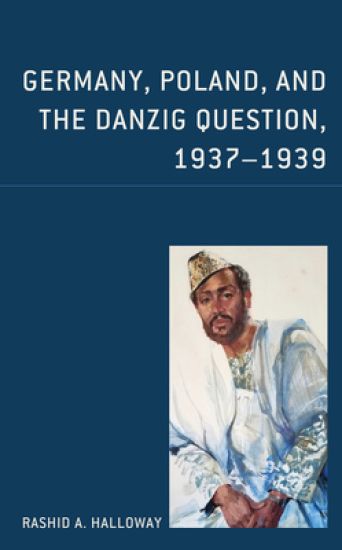
Germany, Poland, and the Danzig Question, 1937—1939 explores the events that led to the Nazi occupation of Danzig, which was the catalyst of World War II. In this book Rashid A. Halloway sheds light on German, Polish, and British diplomatic negotiations at the highest level during a time when diplomacy was at a premium due to the perceived threat to peace in Europe under Hitler. Halloway presents a study of intense diplomatic negotiations in the pre-World Ware II years between Germany and Poland relating to Germany’s desire to gain access, through Poland along the Baltic Sea, to East Prussia, more particularly to the Free City of Danzig, by establishing a secure transport route through that part of Poland, commonly referred to as the “Polish Corridor” and the negative result.
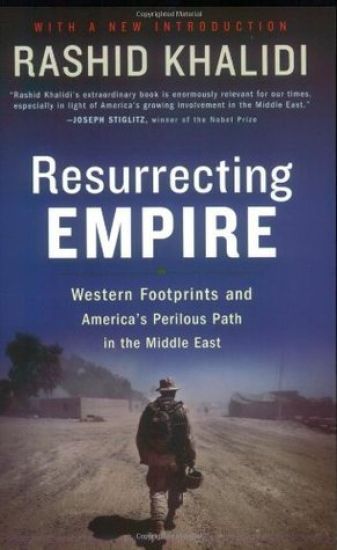
Resurrecting Empire: Western Footprints and America's Perilous Path in the Middle East
Rashid Khalidi
BEACON PRESS
2005
nidottu
Arguing for reform in American foreign policy, the author surveys the troubling history of American involvement in the region and suggests that the current effort to remake the Middle East by force is doomed to fail. Reprint. 25,000 first printing.