Kirjojen hintavertailu. Mukana 11 244 527 kirjaa ja 12 kauppaa.

Kirjahaku

Etsi kirjoja tekijän nimen, kirjan nimen tai ISBN:n perusteella.

1000 tulosta hakusanalla Raymond Faure

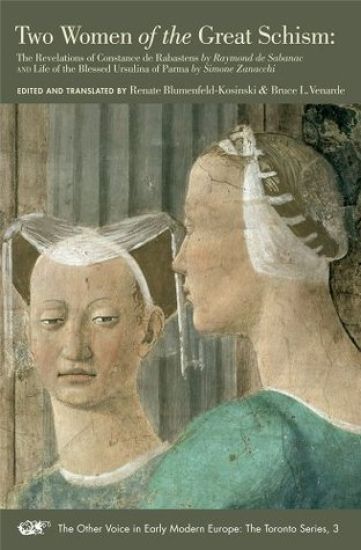
Two Women of the Great Schism – The Revelations of Constance de Rabastens by Raymond de Sabanac and Life of the Blessed Ursulina of Parma by Simone Za

Two Women of the Great Schism – The Revelations of Constance de Rabastens by Raymond de Sabanac and Life of the Blessed Ursulina of Parma by Simone Za

Raymond de Sabanac; Simone Zanacchi; Renate Blumenfeld–kosi; Bruce L. Venarde

University of Toronto Press
2010
nidottu
The Great Schism (1378–1417) divided Western Christendom into two groups: those who recognized a pope in Rome and those who recognized one in Avignon. It was a crisis of authority that brought with it spiritual anxiety and political uproar. This book presents the responses of two fascinating women whose experiences demonstrate the impact of the Schism on ordinary Christians. Constance de Rabastens (active 1384–1386), who lived in a village in rural Languedoc, had dramatic visions indicting the Avignon pope Clement VII, despite his being recognized in her region. Ursulina of Parma (1375–1408), a diminutive young woman from an urban milieu in Italy, believed that she was commanded by Christ to engage in shuttle diplomacy between the Roman and Avignon papacies in order to end the Schism. Two Women of the Great Schism translates an account of Constance’s visionary experiences as recorded by her confessor Raymond de Sabanac and a posthumous biography of Ursulina by Simone Zanacchi, a pious abbot who wrote some sixty years after his subject’s death. These texts bring to life the extraordinary spiritual and political engagement of two late medieval women who refused to be passive bystanders as rival papal factions tore Christendom apart.
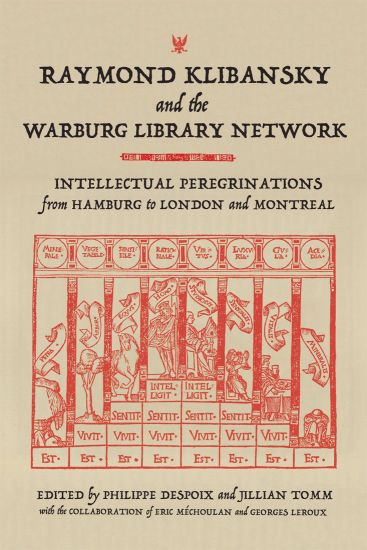
Raymond Klibansky and the Warburg Library Network
The Warburg Institute, founded in the 1920s in Hamburg by art and cultural historian Aby Warburg, is a pioneering institution that has greatly shaped the fields of art, myth, religion, medicine, philosophy, and intellectual history. When, in 1933, the institute was moved to London to escape the Nazis, its research and legacy were protected and further developed by a network of researchers dispersed throughout the UK, the US, and Canada. The first interdisciplinary study of the Warburg network as an arena of intellectual transmission, transformation, and exchange, this volume reveals the dynamics, agencies, and actors at play in the development of the Warburg Institute's program and output, with a specific focus on the role of Raymond Klibansky (1905–2005) in the institute's major ventures. Among these collective projects of the institute are the famous Saturn and Melancholy, which blends art history with philosophical and cultural history, and the Latin and Arabic Corpus Platonicum Medii Aevi series, which contributed to research on the continuity of Platonic thought. Consulting published and unpublished sources including correspondences, memories, and diaries of affiliated scholars, the essays explore the history of the Warburg Library as a vital cultural institution and the personal and intellectual relationships of the researchers devoted to it. From Hamburg to London to Montreal, Raymond Klibansky and the Warburg Library Network takes readers on a journey into more than forty years of intellectual life at one of the most prestigious cultural research institutes. Contributors include Philippe Despoix (Université de Montréal), Georges Leroux (UQAM), Eric Méchoulan (Université de Montréal), Elisabeth Otto (Université de Montréal), Elizabeth Sears (University of Michigan), Davide Stimilli (University of Colorado at Boulder), Jillian Tomm (Université de Montréal), Martin Treml (Zentrum für Literatur- und Kulturforschung Berlin), Jean-Philippe Uzel (UQAM), Regina Weber (DLA Marbach), Claudia Wedepohl (The Warburg Institute London), and Graham Whitaker (Glasgow University)
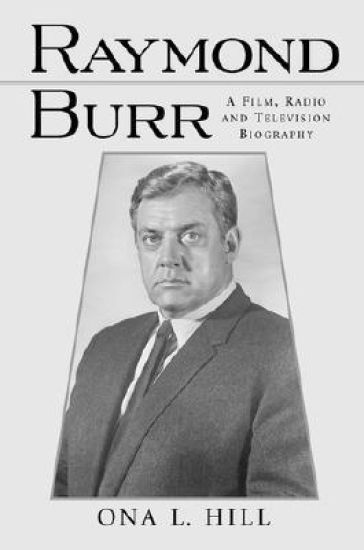
Raymond Burr

Raymond Burr

Ona L. Hill

McFarland Co Inc
1999
pokkari
Best known for his television Perry Mason, Raymond Burr had a career spanning over 50 years. His life is meticulously documented here, including movie roles in such Hollywood productions as Rear Window and Key to the City.
Raymond Chandler's Philip Marlowe

Raymond Chandler's Philip Marlowe

John Paul Athanasourelis

McFarland Co Inc
2011
pokkari
Since their inception, detective novels have been a wildly successful genre of American fiction, featuring a uniquely American belief in rugged individualism. This book focuses on Raymond Chandler's creation of Philip Marlowe, a detective whose feeling for community and willingness to compromise radically changed the genre's vigilantism and violence. It compares Chandler's work to early and mid-20th century American detective novels, particularly those by John Carroll Daly, Mickey Spillane, Dashiell Hammett and Ross Macdonald, as well as contemporary British detective fiction, highlighting Chandler's contribution to the American genre.
Raymond Roussel and the Republic of Dreams

Raymond Roussel and the Republic of Dreams

Mark Ford; John Ashbery

Cornell University Press
2000
sidottu
Raymond Roussel, one of the most outlandishly compelling literary figures of modern times, died in mysterious circumstances at the age of fifty-six in 1933. The story Mark Ford tells about Roussel's life and work is at once captivating, heartbreaking, and almost beyond belief. Could even Proust or Nabokov have invented a character as strange and memorable as the exquisite dandy and graphomaniac this book brings to life?Roussel's poetry, novels, and plays influenced the work of many well-known writers and artists: Jean Cocteau found in him "genius in its pure state," while Salvador Dalí, who died with a copy of Roussel's Impressions d'Afrique on his bedside table, believed him to be one of France's greatest writers ever. Edmond Rostand, Marcel Duchamp, André Breton, Michel Foucault, and Alain Robbe-Grillet all testified to the power of his unique imagination.By any standards, Roussel led an extraordinary life. Tremendously wealthy, he took two world tours during which he hardly left his hotel rooms. He never wore his clothes more than twice, and generally avoided conversation because he dreaded that it might turn morbid. Ford, himself a poet, traces the evolution of Roussel's bizarre compositional methods and describes the idiosyncrasies of a life structured as obsessively as Roussel structured his writing.
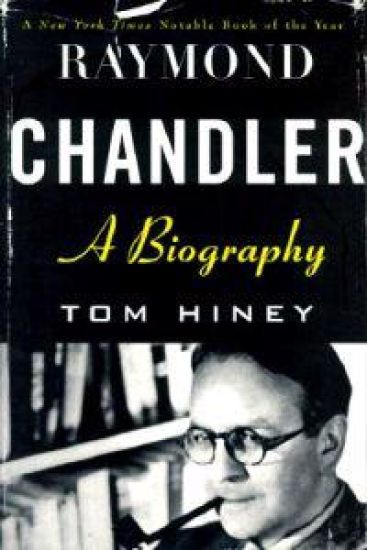
Raymond Chandler

Raymond Chandler

Tom Hiney

Black Cat
1999
nidottu
Drawing on never-before-seen personal papers and previously unrecorded remembrances of Chandler, a biographer portrays a man who was writer, oil executive, poet, recluse, charmer, gentleman, and alcoholic
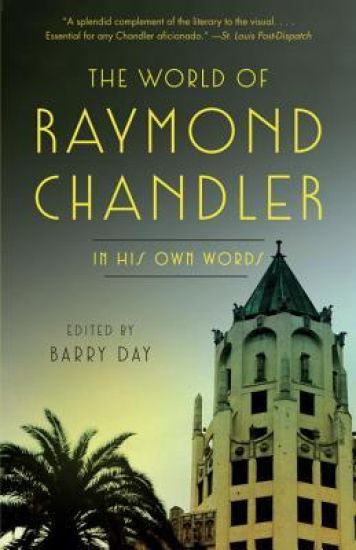
The World of Raymond Chandler

The World of Raymond Chandler

Raymond Chandler

Alfred A. Knopf
2015
pokkari
The World of Raymond Chandler shows how Chandler precariously balanced the values of a classical English education against those of a fast-evolving America during the years before the Great War; how he adopted Los Angeles as his home after WWI, with Hollywood in turn adopting him (and adapting his works); how his detective hero and alter ego Philip Marlowe evolved over the years; and, above all, what it is to be a writer, and in particular one writing in the "other language" of hardboiled fiction. Acclaimed biographer and historian Barry Day deftly interweaves images and text, using quotations from Chandler's novels, short stories, letters, and interviews, to craft a unique portrait of the mystery writer's life and times.
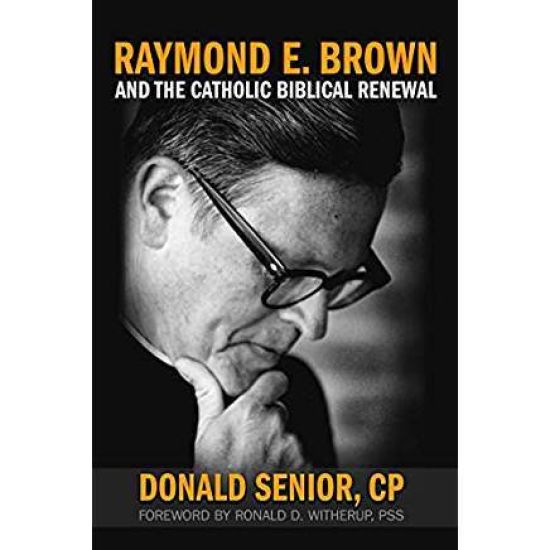
Raymond E. Brown and the Catholic Biblical Renewal

Raymond E. Brown and the Catholic Biblical Renewal

Donald Senior; Ronald D. Witherup

Paulist Press International,U.S.
2018
sidottu
Distinguished biblical scholar Donald Senior has written a comprehensive, analytical and critical, and deeply appreciative biography of one of greatest biblical scholars of the 20th century that locates him within the sweep and drama of the Catholic biblical renewal, especially in the United States. Exploring the life of Raymond Brown is also to be plunged into one of the most remarkable periods in the history of the Catholic Church. Brown’s exceptional personal gifts and his formative experiences explain a lot about his future professional life and the impact it had on the Catholic Church in the United States. At the same time, tracking the evolution of his publications and his reflections on his methodology illumines the struggle within Roman Catholicism to absorb historical critical methods of studying the Bible, while attempting at the same time to maintain Catholic tradition and doctrine. Brown stood at the very epicenter of that struggle, a struggle whose reverberations are still part of the atmosphere of Catholicism today. †
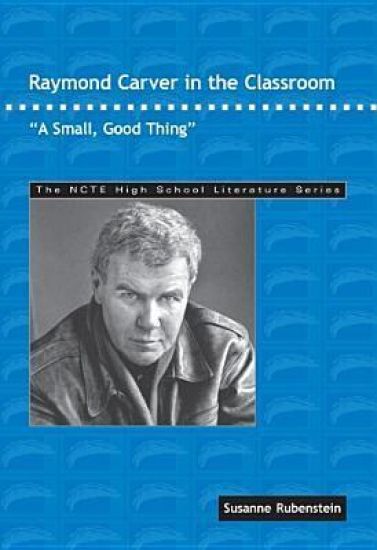
Raymond Carver's Short Fiction in the History of Black Humor
This first book-length study on the black humor in Raymond Carver's work includes valuable interpretations of Carver's aesthetics as well as the psycho-social implications of his short fiction. The presence of an indeterminate menace in the oppressive situations of black humor in Carver - as compared to a European tradition of existentialist writing and his American predecessors including Twain, Heller, Barth and others - is mitigated through humor so it is not dominant. As a result, a subtle promise emerges in the characters' lives.
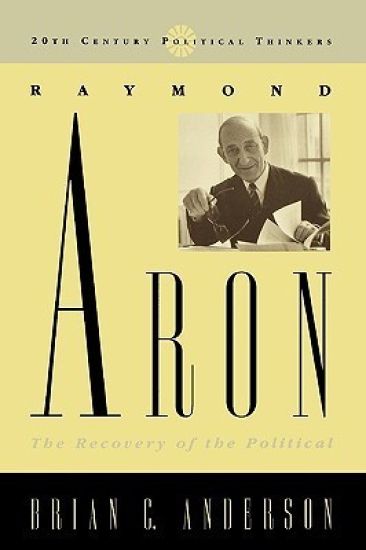
Raymond Aron

Raymond Aron

Brian C. Anderson

Rowman Littlefield
1998
nidottu
This concise and penetrating analysis introduces students to the life and thought of one of the giants of twentieth- century French intellectual life. Portraying Raymond Aron as a great defender of reason, moderation, and political sobriety in an era dominated by ideological fervor and philosophical fashion, Brian Anderson demonstrates the centrality of political reason to Aron's philosophy of history, his critique of ideological thinking, his meditations on the perennial problems of peace and war, and the nature of conservative liberalism. This accessible study of Aron's thought and the thought of his contemporaries will enhance any syllabus for classes on modern and contemporary political thought.
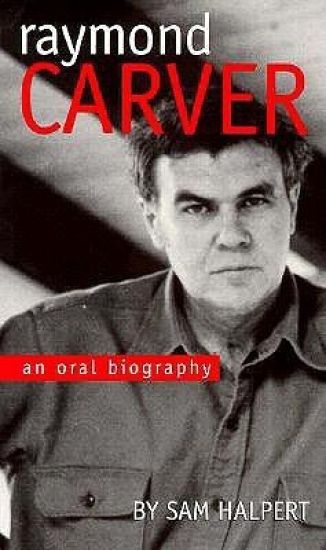
Raymond Carver

Raymond Carver

Sam Halpert

University of Iowa Press
1995
nidottu
Raymond Carver has become a literary icon for our time. When he died in 1988 at the age of fifty, he was acclaimed as the greatest influence on the American short story since Hemingway. Carver's friends were the stuff of legend as well. In this rich collection - greatly expanded from the earlier When We Talk about Raymond Carver - of interviews with close companions, acquaintances, and family, Sam Halpert has chronologically arranged the reminiscences of Carver's adult life, recalling his difficult "Bad Raymond" days through his second life as a recovering alcoholic and triumphantly successful writer. Some of America's most distinguished writers remember Raymond Carver in these pages, including Richard Ford, Leonard Michaels, Scott Turow, Tobias Wolff, Geoffrey Wolff, Chuck Kinder, William Kittredge, Stephen Dobyns, Douglas Unger, Dick Day, John Leggett, Donald Justice, Jay McInerney, and Robert Stone. His first wife, Maryann Carver, and their daughter, Chris Carver, also contribute their recollections of his early efforts to become a writer while struggling with poverty and alcoholism.
Raymond Erith

Raymond Erith

Archer Lucy; Terry Quinlan

Sir John Soane's Museum
2006
nidottu
Raymond Erith's fine buildings both echo Soane's restraint and follow the trends of a stripped mid-20th-century classicism. He looked to achieve what he called the true 'economy of means', where labour and materials are used to the best effect. He used traditional means to create original buildings with progressive ideas behind them. "I am not a modernist, but...I agree with the modernists in every way except that I think their brand of modernism is not very good." New colour photographs of this leading British classicist's work by Mark Fiennes accompany four essays on Erith, and a catalogue and bibliography of his work. Quinlan Terry is a practising classicist architect and Lucy Archer, Kenneth Powell and George Saumarez Smith are well known architectural historians.
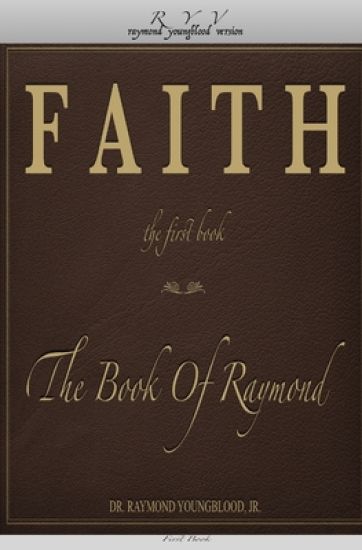
FAITH The First Book of The Book Of Raymond: FAITH The First Book

FAITH The First Book of The Book Of Raymond: FAITH The First Book

Raymond Youngblood Jr

Publishing by Youngblood
2014
nidottu
The Book of Raymond consists of 10 books: 1. Faith 2. Self (You) 3. Emotion 4. Professional 5. Relationship 6. Life/Death 7. Economic 8. People 9. Nature 10. Super NaturalDr. Raymond Youngblood, Jr. observed people's progression towards a better life. He simply noticed that no matter how much funding, no matter the non-profit programs, life was/is not getting better. As a matter fact, it was horrible in some places. Ten books were designed to complement Judaism, Islam, Christianity, Hinduism, Buddhism, Folk, Traditional and others forms of worship.Dr. Youngblood designed these books to truly be comprehended through traditional education, self-education and worship teachings. He believes that it is not possible to understand something fully without comprehending it fully. If instructions from religious leaders, government officials, and laws of the land, even with translation, are misunderstood, then it's not possible for the people to completely understand the tasks before them...The people in poverty stricken countries are simply running their society on impassive behavior. The Pastors, Priests, Imams, Rabbis, etc. would provide great readings and instructions, but other than tithes, a true understanding of human concept is definitely missing. Dr. Youngblood noticed the big separation in the religious messages from the actual content and teachings, (Bible, Quran, Karma, etc.) to the application to the people's daily life. He often attended the various worship centers and lives among the people in many different communities and villages. It seemed that the improvements only came through the worship centers and not directly to a person. As a worship service ended year after year, the society seems to have gotten worse. You can see false improvements when a skyscraper was erected, but ten years later that same building is dilapidated due to poor maintenance and planning. The more the money poured in, the worse the corruption and poverty. After attending thousands of funerals, marriage vows, baptisms, and worship services he realized that many of the people attending, including the religious leaders, did not understand the basic language and meaning of situations they were teaching to their followers. They only knew customs and traditions, but it was never applied to societal improvements. This is a repetitive behavior over and over with everything in society. This happens with almost everything in society and almost everybody. If someone attempted to fix the core problem, the community would chastise the person or become violent towards them. It is not possible that they can really understand what any religious message truly means when they do not know the meaning of fifty percent of the words they hear... Youngblood thought that he would have to prove this to those helping these countries, but he soon realized that many of the people providing the help knew these things. Many of those claiming to help were only leaching... He believes that to improve the lesser society would greatly impact the stronger society. This prompted Youngblood to write the ten books known as The Book Of Raymond.Reading the Book Of Raymond should inspire a positive life. This positive life shall include you, your family and the society in which you live. The Book encourages that all persons to use a common focal point to gain strong feelings toward themselves and all life form.The Book Of Raymond extracts life lessons from many teachers. It offers to contribute to all learners those that teach a person who is humane to all creatures, beings, and life forms. The Book Of Raymond reveals multifaceted forms of beliefs, which is allows you to change during a person's human growth, experiences, relationships, and feelings. You shall use the Books to help your persona; prosperity in this world. Enjoy growth, enjoy people, enjoy pleasures and enjoy any form of wisdom for it offers advantages.
Raymond Buckland's Alchemy Coloring Book

Raymond Buckland's Alchemy Coloring Book

Raymond Buckland

Queen Victoria Press
2017
nidottu
Raymond Buckland produced a set of divination and meditation cards based on the engravings of alchemists and alchemy found in ancient books of magic, redoing the illustrations and coloring them to suit the purpose of the deck of cards. Here he has taken those illustrations in their uncolored form to allow others to exercise their imaginations and to themselves meditate by coloring the cards.
The Baskins-Baskin Family, Pennsylvania, Virginia, South Carolina / by Raymond Martin Bell.
This work has been selected by scholars as being culturally important and is part of the knowledge base of civilization as we know it.This work is in the public domain in the United States of America, and possibly other nations. Within the United States, you may freely copy and distribute this work, as no entity (individual or corporate) has a copyright on the body of the work.Scholars believe, and we concur, that this work is important enough to be preserved, reproduced, and made generally available to the public. To ensure a quality reading experience, this work has been proofread and republished using a format that seamlessly blends the original graphical elements with text in an easy-to-read typeface.We appreciate your support of the preservation process, and thank you for being an important part of keeping this knowledge alive and relevant.