This work has been selected by scholars as being culturally important and is part of the knowledge base of civilization as we know it.This work is in the public domain in the United States of America, and possibly other nations. Within the United States, you may freely copy and distribute this work, as no entity (individual or corporate) has a copyright on the body of the work.Scholars believe, and we concur, that this work is important enough to be preserved, reproduced, and made generally available to the public. To ensure a quality reading experience, this work has been proofread and republished using a format that seamlessly blends the original graphical elements with text in an easy-to-read typeface.We appreciate your support of the preservation process, and thank you for being an important part of keeping this knowledge alive and relevant.
Robinson details the life and times of France-Albert René (1935–2019), the second post-independence leader of Seychelles who oversaw the nation’s transition to democracy after over a decade of his brutal dictatorship.René’s career was Seychelles’ history over the forty-three years from independence in 1976 until his peaceful death. Having seized power in a violent coup he presented himself as a socialist in the Cold War but transitioned to build Africa’s most successful relationship with international lenders and developed Seychelles as a major offshore tax haven. He also sustained and cultivated Seychelles’ position as a Western tourism-based economy. Robinson outlines not only René’s use of political violence and extrajudicial killing but also his unique relationship with transnational, organised crime including his links with the New York mafia, Italian organised crime interests and even helping to arm the Rwandan genocide. Nevertheless, René – a white leader of an African nation – avoided the self-isolation of Rhodesia and South Africa; endowed racial harmony; enabled women to advance politically and socially; and left Seychelles with high incomes, currency convertibility, and robust human and physical infrastructure.This is an essential read for anyone with an interest in the history of Seychelles, which will also be of great value to scholars of postcolonial states, African studies, microstates and the Indian Ocean region.
Robinson details the life and times of France-Albert René (1935–2019), the second post-independence leader of Seychelles who oversaw the nation’s transition to democracy after over a decade of his brutal dictatorship.René’s career was Seychelles’ history over the forty-three years from independence in 1976 until his peaceful death. Having seized power in a violent coup he presented himself as a socialist in the Cold War but transitioned to build Africa’s most successful relationship with international lenders and developed Seychelles as a major offshore tax haven. He also sustained and cultivated Seychelles’ position as a Western tourism-based economy. Robinson outlines not only René’s use of political violence and extrajudicial killing but also his unique relationship with transnational, organised crime including his links with the New York mafia, Italian organised crime interests and even helping to arm the Rwandan genocide. Nevertheless, René – a white leader of an African nation – avoided the self-isolation of Rhodesia and South Africa; endowed racial harmony; enabled women to advance politically and socially; and left Seychelles with high incomes, currency convertibility, and robust human and physical infrastructure.This is an essential read for anyone with an interest in the history of Seychelles, which will also be of great value to scholars of postcolonial states, African studies, microstates and the Indian Ocean region.
English / Deutsch UNLAND engl. wastelandIn the summer term of 2013 Professor Ren Francisco Rodriquez from our partner university Instituto Superior de Arte in Havana (ISA) was our guest in Halle, offering a workshop to students of both the art and design faculty. We had met Ren Francisco a year earlier in Havanna on a wasteland close to the city, were he was constructing a 'temporary city' with his students for the Havana Biennial. We had already heard of his teaching method 'Desde Una Pedagog a Pragmatica', or short DUPP, in which he intently explores and searches for the relationship between art and life, or design and everyday necessities, with a fixed group of students over a longer period of time. The students investigate their desires, develop visions and ideas and then implement them collectively in temporary or permanent artistic works. They often do this in collaboration with the residents of Havana. In a country shaped by shortage and poverty, working artistically poses a challenge. It requires fantasy and the ability to improvise and associate freely, not to mention an organizational talent, social skills and strategic thinking when it comes to mastering bureaucratic obstacles or acquiring materials. Thus, Ren Francisco's teaching does not only focus on artistic design and form as such, but encompasses an innovative and holistic method for implementing artistic interventions in the urban and social context. The workshop in Halle took place under less precarious signs, and-due to the shortness of time and the fact that the event took place alongside all other study obligations-could not be performed with such consistency. Nonetheless, it tied in directly with many of the discussions and questions we have here in Halle with our students and that have gained importance in the public art discourse of the last years: How do we want to live? How can our actions have a lasting effect? How can we engage in and actively shape societal reality? What could a societal sculpture look like? During the workshop, the students developed a series of performances, interventions, and installations in the public space. This collection of works documents all individual and joint projects and insight gained during the workshop. PROF. ANDREA ZAUMSEILUNLAND Im Sommersemester 2013 leitete Ren Francisco Rodriguez, Professor an unserer Partnerhochschule Instituto Superior de Arte in Havanna (ISA), bei uns an der Hochschule einen Workshop, an dem Studierende aus verschiedenen Klassen beider Fachbereiche teilnahmen. Kennen gelernt hatten wir Ren Francisco ein Jahr zuvor in Havanna, auf einer Baustelle auf einer Brache, wo er mit einer Gruppe von Studierenden des ISA eine "tempor re Stadt" f r die Biennale von Havanna baute. Wir hatten bereits von seinem p dagogischen Ansatz geh rt, DESDE UNA PEDAGOG A PRAGMATICA, kurz DUPP genannt, demzufolge er mit einer jeweils festen Gruppe Studierender ber einen l ngeren Zeitraum hinweg konsequent die Verbindung von Kunst und Leben, die Verkn pfung von Gestaltung und allt glichen Notwendigkeiten sucht. Die Studierenden erforschen, zum Teil zusammen mit den Bewohnerinnen und Bewohnern der Stadt, W nsche, entwickeln Visionen und realisieren gemeinsam tempor re oder auch dauerhafte k nstlerische Transformationen. In einem Land wie Kuba, das auch von Mangel und Armut gepr gt ist, ist dies eine besondere Herausforderung. Phantasie, Assoziations- und Improvisationsverm gen, Planungsf higkeit, soziale Kompetenz und strategisches Denken in Bezug auf b rokratische H rden und Materialbeschaffung sind nur einige der Anforderungen, die an seine Studenten gestellt werden. Seine Lehre bezieht sich demzufolge nicht nur auf das Gestalten an sich, sondern umfasst eine innovative und ganzheitliche Methode zur Umsetzung k nstlerischer Interventionen im st dtischen und sozialen Raum (...) Performances, Interventionen und Installati
Through the life of one extraordinary man, this biography reveals what the term human rights meant to the men and women who endured two world wars, and how this major political and intellectual movement ultimately inspired and enshrined the Universal Declaration of Human Rights. René Cassin was a man of his generation, committed to moving from war to peace through international law, and whose work won him the Nobel Peace Prize in 1968. His life crossed all the major events of the first seventy years of the twentieth century, and illustrates the hopes, aspirations, failures and achievements of an entire generation. It shows how today's human rights regimes emerged from the First World War as a pacifist response to that catastrophe and how, after 1945, human rights became a way to go beyond the dangers of absolute state sovereignty, helping to create today's European project.
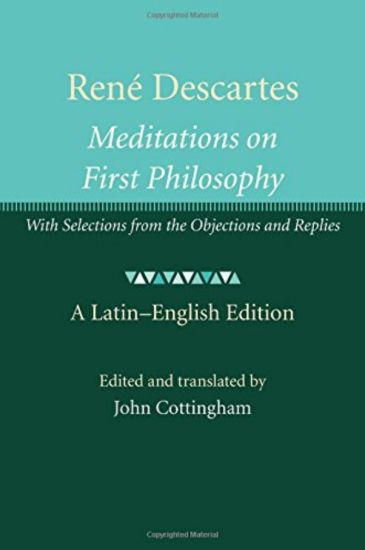
Descartes's Meditations on First Philosophy, published in Latin in 1641, is one of the most widely studied philosophical texts of all time, and inaugurates many of the key themes that have remained central to philosophy ever since. In his original Latin text Descartes expresses himself with great lucidity and elegance, and there is enormous interest, even for those who are not fluent in Latin, in seeing how the famous concepts and arguments of his great masterpiece unfold in the original language. John Cottingham's acclaimed English translation of the work is presented here in a facing-page edition alongside the original Latin text. Students of classical philosophy have long had the benefit of dual-language editions, and the availability of such a resource for the canonical works of the early-modern period is long overdue. This volume now makes available, in an invaluable dual-language format, one of the most seminal texts of Western philosophy.
Through the life of one extraordinary man, this biography reveals what the term human rights meant to the men and women who endured two world wars, and how this major political and intellectual movement ultimately inspired and enshrined the Universal Declaration of Human Rights. René Cassin was a man of his generation, committed to moving from war to peace through international law, and whose work won him the Nobel Peace Prize in 1968. His life crossed all the major events of the first seventy years of the twentieth century, and illustrates the hopes, aspirations, failures and achievements of an entire generation. It shows how today's human rights regimes emerged from the First World War as a pacifist response to that catastrophe and how, after 1945, human rights became a way to go beyond the dangers of absolute state sovereignty, helping to create today's European project.
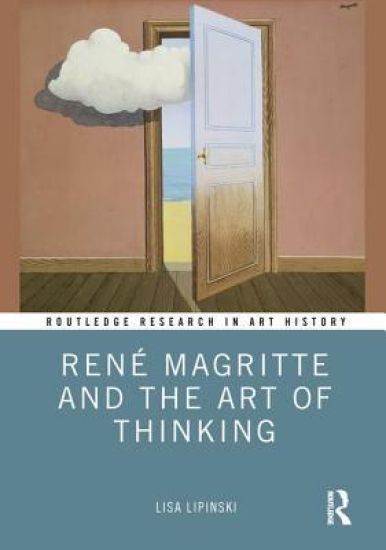
For René Magritte, painting was a form of thinking. Through paintings of ordinary objects rendered with illusionism, Magritte probed the limits of our perception—what we see and cannot see, the nature of representation—as a philosophical system for presenting ideas, and explored perspective as a method of visual argumentation. This book makes the claim that Magritte’s painting is about vision and the act of viewing, of perception itself, and the process of how we see and experience things in the world, including paintings as things.
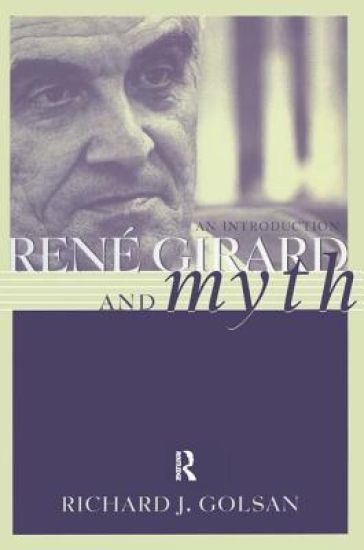
In this comprehensive introduction to the work of contemporary French critic Rene Girard, Richard Golsan focuses on Girard's theory of myth and its connections to his broader exploration of the origins of suffering and violence in Western culture. Golsan highlights two of Girard's primary concepts--mimetic desire and the scapegoat--and employs the concepts to illustrate the ways Girardian analysis of violence in biblical, classical, and folk myths has influenced recent work in theology, psychology, literary studies, and anthropology. The book concludes with an interview between Golsan and Girard, who offers his own analysis of the appropriation (and criticism) of his work by a politically and intellectually diverse company of scholars.