Kirjojen hintavertailu. Mukana 12 092 492 kirjaa ja 12 kauppaa.

Kirjahaku

Etsi kirjoja tekijän nimen, kirjan nimen tai ISBN:n perusteella.

1000 tulosta hakusanalla Richard David Precht

Lucky and Lucy

Lucky and Lucy

Richard David Kennedy

Lulu.com
2016
nidottu
This isn't just another love story. Generically, perhaps, but otherwise not. It is indeed a story about love, falling in love, being in love, experiencing love in all of its manifold, unpredictable aspects with its roller coaster emotions, its exhilarating highs, its heartbreaking lows and its gut-wrenching uncertainties. But the difference and the reason why I believe the reader will kvell over this tale and find it all but un-put-down-able is because this is a story about mature love, venerated love- old love, if you will, to put it plainly...In short, how hope springs eternal, and how we all are truly as young as we think we are. "This is a great book. For anyone who wants to believe there is still magic in the world and that love can happen at any age, this is a must read." Vikki Walker, USA, July 2016

The DisGrace of MySpace

The DisGrace of MySpace

Richard David Kennedy

Lulu.com
2008
pokkari
A slightly different look at the world's largest social networking portal, filled with literally hundreds of facetious annotations that will leave you snickering, if not downright splitting a gut. Seen through Kennedy's penetrating (often unmerciful) eye, this is a book that will show you another reality- the virtual and the absurd, as offered by the actual members themselves. Newcomers as well as those who've been around MySpace for awhile will also be exposed to some interesting facts they probably didn't know. If you are a "Spacer" or thinking of becoming one, then this book is a must for you.
The Keys to Success

The Keys to Success

Richard David Bolstad

Createspace Independent Publishing Platform
2015
nidottu
Here is the manual of an extraordinary training. In one weekend, reading this book, you'll learn how to... -Detect the subtle nonverbal changes that let you know when someone is agreeing or disagreeing, so you can adjust what you say and do to reach agreement. -Use specific body language to create the feeling of rapport and trust in the first ten minutes. Create more co-operation with family, friends, colleagues and clients than ever before. -Connect with people on a deeper level using the techniques that research finds people who create lifelong relationships use. -Set, and help others to set, more effective, measurable and achievable goals, so you get what you intend out of life. -Learn why "The Secret" isn't working for you and set goals the way the most successful people in history really do it to generate wealth, success and satisfaction -Be able to enter a state of high motivation and confidence, or a state of deep relaxation, at will in any situation, using the NLP technique of Resource Anchoring. -Identify and use the five Keys to Success which the developers of NLP found were relevant in any professional or personal situation. "A truly transforming experience. Learning is effortless. All aspects of the course thoroughly planned and delivered with exellence and flair." -Trish Murfitt, Secondary school teacher, Auckland
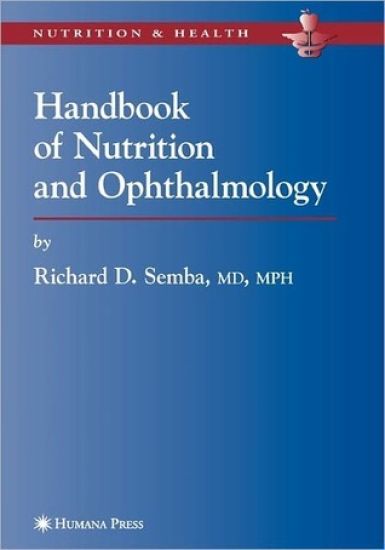
Handbook of Nutrition and Ophthalmology

Handbook of Nutrition and Ophthalmology

Richard David Semba

Humana Press Inc.
2007
sidottu
The Nutrition and Health series of books have, as an overriding mission, to provide health professionals with texts that are considered essential because each includes: 1) a synthesis of the state of the science, 2) timely, in-depth reviews by the leading researchers in their respective fields, 3) extensive, up-to-date fully annotated reference lists, 4) a detailed index, 5) relevant tables and figures, 6) identification of paradigm shifts and the consequences, 7) virtually no overlap of information between chapters, but targeted, inter-chapter referrals, 8) suggestions of areas for future research and 9) balanced, da- driven answers to patient/health professionals questions which are based upon the totality of evidence rather than the findings of any single study. The series volumes are not the outcome of a symposium. Rather, each editor has the potential to examine a chosen area with a broad perspective, both in subject matter as well as in the organization of their volume. The international perspective, especially with regard to public health initiatives, is emphasized where appropriate. The editors, whose trainings are both research and practice oriented, have the opportunity to develop a primary objective for their book; define the scope and focus, and then may invite the leading authorities from around the world to be part of their initiative. The editor/authors are encouraged to provide an overview of the field, discuss their own research and relate the research findings to potential human health consequences.
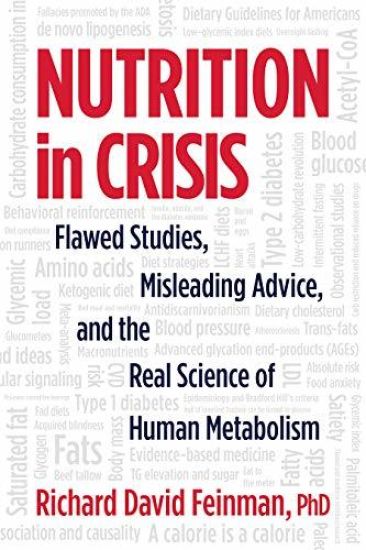
Nutrition in Crisis

Nutrition in Crisis

Richard David Feinman

Chelsea Green Publishing Co
2019
nidottu
Almost every day it seems a new study is published that shows you are at risk for diabetes, cardiovascular disease, or death due to something you’ve just eaten for lunch. Many of us no longer know what to eat or who to believe. In Nutrition in Crisis distinguished biochemist Richard Feinman, PhD, cuts through the noise, explaining the intricacies of nutrition and human metabolism in accessible terms. He lays out the tools you need to navigate the current confusion in medical literature and its increasingly bizarre reflection in the media. At the same time, Nutrition in Crisis offers an unsparing critique of the nutritional establishment, which continues to demonize fat and refute the benefits of low-carbohydrate and ketogenic diets—all despite decades of evidence to the contrary. Feinman tells the story of the first low-carbohydrate revolution fifteen years ago, how it began, what killed it, and why a second revolution is now reaching a fever pitch. He exposes the backhanded tactics of a regressive nutritional establishment that ignores good data and common sense, and highlights the innovative work of those researchers who have broken rank. Entertaining, informative, and irreverent, Feinman paints a broad picture of the nutrition world: the beauty of the underlying biochemistry; the embarrassing failures of the medical establishment; the preeminence of low-carbohydrate diets for weight loss, diabetes, other metabolic diseases, and even cancer; and what’s wrong with the constant reports that the foods we’ve been eating for centuries represent a threat rather than a source of pleasure.
Handbook of Nutrition and Ophthalmology

Handbook of Nutrition and Ophthalmology

Richard David Semba

Humana Press Inc.
2010
nidottu
The Nutrition and Health series of books have, as an overriding mission, to provide health professionals with texts that are considered essential because each includes: 1) a synthesis of the state of the science, 2) timely, in-depth reviews by the leading researchers in their respective fields, 3) extensive, up-to-date fully annotated reference lists, 4) a detailed index, 5) relevant tables and figures, 6) identification of paradigm shifts and the consequences, 7) virtually no overlap of information between chapters, but targeted, inter-chapter referrals, 8) suggestions of areas for future research and 9) balanced, da- driven answers to patient/health professionals questions which are based upon the totality of evidence rather than the findings of any single study. The series volumes are not the outcome of a symposium. Rather, each editor has the potential to examine a chosen area with a broad perspective, both in subject matter as well as in the organization of their volume. The international perspective, especially with regard to public health initiatives, is emphasized where appropriate. The editors, whose trainings are both research and practice oriented, have the opportunity to develop a primary objective for their book; define the scope and focus, and then may invite the leading authorities from around the world to be part of their initiative. The editor/authors are encouraged to provide an overview of the field, discuss their own research and relate the research findings to potential human health consequences.
Fresh out of Pain

Fresh out of Pain

Richard David Goodall

Createspace Independent Publishing Platform
2018
nidottu
These poems chart my journey from a place of acute internal pain to one of self realisation; My hurt inner child through to my Wild hairy man.
Teaching Silicon How to Feel

Teaching Silicon How to Feel

Richard David Hames

TRIARCHY PRESS
2026
nidottu
Teaching Silicon How to Feel reframes the whole AI debate at a stroke. Instead of asking “how do we stop machines from harming us?” we need to ask “what have we already normalised as acceptable harm?”. Richard David Hames argues that contemporary AI is being trained on a civilisation, culture and history shaped by slavery, genocide, colonialism, factory farming, drone warfare and extractive capitalism – and that without deliberate intervention, those patterns of cruelty and indifference will be quietly hard-wired into our most powerful systems. Organised around 17 theoretically ‘unresolvable’ catalysts – from The Inheritance of Cruelty and The Unseen Economies of Suffering to The Algorithm of Oblivion and The Fractal of Indifference – the book probes the darkest angels of human nature. Drawing on philosophy, political and economic history, trauma science and critical technology studies, Hames shows how our institutions encode violence, how that violence shows up in data and infrastructures, and why AI magnifies whatever we feed it. This is not another abstract ethics treatise or tech-doom prophecy. Each catalyst is paired with a ‘From Theory to Praxis’ section that speaks directly to people building and governing AI systems. Readers learn how to: curate healing-focused and relational datasets embed epigenetic empathy checks and ethical audit loops redesign recommender systems to interrupt isolation feedback loops construct ‘metabolic vetoes’ and governance architectures that refuse to profit from suffering Written in accessible, lucid prose for a general audience, Teaching Silicon How to Feel will also inform software engineers, machine learning practitioners, UX designers, policymakers, ethicists, systems thinkers and anyone alarmed by the speed and direction of AI deployment. It offers a stark diagnosis of our current trajectory and a radical, practical invitation: to enlist AI as an ally in dismantling the hidden economies of suffering that have defined the worst of human civilisation.