Kirjojen hintavertailu. Mukana 12 390 323 kirjaa ja 12 kauppaa.

Kirjahaku

Etsi kirjoja tekijän nimen, kirjan nimen tai ISBN:n perusteella.

1000 tulosta hakusanalla Richard E. Strassberg

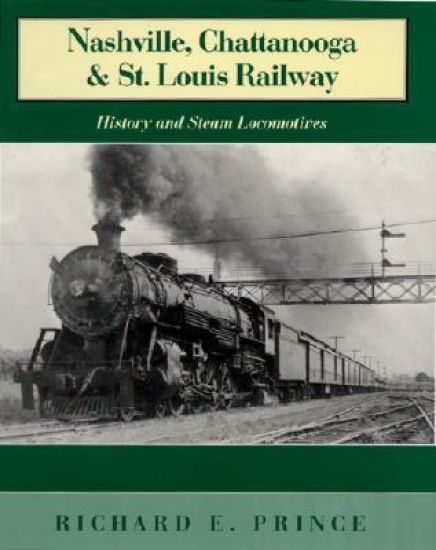
Nashville, Chattanooga & St. Louis Railway

Nashville, Chattanooga & St. Louis Railway

Richard E. Prince

Indiana University Press
2001
sidottu
Nashville, Chattanooga & St. Louis Railway History and Steam Locomotives Richard E. Prince Richard E. Prince's long out-of-print encyclopedic study of the Nashville, Chattanooga & St. Louis Railway, "The Dixie Line," with hundreds of vintage photographs, schematics, maps, and rosters. Railroad buffs, historians, and casual readers alike will be delighted by the reappearance of Richard E. Prince's Nashville, Chattanooga & St. Louis Railway. It was originally published in 1967, and its reputation as the foremost work on this railroad is still unchallenged. The NC&StL Railway originated in 1845 as the Nashville and Chattanooga RR. Taken over by the Union Army during the Civil War, it suffered extensive damage from Confederate attack but was rebuilt and operated by the U.S. Military Railroad for over two years. Returned to its owners in September 1865, it became the Nashville, Chattanooga & St. Louis Ry. in 1873, after absorbing the Nashville & Northwestern RR. During the next 25 years, it became known to the public first as the Tennessee Line, then as the Lookout Mountain Route. In 1890 it gained entrance into Atlanta as lessee of the state-owned Western & Atlantic RR. Paducah and Memphis were reached in 1896, when lines of the former Paducah, Tennessee & Alabama RR were leased from L&N. At its zenith in the 1920s, it operated approximately 1,259 miles of track, from the Mississippi and Ohio rivers through Kentucky, Tennessee, and Alabama, to Atlanta, Georgia. In 1880, to eliminate the threat of competition that was developing between the two companies, the Louisville & Nashville RR acquired control of the NC&StL Ry., much to the dismay of the citizens of Nashville, and for the next 77 years it operated as a prosperous subsidiary of the Old Reliable. It was actually absorbed by the L&N organization in 1957 to become part of the Nashville and W&A divisions. But it will always be remembered by the people of Tennessee and Georgia as the original Dixie Line—the route of such Chicago-Florida passenger trains as the Dixie Flyer, Dixie Limited, Dixie Express, Dixie Mail, Dixieland, Dixie Flagler, and Dixiana. Maps, schedules, rosters, diagrams, and hundreds of photographs supplement historical information on the company and technical information on the trains. Richard E. Prince attended Georgia School of Technology in Atlanta. During World War II, he joined the Merchant Marine and sailed on steam Liberty ships. He worked in several capacities for the L&N Railroad and the Union Pacific Railroad. Prince retired in 1983 and lives in Omaha, Nebraska. He has written ten books on railroads. May 2001 196 pages, 348 b&w photos, 8 1/4 x 10 3/4, index cloth0-253-33927-8$59.95 t / £45.00 Contents Nashville, Chattanooga & St. Louis Ry.—Historical Sketch Nashville, Chattanooga & St. Louis Ry.—The Tennessee Line Western & Atlantic Railroad Nashville, Chattanooga & St. Louis Ry.—-Lookout Mountain Route Nashville, Chattanooga & St. Louis Ry.—The Dixie Line Steam Locomotives—Nashville, Chattanooga & St. Louis Ry. Steam Freight and Passenger Trains—NC&StL Ry. Steam Locomotive Diagrams
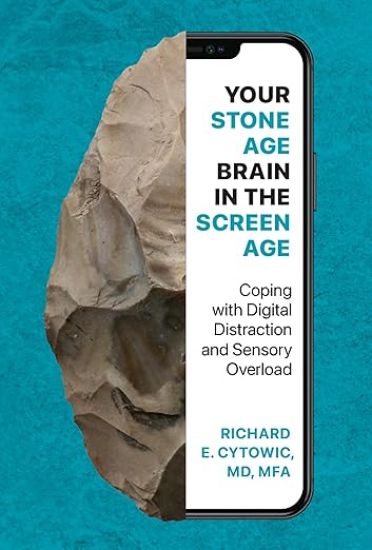
Your Stone Age Brain in the Screen Age

Your Stone Age Brain in the Screen Age

Richard E. Cytowic

MIT PRESS LTD
2024
sidottu
An award-winning neurologist on the Stone-Age roots of our screen addictions, and what to do about them.The human brain hasn’t changed much since the Stone Age, let alone in the mere thirty years of the Screen Age. That’s why, according to neurologist Richard Cytowic—who, Oliver Sacks observed, “changed the way we think of the human brain”—our brains are so poorly equipped to resist the incursions of Big Tech: They are programmed for the wildly different needs of a prehistoric world. In Your Stone Age Brain in the Screen Age, Cytowic explains exactly how this programming works—from the brain’s point of view. What he reveals in this book shows why we are easily addicted to screen devices; why young, developing brains are particularly vulnerable; why we need silence; and what we can do to push back.In the engaging storytelling style of his popular TED Talk, Cytowic draws an easily comprehensible picture of the Stone Age brain’s workings—the function of neurotransmitters like dopamine in basic instincts for survival such as desire and reward; the role of comparison in emotion, and emotion in competition; and, most significantly, the orienting reflex, one of the unconscious circuits that automatically focus, shift, and sustain attention. Given this picture, the nature of our susceptibility to digital devices becomes clear, along with the possibility of how to break their spell.Full of practical actions that we can start taking right away, Your Stone Age Brain in the Screen Age offers compelling evidence that we can change the way we use technology, resist its addictive power over us, and take back the control we have lost.
Wednesday Is Indigo Blue

Wednesday Is Indigo Blue

Richard E. Cytowic; David M. Eagleman; Dmitri Nabokov

MIT Press
2011
pokkari
How the extraordinary multisensory phenomenon of synesthesia has changed our traditional view of the brain.A person with synesthesia might feel the flavor of food on her fingertips, sense the letter "J" as shimmering magenta or the number "5" as emerald green, hear and taste her husband's voice as buttery golden brown. Synesthetes rarely talk about their peculiar sensory gift-believing either that everyone else senses the world exactly as they do, or that no one else does. Yet synesthesia occurs in one in twenty people, and is even more common among artists. One famous synesthete was novelist Vladimir Nabokov, who insisted as a toddler that the colors on his wooden alphabet blocks were "all wrong." His mother understood exactly what he meant because she, too, had synesthesia. Nabokov's son Dmitri, who recounts this tale in the afterword to this book, is also a synesthete-further illustrating how synesthesia runs in families. In Wednesday Is Indigo Blue, pioneering researcher Richard Cytowic and distinguished neuroscientist David Eagleman explain the neuroscience and genetics behind synesthesia's multisensory experiences. Because synesthesia contradicted existing theory, Cytowic spent twenty years persuading colleagues that it was a real-and important-brain phenomenon rather than a mere curiosity. Today scientists in fifteen countries are exploring synesthesia and how it is changing the traditional view of how the brain works. Cytowic and Eagleman argue that perception is already multisensory, though for most of us its multiple dimensions exist beyond the reach of consciousness. Reality, they point out, is more subjective than most people realize. No mere curiosity, synesthesia is a window on the mind and brain, highlighting the amazing differences in the way people see the world.
War

War

Richard E. Barringer; Quincy Wright

MIT Press
2003
pokkari
A number of original techniques with broad application in the social sciences are developed in War: Patterns of Conflict. This companion volume contains the supporting material and computer programs for those techniques and the instruction for their use. It includes simple and compound agreement analysis, a logarithmic scaling technique for compound data, and a revised edition of the conflict data codebook.
War

War

Richard E. Barringer; Quincy Wright

MIT Press
2003
pokkari
"In this book," wrote the late Quincy Wright, "Richard Barringer has made a contribution to the study of international conflict by devising a new method of classifying empirical data to characterize conflict and its stages of development, with results of considerable predictive value." Historians have long applied experienced judgment to distill the most significant factors in the development of large-scale conflict, and modern social scientists have attempted to reduce its acknowledged multidimensionality to manageable proportions by the application of correlation-based factorial techniques. The present study represents a new departure in this oldest and most persistent of civilized man's intellectual preoccupations. It establishes the beginnings of an objective, systematic, and automated program of research into the origins, development, and termination of war, and into the means of its control. An eclectic theory of conflict, a descriptive model of its significant stages, a novel technique of data collection, and an original method of data manipulation, analysis, and presentation are developed. A conflict codebook of 300 social, political, economic, and military indicators is presented as a comprehensive system within which all conflicts develop. Agreement analysis-a noncorrelational technique for determining the dominant empirical patterns in a data base-is developed in its complete form. Application of the method to eighteen wars of the twentieth century reveals the various combinations of factors that precipitate each significant stage of conflict. Finally, the contribution of this method to policy making, through computer simulation of conflict and early detection of conflict potential, is illustrated by example of the war in Vietnam.
The Man Who Tasted Shapes

The Man Who Tasted Shapes

Richard E. Cytowic; Jonathan Cole

Bradford Books
2003
pokkari
In this medical detective adventure, Cytowic shows how synesthesia, or "joined sensation," illuminates a wide swath of mental life and leads to a new view of what it means to be human.Richard Cytowic's dinner host apologized, "There aren't enough points on the chicken!" He felt flavor also as a physical shape in his hands, and the chicken had come out "too round." This offbeat comment in 1980 launched Cytowic's exploration into the oddity called synesthesia. He is one of the few world authorities on the subject. Sharing a root with anesthesia ("no sensation"), synesthesia means "joined sensation," whereby a voice, for example, is not only heard but also seen, felt, or tasted. The trait is involuntary, hereditary, and fairly common. It stayed a scientific mystery for two centuries until Cytowic's original experiments led to a neurological explanation-and to a new concept of brain organization that accentuates emotion over reason. That chicken dinner two decades ago led Cytowic to explore a deeper reality that, he argues, exists in everyone but is often just below the surface of awareness (which is why finding meaning in our lives can be elusive). In this medical detective adventure, Cytowic shows how synesthesia, far from being a mere curiosity, illuminates a wide swath of mental life and leads to a new view of what is means to be human-a view that turns upside down conventional ideas about reason, emotional knowledge, and self-understanding. This 2003 edition features a new afterword.
Synesthesia

Synesthesia

Richard E. Cytowic

MIT Press
2018
pokkari
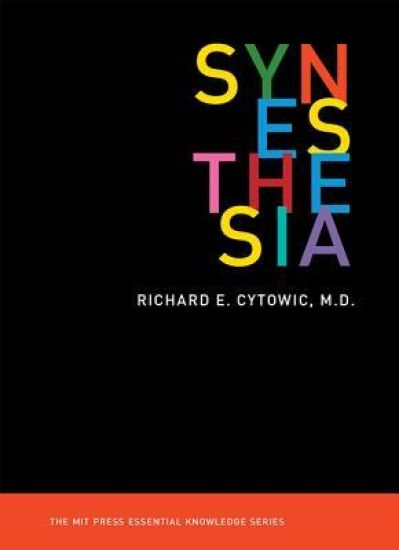
An accessible, concise primer on the neurological trait of synesthesia—vividly felt sensory couplings—by a founder of the field.One in twenty-three people carry the genes for the synesthesia. Not a disorder but a neurological trait—like perfect pitch—synesthesia creates vividly felt cross-sensory couplings. A synesthete might hear a voice and at the same time see it as a color or shape, taste its distinctive flavor, or feel it as a physical touch. In this volume in the MIT Press Essential Knowledge series, Richard Cytowic, the expert who returned synesthesia to mainstream science after decades of oblivion, offers a concise, accessible primer on this fascinating human experience.Cytowic explains that synesthesia's most frequent manifestation is seeing days of the week as colored, followed by sensing letters, numerals, and punctuation marks in different hues even when printed in black. Other manifestations include tasting food in shapes, seeing music in moving colors, and mapping numbers and other sequences spatially. One synesthete declares, "Chocolate smells pink and sparkly"; another invents a dish (chicken, vanilla ice cream, and orange juice concentrate) that tastes intensely blue. Cytowic, who in the 1980s revived scientific interest in synesthesia, sees it now understood as a spectrum, an umbrella term that covers five clusters of outwardly felt couplings that can occur via several pathways. Yet synesthetic or not, each brain uniquely filters what it perceives. Cytowic reminds us that each individual's perspective on the world is thoroughly subjective.
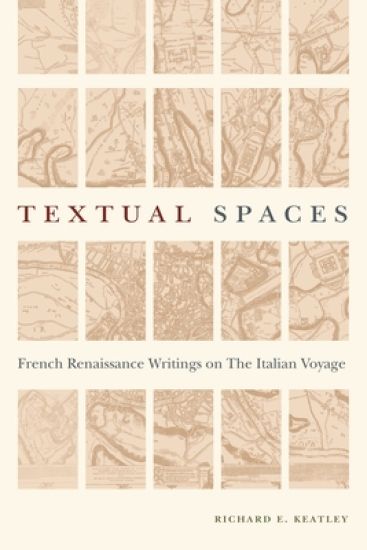
Textual Spaces

Textual Spaces

Richard E. Keatley

Pennsylvania State University Press
2018
sidottu
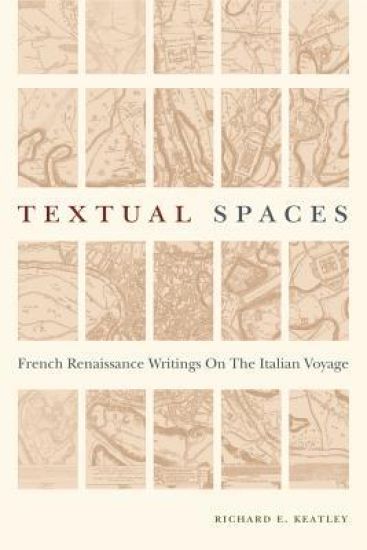
In Textual Spaces, Richard E. Keatley examines how French travelers experienced, consumed, and represented Italian space during the early modern period. This study digs beneath the façade of leisurely travel literature to unearth a complex web of rhetorical, sociological, and political values that conditioned and informed the experiences of French travelers in Italy.Utilizing period maps and geographical sources, Keatley combines rigorous philological mapping of travelers’ itineraries with creative analyses of the tensions that undergird the rewriting of space. He examines a vast corpus of texts that includes Michel de Montaigne's Journal de voyage, Joachim du Bellay’s Regrets, and Jacques de Villamont’s Voyages as well as lesser-known and anonymous travel accounts of the French experience in Italy. In his readings, Keatley traces how the creation of these “textual spaces” allowed travelers to transform territories lost to France through warfare into spaces of desire, forming what Pierre Bourdieu calls symbolic capital, which was used in an ongoing commerce within the French political landscape.By highlighting the political and militaristic origins of leisure excursions, Textual Spaces contributes to our understanding of travel’s dual nature and invites the modern reader to examine the exploitative origins of tourism. Linking the fields of literary and cultural studies, history and art history, and spatial and landscape theory, it provides an engaging vision into the early history of travel that will interest historians, literary scholars, and anyone keen to understand why we venture abroad.
Textual Spaces

Textual Spaces

Richard E. Keatley

Pennsylvania State University Press
2020
pokkari
In Textual Spaces, Richard E. Keatley examines how French travelers experienced, consumed, and represented Italian space during the early modern period. This study digs beneath the façade of leisurely travel literature to unearth a complex web of rhetorical, sociological, and political values that conditioned and informed the experiences of French travelers in Italy.Utilizing period maps and geographical sources, Keatley combines rigorous philological mapping of travelers’ itineraries with creative analyses of the tensions that undergird the rewriting of space. He examines a vast corpus of texts that includes Michel de Montaigne's Journal de voyage, Joachim du Bellay’s Regrets, and Jacques de Villamont’s Voyages as well as lesser-known and anonymous travel accounts of the French experience in Italy. In his readings, Keatley traces how the creation of these “textual spaces” allowed travelers to transform territories lost to France through warfare into spaces of desire, forming what Pierre Bourdieu calls symbolic capital, which was used in an ongoing commerce within the French political landscape.By highlighting the political and militaristic origins of leisure excursions, Textual Spaces contributes to our understanding of travel’s dual nature and invites the modern reader to examine the exploitative origins of tourism. Linking the fields of literary and cultural studies, history and art history, and spatial and landscape theory, it provides an engaging vision into the early history of travel that will interest historians, literary scholars, and anyone keen to understand why we venture abroad.
India's Pro-Arab Policy

India's Pro-Arab Policy

Richard E. Ward

Praeger Publishers Inc
1992
sidottu
From the pre-independence days to the conclusion of the recent Persian Gulf War, India has maintained a strong pro-Arab policy. This book traces the economic, political, and psychological factors that have influenced India's pro-Arab policy from the 1920s to today, and how these factors influence the implementation of present policy with the Arab world. The origins and dynamics of India's foreign policy with West Asia are discussed in detail. Although India's relations with her immediate neighbors are the subject of much study, this examination of India and the Arab world provides a multitude of the perplexing issues that have a direct bearing on India's diversity and rise to mid-level power status.The author finds that India's relations with West Asia are anything but symmetrical as New Delhi continues to give unequivocal support to Arab interests while Arabs generally fail to support India on vital South Asian questions. The continuity of India's pro-Arab policy rests on the relevancy of West Asian oil for industrial development, security interests in the northern frontiers and Indian Ocean, and the sensitivities of India's large Muslim population. Most specifically, India has and will continue to support the creation of a separate Palestinian state. Students and scholars of Indian politics, comparative foreign policy study, Middle East affairs, and international politics will find this study, with its extensive bibliography, a useful and interesting book.
Domestic Intelligence

Domestic Intelligence

Richard E. Morgan

University of Texas Press
1980
pokkari
The 1970s revealed a number of infamous and sometimes illegal practices used by federal law enforcement agencies to monitor political dissent in the United States. In the aftermath of Watergate the revelation of serious abuses created distrust of virtually all domestic intelligence operations and led to vigorous efforts at reform.Richard E. Morgan emphasizes the importance of guarding against an overreaction to the disclosures of the mid-1970s. While acknowledging the need for many of the recent reforms that seek to establish accountability, guarantee privacy, and protect dissent, he cautions against limitations on domestic intelligence gathering that could seriously hamper government's ability to prevent crime, particularly terrorism.Domestic Intelligence has several major objectives: to trace the way in which government agencies became involved with domestic intelligence gathering; to review the controversies and abuses associated with these agencies, especially the FBI, the CIA, and the NSA; to discuss the constitutionality of domestic intelligence collection; to review intelligence reforms adopted; and to suggest additional reforms.This volume is concerned with the tension between the need to protect privacy and political dissent and the need for the government to protect the community. Morgan concludes that intelligence operations aimed at anticipating criminal activity are necessary in a complex, highly vulnerable society, and that these operations can be conducted responsibly with proper guidelines and oversight mechanisms.
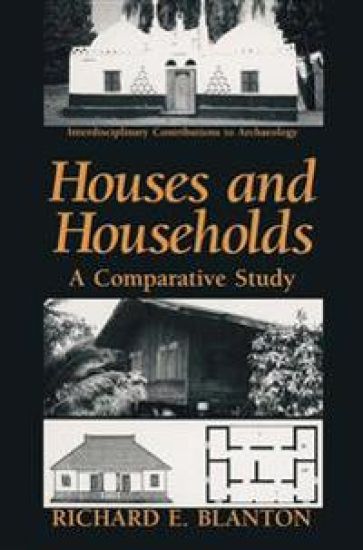
Houses and Households

Houses and Households

Richard E. Blanton

Kluwer Academic/Plenum Publishers
1993
sidottu
The author presents a large comparative database derived from ethnographic and architectural research in Southeast Asia, Egypt, Mesoamerica, and other areas; proposes new methodologies for comparative analyses of houses; and critically examines existing methodologies, theories, and data. His work expands on and systematizes comparative and cross-cultural approaches to the study of households and their environments to provide a firm foundation for this emerging line of study.
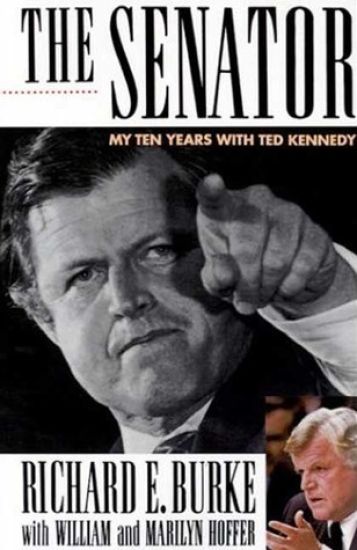
The Senator: My Years with Ted Kennedy

The Senator: My Years with Ted Kennedy

Richard E. Burke

St. Martin's Griffin
2003
nidottu
In 1971 Richard Burke, a freshman at Georgetown University, volunteered his services to the offices of his political idol, Senator Edward M. Kennedy of Massachusetts. Through ability, hard work, and dedication, Burke rose in the next four years to become one of the Senator's closest staff members. In 1977 he was made Kennedy's personal assistant; after his appointment in 1978 as administrative assistant - the youngest in the Senate - he came to know Edward M. Kennedy perhaps more intimately than anyone outside the closed circle of the Senator's family. He was often the last to see the Senator at night and the first to see him in the morning. This book is the account of what Richard Burke witnessed and experienced during his decade at the Senator's right hand. It is neither a full biography nor an examination of Kennedy's long career in government. Rather, it is the history of a young man who shared the Senator's professional and personal lives during a time marked by exhilarating public achievements and tragic secret misconduct. His story is not only the chronicle of a shattered idol, but of Richard Burke's own fall from grace, and eventual recovery. Burke does not shrink from confronting his own faults, and he agrees with the Senator: It is time for him to confront his.
The Politics of Economic Adjustment

The Politics of Economic Adjustment

Richard E. Foglesong; Joel Wolfe

Praeger Publishers Inc
1989
sidottu
Privatization and corporatism along with pluralist forms of adaptation have received much attention as strategies for coping with the transformation of mature industrial economics. Yet, the burgeoning literature on this topic has, until now, lacked an adequate account of the determinants of a government's choice between such strategies or of the relationships between these strategies and the Keynesian economic framework that predominated in the postwar era. This groundbreaking study bridges these gaps by considering both the determinants of the choice of an adjustment strategy and how that choice affects the nature of liberal democracy. Written by a distinguished group of political scientists, the essays collected here examine the divergent responses of liberal capitalist nations to the problem of economic adjustment, giving special attention to the political factors affecting strategic choices aimed at bolstering employment, enhancing international competitiveness, and restoring healthy productivity rates.The contributors examine in depth the experiences of the United States, Britain, France, West Germany, and Italy. They explain how these advanced industrial nations have faced economic crisis differently and why they have responded as they have. In each case, the author focuses on whether and at what level the state has pursued a corporatist approach involving a more direct government role in managing the economy with the assistance of private interest groups, a privatization strategy involving less state intervention and an increased reliance on market processes, or a form of pluralist adaptation. Throughout, the contributors demonstrate that the strategy pursued can have a fundamental impact on the character of democracy and the patterns of policy making. Students of political science as well as policy makers will find this book an incisive discussion of the myriad factors influencing the choice among competing strategies of economic adjustment.
The Power to Legislate

The Power to Legislate

Richard E. Levy

Praeger Publishers Inc
2006
sidottu
In a political climate where the machinery of the federal government has grown increasingly complex, The Power to Legislate offers a comprehensive and in-depth analysis of the extent and limitations of legislative power granted by the U. S. Constitution. By examining the historical development of the Constitution as well as judicial precedent set by the Supreme Court, Richard E. Levy develops a systematic account of federal legislative power that is ideal for anyone interested in constitutional history and political science.Levy focuses his investigation on three distinct, yet related, aspects of federal legislative power: the necessary and proper clause of Article I, the delegation of powers to the various federal institutions, and the deliberative powers of Congress to conduct investigations and interrogations. The Power to Legislate synthesizes these three crucial ideas into a fresh perspective that sheds light on today's controversies.
Rhinoplasty: Contemporary Innovations, An Issue of Facial Plastic Surgery Clinics of North America
Developments in procedures and approaches in Rhinoplasty occur rapidly. With rhinoplasty procedures being one of the most requested cosmetic surgeries, the facial plastic surgeon and plastic surgeon need to be aware of progress with the procedure. The focus of this issue in Facial Plastic Surgery Clinics is on the new procedures, techniques, and surgical tools. Editor Richard Davis leads this issue with Authors renown in the field of rhinoplasty and revision rhinoplasty. Topics include: Spreader Flaps for Middle Vault Stabilization; Treatment of the Scoliotic Nose with Extracorporeal Septoplasty; Cartilage Conservation in Treatment of the Wide Tip; Crural Repositioning for Cephalic Malposition of the Lateral Crura; The Diced Cartilage-Fascia Graft for Dorsal Augmentation; Lengthening the Short Nose; and Nasal Tip De-projection with Crural Cartilage Overlap - The M Arch Model.
Data Analysis Methods in Physical Oceanography

Data Analysis Methods in Physical Oceanography

Richard E. Thomson; William J. Emery

ELSEVIER SCIENCE PUBLISHING CO INC
2024
nidottu
Data Analysis Methods in Physical Oceanography: Fourth Edition provides a practical reference to established and modern data analysis techniques in earth and ocean sciences. In five sections, the book addresses data acquisition and recording, data processing and presentation, statistical methods and error handling, analysis of spatial data fields, and time series analysis methods. The updated edition includes new information on autonomous platforms and new analysis tools such as “deep learning? and convolutional neural networks. A section on extreme value statistics has been added, and the section on wavelet analysis has been expanded. This book brings together relevant techniques and references recent papers where these techniques have been trialed. In addition, it presents valuable examples using physical oceanography data. For students, the sections on data acquisition are useful for a compilation of all the measurement methods.
Development Postponed

Development Postponed

Richard E. Feinberg

Routledge
2018
sidottu
The collapse of political institutions and the failure of economic development models in Central America have turned the region into an ideological battleground. Central Americans are now debating— and fighting over—different conceptions of how to constitute society, the best way to organize production and to distribute benefits, and the political structures best suited to protecting the region's security and ensuring its future prosperity. This book examines die economic and political roots of the current crisis, reviewing the different strategies governments have adopted to cope with their financial woes and evaluating the role that international financial assistance has played in postponing adjustment to the crisis. The region's economies are carefully analyzed to highlight sectors with the potential to generate recovery and growth, and the larger political economy models that might direct the development process are also evaluated. The authors close with a discussion of the fundamental question: Can a Central America composed of a heterogeneous mix of national political economies live at peace with itself and the world?
Apartheid & Intl Org

Apartheid & Intl Org

Richard E Bissell

Routledge
2019
sidottu
The historical controversy over South Africa’s policy of apartheid has not been without effect on that country’s participation and status in the international system. The black African states have been particularly inclined to use the public forums of intergovernmental organizations such as the United Nations and the specialized agencies to press f
Development Postponed

Development Postponed

Richard E. Feinberg

Routledge
2020
nidottu
The collapse of political institutions and the failure of economic development models in Central America have turned the region into an ideological battleground. Central Americans are now debating— and fighting over—different conceptions of how to constitute society, the best way to organize production and to distribute benefits, and the political