Kirjojen hintavertailu. Mukana 11 244 527 kirjaa ja 12 kauppaa.

Kirjahaku

Etsi kirjoja tekijän nimen, kirjan nimen tai ISBN:n perusteella.

1000 tulosta hakusanalla Robert Cornforth

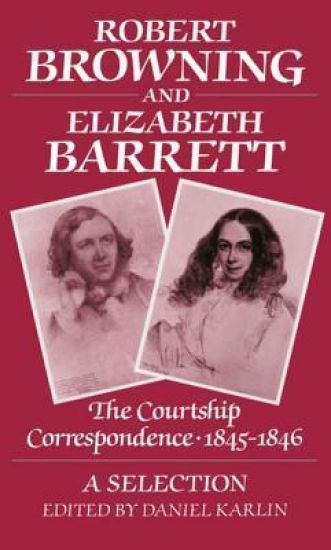
Robert Browning and Elizabeth Barrett
The love letters of Robert Browning and Elizabeth Barrett are among the most famous in literary history: intimate and sensitive, they illuminate both the writers' lives and their creative aims and methods. Daniel Karlin's selection, which complements his widely acclaimed The Courtship of Robert Browning and Elizabeth Barrett, is based on a fresh examination of the manuscripts and allows the reader to follow the story in all its scope and richness, from the beginning of their clandestine correspondence to their elopement in 1846.
The Poetical Works of Robert Browning: Volume VIII. The Ring and the Book, Books V-VIII
In old age, Browning always referred people to The Ring and the Book as his finest achievement. This is the second of the three volumes of the Oxford edition presenting this great Italian murder-story, including the monologues of the villain, the aristocrat Guido Franceschini, Pompilia his abused wife, and Caponsacchi, the priest who tries to rescue her from death. The commentary, at the bottom of each page, elucidates Browning's creative and sometimes challenging use of language with reference to his correspondence, his historical sources, and his own rich experience of Italy. Previously unidentified allusions are fully explained, and a newly discovered source from a seventeenth-century Italian chronicle is presented for the first time (in Appendix B), allowing further insight into Browning's engagement with history. The copy text of 1888-9 has numerous emendations to its punctuation, both those authorized by the poet in the last year of his life and those resulting from corrected compositors' errors, and these, combined with fourteen emendations to substantives, produce a text as near as possible to Browning's final intentions.
Robert Grosseteste

Robert Grosseteste

R. W. Southern

Clarendon Press
1992
sidottu
For this second edition, Sir Richard Southern has revised his much-acclaimed study in the light of recent scholarly research, and added an extensive preliminary chapter on the debate over Robert Grosseteste's career and intellectual growth. He has added c.50 extra pages in which he answers criticisms and adds further material to support his controversial account of Grosseteste's career. He examines particular features of Grosseteste's career in detail, especially his chancellorship of tbe University of Oxford, and provides a fuller account of the tradition of scientific study in England which Grosseteste inherited and transformed. This is a study of the intellectual development and influence of one of the most independent and vigorous Englishmen of the Middle Ages. As a scientist, theologian and pastoral leader, he was rooted in an English tradition predating the Norman conquest, and he looks forward to such disturbing characters of the later Middle Ages as Piers Plowman and John Wycliffe, though with a wider range of intellectual interests than any of them.
Robert Surtees and Early Victorian Society
Though for well over a century the novels of R.S. Surtees have maintained a steady readership, his books have been comparatively neglected in the literary and social studies of his period. Norman Gash's stimulating book is both a contribution to Surtees studies and to Victorian social history. It has often been observed that Surtees' fiction furnishes a wealth of material for social historians, and Professor Gash sets out to exploit the opportunities it offers. He places Surtees' novels in their historical context, and uses the novels and other writings to enlarge the historical evidence. Through the views of an unorthodox and sceptical early Victorian novelist, Norman Gash examines a familiar landscape from an unfamiliar angle, illuminating the conservative world of the countryside, small provincial towns, and the seedier side of London. This is a scholarly and entertaining study by an eminent historian of the nineteenth century.
Robert Robinson: Chemist Extraordinary

Robert Robinson: Chemist Extraordinary

Trevor I. Williams

Clarendon Press
1990
sidottu
Sir Robert Robinson was among the last of the great organic chemists in the classical tradition, achieving brilliant results with extremely simple apparatus. In this area he may be compared with Ernest Rutherford and his colleagues at the Cavendish Laboratory, Cambridge, who revolutionized atomic physics with equipment based on `string and sealing wax'. This biography examines Robinson's long and distinguished career, from his academic achievements to his work in the chemical industry, and illustrates his complex personality.
Robert Burns and Pastoral

Robert Burns and Pastoral

Nigel Leask

Oxford University Press
2015
nidottu
Robert Burns and Pastoral is a full-scale reassessment of the writings of Robert Burns (1759-1796), arguably the most original poet writing in the British Isles between Pope and Blake, and the creator of the first modern vernacular style in British poetry. Although still celebrated as Scotland's national poet, Burns has long been marginalised in English literary studies worldwide, due to a mistaken view that his poetry is linguistically incomprehensible and of interest to Scottish readers only. Nigel Leask challenges this view by interpreting Burns's poetry as an innovative and critical engagement with the experience of rural modernity, namely to the revolutionary transformation of Scottish agriculture and society in the decades between 1760 and 1800, thereby resituating it within the mainstream of the Scottish and European enlightenments. Detailed study of the literary, social, and historical contexts of Burns's poetry explodes the myth of the 'Heaven-taught ploughman', revealing his poetic artfulness and critical acumen as a social observer, as well as his significance as a Romantic precursor. Leask discusses Burns's radical decision to write 'Scots pastoral' (rather than English georgic) poetry in the tradition of Allan Ramsay and Robert Fergusson, focusing on themes of Scottish and British identity, agricultural improvement, poetic self-fashioning, language, politics, religion, patronage, poverty, antiquarianism, and the animal world. The book offers fresh interpretations of all Burns's major poems and some of the songs, the first to do so since Thomas Crawford's landmark study of 1960. It concludes with a new assessment of his importance for British Romanticism and to a 'Four Nations' understanding of Scottish literature and culture.
Robert Graves and the Classical Tradition
The poet Robert Graves' use of material from classical sources has been contentious to scholars for many years, with a number of classicists baulking at his interpretation of myth and his novelization of history, and questioning its academic value. This collection of essays provides the latest scholarship on Graves' historical fiction (for example in I, Claudius and Count Belisarius) and his use of mythical figures in his poetry, as well as an examination of his controversial retelling of the Greek Myths. The essays explore Graves' unique perspective and expand our understanding of his works within their original context, while at the same time considering their relevance in how we comprehend the ancient world.
Robert Browning

Robert Browning

Oxford University Press
2018
nidottu
This volume in the 21st-Century Oxford Authors series offers students and readers a comprehensive selection of the work of Robert Browning (1812-1889). Accompanied by full scholarly apparatus, this is the first one-volume fully annotated edition of Browning's poetry. It presents work written across the breadth of his career, from the very first poem he published, Pauline, to Asolando, the volume that was published on the day that he died. The text chosen is, wherever possible, the text of the poem as it was first published by Browning himself, and as a consequence the volume also constitutes a kind of biography that enables students to understand Browning's development over the course of his life. The edition reveals a poet who began as a bold experimentalist, and who continued to experiment throughout a writing career of more than fifty years. Browning is best known for his dramatic monologues, and the dramatic monologues are fully represented in this volume, but he was also a narrative poet, a poet of philosophical reflection, and a poet who fashioned an extraordinary variety of lyric measures. This volume reveals Browning as a far more versatile poet than he is often taken to be. There are two important prose items, an essay on Shelley and a letter to Ruskin which clarify Browning's intellectual stance. The Notes include brief headnotes to each poem followed by detailed annotation, and they assist the reader in developing a full understanding of these masterful poems. Explanatory notes and commentary are included, to enhance the study, understanding, and enjoyment of these works, and the edition includes an Introduction to the life and works of Browning, and a Chronology.
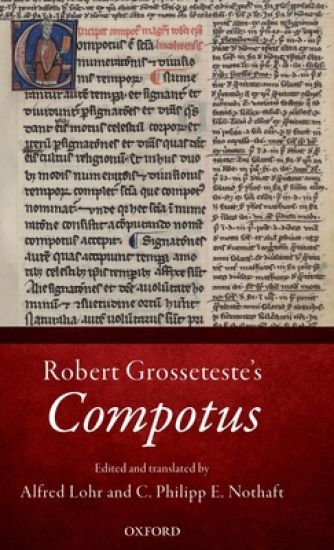
Robert Grosseteste's

Robert Grosseteste's

Oxford University Press
2019
sidottu
Robert Grosseteste (1168/75-1253), Bishop of Lincoln from 1235-1253, is widely recognized as one of the key intellectual figures of medieval England and as a trailblazer in the history of scientific methodology. Few of his numerous philosophical and scientific writings circulated as widely as the Compotus, a treatise on time reckoning and calendrical astronomy apparently written during a period of study in Paris in the 1220s. Besides its strong and long-lasting influence on later writers, Grossteste's Compotus is particularly noteworthy for its innovatory approach to the theory and practice of the ecclesiastical calendar--a subject of essential importance to the life of the Latin Church. Confronting traditional computistical doctrines with the lessons learned from Graeco-Arabic astronomy, Grosseteste offered his readers a critical and reform-oriented take on the discipline, in which he proposed a specific version of the Islamic lunar as a substitute for the failing nineteen-year cycle the Church still employed to calculate the date of Easter. This new critical edition of Grosseteste's Compotus contains the Latin text with an en-face English translation. It is flanked by an extensive introduction and chapter commentary, which will provide valuable new insights into the text's purpose and disciplinary background, its date and biographical context, its sources, as well as its reception in later centuries.
Robert Frost and Northern Irish Poetry

Robert Frost and Northern Irish Poetry

Rachel Buxton

Oxford University Press
2004
sidottu
In this incisive and highly readable study, Rachel Buxton offers a much-needed assessment of Frost's significance for Northern Irish poetry of the past half-century. Drawing upon a diverse range of previously unpublished archival sources, including juvenilia, correspondence, and drafts of poems, Robert Frost and Northern Irish Poetry takes as its particular focus the triangular dynamic of Frost, Seamus Heaney, and Paul Muldoon. Buxton explores the differing strengths which each Irish poet finds in Frost's work: while Heaney is drawn primarily to the Frost persona and to the "sound of sense", it is the studied slyness and wryness of the American's poetry, the complicating undertow, which Muldoon values. This appraisal of Frost in a non-American context not only enables a fuller appreciation of Heaney's and Muldoon's poetry but also provides valuable insight into the nature of trans-national and trans-generational poetic influence. Engaging with the politics of Irish-American literary connections, while providing a subtle analysis of the intertextual relationships between these three key twentieth-century poets, Robert Frost and Northern Irish Poetry is a pioneering work.
Robert Holcot

Robert Holcot

John T. Slotemaker; Jeffrey C. Witt

Oxford University Press Inc
2016
sidottu
This is an introduction the thought of Robert Holcot, a great and influential but often underappreciated medieval thinker. Holcot was a Dominican friar who flourished in the 1330's and produced a diverse body of work including scholastic treatises, biblical commentaries, and sermons. By viewing the whole of Holcot's corpus, this book provides a comprehensive account of his thought. Challenging established characterizations of him as a skeptic or radical, this book shows Holcot to be primarily concerned with affirming and supporting the faith of the pious believer. At times, this manifests itself as a cautious attitude toward absolutists' claims about the power of natural reason. At other times, Holcot reaffirms, in Anselmian fashion, the importance of rational effort in the attempt to understand and live out one's faith. Over the course of this introduction the authors unpack Holcot's views on faith and heresy, the divine nature and divine foreknowledge, the sacraments, Christ, and political philosophy. Likewise, they examine Holcot's approach to several important medieval literary genres, including the development of his unique "picture method," biblical commentaries, and sermons. In so doing, John Slotemaker and Jeffrey Witt restore Holcot to his rightful place as one of the most important thinkers of his time.
Robert Holcot

Robert Holcot

John T. Slotemaker; Jeffrey C. Witt

Oxford University Press Inc
2016
nidottu
This is an introduction the thought of Robert Holcot, a great and influential but often underappreciated medieval thinker. Holcot was a Dominican friar who flourished in the 1330s and produced a diverse body of work including scholastic treatises, biblical commentaries, and sermons. By viewing the whole of Holcot's corpus, this book provides a comprehensive account of his thought. Challenging established characterizations of him as a skeptic or radical, this book shows Holcot to be primarily concerned with affirming and supporting the faith of the pious believer. At times, this manifests itself as a cautious attitude toward absolutists' claims about the power of natural reason. At other times, Holcot reaffirms, in Anselmian fashion, the importance of rational effort in the attempt to understand and live out one's faith. Over the course of this introduction the authors unpack Holcot's views on faith and heresy, the divine nature and divine foreknowledge, the sacraments, Christ, and political philosophy. Likewise, they examine Holcot's approach to several important medieval literary genres, including the development of his unique "picture method," biblical commentaries, and sermons. In so doing, John Slotemaker and Jeffrey Witt restore Holcot to his rightful place as one of the most important thinkers of his time.
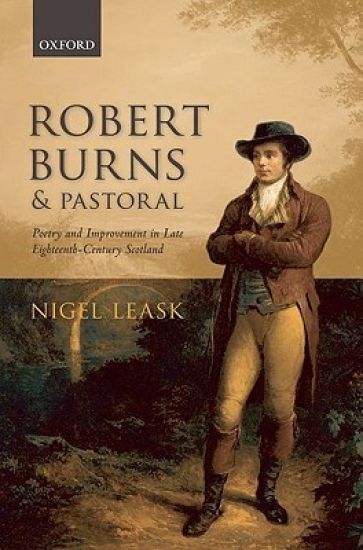
Robert Burns and Pastoral

Robert Burns and Pastoral

Nigel Leask

Oxford University Press
2010
sidottu
Robert Burns and Pastoral is a full-scale reassessment of the writings of Robert Burns (1759-1796), arguably the most original poet writing in the British Isles between Pope and Blake, and the creator of the first modern vernacular style in British poetry. Although still celebrated as Scotland's national poet, Burns has long been marginalised in English literary studies worldwide, due to a mistaken view that his poetry is linguistically incomprehensible and of interest to Scottish readers only. Nigel Leask challenges this view by interpreting Burns's poetry as an innovative and critical engagement with the experience of rural modernity, namely to the revolutionary transformation of Scottish agriculture and society in the decades between 1760 and 1800, thereby resituating it within the mainstream of the Scottish and European enlightenments. Detailed study of the literary, social, and historical contexts of Burns's poetry explodes the myth of the 'Heaven-taught ploughman', revealing his poetic artfulness and critical acumen as a social observer, as well as his significance as a Romantic precursor. Leask discusses Burns's radical decision to write 'Scots pastoral' (rather than English georgic) poetry in the tradition of Allan Ramsay and Robert Fergusson, focusing on themes of Scottish and British identity, agricultural improvement, poetic self-fashioning, language, politics, religion, patronage, poverty, antiquarianism, and the animal world. The book offers fresh interpretations of all Burns's major poems and some of the songs, the first to do so since Thomas Crawford's landmark study of 1960. It concludes with a new assessment of his importance for British Romanticism and to a 'Four Nations' understanding of Scottish literature and culture.
Robert Spaemann's Philosophy of the Human Person

Robert Spaemann's Philosophy of the Human Person

Holger Zaborowski

Oxford University Press
2010
sidottu
The German philosopher Robert Spaemann provides an important contribution to a number of contemporary debates in philosophy and theology, opening up possibilities for conversation between these disciplines. He engages in a dialogue with classical and contemporary positions and often formulates important and original insights which lie beyond common alternatives. In this study Holger Zaborowski provides an analysis of the most important features of Spaemann's philosophy and shows the unity of his thought. The question 'Who is a person?' is of increasing significance: Are all human beings persons? Are there animals that can be considered persons? What does it mean to speak of personal identity and of the dignity of the person? Spaemann provides an answer to these questions: Every human being, he argues, is a person and, therefore, 'has' his nature in freedom. In order to understand the person, Spaemann explains, we have to think about the relation between nature and freedom and avoid the reductive accounts of this relation prevalent in important strands of modern thought. Spaemann develops a challenging critique of modernity, incorporating analysis of modern anti-modernisms and showing that these are also subject to a dialectical development, perpetuating the problematic shortcomings of many features of modern reasoning. If we do not want to abolish ourselves as persons, Spaemann reasons, we need to find a way of understanding ourselves that evades the dialectic of modernity. Thus, he reminds his readers of 'self-evident' knowledge: insights that we have once already known, but tend to forget.
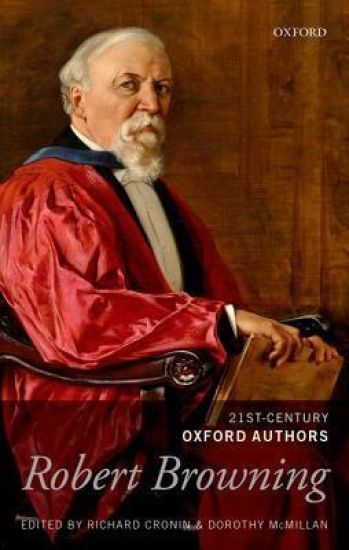
Robert Browning

Robert Browning

Oxford University Press
2014
sidottu
The Robert Browning volume in the 21st-Century Oxford Authors series is the first one-volume fully annotated edition of Browning to offer a wide selection of work written throughout Browning's career, from the very first poem he published, Pauline, to Asolando, the volume that was published on the day that he died. The text chosen is, wherever possible, the text of the poem as it was first published by Browning himself, and as a consequence the volume also constitutes a kind of biography. It reveals a poet who began as a bold experimentalist, and who continued to experiment throughout a writing career of more than fifty years. Browning is best known for his dramatic monologues, and the dramatic monologues are fully represented in this volume, but he was also a narrative poet, a poet of philosophical reflection, and a poet who fashioned an extraordinary variety of lyric measures. This volume reveals Browning as a far more versatile poet than he is often taken to be. There are two important prose items, an essay on Shelley and a letter to Ruskin which clarify Browning's intellectual stance. The Notes include brief headnotes to each poem followed by detailed annotation. Browning is often a difficult poet, and the notes are designed to assist the reader to arrive at a full understanding of the poems. The volume also includes a general introduction and a detailed chronology of Browning's life and times.
Robert Altman's Soundtracks

Robert Altman's Soundtracks

Gayle Sherwood Magee

Oxford University Press Inc
2014
sidottu
American director Robert Altman (1925-2006) first came to national attention with the surprise blockbuster M*A*S*H (1970), and he directed more than thirty feature films in the subsequent decades. Critics and scholars have noted that music is central to Altman's films, and in addition to his feature films, Altman worked in theater, opera, and the emerging field of cable television. His treatment of sound is a hallmark of his films, alongside overlapping dialogue, improvisation, and large ensemble casts. Several of his best-known films integrate musical performances into the central plot, including Nashville (1975), Popeye (1980), Short Cuts (1993), Kansas City (1996), The Company (2003) and A Prairie Home Companion (2006), his final film. Even such non-musicals as McCabe and Mrs. Miller (1971) have been described as, in fellow director and protégé Paul Thomas Anderson's evocative phrase, as "musicals without people singing." Robert Altman's Soundtracks considers Altman's celebrated, innovative uses of music and sound in several of his most acclaimed and lesser-known works. In so doing, these case studies serve as a window not only into Altman's considerable and varied output, but also the changing film industry over nearly four decades, from the heyday of the New Hollywood in the late 1960s through the "Indiewood" boom of the 1990s and its bust in the early 2000s. As its frame, the book will consider the continuing attractions of auteurism inside and outside of scholarly discourse, by considering Altman's career in terms of the director's own self-promotion as a visionary and artist; the film industry's promotion of Altman the auteur; the emphasis on Altman's individual style, including his use of music, by the director, critics, scholars, and within the industry; and the processes, tensions, and boundaries of collaboration.