

Kirjahaku
Etsi kirjoja tekijän nimen, kirjan nimen tai ISBN:n perusteella.
1000 tulosta hakusanalla Robert D. Lesslie

The Wise Men of Foreign Affairs. the History of the Council on Foreign Relations
Robert D. Schulzinger
Columbia University Press
2022
sidottu
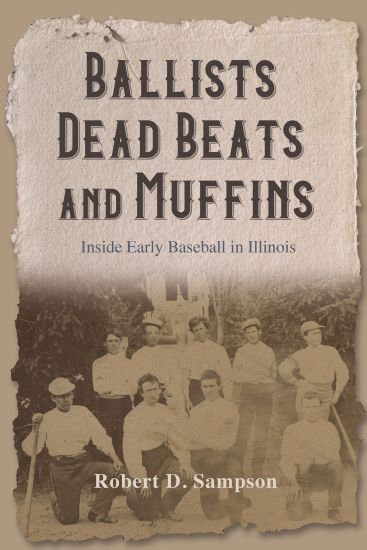
Winner of the Russell P. Strange Book of the Year Award from the Illinois State Historical Society Baseball’s spread across Illinois paralleled the sport’s explosive growth in other parts of the country.Robert D. Sampson taps a wealth of archival research to transport readers to an era when an epidemic of “base ball on the brain” raged from Alton to Woodstock. Focusing on the years 1865 to 1869, Sampson offers a vivid portrait of a game where local teams and civic ambition went hand in hand and teams of paid professionals displaced gentlemen’s clubs devoted to sporting fair play. This preoccupation with competition sparked rules disputes and controversies over imported players while the game itself mirrored society by excluding Black Americans and women. The new era nonetheless brought out paying crowds to watch the Rock Island Lively Turtles, Fairfield Snails, and other teams take the field up and down the state. A first-ever history of early baseball in Illinois, Ballists, Dead Beats, and Muffins adds the Prairie State game’s unique shadings and colorful stories to the history of the national pastime.
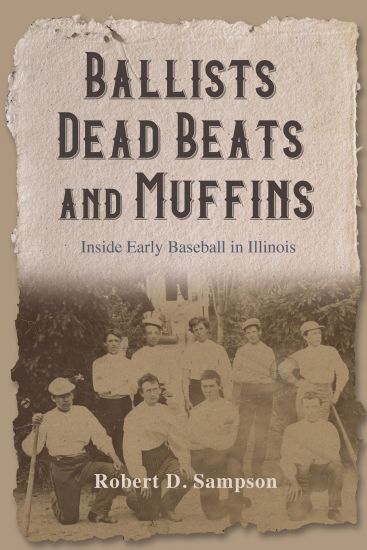
Winner of the Russell P. Strange Book of the Year Award from the Illinois State Historical Society Baseball’s spread across Illinois paralleled the sport’s explosive growth in other parts of the country.Robert D. Sampson taps a wealth of archival research to transport readers to an era when an epidemic of “base ball on the brain” raged from Alton to Woodstock. Focusing on the years 1865 to 1869, Sampson offers a vivid portrait of a game where local teams and civic ambition went hand in hand and teams of paid professionals displaced gentlemen’s clubs devoted to sporting fair play. This preoccupation with competition sparked rules disputes and controversies over imported players while the game itself mirrored society by excluding Black Americans and women. The new era nonetheless brought out paying crowds to watch the Rock Island Lively Turtles, Fairfield Snails, and other teams take the field up and down the state. A first-ever history of early baseball in Illinois, Ballists, Dead Beats, and Muffins adds the Prairie State game’s unique shadings and colorful stories to the history of the national pastime.

When Robert D. Krebs joined the ranks of Southern Pacific Railroad in 1966, the industry had been in decline for decades, and the future of trains was in peril. Despite these obstacles, Krebs fell in love with the rugged, competitive business of railroads and was determined to overcome its resistance to change and put rail transportation back on track. By the age of 40, Krebs was president of the Southern Pacific Railroad and had also served as chief executive of both the Santa Fe Railway and Burlington Northern Santa Fe Railway companies. Riding the Rails: Inside the Business of America's Railroads details Krebs's rise to a position of influence in the recovery of America's railroads and offers a unique insider's view into the boardrooms where executives and businessmen reimagined transportation in the United States.

Most histories of wounded Civil War veterans construe them as feminized men whose manhood has suffered due to their inability to provide for and raise families or engage in business. Wounded for Life complicates this picture by examining how seven veterans—six soldiers and one physician—coped with their changed bodies in their postwar lives. Through these intimate stories, author Robert D. Hicks looks at the veteran's body as shaped by the trauma of the battlefield and hospital and the construction of a postwar identity in relation to that trauma. Through his research, he reveals the changing social circumstances of the late 19th and early 20th centuries as they impacted the traumatized veteran's body. This engaging book is equal parts Civil War history, disability and gender history, and the history of the body that discloses the impact of war on a wounded warrior.


The Vengerova System of Piano Playing
Robert D. Schick
Pennsylvania State University Press
2008
pokkari
This book is based on detailed notes taken by the author during a decade of study under one of the renowned teachers of piano, whose pupils included such pianists as Gary Graffman, Lilian Kallir, Jacob Lateiner, and Sylvia Saremba and such composer/conductors as Samuel Barber, Leonard Bernstein, Lukas Foss, and Thomas Scherman. Following a brief chapter on Vengerova's personality, the author presents the Vengerova system in respect to posture and hand position, accents, "singing tone," fingering, and pedaling. A final chapter discusses the merits of a relatively rigid system of musical instruction, concluding that Vengerova's approach encouraged "variety with an underlying unity"—a conclusion supported in a survey of her former pupils by Joseph Rezits. The book is illustrated with photographs and excerpts from musical scores. An appendix includes an article by the Soviet musicologist Vitaly Neumann on Isabelle Vengerova's teaching at the St. Petersburg Conservatory from 1906 until the Revolution, following a concert career. It also includes an obituary by Jay S. Harrison outlining her teaching accomplishments at the Curtis Institute and the Mannes College of Music between 1924 and her death in 1956.

Since World War II the regulation of conduct in the United States has become problematic. This condition has been recognized by ordinary citizens in the soaring crime rates, illegitimate births, neglect of the public good and increase in special and individual interests, preference for fame, fortune and power, gross immoral acts by public figures, and fascination of the media and the audience with spectacles of evil. The troubled control of social behavior in the nation is suggested by the fact that our society has no commonly accepted set of standards that can guide our actions. Heslep penetrates the bazaar of competing normative principles that Americans subscribe to in search of those logical and feasible standards of behavior that will conquer our nation's moral crisis. He then constructs an idea of character education for Americans, applying it to recent policy recommendations and to cases of individuals with moral education needs.

Since World War II the regulation of conduct in the United States has become problematic. This condition has been recognized by ordinary citizens in the soaring crime rates, illegitimate births, neglect of the public good and increase in special and individual interests, preference for fame, fortune and power, gross immoral acts by public figures, and fascination of the media and the audience with spectacles of evil. The troubled control of social behavior in the nation is suggested by the fact that our society has no commonly accepted set of standards that can guide our actions. Heslep penetrates the bazaar of competing normative principles that Americans subscribe to in search of those logical and feasible standards of behavior that will conquer our nation's moral crisis. He then constructs an idea of character education for Americans, applying it to recent policy recommendations and to cases of individuals with moral education needs.

Designed for those wanting to be teachers, administrators, or other educational practitioners, this work shows how the study of educational philosophy should and can be of considerable practical value. The author provides students with a method—one of questioning—and a set of principles of moral agency for assessing the purposes and decisions of educational practice. Students can see the practical value of educational philosophy through case studies which include: a school district committee's efforts to write a mission statement; a disciplinary hearing for a middle school student; a teacher's instructional evaluation; a high school committee trying to reform an occupational studies program; and an elementary school committee examining how to improve students' academic performance.Each case study contains background information and a description of the facts of the case, an identification of the central topic, a specification of the features of moral activity that appear in the case, a questioning of the case from the standpoint of the generic norms of moral agency, and recommendations on what needs to be done in the case.
Designed for those wanting to be teachers, administrators, or other educational practitioners, this work shows how the study of educational philosophy should and can be of considerable practical value. The author provides students with a method—one of questioning—and a set of principles of moral agency for assessing the purposes and decisions of educational practice. Students can see the practical value of educational philosophy through case studies which include: a school district committee's efforts to write a mission statement; a disciplinary hearing for a middle school student; a teacher's instructional evaluation; a high school committee trying to reform an occupational studies program; and an elementary school committee examining how to improve students' academic performance.Each case study contains background information and a description of the facts of the case, an identification of the central topic, a specification of the features of moral activity that appear in the case, a questioning of the case from the standpoint of the generic norms of moral agency, and recommendations on what needs to be done in the case.

This book is a scholarly, comprehensive, and critical biography of Nicholas II from his birth in 1868 to his execution in 1918. It features a chronological narrative emphasizing the political aspects of the Tsar's reign rather than details from his personal life—although new information about his life is revealed. Nicholas II is portrayed as a conscientious and reasonably intelligent ruler whose reign was marred by inept statesmanship and a stubborn determination to uphold the autocratic tradition of the Romanov dynasty even though he was forced to grant major political concessions in 1905. His imprudent foreign policy in East Asia precipitated a losing war with Japan. But a more cautious policy in Europe nevertheless involved Russia in a far greater conflict in 1914 that resulted in enormous casualties, economic hardship, and the collapse of the monarchy in 1917. As an individual, Nicholas was gentle and benevolent (except towards political dissidents) and proved to be a good husband and father. The serenity of his family life was disrupted by his son and heir's hemophilia, and the ensuing Rasputin scandal impaired the Tsar's image and contributed to his unpopularity. A final chapter examines his legacy and provides a theory of revolutionary causation.
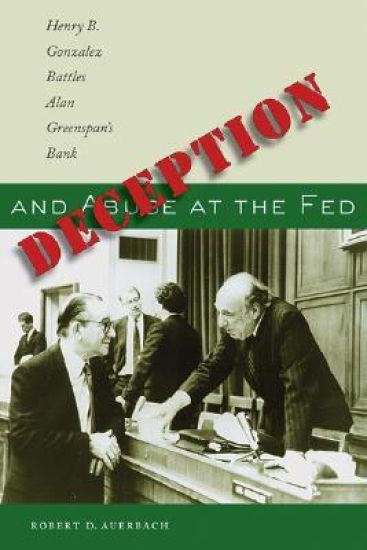
The Federal Reserve-the central bank of the United States-is the most powerful peacetime bureaucracy in the federal government. Under the chairmanship of Alan Greenspan (1987-2006), the Fed achieved near mythical status for its part in managing the economy, and Greenspan was lauded as a genius. Few seemed to notice or care that Fed officials operated secretly with almost no public accountability. There was a courageous exception to this lack of oversight, however: Henry B. Gonzalez (D-TX)-chairman of the U.S. House of Representatives Financial Services (banking) Committee. In Deception and Abuse at the Fed, Robert Auerbach, a former banking committee investigator, recounts major instances of Fed mismanagement and abuse of power that were exposed by Rep. Gonzalez, including: Blocking Congress and the public from holding powerful Fed officials accountable by falsely declaring-for 17 years-it had no transcripts of its meetings; Manipulating the stock and bond markets in 1994 under cover of a preemptive strike against inflation; Allowing $5.5 billion to be sent to Saddam Hussein from a small Atlanta branch of a foreign bank-the result of faulty bank examination practices by the Fed; Stonewalling Congressional investigations and misleading the Washington Post about the $6,300 found on the Watergate burglars. Auerbach provides documentation of these and other abuses at the Fed, which confirms Rep. Gonzalez's belief that no government agency should be allowed to operate with the secrecy and independence in which the Federal Reserve has shrouded itself. Auerbach concludes with recommendations for specific, broad-ranging reforms that will make the Fed accountable to the government and the people of the United States.

Why America no longer leads the world in innovation, why we should be concerned, and what must be done about it This important book delivers a critical wake-up call: a fierce global race for innovation advantage is under way, and while other nations are making support for technology and innovation a central tenet of their economic strategies and policies, America lacks a robust innovation policy. What does this portend? Robert Atkinson and Stephen Ezell, widely respected economic thinkers, report on profound new forces that are shaping the global economy—forces that favor nations with innovation-based economies and innovation policies. Unless the United States enacts public policies to reflect this reality, Americans face the relatively lower standards of living associated with a noncompetitive national economy.The authors explore how a weak innovation economy not only contributed to the Great Recession but is delaying America's recovery from it and how innovation in the United States compares with that in other developed and developing nations. Atkinson and Ezell then lay out a detailed, pragmatic road map for America to regain its global innovation advantage by 2020, as well as maximize the global supply of innovation and promote sustainable globalization.
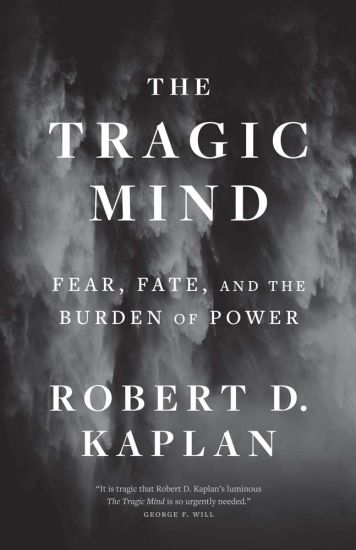
A moving meditation on recent geopolitical crises, viewed through the lens of ancient and modern tragedy “Spare, elegant and poignant. . . . If there is a single contemporary book that should be pressed into the hands of those who decide issues of war and peace, this is it.”—John Gray, New Statesman “It is tragic that Robert D. Kaplan’s luminous The Tragic Mind is so urgently needed.”—George F. Will Some books emerge from a lifetime of hard-won knowledge. Robert D. Kaplan has learned, from a career spent reporting on wars, revolutions, and international politics in Europe, the Middle East, and East Asia, that the essence of geopolitics is tragedy. In The Tragic Mind, he employs the works of ancient Greek dramatists, Shakespeare, German philosophers, and the modern classics to explore the central subjects of international politics: order, disorder, rebellion, ambition, loyalty to family and state, violence, and the mistakes of power. The great dilemmas of international politics, he argues, are not posed by good versus evil—a clear and easy choice—but by contests of good versus good, where the choices are often searing, incompatible, and fraught with consequences. A deeply learned and deeply felt meditation on the importance of lived experience in conducting international relations, this is a book for everyone who wants a profound understanding of the tragic politics of our time.

Mental Health Interventions with Preschool Children
Robert D. Lyman; Toni L. Hembree-Kigin
Kluwer Academic/Plenum Publishers
1994
sidottu
Preschool children have been largely neglected in the mental health treatment literature, although research has established that many behavioral and emotional disorders in children result from events occurring during the preschool years or are first manifested during this period. This has occurred for several reasons. Traditional psychoanalytic thinking has considered preschoolers to be too psychologically immature for complete manifestations of psychopathology, and the limited language abilities of young children have complicated assessment procedures and made them less appropriate for treatment approaches that are largely verbal in nature. In addition, the developmental complexity of the preschool period has deterred many researchers from investigating clinical issues with this age group. Partly as a result of the lack of information on preschoolers in the literature, practitioners have historically been uncomfortable in conduct ing assessments and initiating treatment with young children. They have often adopted a "wait and see" attitude in which formal mental health diagnosis and treatment are not implemented until after the child's entry into school. Unfortunately, such a delay may mean wasting the time during which mental health interventions can be maximally effective. Recently, this attitude has changed and practitioners now recognize the need for assessment and treatment of behavioral and emotional disorders early in life. What they require to assist them in the timely delivery of such services is information about assessment and treatment procedures specifically designed for preschoolers and with demonstrated efficacy with that age group.

Assessing the Youthful Offender
Robert D. Hoge; D.A. Andrews
Kluwer Academic/Plenum Publishers
1996
sidottu
Our society's preoccupation with crime and fear of crime appears to have shifted its focus to the juvenile offender. Both electronic and print media continuously warn us that juvenile offenders are increasingly younger and more virulent. The demographics of our population suggest that there will only be more juvenile offenders to fear in the near future. All of these concerns arise in a social climate that is characterized by an ever increasing demand for stronger retributive measures against the offender. The belief that only harsh justice will protect us from the ravages of juveniles has become dominant. Increasingly, perceptions and politics, rather than scientific data, dominate policy making with regard to youthful offenders. In Assessing the Youthful Offender: Issues and Techniques, Robert D. Hoge and D. A. Andrews make a restrained, rational, and ultimately persuasive argu ment for the use of standardized psychological assessments in the effective management of youth within juvenile justice systems. They clarify how what we already know about the cause and management of youthful criminal activity can be incorporated into standardized testing and that the information obtained from testing can improve the administration of criminal justice. Moreover, this informa tion is useful whatever the theoretical biases of those who administer the justice system. The efficiency of policies of either retribution, deterrence, or rehabilitation is only enhanced by reliance on data.

Assessing the Youthful Offender
Robert D. Hoge; D.A. Andrews
Kluwer Academic/Plenum Publishers
1996
nidottu
Our society's preoccupation with crime and fear of crime appears to have shifted its focus to the juvenile offender. Both electronic and print media continuously warn us that juvenile offenders are increasingly younger and more virulent. The demographics of our population suggest that there will only be more juvenile offenders to fear in the near future. All of these concerns arise in a social climate that is characterized by an ever increasing demand for stronger retributive measures against the offender. The belief that only harsh justice will protect us from the ravages of juveniles has become dominant. Increasingly, perceptions and politics, rather than scientific data, dominate policy making with regard to youthful offenders. In Assessing the Youthful Offender: Issues and Techniques, Robert D. Hoge and D. A. Andrews make a restrained, rational, and ultimately persuasive argu ment for the use of standardized psychological assessments in the effective management of youth within juvenile justice systems. They clarify how what we already know about the cause and management of youthful criminal activity can be incorporated into standardized testing and that the information obtained from testing can improve the administration of criminal justice. Moreover, this informa tion is useful whatever the theoretical biases of those who administer the justice system. The efficiency of policies of either retribution, deterrence, or rehabilitation is only enhanced by reliance on data.
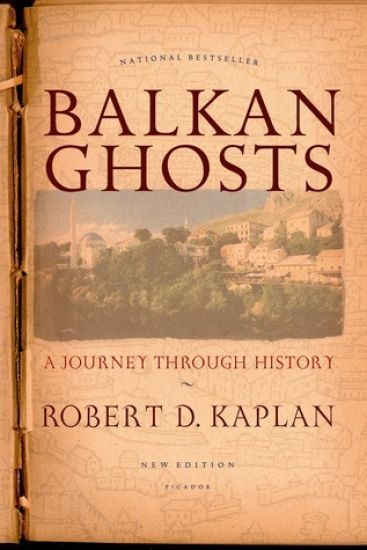
From the assassination that triggered World War I to the ethnic warfare in Serbia, Bosnia, and Croatia, the Balkans have been the crucible of the twentieth century, the place where terrorism and genocide first became tools of policy. Chosen as one of the Best Books of the Year by The New York Times, and greeted with critical acclaim as "the most insightful and timely work on the Balkans to date" (The Boston Globe), Kaplan's prescient, enthralling, and often chilling political travelogue is already a modern classic. This new edition of the Balkan Ghosts includes six opinion pieces written by Robert Kaplan about the Balkans between 1996 and 2000 beginning just after the implementation of the Dayton Peace Accords and ending after the conclusion of the Kosovo war, with the removal of Slobodan Milosevic from power.