Kirjojen hintavertailu. Mukana 11 627 423 kirjaa ja 12 kauppaa.

Kirjahaku

Etsi kirjoja tekijän nimen, kirjan nimen tai ISBN:n perusteella.

1000 tulosta hakusanalla Robert Efird

Robert Burns and Pastoral

Robert Burns and Pastoral

Nigel Leask

Oxford University Press
2015
nidottu
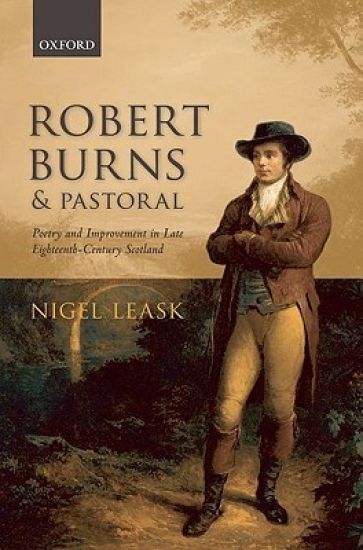
Robert Burns and Pastoral is a full-scale reassessment of the writings of Robert Burns (1759-1796), arguably the most original poet writing in the British Isles between Pope and Blake, and the creator of the first modern vernacular style in British poetry. Although still celebrated as Scotland's national poet, Burns has long been marginalised in English literary studies worldwide, due to a mistaken view that his poetry is linguistically incomprehensible and of interest to Scottish readers only. Nigel Leask challenges this view by interpreting Burns's poetry as an innovative and critical engagement with the experience of rural modernity, namely to the revolutionary transformation of Scottish agriculture and society in the decades between 1760 and 1800, thereby resituating it within the mainstream of the Scottish and European enlightenments. Detailed study of the literary, social, and historical contexts of Burns's poetry explodes the myth of the 'Heaven-taught ploughman', revealing his poetic artfulness and critical acumen as a social observer, as well as his significance as a Romantic precursor. Leask discusses Burns's radical decision to write 'Scots pastoral' (rather than English georgic) poetry in the tradition of Allan Ramsay and Robert Fergusson, focusing on themes of Scottish and British identity, agricultural improvement, poetic self-fashioning, language, politics, religion, patronage, poverty, antiquarianism, and the animal world. The book offers fresh interpretations of all Burns's major poems and some of the songs, the first to do so since Thomas Crawford's landmark study of 1960. It concludes with a new assessment of his importance for British Romanticism and to a 'Four Nations' understanding of Scottish literature and culture.
Robert Graves and the Classical Tradition
The poet Robert Graves' use of material from classical sources has been contentious to scholars for many years, with a number of classicists baulking at his interpretation of myth and his novelization of history, and questioning its academic value. This collection of essays provides the latest scholarship on Graves' historical fiction (for example in I, Claudius and Count Belisarius) and his use of mythical figures in his poetry, as well as an examination of his controversial retelling of the Greek Myths. The essays explore Graves' unique perspective and expand our understanding of his works within their original context, while at the same time considering their relevance in how we comprehend the ancient world.
Robert Browning

Robert Browning

Oxford University Press
2018
nidottu
This volume in the 21st-Century Oxford Authors series offers students and readers a comprehensive selection of the work of Robert Browning (1812-1889). Accompanied by full scholarly apparatus, this is the first one-volume fully annotated edition of Browning's poetry. It presents work written across the breadth of his career, from the very first poem he published, Pauline, to Asolando, the volume that was published on the day that he died. The text chosen is, wherever possible, the text of the poem as it was first published by Browning himself, and as a consequence the volume also constitutes a kind of biography that enables students to understand Browning's development over the course of his life. The edition reveals a poet who began as a bold experimentalist, and who continued to experiment throughout a writing career of more than fifty years. Browning is best known for his dramatic monologues, and the dramatic monologues are fully represented in this volume, but he was also a narrative poet, a poet of philosophical reflection, and a poet who fashioned an extraordinary variety of lyric measures. This volume reveals Browning as a far more versatile poet than he is often taken to be. There are two important prose items, an essay on Shelley and a letter to Ruskin which clarify Browning's intellectual stance. The Notes include brief headnotes to each poem followed by detailed annotation, and they assist the reader in developing a full understanding of these masterful poems. Explanatory notes and commentary are included, to enhance the study, understanding, and enjoyment of these works, and the edition includes an Introduction to the life and works of Browning, and a Chronology.
Robert Grosseteste's

Robert Grosseteste's

Oxford University Press
2019
sidottu
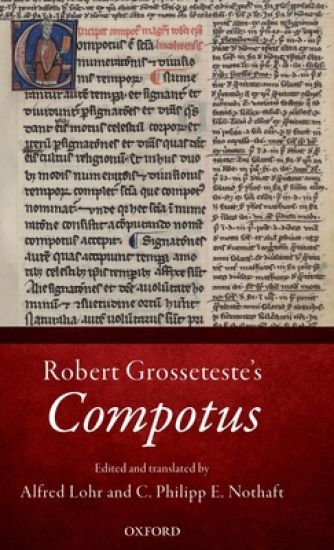
Robert Grosseteste (1168/75-1253), Bishop of Lincoln from 1235-1253, is widely recognized as one of the key intellectual figures of medieval England and as a trailblazer in the history of scientific methodology. Few of his numerous philosophical and scientific writings circulated as widely as the Compotus, a treatise on time reckoning and calendrical astronomy apparently written during a period of study in Paris in the 1220s. Besides its strong and long-lasting influence on later writers, Grossteste's Compotus is particularly noteworthy for its innovatory approach to the theory and practice of the ecclesiastical calendar--a subject of essential importance to the life of the Latin Church. Confronting traditional computistical doctrines with the lessons learned from Graeco-Arabic astronomy, Grosseteste offered his readers a critical and reform-oriented take on the discipline, in which he proposed a specific version of the Islamic lunar as a substitute for the failing nineteen-year cycle the Church still employed to calculate the date of Easter. This new critical edition of Grosseteste's Compotus contains the Latin text with an en-face English translation. It is flanked by an extensive introduction and chapter commentary, which will provide valuable new insights into the text's purpose and disciplinary background, its date and biographical context, its sources, as well as its reception in later centuries.
Robert Frost and Northern Irish Poetry

Robert Frost and Northern Irish Poetry

Rachel Buxton

Oxford University Press
2004
sidottu
In this incisive and highly readable study, Rachel Buxton offers a much-needed assessment of Frost's significance for Northern Irish poetry of the past half-century. Drawing upon a diverse range of previously unpublished archival sources, including juvenilia, correspondence, and drafts of poems, Robert Frost and Northern Irish Poetry takes as its particular focus the triangular dynamic of Frost, Seamus Heaney, and Paul Muldoon. Buxton explores the differing strengths which each Irish poet finds in Frost's work: while Heaney is drawn primarily to the Frost persona and to the "sound of sense", it is the studied slyness and wryness of the American's poetry, the complicating undertow, which Muldoon values. This appraisal of Frost in a non-American context not only enables a fuller appreciation of Heaney's and Muldoon's poetry but also provides valuable insight into the nature of trans-national and trans-generational poetic influence. Engaging with the politics of Irish-American literary connections, while providing a subtle analysis of the intertextual relationships between these three key twentieth-century poets, Robert Frost and Northern Irish Poetry is a pioneering work.
Robert Holcot

Robert Holcot

John T. Slotemaker; Jeffrey C. Witt

Oxford University Press Inc
2016
sidottu
This is an introduction the thought of Robert Holcot, a great and influential but often underappreciated medieval thinker. Holcot was a Dominican friar who flourished in the 1330's and produced a diverse body of work including scholastic treatises, biblical commentaries, and sermons. By viewing the whole of Holcot's corpus, this book provides a comprehensive account of his thought. Challenging established characterizations of him as a skeptic or radical, this book shows Holcot to be primarily concerned with affirming and supporting the faith of the pious believer. At times, this manifests itself as a cautious attitude toward absolutists' claims about the power of natural reason. At other times, Holcot reaffirms, in Anselmian fashion, the importance of rational effort in the attempt to understand and live out one's faith. Over the course of this introduction the authors unpack Holcot's views on faith and heresy, the divine nature and divine foreknowledge, the sacraments, Christ, and political philosophy. Likewise, they examine Holcot's approach to several important medieval literary genres, including the development of his unique "picture method," biblical commentaries, and sermons. In so doing, John Slotemaker and Jeffrey Witt restore Holcot to his rightful place as one of the most important thinkers of his time.
Robert Holcot

Robert Holcot

John T. Slotemaker; Jeffrey C. Witt

Oxford University Press Inc
2016
nidottu
This is an introduction the thought of Robert Holcot, a great and influential but often underappreciated medieval thinker. Holcot was a Dominican friar who flourished in the 1330s and produced a diverse body of work including scholastic treatises, biblical commentaries, and sermons. By viewing the whole of Holcot's corpus, this book provides a comprehensive account of his thought. Challenging established characterizations of him as a skeptic or radical, this book shows Holcot to be primarily concerned with affirming and supporting the faith of the pious believer. At times, this manifests itself as a cautious attitude toward absolutists' claims about the power of natural reason. At other times, Holcot reaffirms, in Anselmian fashion, the importance of rational effort in the attempt to understand and live out one's faith. Over the course of this introduction the authors unpack Holcot's views on faith and heresy, the divine nature and divine foreknowledge, the sacraments, Christ, and political philosophy. Likewise, they examine Holcot's approach to several important medieval literary genres, including the development of his unique "picture method," biblical commentaries, and sermons. In so doing, John Slotemaker and Jeffrey Witt restore Holcot to his rightful place as one of the most important thinkers of his time.
Robert Burns and Pastoral

Robert Burns and Pastoral

Nigel Leask

Oxford University Press
2010
sidottu
Robert Burns and Pastoral is a full-scale reassessment of the writings of Robert Burns (1759-1796), arguably the most original poet writing in the British Isles between Pope and Blake, and the creator of the first modern vernacular style in British poetry. Although still celebrated as Scotland's national poet, Burns has long been marginalised in English literary studies worldwide, due to a mistaken view that his poetry is linguistically incomprehensible and of interest to Scottish readers only. Nigel Leask challenges this view by interpreting Burns's poetry as an innovative and critical engagement with the experience of rural modernity, namely to the revolutionary transformation of Scottish agriculture and society in the decades between 1760 and 1800, thereby resituating it within the mainstream of the Scottish and European enlightenments. Detailed study of the literary, social, and historical contexts of Burns's poetry explodes the myth of the 'Heaven-taught ploughman', revealing his poetic artfulness and critical acumen as a social observer, as well as his significance as a Romantic precursor. Leask discusses Burns's radical decision to write 'Scots pastoral' (rather than English georgic) poetry in the tradition of Allan Ramsay and Robert Fergusson, focusing on themes of Scottish and British identity, agricultural improvement, poetic self-fashioning, language, politics, religion, patronage, poverty, antiquarianism, and the animal world. The book offers fresh interpretations of all Burns's major poems and some of the songs, the first to do so since Thomas Crawford's landmark study of 1960. It concludes with a new assessment of his importance for British Romanticism and to a 'Four Nations' understanding of Scottish literature and culture.
Robert Spaemann's Philosophy of the Human Person

Robert Spaemann's Philosophy of the Human Person

Holger Zaborowski

Oxford University Press
2010
sidottu
The German philosopher Robert Spaemann provides an important contribution to a number of contemporary debates in philosophy and theology, opening up possibilities for conversation between these disciplines. He engages in a dialogue with classical and contemporary positions and often formulates important and original insights which lie beyond common alternatives. In this study Holger Zaborowski provides an analysis of the most important features of Spaemann's philosophy and shows the unity of his thought. The question 'Who is a person?' is of increasing significance: Are all human beings persons? Are there animals that can be considered persons? What does it mean to speak of personal identity and of the dignity of the person? Spaemann provides an answer to these questions: Every human being, he argues, is a person and, therefore, 'has' his nature in freedom. In order to understand the person, Spaemann explains, we have to think about the relation between nature and freedom and avoid the reductive accounts of this relation prevalent in important strands of modern thought. Spaemann develops a challenging critique of modernity, incorporating analysis of modern anti-modernisms and showing that these are also subject to a dialectical development, perpetuating the problematic shortcomings of many features of modern reasoning. If we do not want to abolish ourselves as persons, Spaemann reasons, we need to find a way of understanding ourselves that evades the dialectic of modernity. Thus, he reminds his readers of 'self-evident' knowledge: insights that we have once already known, but tend to forget.
Robert Browning

Robert Browning

Oxford University Press
2014
sidottu
The Robert Browning volume in the 21st-Century Oxford Authors series is the first one-volume fully annotated edition of Browning to offer a wide selection of work written throughout Browning's career, from the very first poem he published, Pauline, to Asolando, the volume that was published on the day that he died. The text chosen is, wherever possible, the text of the poem as it was first published by Browning himself, and as a consequence the volume also constitutes a kind of biography. It reveals a poet who began as a bold experimentalist, and who continued to experiment throughout a writing career of more than fifty years. Browning is best known for his dramatic monologues, and the dramatic monologues are fully represented in this volume, but he was also a narrative poet, a poet of philosophical reflection, and a poet who fashioned an extraordinary variety of lyric measures. This volume reveals Browning as a far more versatile poet than he is often taken to be. There are two important prose items, an essay on Shelley and a letter to Ruskin which clarify Browning's intellectual stance. The Notes include brief headnotes to each poem followed by detailed annotation. Browning is often a difficult poet, and the notes are designed to assist the reader to arrive at a full understanding of the poems. The volume also includes a general introduction and a detailed chronology of Browning's life and times.
Robert Altman's Soundtracks

Robert Altman's Soundtracks

Gayle Sherwood Magee

Oxford University Press Inc
2014
sidottu
American director Robert Altman (1925-2006) first came to national attention with the surprise blockbuster M*A*S*H (1970), and he directed more than thirty feature films in the subsequent decades. Critics and scholars have noted that music is central to Altman's films, and in addition to his feature films, Altman worked in theater, opera, and the emerging field of cable television. His treatment of sound is a hallmark of his films, alongside overlapping dialogue, improvisation, and large ensemble casts. Several of his best-known films integrate musical performances into the central plot, including Nashville (1975), Popeye (1980), Short Cuts (1993), Kansas City (1996), The Company (2003) and A Prairie Home Companion (2006), his final film. Even such non-musicals as McCabe and Mrs. Miller (1971) have been described as, in fellow director and protégé Paul Thomas Anderson's evocative phrase, as "musicals without people singing." Robert Altman's Soundtracks considers Altman's celebrated, innovative uses of music and sound in several of his most acclaimed and lesser-known works. In so doing, these case studies serve as a window not only into Altman's considerable and varied output, but also the changing film industry over nearly four decades, from the heyday of the New Hollywood in the late 1960s through the "Indiewood" boom of the 1990s and its bust in the early 2000s. As its frame, the book will consider the continuing attractions of auteurism inside and outside of scholarly discourse, by considering Altman's career in terms of the director's own self-promotion as a visionary and artist; the film industry's promotion of Altman the auteur; the emphasis on Altman's individual style, including his use of music, by the director, critics, scholars, and within the industry; and the processes, tensions, and boundaries of collaboration.
Robert Crumb's Book of Genesis
Retells the story of Genesis. In this title, readers of every persuasion can gain fresh insights from these stories. It reintroduces us to the bountiful tree-lined garden of Adam and Eve, the massive ark of Noah with beasts of every kind, the cities of Sodom and Gomorrah destroyed by brimstone and fire, and the Egypt of the Pharaoh.
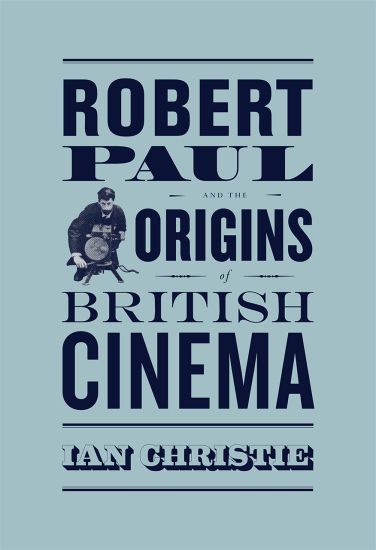
Robert Paul and the Origins of British Cinema

Robert Paul and the Origins of British Cinema

Ian Christie

University of Chicago Press
2019
pokkari
The early years of film were dominated by competition between inventors in America and France, especially Thomas Edison and the Lumiere brothers . But while these have generally been considered the foremost pioneers of film, they were not the only crucial figures in its inception. Telling the story of the white-hot years of filmmaking in the 1890s, Robert Paul and the Origins of British Cinema seeks to restore Robert Paul, Britain's most important early innovator in film, to his rightful place. From improving upon Edison's Kinetoscope to cocreating the first movie camera in Britain to building England's first film studio and launching the country's motion-picture industry, Paul played a key part in the history of cinema worldwide. It's not only Paul's story, however, that historian Ian Christie tells here. Robert Paul and the Origins of British Cinema also details the race among inventors to develop lucrative technologies and the jumbled culture of patent-snatching, showmanship, and music halls that prevailed in the last decade of the nineteenth century. Both an in-depth biography and a magnificent look at early cinema and fin-de-siecle Britain, Robert Paul and the Origins of British Cinema is a first-rate cultural history of a fascinating era of global invention, and the revelation of one of its undervalued contributors.
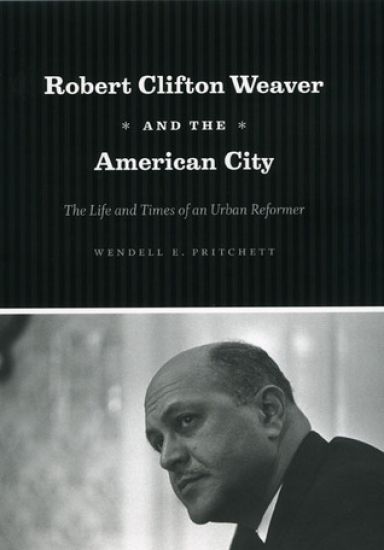
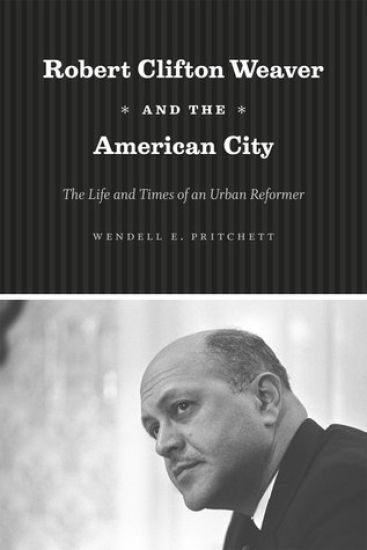
Robert Clifton Weaver and the American City

Robert Clifton Weaver and the American City

Wendell E. Pritchett

University of Chicago Press
2014
nidottu
From his role as Franklin Roosevelt's "negro advisor" to his appointment under Lyndon Johnson as the first secretary of Housing and Urban Development, Robert Clifton Weaver was one of the most influential domestic policy makers and civil rights advocates of the twentieth century. This volume, the first biography of the first African American to hold a cabinet position in the federal government, rescues from obscurity the story of a man whose legacy continues to affect American race relations and the cities in which they largely play out. Tracing Weaver's career through the creation, expansion, and contraction of New Deal liberalism, Wendell E. Pritchett illuminates his instrumental role in the birth of almost every urban initiative of the period, from public housing and urban renewal to affirmative action and rent control. Beyond these policy achievements, Weaver also founded racial liberalism, a new approach to race relations that propelled him through a series of high-level positions in public and private agencies working to promote racial cooperation in American cities. But Pritchett shows that despite Weaver's efforts to make race irrelevant, white and black Americans continued to call on him to mediate between the races - a position that grew increasingly untenable as Weaver remained caught between the white power structure to which he pledged his allegiance and the African Americans whose lives he devoted his career to improving.
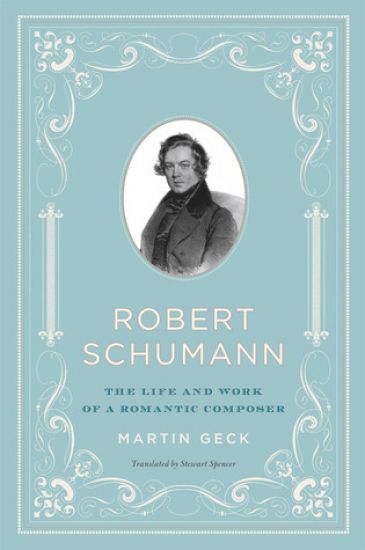
Robert Schumann

Robert Schumann

Martin Geck

University of Chicago Press
2012
sidottu
Robert Schumann (1810-56) is one of the most important and representative composers of the Romantic era. Born in Zwickau, Germany, Schumann began piano instruction at age seven and immediately developed a passion for music. When a permanent injury to his hand prevented him from pursuing a career as a touring concert pianist, he turned his energies and talents to composing, writing hundreds of works for piano and voice, as well as four symphonies and two ballets. Here acclaimed biographer Martin Geck tells the fascinating story of this multifaceted genius, set in the context of the political and social revolutions of his time. The image of Schumann, the man and the artist, that emerges in Geck's book is complex. Geck shows Schumann to be not only a major composer and music critic-he cofounded and wrote articles for the controversial Neue Zeitschrift fur Musik-but also a political activist, the father of eight children, and an addict of mind-altering drugs. Through hard work and determination bordering on the obsessive, Schumann was able to control his demons and channel the tensions that seethed within him into music that mixes the popular and esoteric, resulting in compositions that require the creative engagement of reader and listener. The more we know about a composer, the more we hear his personality in his music, even if it is above all on the strength of his work that we love and admire him. Martin Geck's book on Schumann is not just another rehashing of Schumann's life and works, but an intelligent, personal interpretation of the composer as a musical, literary, and cultural personality.
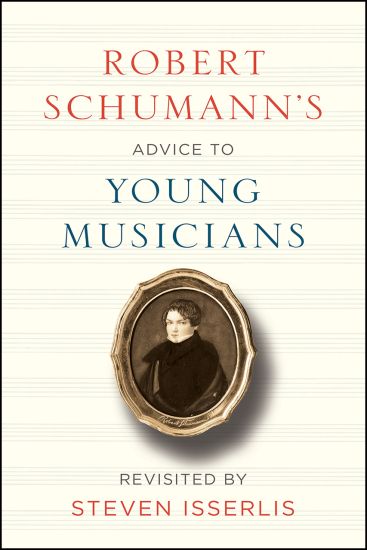
Robert Schumann's Advice to Young Musicians: Revisited by Steven Isserlis
If everybody were to play first violin, we could not have an orchestra. Therefore respect each musician in his own place. There is no end to learning. Originally published in1850, Advice to Young Musicians: Musical Rules for Home and in Life offered composer Robert Schumann's (1810-56) combination of practical advice and poetic words of wisdom for young people beginning their musical education. Presented in aphorisms and short paragraphs, the book's insights remain as valuable today as when it was written. Recognizing the continued resonance of Schumann's words, world-renowned cellist Steven Isserlis, himself a writer of children's books and many articles for young musicians, set out to rescue the work from history. Here, in this beautiful gift edition, he revisits Schumann's work and contributes his own contemporary counsel for musicians and music lovers. For this edition, Isserlis retranslated Schumann's text and arranged it into four thematic sections: "On being a musician," "Playing," "Practicing," and "Composing." Each page is decoratively designed, and accompanying Schumann's original quotation are Isserlis's thoughtful and often humorous glosses. The book concludes with Isserlis's own reflections on his life as a musician and performer: "My Own Bits of Advice (For What They're Worth)." The result is a unique and thought-provoking book that will be treasured by aspiring musicians of any age.
Robert Clifton Weaver and the American City

Robert Clifton Weaver and the American City

Wendell E. Pritchett

University of Chicago Press
2008
sidottu
From his role as FDR's 'negro advisor' to his appointment under LBJ as the first secretary of Housing and Urban Development, Robert Clifton Weaver was one of the most influential domestic policy makers and civil rights advocates of the twentieth century. This volume, the first biography of the first African American to hold a cabinet position in the federal government, rescues from obscurity the story of a man whose legacy continues to impact American race relations and the cities in which they largely play out.Tracing Weaver's career through the creation, expansion, and contraction of New Deal liberalism, Wendell Pritchett illuminates his instrumental role in the birth of almost every urban initiative of the period, from public housing and urban renewal to affirmative action and rent control. Beyond these policy achievements, Weaver also founded racial liberalism, a new approach to race relations that propelled him through a series of high-level positions in which he worked to promote racial cooperation in American cities. But Pritchett shows that despite Weaver's efforts to make race irrelevant, white and black Americans continued to call on him to mediate between the races - a position that grew increasingly untenable as Weaver remained caught between the white power structure to which he pledged his allegiance and the African Americans whose lives he devoted his career to improving.A crucial and largely unknown chapter in the history of American liberalism, this long-overdue biography adds a new dimension to our understanding of racial and urban struggles and illuminates the complex role of the black elite in modern U.S. history.