Kirjahaku
Etsi kirjoja tekijän nimen, kirjan nimen tai ISBN:n perusteella.
1000 tulosta hakusanalla Robin Leaver
'Hank Rubin translates complex, contextually driven processes into digestible bites. The text is compelling, refreshing, and a joy to read'-Chris Ferguson, Program AssociateSouthwest Educational Development Laboratory'Rubin's book provides an eloquent and practical articulation of collaborative leadership and its potential to improve the partnership of communities and public schools'-Wendy Caszatt-Allen, Teacher and Author, Mid-Prairie Middle School, Kalona, IAWritten to inspire and support educators in becoming transformative, collaborative leaders, this updated edition of a best-selling resource demonstrates how educators can use collaboration skills to help shape school culture and build and maintain strong schoolwide relationships that contribute meaningfully to students' learning. Visionary Hank Rubin provides a broad overview of collaboration in education and lays the foundation for working with colleagues, establishing strong partnerships, and cooperating with students to achieve goals. Updated with the latest research and filled with practical examples, this resource examines 14 phases of collaboration and helps educators: - Understand the knowledge, skills, and personal characteristics necessary to foster successful collaboration- Nurture relationships between students and the institutions and individuals associated with learning- Build collaborative community relationships that support an instructional agenda- Incorporate the study of collaboration and related reflective activities into leadership practiceBy applying these vital principles of collaboration to their work, educators will discover what a school of collaborative excellence is capable of achieving.
Leadership and Negotiation in the Middle East
Barbara Kellerman; Jeffrey Rubin
Praeger Publishers Inc
1988
sidottu
A pioneering contribution to the study of negotiation theory, this volume takes as its central organizing principle the thesis that national leaders are generally the key actors in international politics and conflict management. Therefore, the editors argue, efforts to contain, manage, and reduce international conflicts through negotiation will be significantly enhanced through the availability of detailed information about the leading players. The papers collected here are deigned to evaluate this hypothesis through a detailed analysis of the major national leaders during the events of June-September 1982 in Lebanon, which began with the Israeli invasion of Lebanon and culminated in the establishment of an international peace-keeping force in West Beirut.
The Steward Leader – Transforming People, Organizations and Communities
R. Scott Rodin
Inter-Varsity Press,US
2010
nidottu
Coach. Entrepreneur. Mentor. Executive. Servant. Visionary. Everyone has a different idea of what a leader should be. How can any one person be everything? Scott Rodin brings unity and clarity to this confusing, demanding picture of leadership. He offers a comprehensive model that brings together a biblical understanding of holistic stewardship with the best in leadership studies. Whether in churches, not-for-profit ministries or in business the need for sound leadership is readily apparent. Drawing on his years of experience in development and fundraising and his extensive theological training, Scott Rodin offers a new paradigm--a transformational approach to leadership that is biblically sound, theologically rich and practically compelling.
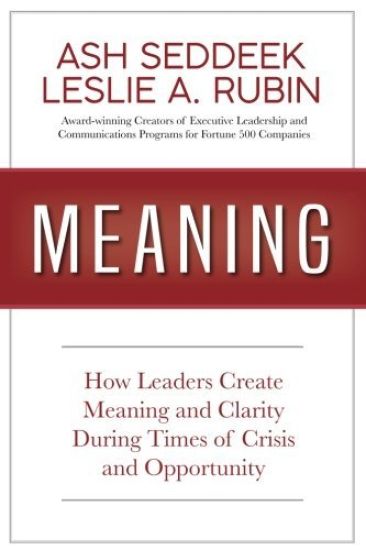
Meaning: How Leaders Create Meaning and Clarity During Times of Crisis and Opportunity
Leslie a. Rubin; Ash Seddeek
Incredible Messages Press
2017
nidottu
Leadership and pivotal moments go hand-in-hand. This book explores how 12 diverse leaders effectively handled times of crisis and opportunity. The authors conducted in-depth interviews to learn how these proven leaders effectively handled times of crisis and opportunity. In the process, they uncovered 10 leadership behaviors that work together to create meaning and inspire followers to give the extra effort need to succeed in challenging times. This book isn't about theory; it's about the leadership communication skills you need to become an exemplary leader.
The 7 Heavenly Virtues of Leadership
Carolyn (EDT) Barker; Robyn (EDT) Coy
McGraw-Hill Professional
2003
pokkari
The fourth in the successful Management Today series will explore seven of the virtues of modern leadership. The seven contributors of this book will be commentators who have expanded the boundaries of Australian business and management thought and debate to include both personal and social territories. Contributors include Fabian Dattner, Ray Weeks, Wendy McCarthy, Colin Benjamin, Mark Strom, Charles Kovess and Dexter Dunphy. Each contributor will explore the many facets of one virtue: why is it a virtue? why should we be thankful for this leadership virtue? what does it mean for the community, the organisation and the individual? what would the world be like without this virtue? who possesses it and why? can it be learned or taught? While each chapter may touch on theory, the main thrust will be the contributor's personal thoughts and reflections on leadership. It will be written in the first person, in a lively and accessible style, and will include real-life anecdotes and observations that illustrate each of the leadership virtues and their role in modern organisational life.
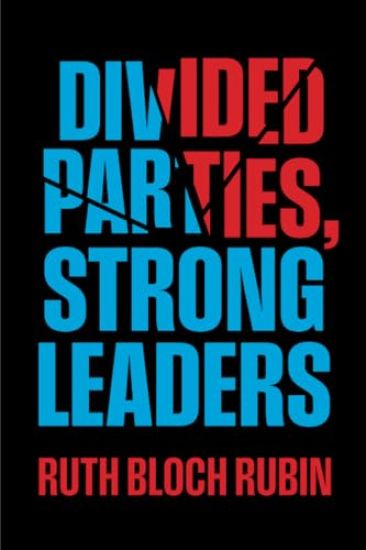
Drawing on nearly a century of legislative history, this careful account invites readers to think anew about when, why, and how leaders of divided parties wield power in Congress. For decades, legislative scholars have viewed party divisions as critical constraints on congressional leadership. The more a party’s rank and file disagree with one another, the weaker their leaders are predicted to be; as member preferences converge, leader power is thought to increase. In a powerful corrective to this prevailing view, Ruth Bloch Rubin argues that party divisions are not inherently limiting. Divided Parties, Strong Leaders highlights and examines variation in how members of party factions choose to work together. She shows that leaders of divided parties are well positioned to overcome, and even draw strength from, their divided ranks when the collaborative efforts of their coalitions’ competing factions are evenly matched. By contrast, their capacity to get what they want is more limited when one faction has out-collaborated its competition. Presenting detailed case studies of some of the most storied leaders of the postwar Congress, including Speakers Sam Rayburn and Nancy Pelosi, Bloch Rubin analyzes the factional configuration each leader encountered and explains why it mattered for their exercise of power.
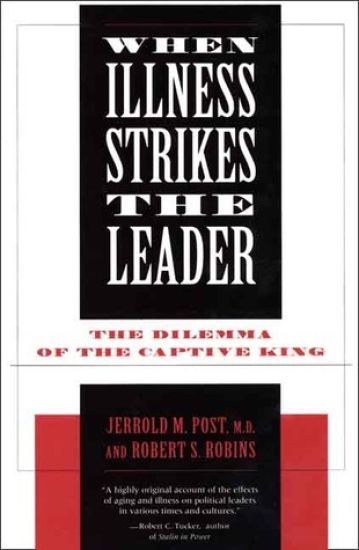
The illness or disability of a world leader can change the course of history. When Lenin became too infirm to remove Stalin from a position of power, when the shah of Iran's terminal cancer was kept secret from fellow Iranians and foreign supporters until Ayatollah Khomeini's Islamic revolution had succeeded, the political consequences were monumental. In this absorbing book, two experts in political psychology reveal how the infirmities of leaders have affected their own societies and the broader course of world events. Drawing on a wide range of examples, including Mad King Ludwig of Bavaria, Woodrow Wilson, Adolf Hitler, Idi Amin, Deng Xiao-peng, Ferdinand Marcos, Franklin Delano Roosevelt, and Menachem Begin, Dr. Jerrold M. Post and Robert S. Robins explore the impact of physical and mental illness on political leadership.Post and Robins investigate the effects of illness on the leader, his inner circle, his followers, and the political system itself. They discuss such thought-provoking topics as:—how the nature of the illness affects decisionmaking;—how mortal illness can make a leader more determined to make his mark on history;—how a leader's disability can be hidden from the public in every political system;—the effects of prescribed drugs and substance abuse on leadership behavior;—the conflicted role and ethical dilemmas of physicians who care for the powerful;—and how the demands and privileges of high office compromise the quality of medical care.In closed societies where there is no clear mechanism of succession, say the authors, the ailing or aging leader and his close advisers can become locked in a fatal embrace, each dependent upon the other for survival: a captive king and his captive court. In the absence of clear rules for determining when a leader is disabled and should be replaced and how a successor will be chosen, illness in high office can be highly destabilizing. Post and Robins's book will be engrossing—and timely—reading for all those interested in leadership, history, and the political process.
Growing Yourself As A Leader
Brian Sutton; Robina Chatham
BCS, The Chartered Institute for IT
2018
nidottu
The development of technical leadership capabilities is often overlooked as a training requirement in organisations but these are key to business success. In this book, management experts Brian Sutton and Robina Chatham describe six management techniques to help you develop your leadership capabilities and grow as a leader. With real life examples, tips and mini exercises, you'll also boost your soft skills as you progress your personal and professional development.
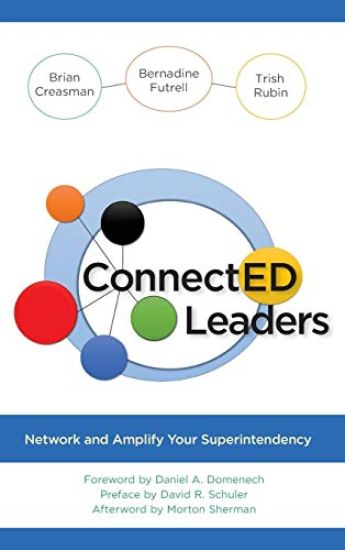
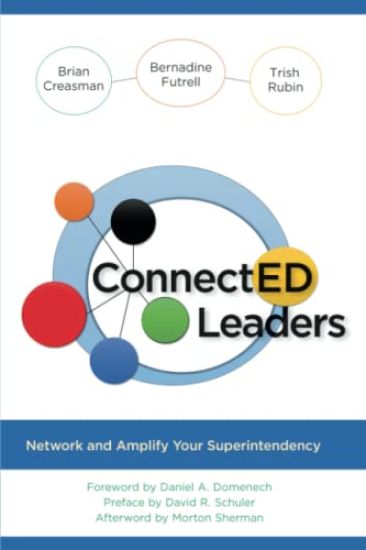
ConnectED Leaders is a call to action for superintendents and school system leaders to grow lead and engage in professional leadership networks. The book is based on principles developed in our professional roles as authors, a district superintendent, educational researcher, non-profit leader, leadership development expert, and a K-16 branding consultant for education and business and our personal roles and as friends, siblings, co-workers and parents. The position we claim in highlighting professional leadership networks is grounded in our work and experience. Our belief in professional leadership networks leads us to collaborate upon the superintendency’s need to employ a strategy of growing professional networks, a first book in today's literature. We intend to help superintendents, novice or veteran, and other school system leaders recognize the importance of collaboration through professional leadership networks at a critical point in public education. With the call for more leadership collaboration and less isolation in today’s schools, we offer school system leaders essential principles of networking, that will help them develop and engage in strategic opportunities of collaboration as a means to strengthen and improve the superintendency, their school district organization, and their students’ success.