Kirjojen hintavertailu. Mukana 11 627 463 kirjaa ja 12 kauppaa.

Kirjahaku

Etsi kirjoja tekijän nimen, kirjan nimen tai ISBN:n perusteella.

1000 tulosta hakusanalla Roger L H Dennis; Peter B Hardy

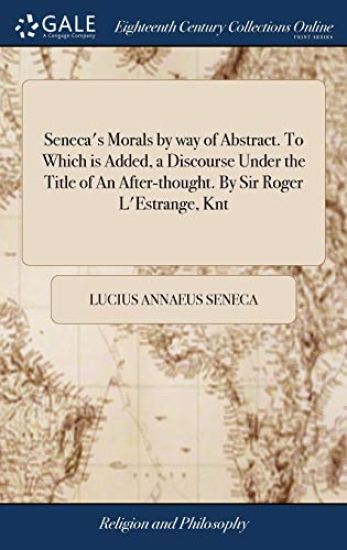
Seneca's Morals by Way of Abstract. to Which Is Added, a Discourse Under the Title of an After-Thought. by Sir Roger l'Estrange, Knt
The 18th century was a wealth of knowledge, exploration and rapidly growing technology and expanding record-keeping made possible by advances in the printing press. In its determination to preserve the century of revolution, Gale initiated a revolution of its own: digitization of epic proportions to preserve these invaluable works in the largest archive of its kind. Now for the first time these high-quality digital copies of original 18th century manuscripts are available in print, making them highly accessible to libraries, undergraduate students, and independent scholars.The Age of Enlightenment profoundly enriched religious and philosophical understanding and continues to influence present-day thinking. Works collected here include masterpieces by David Hume, Immanuel Kant, and Jean-Jacques Rousseau, as well as religious sermons and moral debates on the issues of the day, such as the slave trade. The Age of Reason saw conflict between Protestantism and Catholicism transformed into one between faith and logic -- a debate that continues in the twenty-first century.++++The below data was compiled from various identification fields in the bibliographic record of this title. This data is provided as an additional tool in helping to insure edition identification: ++++British LibraryT134872The imprint may be false?.London: printed for John Thompson, 1764. 26],354p.; 12
A Treatise of Clemency by Lucius Annæus Seneca the Philosopher. Address'd to Nero in the Beginning of his Reign. Done Into English by Sir Roger L'Estrange
The 18th century was a wealth of knowledge, exploration and rapidly growing technology and expanding record-keeping made possible by advances in the printing press. In its determination to preserve the century of revolution, Gale initiated a revolution of its own: digitization of epic proportions to preserve these invaluable works in the largest archive of its kind. Now for the first time these high-quality digital copies of original 18th century manuscripts are available in print, making them highly accessible to libraries, undergraduate students, and independent scholars.The Age of Enlightenment profoundly enriched religious and philosophical understanding and continues to influence present-day thinking. Works collected here include masterpieces by David Hume, Immanuel Kant, and Jean-Jacques Rousseau, as well as religious sermons and moral debates on the issues of the day, such as the slave trade. The Age of Reason saw conflict between Protestantism and Catholicism transformed into one between faith and logic -- a debate that continues in the twenty-first century.++++The below data was compiled from various identification fields in the bibliographic record of this title. This data is provided as an additional tool in helping to insure edition identification: ++++British LibraryT122170Edinburgh: printed by William Adams junior, in the year 1717, and sold at the printing-house opposite to the Trone-Church, 1717]. iv,16p.; 4
A Compleat Collection of the Genuine Works of Flavius Josephus, Faithfully Translated From the Original Greek, and Compared With the Translation of Sir Roger L'Estrange, Knight
The 18th century was a wealth of knowledge, exploration and rapidly growing technology and expanding record-keeping made possible by advances in the printing press. In its determination to preserve the century of revolution, Gale initiated a revolution of its own: digitization of epic proportions to preserve these invaluable works in the largest archive of its kind. Now for the first time these high-quality digital copies of original 18th century manuscripts are available in print, making them highly accessible to libraries, undergraduate students, and independent scholars.The Age of Enlightenment profoundly enriched religious and philosophical understanding and continues to influence present-day thinking. Works collected here include masterpieces by David Hume, Immanuel Kant, and Jean-Jacques Rousseau, as well as religious sermons and moral debates on the issues of the day, such as the slave trade. The Age of Reason saw conflict between Protestantism and Catholicism transformed into one between faith and logic -- a debate that continues in the twenty-first century.++++The below data was compiled from various identification fields in the bibliographic record of this title. This data is provided as an additional tool in helping to insure edition identification: ++++British LibraryT106245Titlepage in red and black. The last 16p. contain an index.London: printed and sold by J. Brindley, J. Worral, O. Payne, J. Jolliffe, W. Shropshire, C. Corbett, and Mr. Norton; as likewise by Messieurs Rogers and Cooper, 1736. 5],8-774, 16]p., plates: port., maps; 2
A Hymn to Confinement. Written by the Author of The Case of the Church of England's Memorial Fairly Stated, &c. While in Durance. ... To Which is Added, a Poem on the Same Subject by the Famous Sir Roger L'Estrange,
The 18th century was a wealth of knowledge, exploration and rapidly growing technology and expanding record-keeping made possible by advances in the printing press. In its determination to preserve the century of revolution, Gale initiated a revolution of its own: digitization of epic proportions to preserve these invaluable works in the largest archive of its kind. Now for the first time these high-quality digital copies of original 18th century manuscripts are available in print, making them highly accessible to libraries, undergraduate students, and independent scholars.Western literary study flows out of eighteenth-century works by Alexander Pope, Daniel Defoe, Henry Fielding, Frances Burney, Denis Diderot, Johann Gottfried Herder, Johann Wolfgang von Goethe, and others. Experience the birth of the modern novel, or compare the development of language using dictionaries and grammar discourses. ++++The below data was compiled from various identification fields in the bibliographic record of this title. This data is provided as an additional tool in helping to insure edition identification: ++++British LibraryT036936The author of 'The case of the Church of England's memorial .. ' = William Pittis. Sometimes attributed to Charles Leslie.London: printed in the year, 1705. 4]
Parkinson Disease

Parkinson Disease

Roger L. Albin

OXFORD UNIVERSITY PRESS INC
2022
sidottu
Parkinson Disease is a comprehensive introduction to the biology and clinical features of Parkinson disease (PD). This book is aimed at clinicians in training, general neurologists seeking a useful guide to PD, and scientists seeking an overview of clinical aspects of PD. Topics covered include nosology of PD, PD epidemiology, pathology and pathophysiology of PD, and theories of PD pathogenesis. Clinical features, including the many non-motor features, natural history of disease progression, clinical pharmacology, and management of PD receive coverage. Important themes are heterogeneity of PD, the multi-focal nature of PD pathology, the diversity of clinical features, dopaminergic signaling and the impacts of dopaminergic deficiency, the importance of non-motor features, limitations of existing treatment modalities, and the necessity of approaching PD as a multi-system disorder. The description and discussion of the many aspects of Parkinson disease (PD) is dogged by the fact that PD is an ambiguous concept. This book intends to be a useful overview, bridging the gap between general textbooks and specific topical reviews.
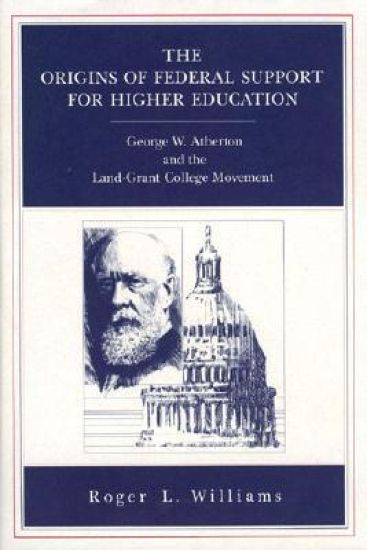
The Origins of Federal Support for Higher Education

The Origins of Federal Support for Higher Education

Roger L. Williams

Pennsylvania State University Press
1991
sidottu
The Origins of Federal Support for Higher Education revises the traditional interpretation of the land-grant college movement, whose institutions were brought into being by the 1862 Morrill Act to provide for "the liberal and practical education of the industrial classes." Rather than being the inevitable consequence of the unfolding dynamic of institutional and socioeconomic forces, Williams argues, it was the active intervention and initiative of a handful of educational leaders that secured the colleges' future—above all, the activities of George W. Atherton.For nearly three decades, Atherton, who was the seventh president of the Pennsylvania State University, worked to secure consistent federal financial support for the colleges, which in their early years received little assistance from the states they were designed to benefit. He also helped to develop the institutions as comprehensive "national" universities grounded in the liberal arts and sciences—a conception that countered the prevailing view of the colleges as mainly agricultural schools.Atherton became the prime mover in the campaign to enact the 1887 Hatch Act, which encouraged the establishment of agricultural experiment stations at land-grant colleges. The act marked the federal government's first effort to provide continuous funding to research units associated with higher education institutions. At the same time, Atherton played a key role in the formation of the first association of such institutions: The Association of American Agricultural Colleges and Experiment Stations. It was the Association that provided the critical mass needed to lobby Congress successively and to approach the many opportunities and threats the land-grant colleges faced during the 1885–1906 period.Atherton was also deeply involved in the campaign for the Morrill Act of 1890, which provided long-sought annual appropriations to land-grant colleges for a broad range of academic programs and encouraged steady growth in state support during the 1890s.Roger Williams traces the motives and tactics behind a series of laws that made the federal government irreversibly committed to funding higher education and scientific research and provides rich new insights into the complexities, polarities, and inherent contradictions of the history of the American land-grant movement.
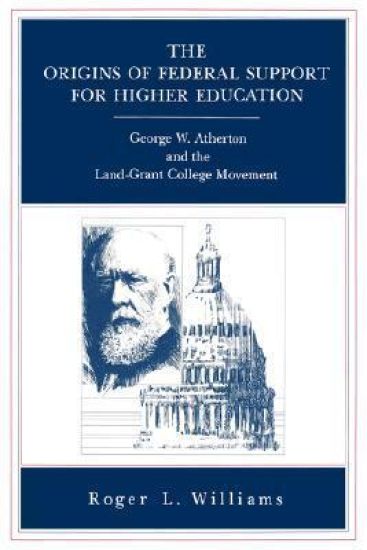
The Origins of Federal Support for Higher Education

The Origins of Federal Support for Higher Education

Roger L. Williams

Pennsylvania State University Press
1991
pokkari
The Origins of Federal Support for Higher Education revises the traditional interpretation of the land-grant college movement, whose institutions were brought into being by the 1862 Morrill Act to provide for "the liberal and practical education of the industrial classes." Rather than being the inevitable consequence of the unfolding dynamic of institutional and socioeconomic forces, Williams argues, it was the active intervention and initiative of a handful of educational leaders that secured the colleges' future—above all, the activities of George W. Atherton.For nearly three decades, Atherton, who was the seventh president of the Pennsylvania State University, worked to secure consistent federal financial support for the colleges, which in their early years received little assistance from the states they were designed to benefit. He also helped to develop the institutions as comprehensive "national" universities grounded in the liberal arts and sciences—a conception that countered the prevailing view of the colleges as mainly agricultural schools.Atherton became the prime mover in the campaign to enact the 1887 Hatch Act, which encouraged the establishment of agricultural experiment stations at land-grant colleges. The act marked the federal government's first effort to provide continuous funding to research units associated with higher education institutions. At the same time, Atherton played a key role in the formation of the first association of such institutions: The Association of American Agricultural Colleges and Experiment Stations. It was the Association that provided the critical mass needed to lobby Congress successively and to approach the many opportunities and threats the land-grant colleges faced during the 1885–1906 period.Atherton was also deeply involved in the campaign for the Morrill Act of 1890, which provided long-sought annual appropriations to land-grant colleges for a broad range of academic programs and encouraged steady growth in state support during the 1890s.Roger Williams traces the motives and tactics behind a series of laws that made the federal government irreversibly committed to funding higher education and scientific research and provides rich new insights into the complexities, polarities, and inherent contradictions of the history of the American land-grant movement.
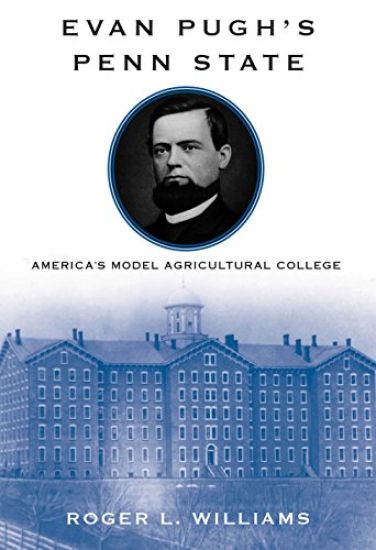
Evan Pugh’s Penn State

Evan Pugh’s Penn State

Roger L. Williams

Pennsylvania State University Press
2018
sidottu
When Evan Pugh became the first president of Pennsylvania’s Farmers’ High School—later to be known as The Pennsylvania State University—the small campus was in disrepair and in dire need of leadership. Pugh was young, barely into his 30s, but he was energetic, educated, and visionary. During his tenure as president he molded the school into a model institution of its kind: America’s first scientifically based agricultural college.In this volume, Roger Williams gives Pugh his first book-length biographical treatment. Williams recounts Pugh’s short life and impressive career, from his early days studying science in the United States and Europe to his fellowship in the London Chemical Society, during which he laid the foundations of the modern ammonium nitrate fertilizer industry, and back to Pennsylvania, where he set about developing “upon the soil of Pennsylvania the best agricultural college in the world” and worked to build an American academic system mirroring Germany’s state-sponsored agricultural colleges. This last goal came to fruition with the passage of the Morrill Act in 1862, just two years prior to Pugh’s death. Drawing on the scientist-academic administrator’s own writings and taking a wide focus on the history of higher education during his lifetime, Evan Pugh’s Penn State tells the compelling story of Pugh’s advocacy and success on behalf of both Penn State and land-grant colleges nationwide.Despite his short life and career, Evan Pugh’s vision for Penn State made him a leader in higher education. This engaging biography restores Pugh to his rightful place in the history of scientific agriculture and education in the United States.
Frederick Watts and the Founding of Penn State

Frederick Watts and the Founding of Penn State

Roger L. Williams

Pennsylvania State University Press
2021
sidottu
Frederick Watts came to prominence during the nineteenth century as a lawyer and a railroad company president, but his true interests lay in agricultural improvement and in raising the economic, social, and political standing of Pennsylvania’s farmers. After being elected founding president of The Pennsylvania State Agricultural Society in 1851, he used his position to advocate vigorously for the establishment of an agricultural college that would employ science to improve farming practices. He went on to secure the charter for the Farmers’ High School of Pennsylvania, which would eventually become the Pennsylvania State University.This biography explores Watts’s role in founding and leading Penn State through its formative years. Watts adroitly directed the school as it was sited, built, and financed, opening for students in 1859. He hired the brilliant Evan Pugh as founding president, who, with Watts, quickly made it the first successful agricultural college in America. But for all his success in launching the institution, Watts nearly brought it to the brink of closure through a series of ruinous presidential appointments that led to an abandonment of the land-grant focus on agriculture and engineering.Watts’s influence in the agricultural modernization movement and his impact on land-grant education in the United States—both in his role with Penn State and later as US commissioner of agriculture—made him a leader in the history of agricultural and higher education. Roger L. Williams’s compelling biography of Watts reestablishes him in this legacy, providing a balanced analysis of his missteps and accomplishments.
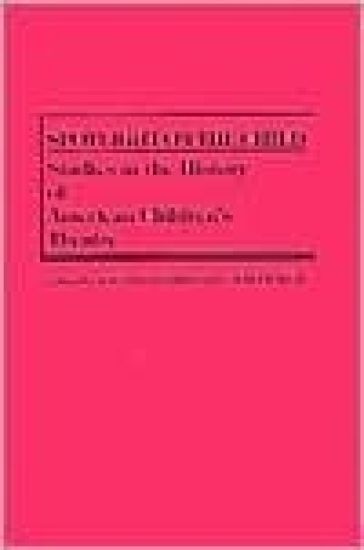
Spotlight on the Child

Spotlight on the Child

Roger L. Bedard; C. John Tolch

Praeger Publishers Inc
1989
sidottu
Although children's theatre has been a part of American culture from early times, historians have not always included it in the documentation of our theatrical heritage. Sometimes more the product of the educator and the social worker than the producer or the theatre artist, theatre with and for young people has been neglected in traditional theatre history studies; yet as early as 1792 Charles Stearns began creating his plays and dialogues for school children. The traditions and success of eighteenth-century school drama inspired social workers to explore similar activities in their playground and settlement house work, and at the end of the nineteenth and the beginning of the twentieth century, professional producers began experimenting more vigorously with the commercial possibilities of children as audience. This book is a collection of essays by leading authorities in the field on various aspects of the historical development of children's theatre in the United States. The discussions focus on the marked differences that have occurred from group to group and examine the ways in which children's theatre began to find definition, as theorists and writers such as Winifred Ward and Charlotte Chorpenning strove to articulate the differences between the child as participant in creative drama and the child as audience member. The introduction provides a review of early concepts and the evolution of present-day thought, and the essays illuminate facets of the rich and varied history of American theatre with and for children. This trailblazing study will serve as the beginning of a fuller understanding of the field and a challenge to others to document the missing pieces.
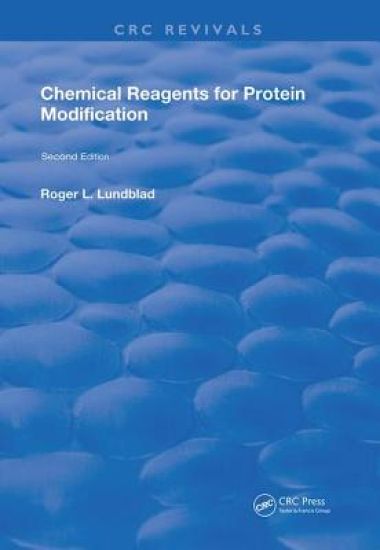
Chemical Reagents for Protein Modification
First published in 1991, Chemical Reagents for Protein Modification, 2nd Edition provides a unique combination of theoretical and practical considerations for the use of chemical reagents for site-specific modification of proteins. The book is divided into three sections, with the first section describing general techniques, including information on the organic chemistry of the various modification reactions; the separation and characterization of site-specific modified proteins, including applications to proteins separated by electrophoresis followed by blotting; the specific chemical cleavage of peptide bonds in proteins; the separation of peptides by high-performance liquid chromatography and electrophoresis; and the use of chemical reagents to assess conformational change in proteins. The second section provides an encyclopedic description of reagents and reactions for the site-specific modification of individual amino acid residues in proteins. The final section presents descriptions of the use of chemical reagents to label biologically significant sites in proteins, including enzyme active sites and the use of covalent cross-linking to measure protein-protein interactions. Particular emphasis is placed on the use of photoaffinity reagents. The book will be an extremely useful research tool for all investigators interested in the solution chemistry of proteins.
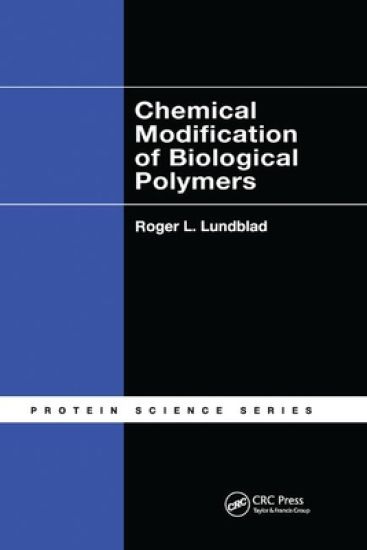
Chemical Modification of Biological Polymers
Examining the chemical modification of biological polymers and the emerging applications of this technology, Chemical Modification of Biological Polymers reflects the change in emphasis in this subsection of biotechnology from the study of protein structure and function toward applications in therapeutics and diagnostics. Highlights The basic organic chemistry of the modification proteins, nucleic acids, oligosaccharides, polysaccharides, and their applicationsNew analytical technologies used to characterize the chemical modification of biological polymersIdentification of in vivo, non-enzymatic chemical modification of biological polymersSpecific chemical modifications to generate biopharmaceutical products This book covers the basics on the organic chemistry underlying the chemical modification of biopolymers, including updates on the use of various chemical reagents. It describes the current status of chemical modification of biological polymers and emerging applications of this technology in biotechnology. These technologies are important for the manufacture of conjugate proteins used in drug delivery, for the preparation of nucleic acid microarrays, and for the preparation of hydrogels and other materials used in tissue engineering.
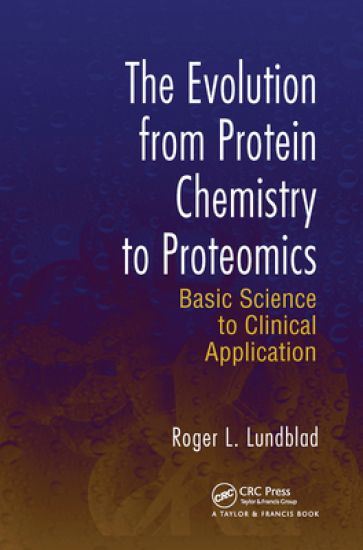
The Evolution from Protein Chemistry to Proteomics
Largely driven by major improvements in the analytical capability of mass spectrometry, proteomics is being applied to broader areas of experimental biology, ranging from oncology research to plant biology to environmental health. However, while it has already eclipsed solution protein chemistry as a discipline, it is still essentially an extension of classical protein chemistry, owing much of its maturation to prior contributions. Unfortunately, this debt is not always evident in current literature.The Evolution from Protein Chemistry to Proteomics: Basic Science to Clinical Application, in providing a different perspective than other reviews, strengthens the connection between solution protein chemistry and proteomic technology. Towards this end, Roger Lundblad, a long-time leader in protein chemistry and a scientist who has worked in both academics and industry, brings together some seemingly disparate areas into a single volume. Discussing analytical proteomics, expression proteomics, and clinical proteomics (biomarker identification), he provides coverage that is uniquely rich in detail. Lundblad applies this detail to sample preparation for proteomic analysis, including preparation from blood and tissues. He also presents specifics on the prefractionation of samples used to identify specific subproteomes such as phosphoproteomes and glycoproteomes. Comprehensive reviews are provided covering the chemical modification of proteins, including its use for chemical proteomics. Special attention is given to challenges that impede the identification, validation, and development of biomarkers into clinically useful diagnostic analytes. A bestselling author, Lundblad utilizes classical protein chemistry literature in providing an intellectual basis for proteomics that merges current concepts with the existing literature, while providing the technical detail necessary for the effective commercialization of proteomics.
Chemical Reagents for Protein Modification
The use of the chemical modification of proteins has evolved over the past 80 years, benefiting from advances in analytical, physical, and organic chemistry. Over the past 30 years, the use of chemical reagents to modify proteins has been crucial in determining the function and structure of purified proteins. This groundbreaking work is part of the foundation of emerging disciplines of proteomics, chemical biology, structure biology, and chemical proteomics.Chemical Reagents for Protein Modification, Fourth Edition provides a comprehensive review of reagents used for the chemical modification of proteins, representing a major revision of the work presented in previous editions. The completely updated Fourth Edition is substantially larger and includes five new chapters: Alkylating AgentsAcylating AgentsNitration and NitrosylationOxidationModification of Proteins with Reducing Agents There is greatly increased coverage of the chemical modification of cysteine, which is critical for bioconjugate synthesis. The chapter on reduction also provides information necessary for bioconjugate synthesis as well as for the processing of inclusion bodies. The book places emphasis on conditions that affect the specificity of the chemical modification of proteins, such as solvent and temperature. The format has been markedly revised, presenting information based on the chemical nature of the modifying material and on the amino acid residue modified. This new version has increased significance to biopharmaceuticals. Much of the information is in tabular form, which enables the rapid location of cited material.
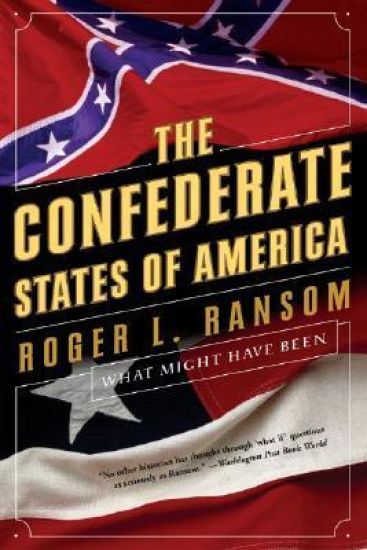
The Confederate States of America

The Confederate States of America

Roger L. Ransom

WW Norton Co
2006
nidottu
Presents a distinguished historian's theories about how America would be different if the Civil War had ended in a stalemate or a victory for the Confederacy or if Lincoln had lost the 1864 election, in a historical analysis that offers additional insight into key Civil War events. Reprint.
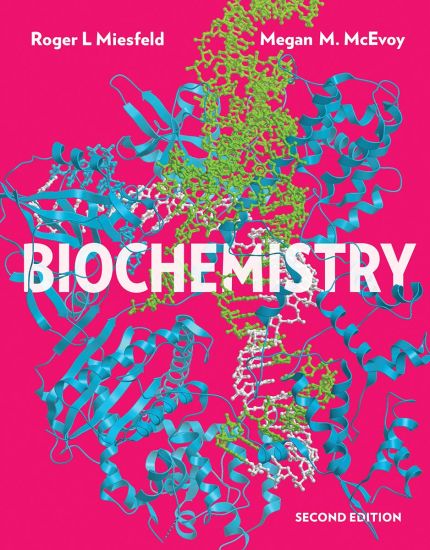
Biochemistry

Biochemistry

Roger L Miesfeld; Megan M McEvoy

WW NORTON CO
2021
muu
Drawing on more than three decades of teaching experience, Roger Miesfeld and Megan McEvoy created a book that is both a learning tool for students and a teaching tool for instructors--one that delivers exceptionally readable explanations, stunning graphics, and rigorous content. Relevant everyday biochemistry examples make clear why biochemistry matters in a way that develops students' knowledge base and critical thinking skills. The second edition includes exciting new Your Turn critical thinking pedagogy, a thoughtful balance of biology and chemistry, a compelling ebook featuring 3D molecular images, videos, animations, and more.
Biochemistry

Biochemistry

Roger L. Miesfeld; Megan M. McEvoy

W. W. Norton Company
2021
irtolehti
Drawing on more than three decades of teaching experience, Roger Miesfeld and Megan McEvoy created a book that is both a learning tool for students and a teaching tool for instructors--one that delivers exceptionally readable explanations, stunning graphics, and rigorous content. Relevant everyday biochemistry examples make clear why biochemistry matters in a way that develops students' knowledge base and critical thinking skills. The second edition includes exciting new Your Turn critical thinking pedagogy, a thoughtful balance of biology and chemistry, a compelling ebook featuring 3D molecular images, videos, animations, and more.