Kirjojen hintavertailu. Mukana 11 241 044 kirjaa ja 12 kauppaa.

Kirjahaku

Etsi kirjoja tekijän nimen, kirjan nimen tai ISBN:n perusteella.

1000 tulosta hakusanalla STEVENSON ROBERT LO

Robert Louis Stevenson

Robert Louis Stevenson

Stevenso Stevenson

Createspace Independent Publishing Platform
2017
nidottu
Prof Henry Charles Fleeming Jenkin FRS FRSE LLD (25 March 1833 - 12 June 1885) was Regius Professor of Engineering at the University of Edinburgh, remarkable for his versatility. Known to the world as the inventor of the cable car or telpherage, he was an electrician and cable engineer, economist, lecturer, linguist, critic, actor, dramatist and artist. His descendants include the engineer Charles Frewen Jenkin and through him the Conservative MPs Patrick, Lord Jenkin of Roding and Bernard Jenkin.
Robert Louis Stevenson

Robert Louis Stevenson

Claire Harman

HARPERCOLLINS PUBLISHERS
2006
pokkari
The most authoritative, comprehensive, perceptive biography of R. L. Stevenson to date, using for the first time his collected correspondence â?? which has been unavailable to all previous writers.
Robert Louis Stevenson, Science, and the Fin de Siècle
In this fascinating book, Reid examines Robert Louis Stevenson's writings in the context of late-Victorian evolutionist thought, arguing that an interest in 'primitive' life is at the heart of his work. She investigates a wide range of Stevenson's writing, including Dr Jekyll and Mr Hyde and Treasure Island as well as previously unpublished material from the Stevenson archive at Yale. Reid's interpretation offers a new way of understanding the relationship between his Scottish and South Seas work. Her analysis of Stevenson's engagement with anthropological and psychological debate also illuminates the dynamic intersections between literature and science at the fin de siècle.
Robert Louis Stevenson

Robert Louis Stevenson

University of Wisconsin Press
2006
sidottu
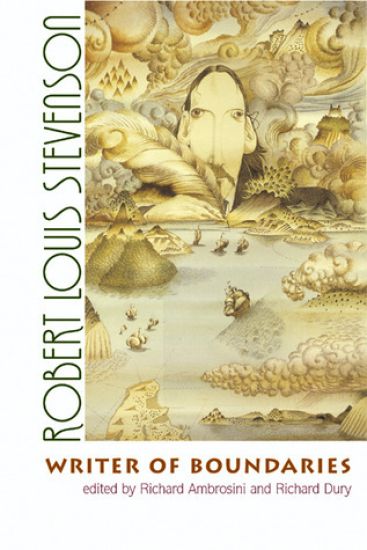
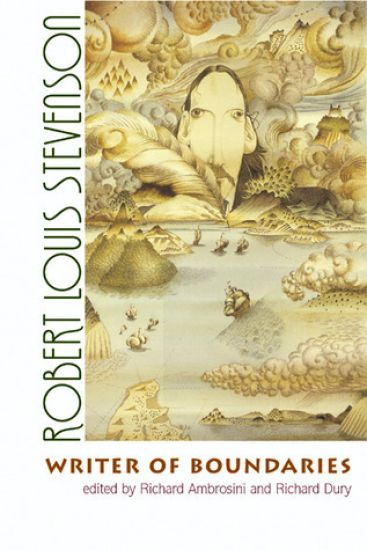
Robert Louis Stevenson: Writer of Boundaries reinstates Stevenson at the center of critical debate and demonstrates the sophistication of his writings and the present relevance of his kaleidoscopic achievements. While most young readers know Robert Louis Stevenson (1850 - 1894) as the author of ""Treasure Island"", few people outside of academia are aware of the breadth of his literary output. The contributors to ""Robert Louis Stevenson: Writer of Boundaries"" look, with varied critical approaches, at the whole range of his literary production and unite to confer scholarly legitimacy on this enormously influential writer who has been neglected by critics. As the editors point out in their Introduction, Stevenson reinvented the ""personal essay"" and the ""walking tour essay,"" in texts of ironic stylistic brilliance that broke completely with Victorian moralism. His first full-length work of fiction, ""Treasure Island"", provocatively combined a popular genre (subverting its imperialist ideology) with a self-conscious literary approach. Stevenson, one of Scotland's most prolific writers, was very effectively excluded from the canon by his twentieth-century successors, and rejected by Anglo-American Modernist writers and critics for his play with popular genres and for his non-serious metaliterary brilliance. While Stevenson's critical recognition has been slowly increasing, there have been far fewer published single-volume studies of his works than those of his contemporaries, Henry James and Joseph Conrad. ""The Robert Louis Stevenson Colloquium"", held at Gargnano, Italy, on Lake Garda in the summer of 2002, was attended by many of the world's leading Stevenson scholars.
Robert Louis Stevenson

Robert Louis Stevenson

University of Wisconsin Press
2006
nidottu
Robert Louis Stevenson: Writer of Boundaries reinstates Stevenson at the center of critical debate and demonstrates the sophistication of his writings and the present relevance of his kaleidoscopic achievements. While most young readers know Robert Louis Stevenson (1850 - 1894) as the author of ""Treasure Island"", few people outside of academia are aware of the breadth of his literary output. The contributors to ""Robert Louis Stevenson: Writer of Boundaries"" look, with varied critical approaches, at the whole range of his literary production and unite to confer scholarly legitimacy on this enormously influential writer who has been neglected by critics. As the editors point out in their Introduction, Stevenson reinvented the ""personal essay"" and the ""walking tour essay,"" in texts of ironic stylistic brilliance that broke completely with Victorian moralism. His first full-length work of fiction, ""Treasure Island"", provocatively combined a popular genre (subverting its imperialist ideology) with a self-conscious literary approach. Stevenson, one of Scotland's most prolific writers, was very effectively excluded from the canon by his twentieth-century successors, and rejected by Anglo-American Modernist writers and critics for his play with popular genres and for his non-serious metaliterary brilliance. While Stevenson's critical recognition has been slowly increasing, there have been far fewer published single-volume studies of his works than those of his contemporaries, Henry James and Joseph Conrad. ""The Robert Louis Stevenson Colloquium"", held at Gargnano, Italy, on Lake Garda in the summer of 2002, was attended by many of the world's leading Stevenson scholars.
The Letters of Robert Louis Stevenson

The Letters of Robert Louis Stevenson

Robert Louis Stevenson

Yale University Press
1994
sidottu
Robert Louis Stevenson, celebrated author of such treasured classics as Treasure Island, Kidnapped, and The Strange Case of Dr. Jekyll and Mr. Hyde, has long been recognized as a master storyteller and essayist. But he was also a delightful and instructive letter writer. Now, in the centenary of his death, Yale University Press is publishing the definitive edition of Stevenson's collected letters in eight handsomely produced volumes. The edition will contain nearly 2800 letters; only 1100 have been published before, and many of these were abridged or expurgated.The letters make fascinating reading, not only for those interested in Stevenson's life and work but also for everyone interested in nineteenth-century literature and social history.The letters in volumes I and II, which cover the years from 1854 to 1879, reveal Stevenson's struggles to achieve success as an author. We learn of his years as a student, his work, and his travels. We meet the people who became his chief correspondents for the rest of his life, including Sidney Colvin, who was to be his literary mentor and lifelong friend; the poet and critic W.E. Henley; and Fanny Osbourne, who later became Stevenson's wife. During this period Stevenson published stories and essays and two books, An Inland Voyage and Edinburgh: Picturesque Notes, and set off on the journey to the Cevennes later immortalized in his famous Travels with a Donkey.Ernest Mehew's introduction and detailed annotation place the letters in a biographical framework that gives a chronology of Stevenson's life; explains his family background; and identifies the people he met, the literary projects he planned, and the contemporary events to which he refers.
The Letters of Robert Louis Stevenson

The Letters of Robert Louis Stevenson

Robert Louis Stevenson

Yale University Press
1994
sidottu
Robert Louis Stevenson, celebrated author of such treasured classics as Treasure Island, Kidnapped, and The Strange Case of Dr. Jekyll and Mr. Hyde, has long been recognized as a master storyteller and essayist. But he was also a delightful and instructive letter writer. Now, in the centenary of his death, Yale University Press is publishing the definitive edition of Stevenson's collected letters in eight handsomely produced volumes. The edition will contain nearly 2800 letters; only 1100 have been published before, and many of these were abridged or expurgated. The letters make fascinating reading, not only for those interested in Stevenson's life and work but also for everyone interested in nineteenth-century literature and social history. The letters in volumes I and II, which cover the years from 1854 to 1879, reveal Stevenson's struggles to achieve success as an author. We learn of his years as a student, his work, and his travels. We meet the people who became his chief correspondents for the rest of his life, including Sidney Colvin, who was to be his literary mentor and lifelong friend; the poet and critic W.E. Henley; and Fanny Osbourne, who later became Stevenson's wife. During this period Stevenson published stories and essays and two books, An Inland Voyage and Edinburgh: Picturesque Notes, and set off on the journey to the Cevennes later immortalized in his famous Travels with a Donkey. Ernest Mehew's introduction and detailed annotation place the letters in a biographical framework that gives a chronology of Stevenson's life; explains his family background; and identifies the people he met, the literary projects he planned, and the contemporary events to which he refers.
The Letters of Robert Louis Stevenson

The Letters of Robert Louis Stevenson

Robert Louis Stevenson

Yale University Press
1994
sidottu
Robert Louis Stevenson, long recognized as a master storyteller and essayist, was also one of the finest and most delightful of letter writers. Yale University Press is now publishing the definitive edition of Stevenson's collected letters in eight handsomely produced volumes. The edition will contain nearly 2,800 letters, only 1,100 of which have been published before.Volumes III and IV cover the period from August 1879 to June 1884. The six hundred letters tell for the first time the full story of Stevenson's reckless journey to California as an "amateur emigrant," during which he gained a wife but wrecked his health. They describe his return to Europe and his futile search to improve his health in Scotland, Switzerland, and France and reveal interesting aspects of the writing of Treasure Island, Virginibus Puerisque (his first volume of collected essays), and many poems later collected in Underwoods and in A Child's Garden of Verses. Volumes V and VI cover the period from July 1884 to September 1890 and comprise over nine hundred letters. During this time, Stevenson lived as a chronic invalid for three years in Bournemouth, England; searched for improved health in the United States and the South Seas; and achieved fame and success with the Strange Case of Dr. Jekyll and Mr. Hyde, Kidnapped, and A Child's Garden of Verses. The letters convey Stevenson's courage and gaiety in the face of illness and his affection for his family and friends. They also reveal the devoted care given him by his wife, Fanny Stevenson.Ernest Mehew's detailed annotation provides all the background necessary to fully enjoy Stevenson's letters.
The Letters of Robert Louis Stevenson

The Letters of Robert Louis Stevenson

Robert Louis Stevenson

Yale University Press
1994
sidottu
Robert Louis Stevenson, long recognized as a master storyteller and essayist, was also one of the finest and most delightful of letter writers. Yale University Press is now publishing the definitive edition of Stevenson's collected letters in eight handsomely produced volumes. The edition will contain nearly 2,800 letters, only 1,100 of which have been published before.Volumes III and IV cover the period from August 1879 to June 1884. The six hundred letters tell for the first time the full story of Stevenson's reckless journey to California as an "amateur emigrant," during which he gained a wife but wrecked his health. They describe his return to Europe and his futile search to improve his health in Scotland, Switzerland, and France and reveal interesting aspects of the writing of Treasure Island, Virginibus Puerisque (his first volume of collected essays), and many poems later collected in Underwoods and in A Child's Garden of Verses. Volumes V and VI cover the period from July 1884 to September 1890 and comprise over nine hundred letters. During this time, Stevenson lived as a chronic invalid for three years in Bournemouth, England; searched for improved health in the United States and the South Seas; and achieved fame and success with the Strange Case of Dr. Jekyll and Mr. Hyde, Kidnapped, and A Child's Garden of Verses. The letters convey Stevenson's courage and gaiety in the face of illness and his affection for his family and friends. They also reveal the devoted care given him by his wife, Fanny Stevenson.Ernest Mehew's detailed annotation provides all the background necessary to fully enjoy Stevenson's letters.
The Letters of Robert Louis Stevenson

The Letters of Robert Louis Stevenson

Robert Louis Stevenson

Yale University Press
1995
sidottu
Robert Louis Stevenson, long recognized as a master storyteller and essayist, was also one of the finest and most delightful of letter writers. Yale University Press is now publishing the definitive edition of Stevenson's collected letters in eight handsomely produced volumes. The edition will contain nearly 2,800 letters, only 1,100 of which have been published before.Volumes III and IV cover the period from August 1879 to June 1884. The six hundred letters tell for the first time the full story of Stevenson's reckless journey to California as an "amateur emigrant," during which he gained a wife but wrecked his health. They describe his return to Europe and his futile search to improve his health in Scotland, Switzerland, and France and reveal interesting aspects of the writing of Treasure Island, Virginibus Puerisque (his first volume of collected essays), and many poems later collected in Underwoods and in A Child's Garden of Verses. Volumes V and VI cover the period from July 1884 to September 1890 and comprise over nine hundred letters. During this time, Stevenson lived as a chronic invalid for three years in Bournemouth, England; searched for improved health in the United States and the South Seas; and achieved fame and success with the Strange Case of Dr. Jekyll and Mr. Hyde, Kidnapped, and A Child's Garden of Verses. The letters convey Stevenson's courage and gaiety in the face of illness and his affection for his family and friends. They also reveal the devoted care given him by his wife, Fanny Stevenson.Ernest Mehew's detailed annotation provides all the background necessary to fully enjoy Stevenson's letters.
The Letters of Robert Louis Stevenson

The Letters of Robert Louis Stevenson

Robert Louis Stevenson

Yale University Press
1995
sidottu
Robert Louis Stevenson, long recognized as a master storyteller and essayist, was also one of the finest and most delightful of letter writers. Yale University Press is now publishing the definitive edition of Stevenson's collected letters in eight handsomely produced volumes. The edition will contain nearly 2,800 letters, only 1,100 of which have been published before.Volumes III and IV cover the period from August 1879 to June 1884. The six hundred letters tell for the first time the full story of Stevenson's reckless journey to California as an "amateur emigrant," during which he gained a wife but wrecked his health. They describe his return to Europe and his futile search to improve his health in Scotland, Switzerland, and France and reveal interesting aspects of the writing of Treasure Island, Virginibus Puerisque (his first volume of collected essays), and many poems later collected in Underwoods and in A Child's Garden of Verses. Volumes V and VI cover the period from July 1884 to September 1890 and comprise over nine hundred letters. During this time, Stevenson lived as a chronic invalid for three years in Bournemouth, England; searched for improved health in the United States and the South Seas; and achieved fame and success with the Strange Case of Dr. Jekyll and Mr. Hyde, Kidnapped, and A Child's Garden of Verses. The letters convey Stevenson's courage and gaiety in the face of illness and his affection for his family and friends. They also reveal the devoted care given him by his wife, Fanny Stevenson.Ernest Mehew's detailed annotation provides all the background necessary to fully enjoy Stevenson's letters.
The Letters of Robert Louis Stevenson

The Letters of Robert Louis Stevenson

Robert Louis Stevenson

Yale University Press
1995
sidottu
The publication of Volumes VII and VIII completes this major edition of the letters of Robert Louis Stevenson, an edition comprising 2,800 letters, almost two-thirds of which have never been in print before.These volumes contain some 560 letters that provide a vivid picture of the last four years of Stevenson's life, from 1890 to 1894. Stevenson spent these years in Samoa, where he had gone to improve his health. We learn a great deal about Stevenson's exile in Samoa: the early pioneering days during the establishment of the Vailima Plantation; his life as the head of a large household composed of his wife, Fanny, her two children, his mother, native house servants, and estate workers; his hospitality to native Samoan chiefs and to many white visitors; his passionate involvement in local politics; and his literary work--including David Balfour, the sequel to Kidnapped, and Weir of Hermiston, a masterpiece that he died before completing.Ernest Mehew's detailed annotation elucidates the complications of the Samoan background and provides all the information necessary to enjoy Stevenson's letters to the full.
The Letters of Robert Louis Stevenson

The Letters of Robert Louis Stevenson

Robert Louis Stevenson

Yale University Press
1995
sidottu
The publication of Volumes VII and VIII completes this major edition of the letters of Robert Louis Stevenson, an edition comprising 2,800 letters, almost two-thirds of which have never been in print before.These volumes contain some 560 letters that provide a vivid picture of the last four years of Stevenson's life, from 1890 to 1894. Stevenson spent these years in Samoa, where he had gone to improve his health. We learn a great deal about Stevenson's exile in Samoa: the early pioneering days during the establishment of the Vailima Plantation; his life as the head of a large household composed of his wife, Fanny, her two children, his mother, native house servants, and estate workers; his hospitality to native Samoan chiefs and to many white visitors; his passionate involvement in local politics; and his literary work--including David Balfour, the sequel to Kidnapped, and Weir of Hermiston, a masterpiece that he died before completing.Ernest Mehew's detailed annotation elucidates the complications of the Samoan background and provides all the information necessary to enjoy Stevenson's letters to the full.
Selected Letters of Robert Louis Stevenson

Selected Letters of Robert Louis Stevenson

Robert Louis Stevenson

Yale University Press
2001
pokkari
Millions of readers throughout the world continue to enjoy Treasure Island, Dr. Jekyll and Mr. Hyde, A Child’s Garden of Verses, and other books by Robert Louis Stevenson (1850-1894). A celebrated author in many different fields of literature, Stevenson is also recognized as a highly engaging and prolific correspondent: he penned over 2,800 letters, which are contained in eight critically acclaimed volumes published by Yale University Press. In this book, 317 of Stevenson’s most interesting and revealing letters represent each stage of his mature life. With a linking narrative and full annotation, Ernest Mehew sets the letters in the context of Stevenson’s remarkable life.Beginning with the days of his troubled youth in Edinburgh, Stevenson’s letters go on to tell of his love for Frances Sitwell, a beautiful, older married woman; a reckless journey to California in pursuit of Fanny Osbourne, the woman who became his wife; their worldwide but vain search for a healthy place to live; and a period of adventure in the South Seas, where Stevenson wrote some of his best work and became passionately involved in Samoan life. The letters show the author’s zest for living despite daunting illnesses, his struggles with his own writing, his literary tastes, and his affection for his friends. Stevenson writes in many moods, ranging from playful and witty to deeply serious. Better than any biography ever could, these letters in Stevenson’s own words tell the real story of his life.
Robert Louis Stevenson and the Appearance of Modernism
Despite attracting the admiration of Modernists like Nabokov and Borges, Stevenson remains for many an apologist for the lost world of the romance. This is not only to misread and simplify his fiction, it is greatly to undervalue his lively, forward-looking literary essays. Strenously resisting the authority of the literary 'fathers' (though haunted by the complexities of paternity), Stevenson reveals strong affinities with emergent Modernism. It is from this perspective that Alan Sandison's latest book (the first to appear for nearly thirty years) conducts a lively and readable re-examination of this often underrated writer.
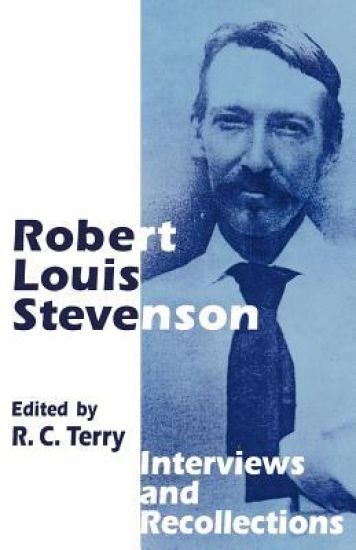
Robert Louis Stevenson

Robert Louis Stevenson

Palgrave Macmillan
1995
nidottu
Amongst the classics of children's literature, Treasure Island and Kidnapped remain as popular today as ever. And in recent years, there has been a wave of fresh enthusiasm for the author of these novels, with the publication of several new biographies and collections of his letters. Stevenson's reputation has soared and his travel writing is now thought to be of particular interest, providing a unique insight into life on the South Sea islands. This fascinating volume brings together the most memorable interviews and recollections from a wealth of material, portraying the life and times of one of the nineteenth-century's most successful writers.
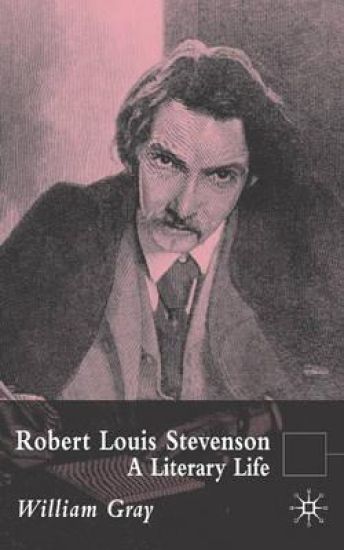
Robert Louis Stevenson

Robert Louis Stevenson

William Gray

Palgrave Macmillan
2004
nidottu
More than most writers, Robert Louis Stevenson requires a Literary Life. Fascination with Stevenson's life (the 'Stevenson biography' is almost a minor genre) has tended to eclipse his literary achievement. This study focuses on Stevenson's writing practice within the different geographical, cultural and political contexts that shaped it, from Scotland to the South Seas. Following Stevenson's own views on biography, the book is not structured primarily in terms of chronology, but is more a kind of literary geography than traditional literary history.
Robert Louis Stevenson and the Pictorial Text
Robert Louis Stevenson and the Pictorial Text explores the genesis, production and the critical appreciation of the illustrations to the fiction of Robert Louis Stevenson. Stevenson is one of the most copied and interpreted authors of the late nineteenth century, especially his novels Treasure Island and Strange Case of Dr Jekyll and Mr Hyde. These interpretations began with the illustration of his texts in their early editions, often with Stevenson’s express consent, and this book traces Stevenson’s understanding and critical responses to the artists employed to illustrate his texts. In doing so, it attempts to position Stevenson as an important thinker and writer on the subject of illustrated literature, and on the marriage of literature and visual arts, at a moment preceding the dawn of cinema, and the rejection of such popular tropes by modernist writers of the early twentieth century.
Robert Louis Stevenson and the Great Affair
In his travel narrative Travels with a Donkey in the Cevennes (1879), Robert Louis Stevenson declares, "I travel not to go anywhere, but to go. I travel for travel's sake. The great affair is to move." Taking up the concepts of time, place, and memory, the contributors to this collection explore in what ways the dynamic view of life suggested by this quotation permeates Stevenson's work. The essays adopt a wide variety of critical approaches, including post-colonial theory, post-structuralism, new historicism, art history, and philosophy, making use of the vast array of literary materials that Stevenson left across a global journey that began in Scotland in 1850 and ended in Samoa in 1894. These range from travel journals, letters, and classic literary staples such as Treasure Island and The Strange Case of Dr. Jekyll and Mr. Hyde, to rarely read masterpieces such as The Master of Ballantrae or The Ebb-Tide. While much recent scholarship on Stevenson foregrounds geography, the present volume also examines the theme of movement across memory, time, and generic boundaries. Taken together, the essays offer a view of Stevenson that demonstrates how the protean nature of his literary output reflects the radical developments in science, technology, and culture that characterized the age in which he lived.