
Kirjahaku
Etsi kirjoja tekijän nimen, kirjan nimen tai ISBN:n perusteella.
1000 tulosta hakusanalla Samuel M Ostroff


While many would argue that spirituality is a necessary component of authentic human living, there is a lot of confusion over what spirituality is. According to Powell Christian spirituality has five aspects: Christian living is inescapably corporate, and it is inseparable from the Christian community; it is inescapably corporeal - it cannot be separated from specific and embodied practices; it is participation in the Trinitarian life of God, and thus Christian living reflects both upon us and God; it has an eschatological existence; and, it is marked by our essential finitude under the conditions of sin.
Absences addresses the themes of loss of youth, loss of innocence, isolation, separation, exile, death, the absence of familiarity, affection, and above all the loss or absence of love. The sequence meditates on the natural world but finds little comfort there. There are no idyllic, romantic refuges from the self, and pathetic fallacies remain just that: instead of providing a balm to the sick heart, the dales of Arcady merely accentuate its angst. The poems find fitting motifs in poetic echoes and these are channeled into the poems' movement to harmonize their rhythms and oscillations and to achieve a kind of unsettling but restorative equipoise. The sequence resonates with allusions to classical mythology, Virginia Woolf, Gabriel Garcia Marquez, Julio Cortazar, Franz Kafka, Johann Georg Hamann, Paul Celan, and Bruno Schulz, and tries to weave its patchwork aesthetic by drawing on their disparate but unified themes. Ultimately, the sequence is a celebration of life, even if life's great peroration is death, and even if we all die the same death over and over again.

Co-published with the Oxford Philosophy Trust, this third volume of collected papers focuses on the moral and ethical concerns and theological reflections encountered in professional training. Essential for those involved in the instruction and training of other professionals.

Principle of Synthetic Unity in Berkeley and Kant (1898)
Samuel M. Dick
KESSINGER PUBLISHING CO
2003
pokkari
Summary of the Christian Doctrines As Held by the Religious Society of Friends 1871
Samuel M. Janney
Kessinger Pub
2003
pokkari

Catalogue of Revolutionary Soldiers and Sailors of the Commonwealth of Virginia To Whom Land Bounty Warrants Were Granted by Virginia for Military Services in The War For Independence
Samuel M Wilson
Heritage Books
2009
pokkari
Was your Virginia ancestor a soldier or sailor in the American Revolution? If so, he would have been allotted a land bounty for his military service, as long as he served out his period of enlistment (usually 3 years) or served until the end of the war. T


In this exciting work, Samuel Powell offers a new constructive and systematic vision of creation by interpreting it in terms of contemporary science and trinitarian theology.Powell's work unfolds in three stages, building on the multiple ways the doctrine of creation actually functions for Christians. He first analyzes its regulative dimension. Even in all the multiplicity of historical Christianity, he shows, the doctrine commits Christians to a particular set of normative beliefs about the world and God's relation to it. Second, Powell builds on the doctrine's hermeneutical potential. It allows Christians both to interpret the meaning of creation in terms of other prevalent philosophical, religious, or scientific ideas and also to interpret the world, as disclosed by scientific theory, in theological terms. In the heart of his book, Powell correlates creaturely characteristics with their participation in God through the trinitarian persons. Finally, in light of his findings, Powell drives home the often ignored ethical dimension of the doctrine, especially in relation to the environment, our consumerist lifestyle, and eschatology.Powell's bold proposal harvests from two of the most fruitful fields of recent theology -- trinitarian theory and religion-and-science -- and crafts a creative new vision of how we and all creation participate in the life and work of the triune God.

In 1492 Hispaniola was inhabited by the Taino, an Indian group whose ancestors had moved into the Caribbean archipelago from lowland South America. This book examines the early years of the contact period in the Caribbean and reconstructs the social and political organization of the Taino.

The Ethical Contexts for Business Conflicts
Samuel M. Natale; John B. Wilson
University Press of America
1990
nidottu
This is the first in a series of studies which is aimed at clarifying one of the most vexing and ubiquitous problems of contemporary livingóethics and moral education. It deals with the area endemic to moral decision makingóconflict. This conflict is examined as it appears in corporate living. This collection of articles covers a broad array of topics to give the reader a flavor for the kinds of issues which exist in this cognate domain. Within these pages readers will explore everything from the problem of decision making and authority to models of the market which may impact on ethical and corporate decisions such as declaring bankruptcy. Other authors reflect more systemic concerns such as examining organizational structures for issues involving justice or, in another case, exploring just how and if values impact on concrete living at all. Co-published with Oxford Philosophy Trust.
Discovering Our Christian Faith: An Introduction to Theology
Samuel M. Powell
Beacon Hill Press of Kansas City
2008
sidottu
Theology is the knowledge of God; but unlike other types of information, which simply provide a broader understanding of a topic, theology is intimately connected to how we exist and conduct ourselves in the world. With this in mind, it's important that we, as Christians, understand our beliefs in order to value their impact and practice them effectively.Discovering Our Christian Faith is an introduction to Christian theology. It explores the Bible's amazing story, beginning with creation and ending with the return of Christ. Dr. Samuel Powell presents the leading doctrines of Christianity and explores how they have been shaped throughout the centuries. With thorough examination and academic scholarship, he outlines the creedal statements of Wesleyan-holiness churches and explores the importance of eschatology in every doctrine, seeking to maintain the coherence and systematic character of Christian belief. In addition to a section on ethical dimensions of the doctrines discussed, each chapter includes a hymn by John and/or Charles Wesley that expresses the theme of the chapter.Discovering Our Christian Faith offers students, scholars, pastors, and teachers the opportunity to engage and unite their faith and intellect in an act of worship. With challenging insight and enriching evidence, it brings readers face to face with the beginning and end of our being by seeking to understand and encounter the knowledge of God.Check out this review of Discovering Our Christian Faith by The Arminian Magazine


While we often think of theological doctrines as truths we believe, doctrines are also meant to be practiced. For many Christians, the doctrine of the Trinity feels very mysterious. What is the Trinity? Why is understanding the doctrine of the Trinity important? How does the Trinity influence our worship and daily life? Samuel M. Powell demystifies this foundational doctrine of the church in an accessible style that is easy to follow. The Trinity clarifies the numerous ways in which our Wesleyan worship, doctrines, and biblical interpretation are--when properly understood and articulated--thoroughly Trinitarian. Powell will move readers from understanding to intentional practice as he illuminates the far-reaching existence of the Trinity in every aspect of church life and thought. The Wesleyan Theology Series aims to discuss Christian doctrines in easy to understand language that states clearly what Christians believe and why. Each volume is written by an author with a particular expertise who also has the ability to simplify and clarify complex issues. This 12-book series is written specifically for the theologically curious layperson, student, or pastor. Join The Wesleyan Theology Series Membership and save 30% and automatic shipping on each title in the series.

Here is an important new book focusing on the contribution of the therapist's love and empathy to the therapeutic process. Technique without dedication, discipline, and understanding will rarely benefit patients nor help resolve their conflicts. Psychoanalytic Technique demonstrates how the therapist's countertransference feelings, anxieties, wishes, and superego admonitions shape his or her therapeutic interventions.
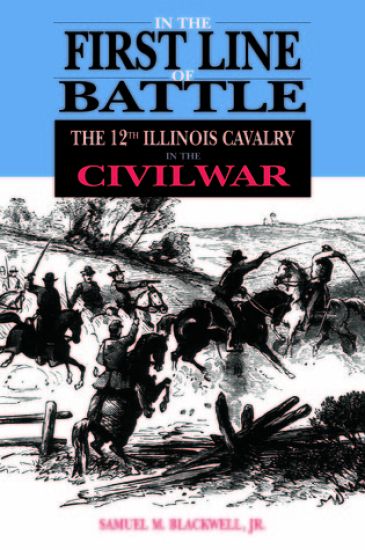
From its first major engagement at Harpers Ferry, Virginia, to the campaigns against Confederates in the swamps of occupied Louisiana, the 12th Illinois Volunteer Cavalry fought more than twenty battles in three theaters of combat. So great was the regiment's contribution to the Union victory that a monument at Gettysburg honors the unit for its place "in the first line of battle." The campaigns of the 12th Illinois reflect the larger shape of the war. In 1862 and early 1863, the 12th Illinois defended Union supply lines against the lightning raids of J. E. B. Stuart's Confederate Cavalry in Virginia and Maryland. In 1863, it helped to turn back the tide of the Confederate advance at Gettysburg. And in 1864–1865 the unit went on the offensive and raided deep into the Southern heartland as the Union pursued a strategy of "hard war." Drawing upon firsthand accounts from letters, diaries, memoirs, and official service records, Blackwell brings the soldiers of the 12th Illinois to life. As with other militia units in the heady first months of the war, the 12th Illinois assembled quickly, and its officers had at best only rudimentary military training. They were little prepared for the rigors of leading men into war or coping with desertions and horrific casualties. In the First Line of Battle tells the story of how the 12th Illinois Cavalry came through the war with its colors intact. Tracking the regiment from its first muster early in 1862 through its service in Texas during Reconstruction, Blackwell shows readers the war as it was lived by men who fought across the length and breadth of the Confederacy. Tracing the path of the 12th Illinois, he sheds new light on the role of the Union cavalry in the Civil War.