Kirjojen hintavertailu. Mukana 11 244 527 kirjaa ja 12 kauppaa.

Kirjahaku

Etsi kirjoja tekijän nimen, kirjan nimen tai ISBN:n perusteella.

1000 tulosta hakusanalla Samuel Pepys

The Diary of Samuel Pepys

The Diary of Samuel Pepys

Samuel Pepys

Benediction Classics
2020
pokkari
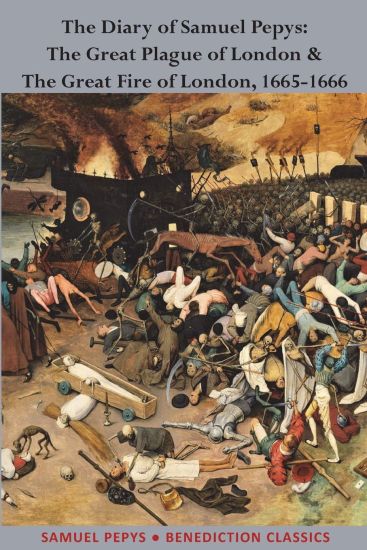
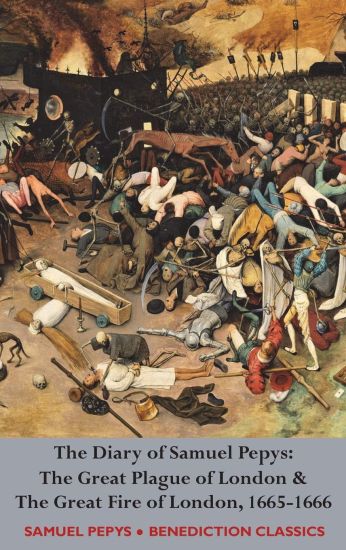
On April 30th, 1665 Samuel Pepys wrote "Great fears of the sickenesse here in the City, it being said that two or three houses are already shut up. God preserve as all " After these fateful words there ensued the Great Plague of London, followed swiftly by the Great Fire of London. Twenty months later, he concluded 1666 with "Thus ends this year of publick wonder and mischief to this nation, and, therefore, generally wished by all people to have an end... publick matters in a most sad condition; ... the City less and less likely to be built again, everybody settling elsewhere, and nobody encouraged to trade ... and all sober men there fearful of the ruin of the whole kingdom this next year; from which, good God deliver us " But his last word is "One thing I reckon remarkable in my owne condition is, that I am come to abound in good plate, ...".While perhaps as many as 100,000 perished and the rich fled London in the face of the plague, Pepys sent "his wife and gold" out of the city and cautiously continued "life as normal", complaining about his excessive work and rejoicing at his abounding wealth, all the while observing and recording. This is a unique first-hand account of daily life and civic disaster in London, perhaps the most populous city of that time.The Diary of Samuel Pepys, kept over the period of a decade, is regarded as the most human and accessible diary of life at the time. Pepys was a careful observer of events and especially people, using his own shorthand to record them in vivid detail and with compassion. This edition focuses on the period of the Great Plague of London and the Great Fire of London and contains all the entries from 1st June 1665 to 30th April 1666 and 1st-8th September 1666 and selected other entries.About the author: Samuel Pepys (1633-1703) was an energetic, diligent self-made man with an enquiring mind and a zest for life. Born to humble parents he rose to be the Chief Secretary to the Admiralty, a role in which he excelled. In addition, he was a member of Parliament and a Fellow, and later President of the Royal Society, counting most of the leading scholars among his friends. He donated his collection of 3000 volumes to Magdalen College Cambridge, together with the funds to build a library to house them. Pepys was no stranger to power, being a trusted confidant of both Charles II and James II. Never-the-less, Samuel Pepys is best remembered for his diary.
The Diary of Samuel Pepys

The Diary of Samuel Pepys

Samuel Pepys

Benediction Classics
2020
sidottu
On April 30th, 1665 Samuel Pepys wrote "Great fears of the sickenesse here in the City, it being said that two or three houses are already shut up. God preserve as all " After these fateful words there ensued the Great Plague of London, followed swiftly by the Great Fire of London. Twenty months later, he concluded 1666 with "Thus ends this year of publick wonder and mischief to this nation, and, therefore, generally wished by all people to have an end... publick matters in a most sad condition; ... the City less and less likely to be built again, everybody settling elsewhere, and nobody encouraged to trade ... and all sober men there fearful of the ruin of the whole kingdom this next year; from which, good God deliver us " But his last word is "One thing I reckon remarkable in my owne condition is, that I am come to abound in good plate, ...".While perhaps as many as 100,000 perished and the rich fled London in the face of the plague, Pepys sent "his wife and gold" out of the city and cautiously continued "life as normal", complaining about his excessive work and rejoicing at his abounding wealth, all the while observing and recording. This is a unique first-hand account of daily life and civic disaster in London, perhaps the most populous city of that time.The Diary of Samuel Pepys, kept over the period of a decade, is regarded as the most human and accessible diary of life at the time. Pepys was a careful observer of events and especially people, using his own shorthand to record them in vivid detail and with compassion. This edition focuses on the period of the Great Plague of London and the Great Fire of London and contains all the entries from 1st June 1665 to 30th April 1666 and 1st-8th September 1666 and selected other entries.About the author: Samuel Pepys (1633-1703) was an energetic, diligent self-made man with an enquiring mind and a zest for life. Born to humble parents he rose to be the Chief Secretary to the Admiralty, a role in which he excelled. In addition, he was a member of Parliament and a Fellow, and later President of the Royal Society, counting most of the leading scholars among his friends. He donated his collection of 3000 volumes to Magdalen College Cambridge, together with the funds to build a library to house them. Pepys was no stranger to power, being a trusted confidant of both Charles II and James II. Never-the-less, Samuel Pepys is best remembered for his diary.
The Diary of Samuel Pepys

The Diary of Samuel Pepys

Samuel Pepys

Everyman's Library
2018
sidottu
When Samuel Pepys (1633–1703) began writing in 1660 he was a young clerk living in London, struggling to pay his rent. Over the next nine years as he kept his journal, he rose to be a powerful naval administrator. He became eyewitness to some of the most significant events in seventeenth-century English history, among them, the Restoration of the monarchy in 1660 (he was in the ship that brought back Charles II from exile), the plague that ravaged the capital in 1665, and the Great Fire of 1666, described with poetry and horror. Pepys's diary gives vivid descriptions of spectacular events, but much of the richness of the diary lies in the details it provides about the minor dramas of daily life. While Pepys was keen to hear the King's views, he was also ready to talk with a soldier, a housekeeper, or a child rag-picker. He records with searing frankness his tumultuous personal and professional life: the pleasures and frustrations of his marriage, together with his infidelities, his ambitions, and his power schemes. All of this was set down in shorthand, to protect it from prying eyes. The result is a lively, often astonishing, diary and an unrivalled account of life in seventeenth-century London.
The Diary of Samuel Pepys, Esq., F.R.S.
The Diary of Samuel Pepys, Esq., F.R.S. - From 1659 to 1669, with memoir is an unchanged, high-quality reprint of the original edition of 1887. Hansebooks is editor of the literature on different topic areas such as research and science, travel and expeditions, cooking and nutrition, medicine, and other genres. As a publisher we focus on the preservation of historical literature. Many works of historical writers and scientists are available today as antiques only. Hansebooks newly publishes these books and contributes to the preservation of literature which has become rare and historical knowledge for the future.
Diary and Correspondence of Samuel Pepys, Esq., F.R.S.
Diary and Correspondence of Samuel Pepys, Esq., F.R.S. - From his ms. cypher in the Pepysian library, with a life and notes by Richard lord Braybrooke; deciphered, with additional notes, by Rev. Mynors Bright. Vol. 1 is an unchanged, high-quality reprint of the original edition of 1875. Hansebooks is editor of the literature on different topic areas such as research and science, travel and expeditions, cooking and nutrition, medicine, and other genres. As a publisher we focus on the preservation of historical literature. Many works of historical writers and scientists are available today as antiques only. Hansebooks newly publishes these books and contributes to the preservation of literature which has become rare and historical knowledge for the future.
Samuel Pepys

Samuel Pepys

Henry Benjamin Wheatley

Hansebooks
2017
pokkari
Samuel Pepys - And the world he lived in. Second Edition is an unchanged, high-quality reprint of the original edition of 1880. Hansebooks is editor of the literature on different topic areas such as research and science, travel and expeditions, cooking and nutrition, medicine, and other genres. As a publisher we focus on the preservation of historical literature. Many works of historical writers and scientists are available today as antiques only. Hansebooks newly publishes these books and contributes to the preservation of literature which has become rare and historical knowledge for the future.