Kirjojen hintavertailu. Mukana 11 244 527 kirjaa ja 12 kauppaa.

Kirjahaku

Etsi kirjoja tekijän nimen, kirjan nimen tai ISBN:n perusteella.

1000 tulosta hakusanalla Saul Alinsky

Saul Leiter

Saul Leiter

Margit Erb; Michael Parillo

THAMES HUDSON LTD
2023
sidottu
Celebrating the centennial of Saul Leiter’s birth, the official retrospective of a revolutionary figure in twentieth-century photography. Saul Leiter photographed and painted nearly every day for over sixty years, amassing an enormous archive, most of which remained unseen during his lifetime. Finding inspiration within a few blocks of his apartment in Lower Manhattan, he was a master at discovering beauty in the most ordinary places. Celebrated today for his evocative colour photographs of New York in the 1950s and 1960s, which were unknown in their day, Leiter also found success as a fashion photographer for Harper’s Bazaar. All the while he was shooting black-and-white street scenes on his daily walks, and nudes and intimate portraits back home, while continuing his painting explorations with abstract watercolours, whimsical sketchbooks and painted photographs. Created in collaboration with the Saul Leiter Foundation, this definitive monograph brings together these diverse yet interconnected bodies of work – including much that was previously unpublished – to reveal the complete artist for the first time.
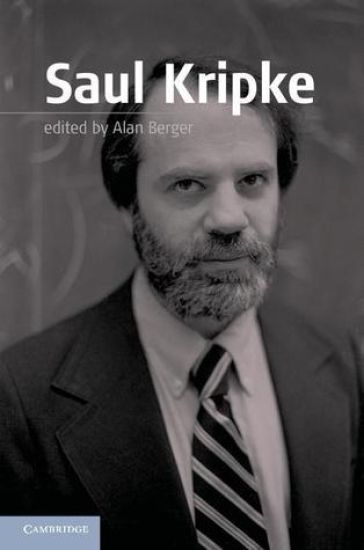
Saul Kripke

Saul Kripke

Cambridge University Press
2011
pokkari
This collection of essays on Saul Kripke and his philosophy is the first and only collection of essays to examine both published and unpublished writings by Kripke. Its essays, written by distinguished philosophers in the field, present a broader picture of Kripke's life and work than has previously been available to scholars of his thought. New topics covered in these essays include vacuous names and names in fiction, Kripke on logicism and de re attitude toward numbers, Kripke on the incoherency of adopting a logic, Kripke on colour words and his criticism of the primary versus secondary quality distinction, and Kripke's critique of functionalism. These essays not only present Kripke's basic arguments but also engage with the arguments and controversies engendered by his work, providing the most comprehensive analysis of his philosophy and writings available. This collection will become a classic in contemporary analytic philosophy.
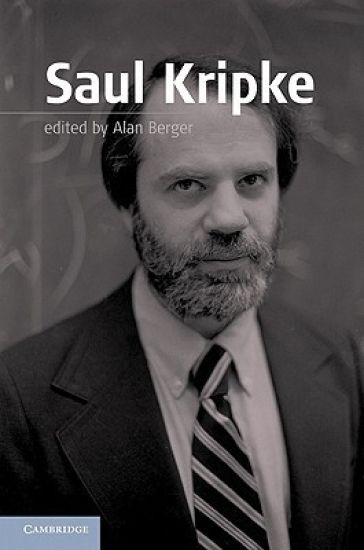
Saul Kripke

Saul Kripke

Cambridge University Press
2011
sidottu
This collection of essays on Saul Kripke and his philosophy is the first and only collection of essays to examine both published and unpublished writings by Kripke. Its essays, written by distinguished philosophers in the field, present a broader picture of Kripke's life and work than has previously been available to scholars of his thought. New topics covered in these essays include vacuous names and names in fiction, Kripke on logicism and de re attitude toward numbers, Kripke on the incoherency of adopting a logic, Kripke on colour words and his criticism of the primary versus secondary quality distinction, and Kripke's critique of functionalism. These essays not only present Kripke's basic arguments but also engage with the arguments and controversies engendered by his work, providing the most comprehensive analysis of his philosophy and writings available. This collection will become a classic in contemporary analytic philosophy.
Saul, Doeg, Nabal, and the "Son of Jesse"

Saul, Doeg, Nabal, and the "Son of Jesse"

Joseph Lozovyy

T. T.Clark Ltd
2009
sidottu
This work examines some of the stories in 1 Sam. 16-25 with the particular focus placed on Saul, Doeg, Nabal and the "son of Jesse." It seeks to discover new meaning in the structure as well as in the characters' functions in the narratives by studying the stories synchronically and diachronically. One of the mysterious characters in 1 Samuel that has puzzled many a scholar is Nabal the Calebite. This study scrutinizes the elements of his characterization in 1 Sam. 25 and considers his abuses of the "son of Jesse", the contextual role of the geographic setting and political environment during King Saul's reign. Similarly, this volume studies the function of the character of Doeg the Edomite in 1 Sam. 21 and 22 regarding his Edomite origin, his particular business in Nob and his official status in Saul's court. The phrase the "son of Jesse" is quite important in 1 Samuel and serves a particular purpose in the thematic development in the second half of the book. Viewed against the background of the Saul/David relationship, it underscores the superiority of the Davidic person in advancing the divine plan for the nation of Israel. The determination of the book's historical context is the key to understanding the multilayered messages. The roles of history and ideology in making these stories are also considered with the proposal that the making of the book(s) of Samuel after the Exile (5th c. B.C.) might have been instigated by the writer's desire to create the context needed for further development of the messianic ideas.
Saul and the Monarchy: A New Look

Saul and the Monarchy: A New Look

Simcha Shalom Brooks

Ashgate Publishing Limited
2005
sidottu
The negative biblical presentation of King Saul of Israel has been biased in favour of David at the expense of Saul. This book presents a more positive picture and more realistic view of the culture of the period extending from Saul to the schism. Simcha Shalom Brooks explores a number of controversial issues such as the historicity of the biblical text on which so many modern scholars are sharply divided; that David was ambitious and coveted Saul's throne, and even though David became king, the people continued to support the house of Saul. This book makes a valuable contribution to the current biblical debate as to the existence of ancient Israel in the Iron Age 1 Period. Simcha Shalom Brooks draws on literary, historical and archaeological material to present a balanced view of the period.
Saul Bellow

Saul Bellow

Mark Connelly

McFarland Co Inc
2016
pokkari
A three-time National Book Award for Fiction winner, Saul Bellow (1915-2005) is one of the most highly regarded American authors to emerge since World War II. His 60-year career produced 14 novels and novellas, two volumes of nonfiction, short story collections, plays and a book of collected letters. His 1953 breakthrough novel The Adventures of Augie March was followed by Seize the Day (1956), Herzog (1964) and Mr. Sammler's Planet (1970). His Humboldt's Gift won a Pulitzer Prize in 1976 and contributed to his receiving the Nobel Prize for Literature that year. This literary companion provides more than 200 entries about his works, literary characters, events and persons in his life. Also included are an introduction and overview of Bellow's life, statements made by him during interviews, suggestions for writing and further study and an extensive bibliography.
Saul and Selected Poems

Saul and Selected Poems

Heavysege Charles

UNIVERSITY OF TORONTO PRESS
1977
nidottu
Saul and Selected Poems is an original and useful introduction to the work and poetic personality of Charles Heavysege (1816-76), an important but currently neglected nineteenth-century Canadian writer. Heavysege was handicapped by a limited education and a lack of public support, yet nonetheless established himself in Great Britain and America as the 'leading intellect of the] Dominion' in a period when native literature was scantily regarded. His struggle to express himself and to find an audience for his work mirrors the dilemma of the migr writer of his time. Heavysege's work is related in this volume to the early nineteenth-century English revival of poetic drama, and seen in the context of the Canadian cultural milieu of the 1860s. Saul is a powerful presentation of the tormented soul caught in a world of order and universal degree. Its main interest is to be found in the psychological frankness - Saul's recognition of his demon resonates with the deeper implication of the recognition of the d ppelg nger - and in passages of sinewy verse written with a directness that anticipates E.J. Pratt. The text of Saul and 'Jezebel, ' selections from Jephthah's Daughter, an original commentary on the major poems, a bibliography, and a review of Heavysege criticism are all included in this volume. (Literature of Canada 19)
Saul Bass

Saul Bass

Jan-Christopher Horak

The University Press of Kentucky
2014
sidottu
Iconic graphic designer and Academy Award--winning filmmaker Saul Bass (1920--1996) defined an innovative era in cinema. His title sequences for films such as Otto Preminger's The Man with the Golden Arm (1955) and Anatomy of a Murder (1959), Alfred Hitchcock's Vertigo (1958) and North by Northwest (1959), and Billy Wilder's The Seven Year Itch (1955) introduced the idea that opening credits could tell a story, setting the mood for the movie to follow. Bass's stylistic influence can be seen in popular Hollywood franchises from the Pink Panther to James Bond, as well as in more contemporary works such as Steven Spielberg's Catch Me If You Can (2002) and television's Mad Men.The first book to examine the life and work of this fascinating figure, Saul Bass: Anatomy of Film Design explores the designer's revolutionary career and his lasting impact on the entertainment and advertising industries. Jan-Christopher Horak traces Bass from his humble beginnings as a self-taught artist to his professional peak, when auteur directors like Stanley Kubrick, Robert Aldrich, and Martin Scorsese sought him as a collaborator. He also discusses how Bass incorporated aesthetic concepts borrowed from modern art in his work, presenting them in a new way that made them easily recognizable to the public.This long-overdue book sheds light on the creative process of the undisputed master of film title design -- a man whose multidimensional talents and unique ability to blend high art and commercial imperatives profoundly influenced generations of filmmakers, designers, and advertisers.
Saul Steinberg's Literary Journeys

Saul Steinberg's Literary Journeys

Jessica R. Feldman

University of Virginia Press
2021
sidottu
Saul Steinberg's inimitable drawings, paintings, and assemblages enriched the New Yorker, gallery and museum shows, and his own books for more than half a century. Although the literary qualities of Steinberg's work have often been noted in passing, critics and art historians have yet to fathom the specific ways in which Steinberg meant drawing not merely to resemble writing but to be itself a type of literary writing. Jessica R. Feldman's Saul Steinberg's Literary Journeys, the first book-length critical study of Steinberg's art and its relation to literature, explores his complex literary roots, particularly his affinities with modernist aesthetics and iconography. The Steinberg who emerges is an artist of far greater depth than has been previously recognized. Feldman begins her study with a consideration of Steinberg as a reader and writer, including a survey of his personal library. She explores the practice of modernist parody as the strongest affinity between Steinberg and the two authors he repeatedly claimed as his ""teachers"" Vladimir Nabokov and James Joyce. Studying Steinberg's art in tandem with readings of selected works by Nabokov and Joyce, Feldman explores fascinating bonds between Steinberg and these writers, from their tastes for parody and popular culture to their status as mythmakers, émigrés, and perpetual wanderers. Further, Feldman relates Steinberg's uniquely literary art to a host of other authors, including Rimbaud, Baudelaire, Flaubert, Gogol, Tolstoy, and Defoe. Generously illustrated with the artist's work and drawing on invaluable archival material from the Saul Steinberg Foundation, this innovative fusion of literary history and art history allows us to see anew Steinberg's art.
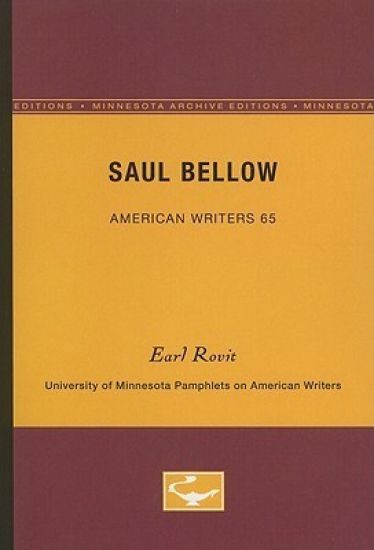
Saul Bellow - American Writers 65

Saul Bellow - American Writers 65

Rovit Earl

UNIVERSITY OF MINNESOTA PRESS
1967
nidottu
Saul Bellow - American Writers 65 was first published in 1967. Minnesota Archive Editions uses digital technology to make long-unavailable books once again accessible, and are published unaltered from the original University of Minnesota Press editions.
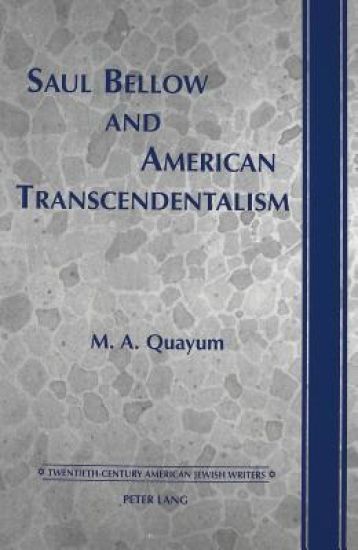
Saul Bellow and American Transcendentalism

Saul Bellow and American Transcendentalism

M.A. Quayum

Peter Lang Publishing Inc
2004
sidottu
Saul Bellow and American Transcendentalism explores Saul Bellow's moral and philosophical affinity with the writers of American transcendentalism, especially Emerson and Whitman. Its focus is on the vintage Bellow, or his mature novels, from Henderson the Rain King (1959) to The Dean's December (1982). In these novels, Bellow highlights a moral crisis, arising from humankind's despiritualization and dehumanization, which, he believes, is responsible for an ongoing dichotomy in the modern world. Bellow describes this as a dichotomy of the Cleans and the Dirties , in the context of American culture. To rectify this dichotomy and redeem humankind from its current death-ridden state, Bellow and his protagonists advance a vision of life that corresponds to the transcendental vision of dialogue and double consciousness , or coordination and balance. Like Emerson, they advocate, The mid-world is best... A man is a golden impossibility; the line he must walk is a hair's breadth . Comparable to Whitman, they urge the individual to knit the knot of contrariety and act as an arbiter of the diverse .
Saul Kripke

Saul Kripke

Arif Ahmed

Continuum International Publishing Group Ltd.
2007
sidottu
Saul Kripke is one of the most important and original post-war analytic philosophers. His work has undeniably had a profound impact on the philosophy of language and the philosophy of mind. Yet his ideas are amongst the most challenging frequently encountered by students of philosophy. In this informative and accessible book, Arif Ahmed provides a clear and thorough account of Kripke's philosophy, his major works and ideas, providing an ideal guide to the important and complex thought of this key philosopher. The book offers a detailed review of his two major works, Naming and Necessity and Wittgenstein on Rules and Private Language, and explores how Kripke's ideas often seem to overturn widely accepted views and even perceptions of common sense. Geared towards the specific requirements of students who need to reach a sound understanding of Kripke's thought, the book provides a cogent and reliable survey of the nature and significance of Kripke's contribution to philosophy. This is the ideal companion to the study of this most influential and challenging of philosophers.
Saul Kripke

Saul Kripke

Arif Ahmed

Continuum International Publishing Group Ltd.
2007
nidottu
Saul Kripke is one of the most important and original post-war analytic philosophers. His work has undeniably had a profound impact on the philosophy of language and the philosophy of mind. Yet, his ideas are amongst the most challenging frequently encountered by students of philosophy. In this informative and accessible book, Arif Ahmed provides a clear and thorough account of Kripke's philosophy, his major works and ideas, providing an ideal guide to the important and complex thought of this key philosopher. The book offers a detailed review of his two major works, "Naming and Necessity" and "Wittgenstein on Rules and Private Language", and explores how Kripke's ideas often seem to overturn widely accepted views and even perceptions of common sense. Geared towards the specific requirements of students who need to reach a sound understanding of Kripke's thought, the book provides a cogent and reliable survey of the nature and significance of Kripke's contribution to philosophy. This is the ideal companion to the study of this most influential and challenging of philosophers.