Kirjojen hintavertailu. Mukana 11 627 630 kirjaa ja 12 kauppaa.

Kirjahaku

Etsi kirjoja tekijän nimen, kirjan nimen tai ISBN:n perusteella.

1000 tulosta hakusanalla Schelling Hans

Schelling'S Ontology of Powers

Schelling'S Ontology of Powers

Charlotte Alderwick

Edinburgh University Press
2021
sidottu
Charlotte Alderwick presents Schelling's ontology as fundamentally power-based. She demonstrates that this ontology enables his unique conception of human freedom outlined in the 'Freedom' essay. This distinctive reading demonstrates that Schelling's power-based ontology can usefully problematise and supplement contemporary work on power-based ontologies. First, where current work focuses on powers in relation to specific areas of metaphysics, Schelling provides a holistic picture, encompassing these areas into a single ontological story. Secondly, engagement with Schelling's work points to problems (and to possible solutions) that will arise for any power-based metaphysics, but have not been examined in the literature.

Schelling'S Ontology of Powers

Schelling'S Ontology of Powers

Charlotte Alderwick

EDINBURGH UNIVERSITY PRESS
2023
nidottu
Brings Schelling's ontology into conversation with contemporary analytic metaphysics of powers Contributes to the recent revival of interest in Schelling as a historical figure as well as being relevant to contemporary concerns Offers a unique account of Schelling's philosophy and conception of freedom Links Schelling's work to current debates in the analytic tradition Charlotte Alderwick presents Schelling's ontology as fundamentally power-based. She demonstrates that this ontology enables his unique conception of human freedom outlined in the 'Freedom' essay. This distinctive reading demonstrates that Schelling's power-based ontology can usefully problematise and supplement contemporary work on power-based ontologies. First, where current work focuses on powers in relation to specific areas of metaphysics, Schelling provides a holistic picture, encompassing these areas into a single ontological story. Secondly, engagement with Schelling's work points to problems (and to possible solutions) that will arise for any power-based metaphysics, but have not been examined in the literature.
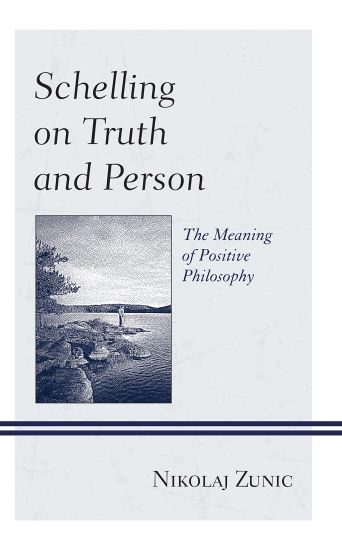
Schelling on Truth and Person

Schelling on Truth and Person

Nikolaj Zunic

BLOOMSBURY PUBLISHING PLC
2022
sidottu
Positive philosophy is the name that Friedrich Schelling (1775–1854) gave to a new type of philosophizing that stands in contrast to the so-called negative philosophy that is predominant in modern rationalism. But what exactly is positive philosophy? Schelling on Truth and Person: The Meaning of Positive Philosophy argues that its meaning lies in a distinctive view of the human person as a seeker of truth. Truth is presented as historically woven in the movement of life with the phenomena of mythology and religion that reveal the human being's falling away from and return to the truth. Nikolaj Zunic demonstrates that this novel understanding of truth accompanies the development and expression of positive philosophy itself. The anthropological dimension of truth relates to self-knowledge, the soul, spirit, and personality, and Schelling’s positive philosophy sheds light on the grand themes of the meaning of life, the ontological question (why is there something rather than nothing?), the enigma of knowledge and reason, and the affirmation of the existence of God. This book will appeal to students and scholars interested in Schelling's late philosophy as well as broader questions in philosophy concerning meaning, truth, human nature, and rationality.
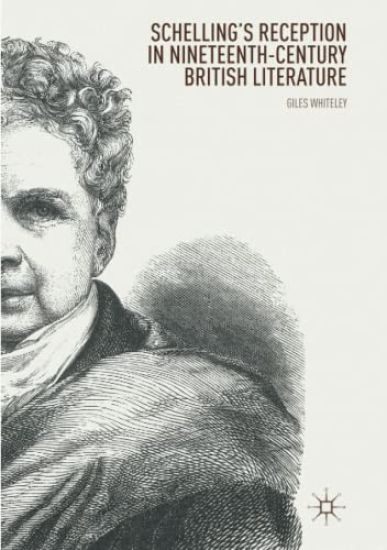
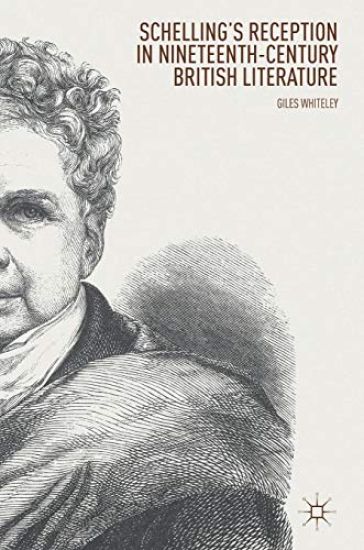
Schelling’s Reception in Nineteenth-Century British Literature

Schelling’s Reception in Nineteenth-Century British Literature

Giles Whiteley

Springer Nature Switzerland AG
2019
nidottu
This book examines the various ways in which the German philosopher Friedrich Schelling was read and responded to by British readers and writers during the nineteenth century. Challenging the idea that Schelling’s reception was limited to the Romantics, this book shows the ways in which his thought continued to be engaged with across the whole period. It follows Schelling’s reception both chronologically and conceptually as it developed in a number of different disciplines in British aesthetics, literature, philosophy, science and theology. What emerges is a vibrant new history of the period, showing the important role played by reading and responding to Schelling, either directly or more diffusely, and taking in a vast array of major thinkers during the period. This book, which will be of interest not only to historians of philosophy and the history of ideas, but to all those dealing with Anglo-German reception during the nineteenth century, reveals Schelling to be a kind of uncanny presence underwriting British thought.
Schelling und die Hermeneutik der Aufklärung
Der junge Schelling hat während seiner Tübinger Studienzeit eigene Kommentare zu biblischen Schriften verfasst und eine historische Hermeneutik ausgearbeitet, welche an die zeitgenössischen Konzeptionen anknüpft und diese weiterführt. Die Beiträge in diesem Band thematisieren erstmals diese neuen Quellen im Kontext der komplexen hermeneutischen und exegetischen Debattenlagen der späten Aufklärungstheologie. Dadurch werden die bislang nur wenig erforschten Zusammenhänge von theologischen Fragestellungen am Ende des 18. Jahrhunderts und der Herausbildung des Deutschen Idealismus auf eine interdisziplinäre Weise erschlossen.
Schelling und die historische Theologie des 19. Jahrhunderts
Der vorliegende Band thematisiert die bislang nur wenig erforschten Zusammenhänge zwischen der Philosophie Schellings und den Historisierungsschüben in den theologischen, philosophischen und geschichtswissenschaftlichen Diskursen der ersten Hälfte des 19. Jahrhunderts. Die Rezeption Schellings in Theologie, Philosophie und Geschichtswissenschaft bezieht sich vor allem auf dessen Schriften um 1800. Die Beiträge des Bandes untersuchen sowohl die breite Wirkung dieser Texte in den zeitgenössischen Debattenkonstellationen sowie die Wechselwirkungen zwischen der sich etablierenden historischen Theologie und der Herausbildung von Schellings Spätphilosophie als auch die Rezeption der Geschichtsphilosophie Schellings bei Friedrich Schleiermacher sowie in den geschichtswissenschaftlichen Diskursen, bei David Friedrich Strauß, Ferdinand Christian Baur sowie in der Landshuter Romantik.
Schelling’s Reception in Nineteenth-Century British Literature

Schelling’s Reception in Nineteenth-Century British Literature

Giles Whiteley

Springer International Publishing AG
2018
sidottu
This book examines the various ways in which the German philosopher Friedrich Schelling was read and responded to by British readers and writers during the nineteenth century. Challenging the idea that Schelling’s reception was limited to the Romantics, this book shows the ways in which his thought continued to be engaged with across the whole period. It follows Schelling’s reception both chronologically and conceptually as it developed in a number of different disciplines in British aesthetics, literature, philosophy, science and theology. What emerges is a vibrant new history of the period, showing the important role played by reading and responding to Schelling, either directly or more diffusely, and taking in a vast array of major thinkers during the period. This book, which will be of interest not only to historians of philosophy and the history of ideas, but to all those dealing with Anglo-German reception during the nineteenth century, reveals Schelling to be a kind of uncanny presence underwriting British thought.
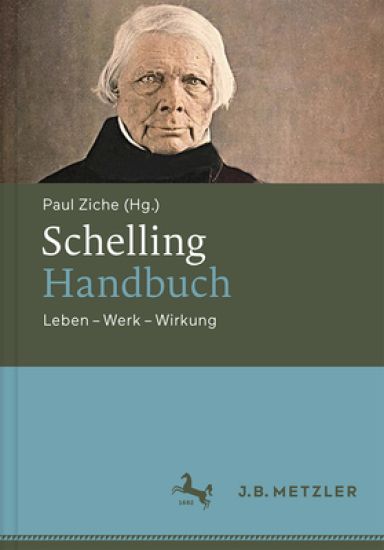
Schelling-Handbuch

Schelling-Handbuch

Springer-Verlag Berlin and Heidelberg GmbH Co. KG
2026
sidottu
Friedrich Wilhelm Joseph Schelling (1775-1854) war einer der prägenden Denker des „Deutschen Idealismus“. Sein Werk ist vielfältig innovativ und bis heute einflussreich: Etwa durch erhöhte Aufmerksamkeit für Natur und Kunst, die Grenzen und die Grundlagen von Rationalität, Reflexionen über Freiheit, Religion und das Böse.Das Handbuch berücksichtigt den aktuellen Forschungsstand auf der Grundlage der historisch-kritischen Ausgabe seiner Werke. Diese werden anhand von „Werkkomplexen“ dargestellt, womit bewusst auf eine Vorstrukturierung von Schellings Œuvre verzichtet wird. Eine Biographie, ausgewählte Begriffe und ein Kapitel zur Rezeption runden den Blick auf Schellings Werk ab.
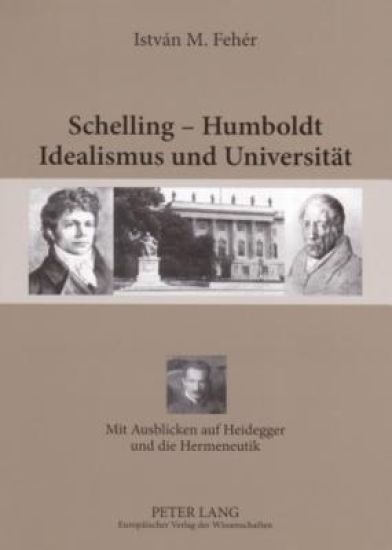
Schelling - Humboldt - Idealismus Und Universitaet
In den heutigen Debatten um die europaische Universitatstradition und ihre Krise fehlt es nicht an Hinweisen auf Wilhelm von Humboldts Universitatsidee und ihre Verwandtschaft zur Philosophie des Deutschen Idealismus, dennoch kommt es kaum zu einer tieferen Auseinandersetzung damit. Ein Stuck dieser hermeneutischen Arbeit wird in dieser Untersuchung zu leisten versucht. Im Vergleich ihrer beiden Universitatsschriften wird dabei vor allem den Beziehungen zwischen Schelling und Humboldt nachgegangen. Mit einbezogen werden jedoch auch die anderen Universitatsschriften des Zeitalters, sonstige Denkperspektiven des Idealismus sowie Ausblicke auf die Nachgeschichte des Humboldtschen Konzepts. Besondere Berucksichtigung finden dabei Heidegger und die Hermeneutik.