

Kirjahaku
Etsi kirjoja tekijän nimen, kirjan nimen tai ISBN:n perusteella.
1000 tulosta hakusanalla Scott Gregory

Family Maps of Scott County, Indiana, Deluxe Edition
Gregory a. Boyd J. D.
Arphax Publishing Co.
2010
nidottu
Locating original landowners in maps has never been an easy task-until now. This volume in the Family Maps series contains newly created maps of original landowners (patent maps) in what is now Scott County, Indiana, gleaned from the indexes of the U.S. Bureau of Land Management. But it offers much more than that. For each township in the county, there are two additional maps accompanying the patent map: a road map and a map showing waterways, railroads, and both modern and many historical city-centers and cemeteries. Included are indexes to help you locate what you are looking for, whether you know a person's name, a last name, a place-name, or a cemetery. The combination of maps and indexes are designed to aid researchers of American history or genealogy to explore frontier neighborhoods, examine family migrations, locate hard-to-find cemeteries and towns, as well as locate land based on legal descriptions found in old documents or deeds. The patent-maps are essentially plat maps but instead of depicting owners for a particular year, these maps show original landowners, no matter when the transfer from the federal government was completed. Dates of patents typically begin near the time of statehood and run into the early 1900s. 118 pages with 32 total maps What's Mapped in this book (that you'll not likely find elsewhere) . . . 1242 Parcels of Land (with original landowner names and patent-dates labeled in the relevant map) 15 Cemeteries plus . . . Roads, and existing Rivers, Creeks, Streams, Railroads, and Small-towns (including some historical), etc. What YEARS are these maps for? Here are the counts for parcels of land mapped, by the decade in which the corresponding land patents were issued: DecadeParcel-count 1820s37 1830s786 1840s292 1850s124 1860s1 1900s2 What Cities and Towns are in Scott County, Indiana (and in this book)? Albion, Austin, Blocher, Goshen, Leota, Lexington, Marshfield, Nabb, New Frankfort, Pigeon Roost Station, Scottsburg, Vienna, Wooster
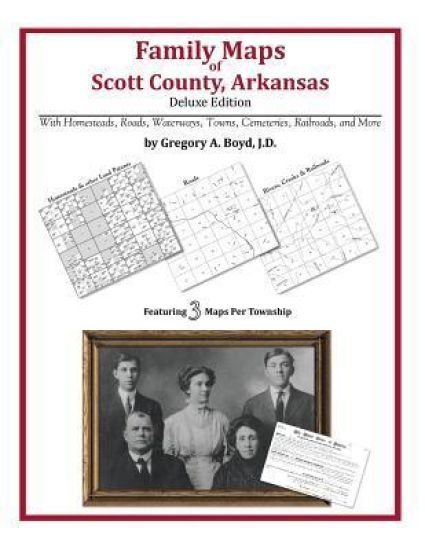
362 pages with 103 total maps Locating original landowners in maps has never been an easy task-until now. This volume in the Family Maps series contains newly created maps of original landowners (patent maps) in what is now Scott County, Arkansas, gleaned from the indexes of the U.S. Bureau of Land Management. But it offers much more than that. For each township in the county, there are two additional maps accompanying the patent map: a road map and a map showing waterways, railroads, and both modern and many historical city-centers and cemeteries. Included are indexes to help you locate what you are looking for, whether you know a person's name, a last name, a place-name, or a cemetery. The combination of maps and indexes are designed to aid researchers of American history or genealogy to explore frontier neighborhoods, examine family migrations, locate hard-to-find cemeteries and towns, as well as locate land based on legal descriptions found in old documents or deeds. The patent-maps are essentially plat maps but instead of depicting owners for a particular year, these maps show original landowners, no matter when the transfer from the federal government was completed. Dates of patents typically begin near the time of statehood and run into the early 1900s. What's Mapped in this book (that you'll not likely find elsewhere) . . . 5049 Parcels of Land (with original landowner names and patent-dates labeled in the relevant map) 59 Cemeteries plus . . . Roads, and existing Rivers, Creeks, Streams, Railroads, and Small-towns (including some historical), etc. What YEARS are these maps for? Here are the counts for parcels of land mapped, by the decade in which the corresponding land patents were issued: Decade Parcel-count 1830s 1 1840s 65 1850s 64 1860s 317 1870s 478 1880s 1396 1890s 602 1900s 814 1910s 1029 1920s 286 What Cities and Towns are in Scott County, Arkansas (and in this book)? Abbott, Anderson, Bates, Beauchamp, Black Fork, Blansett, Blue Ball, Bluff Ridge (historical), Boles, Boothe, Brawley, Bryan, Buck Knob, Buffalo (historical), Cardiff, Cauthron, Cedar Creek, Chant (historical), Coaldale, Colburn Spring (historical), Denton, Elm Park, Evening Shade, Forester, Gate (historical), Gipson, Girard (historical), Green Ridge, Harvey, Hon, Keener, Kings Creek (historical), Lewis, Little Texas, Lone Elm, Morgan Springs, Nebraska (historical), Needmore, Nella, Nola, Olio, Oliver, Parks, Pleasant Hill, Pleasant Valley, Puryear, Ritz, Sensation (historical), Shiloh, The Pines, Tintop, Union Hill, Waldron, Weeks, Winfield, Y City
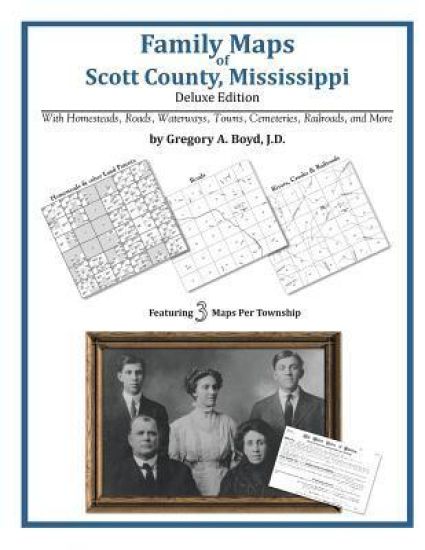
236 pages with 65 total maps Locating original landowners in maps has never been an easy task-until now. This volume in the Family Maps series contains newly created maps of original landowners (patent maps) in what is now Scott County, Mississippi, gleaned from the indexes of the U.S. Bureau of Land Management. But it offers much more than that. For each township in the county, there are two additional maps accompanying the patent map: a road map and a map showing waterways, railroads, and both modern and many historical city-centers and cemeteries. Included are indexes to help you locate what you are looking for, whether you know a person's name, a last name, a place-name, or a cemetery. The combination of maps and indexes are designed to aid researchers of American history or genealogy to explore frontier neighborhoods, examine family migrations, locate hard-to-find cemeteries and towns, as well as locate land based on legal descriptions found in old documents or deeds. The patent-maps are essentially plat maps but instead of depicting owners for a particular year, these maps show original landowners, no matter when the transfer from the federal government was completed. Dates of patents typically begin near the time of statehood and run into the early 1900s. What's Mapped in this book (that you'll not likely find elsewhere) . . . 2692 Parcels of Land (with original landowner names and patent-dates labeled in the relevant map) 36 Cemeteries plus . . . Roads, and existing Rivers, Creeks, Streams, Railroads, and Small-towns (including some historical), etc. What YEARS are these maps for? Here are the counts for parcels of land mapped, by the decade in which the corresponding land patents were issued: DecadeParcel-count 1830s73 1840s1665 1850s249 1860s280 1870s41 1880s55 1890s177 1900s122 1910s25 1920s5 What Cities and Towns are in Scott County, Mississippi (and in this book)? Ball Hill, Beach, Branch, Buckleytown, Cash, Clarkburg, Clifton, Contrell, Cooperville, Damascus, Dennis Settlement, Donohoe, East Hillsboro, Fikestown, Forest, Forkville, Frogtown, Gum Spring, Harperville, Hays, Hillsboro, Homewood, Horseshoe, Hunter Town, Independence, Kalem, Kracker Station, Lake, Lillian, Little Italy, Ludlow, Midway, Morton, Muskegon, Norris, Otho, Piketown, Pulaski, Raworth, Sebastopol, Singleton Settlement, Stage, Steele, Sun, Usrytown, Wolf

Securing the Network: F. Scott Yeager and the Rise of the Commercial Internet
Nathan Gregory
Independently Published
2016
nidottu
Commercial use of the Internet was a new and radical concept There is much more to the origin of the network than the story of ARPANET. This is the inside story, told by those who were there, of how the highly restricted, government-funded network playground of the government, military, and academia was usurped to create the modern Commercial Internet. This book provides not just the inside story but immense volumes of supporting information, documentation, videos and more.One man with drive and conviction became the visionary who united a collection of scrappy upstart ISPs for the formation of MAE-East, drove the creation of the long-haul Commercial Internet backbone at MFS Datanet, and then became a pioneer of the media-rich streaming data services that came into being at the ill-fated Enron Broadband Services prior to the Dot-com bubble burst in March of 2000.In 1991, the Internet was owned and operated by the National Science Foundation and was strictly limited in the things for which it could be used. In particular, the NSF had an Acceptable Uses Policy, a.k.a. the AUP, which prohibited anything which could be considered personal or commercial usage of the Internet.The NSF was looking to "sell" the Internet to a corporate entity and get out of the operation of the network. Many in the Internet community believed that when IBM teamed with Merit and MCI to form a partnership in a new company, they would win a contract to be this new backbone. Many in the Internet community assumed that if this happened, they would own the Internet and dictate usage just as the NSF had done.They bristled at this prospect.This new Merit/IBM/MCI company was called Advanced Network and Services (ANS) and operated the Internet NOC in Ann Arbor Michigan as part of the venture.Many of the small private Internet providers profoundly disliked ANS. They considered ANS a threat to the openness of the Internet. There was a joke at the time that said "The only thing missing from ANS is U" which appeared on a popular T-Shirt at Interop 1992.Debate raged about who was going to "own" the Internet when the NSF turned off the government-funded backbone. Small IP Services Providers began carrying traffic by interconnecting. From this debate emerged an independent entity beyond the control of the NSF, an interconnection point called MAE-East.From there, the Commercial Internet evolved and grew, and became the Internet we know today. The book "Securing the Network" tells the story of how this happened and the role of myself, many of my friends and co-workers, and especially that of my close friend and business partner F. Scott Yeager.If you use the Internet, work with the Internet, or are just interested in the history of the Internet, you need to read this book.Educate yourself. Buy "Securing the Network" today
The Heart of the Matter: Five ESL Leaders and the Impact They've Had: Featuring Krashen, O'Neill, Vanpatten, Gregory, and Hopkins
Robert Bruce Scott Ed D.
Independently Published
2019
nidottu
There is an argument to be made that the five individuals featured in this collection personify the very essence of what it means to be a language teacher in the 21st century because of the profound effects their words and actions have had on so many teachers and so many careers in the field of ESL. All of the essays in this book were originally published on web pages in the ESL MiniConference Online newsletter. Steve Krashen, the late Robert O'Neill, and Bill VanPatten debated the nature of the language learning or language acquisition process in a series of exchanges that was instigated by O'Neill, who suggested to ESL MiniConference founding editor Robb Scott that he invite Krashen to respond to statements in which O'Neill challenged the validity of the "natural approach" that Tracy Terrell and Krashen had developed and Krashen had spent a lifetime popularizing. The bait was taken and the resulting exchanges were revealing, to say the least. At one point, Bill VanPatten served as a tag-teammate for Krashen and wrote a truly eloquent defense of unconscious acquisition with a powerful flying metaphor, accentuating significant updates to the Krashen/Terrell model, only to encounter yet further resistance from O'Neill, who drove home his points with obvious feisty pleasure. That memorable debate is just as relevant and thought-provoking today as it was in 2002. Joining Krashen, O'Neill, and VanPatten in the pantheon of ESL/EFL and second language teaching legends are O. Dean Gregory and David B. Hopkins, whose careers in teacher training are feted in two spectacular festschrifts with heart-felt essays from their students and colleagues. Gregory passed away in the year 2000 after a lifetime devoted to ESL program development and university teaching; Hopkins has spent more than five decades doing program development and teacher training overseas, and is still going strong. A close reading of the "Great Debate" and these two festschrifts -- previously only available online -- will give the reader entry into the philosophical and pedagogical concerns that are at the core of this exciting field of second language learning and teaching.

Dancing in Dreamtime
Scott Russell Sanders; Gregory Frost; Lee Martin; Erin Stalcup; Carmen Machado
Indiana University Press
2016
pokkari
Fans today may be surprised to learn Scott Russell Sanders was previously one of the brightest science-fiction newcomers of the 1980s. In Dancing in Dreamtime, he returns to his roots, exploring both inner and outer space in a speculative collection of short stories. At a time when humankind faces unprecedented, global-scale challenges from climate change, loss of biodiversity, dwindling vital resources, and widespread wars, this collection of planetary tales will strike a poignant chord with the reader. Sanders has created worlds where death tolls rise due to dream deprivation, where animals only exist in mechanical form, and where poisoned air forces people to live in biodomes. Never before has Sanders's writing been so relevant and never before have the lessons in these stories been so important.
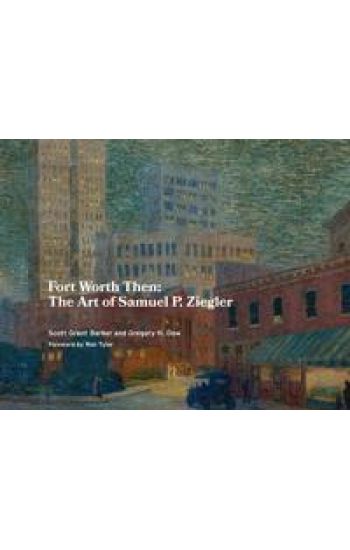
In Fort Worth Then, rare works of art by Samuel P. Ziegler capture the metamorphosis that the city of Fort Worth, Texas, experienced in the early twentieth century. Ziegler (1881–1967) was a Texas Christian University art professor who never had to look far to find inspiration, producing images of Fort Worth in the 1920s and 1930s that provide a unique glimpse into the city a hundred years ago. Unlike his local contemporaries, Samuel P. Ziegler regarded Fort Worth’s rapid urban development as an indispensable source of ideas. He expressed these ideas in paintings, drawings, etchings, and lithographs of significant buildings, street scenes, demolition and construction sites, and scenes along the Trinity River. Many of Ziegler’s works from this period are presented here for the first time. Of special note are his depictions of the TCU campus, which grew along with the city. A professional musician as well as an artist, Ziegler taught music at TCU before eventually becoming head of the visual arts department. In addition to creating images of the city, in the late 1920s he began to depict the oil boom erupting in counties just west of Fort Worth. Ziegler absorbed all these sights and turned them into art, embodying the mindset of Texas artists living in the Depression era who believed in and pursued the regionalist ideal.

Investor-State Dispute Settlement
Scott Miller; Gregory N. Hicks
Centre for Strategic International Studies,U.S.
2015
nidottu
Investor-State Dispute Settlement (ISDS) is a provision in Bilateral Investment Treaties (BITs) and other international investment agreements that allows investors to enter arbitration with states over treaty breaches. ISDS has become controversial in the United States and our negotiating partners; critics, including some governments, have argued that ISDS is unnecessary, while others insist it is illegitimate as public policy. Treaty-based investment protection represents a major advance in the fair treatment of aliens and the peaceful resolution of disputes. Given the alternatives, withdrawing from investment treaties—the logical conclusion of the critics’ position—would likely have negative consequences for economic growth and the rule of law. This report is an empirical review of ISDS, based on the record of disputes under existing investment treaties.
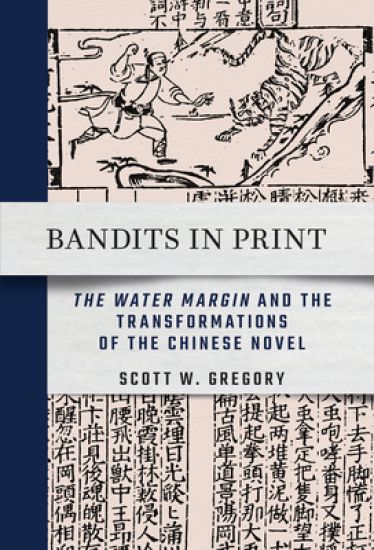
Bandits in Print examines the world of print in early modern China, focusing on the classic novel The Water Margin (Shuihu zhuan). Depending on which edition a reader happened upon, The Water Margin could offer vastly different experiences, a characteristic of the early modern Chinese novel genre and the shifting print culture of the era. Scott W. Gregory argues that the traditional novel is best understood as a phenomenon of print. He traces the ways in which this particularly influential novel was adapted and altered in the early modern era as it crossed the boundaries of elite and popular, private and commercial, and civil and martial. Moving away from ultimately unanswerable questions about authorship and urtext, Gregory turns instead to the editor-publishers who shaped the novel by crafting their own print editions. By examining the novel in its various incarnations, Bandits in Print shows that print is not only a stabilizing force on literary texts; in particular circumstances and with particular genres, the print medium can be an agent of textual change.
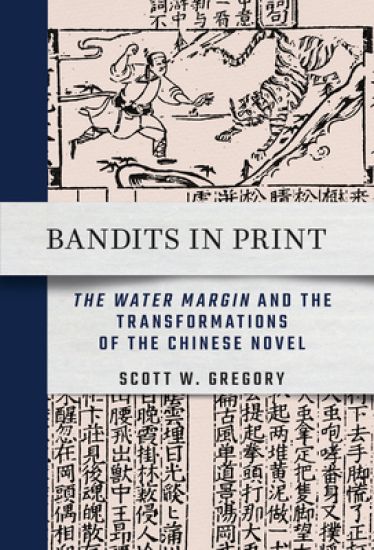
Bandits in Print examines the world of print in early modern China, focusing on the classic novel The Water Margin (Shuihu zhuan). Depending on which edition a reader happened upon, The Water Margin could offer vastly different experiences, a characteristic of the early modern Chinese novel genre and the shifting print culture of the era. Scott W. Gregory argues that the traditional novel is best understood as a phenomenon of print. He traces the ways in which this particularly influential novel was adapted and altered in the early modern era as it crossed the boundaries of elite and popular, private and commercial, and civil and martial. Moving away from ultimately unanswerable questions about authorship and urtext, Gregory turns instead to the editor-publishers who shaped the novel by crafting their own print editions. By examining the novel in its various incarnations, Bandits in Print shows that print is not only a stabilizing force on literary texts; in particular circumstances and with particular genres, the print medium can be an agent of textual change.


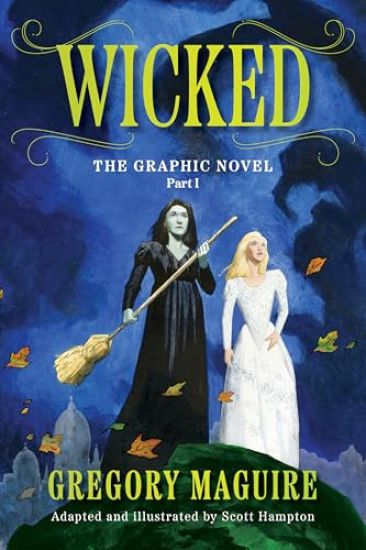
Experience the magic of Oz as you've never seen it before with this brand-new graphic novel adaptation of Gregory Maguire's masterpiece Wicked, the inspiration for the Broadway show and major motion picture--the first in a two-part series featuring gorgeous full-color illustrations by Scott Hampton.Like Dorothy when she crash-landed all those years ago, prepare to be swept into a new and colorful world in this first-ever graphic novel adaptation of Wicked. While the long-running Broadway musical and major motion picture take inspiration from this iconic novel, this is Oz as Gregory Maguire wrote it--a fantastical story with dark edges that explores morality and ambition, love and friendship, and discovering one's inner power. Elphaba was born with emerald-green skin--no easy burden in a land as mean and poor as Oz, where superstition and magic are not strong enough to explain or overcome the natural disasters of flood and famine. Still, Elphaba is smart, and by the time she enters Shiz University, she becomes a member of a charmed circle of Oz's most promising young citizens.But Elphaba's Oz is no utopia. The Wizard's secret police are everywhere. Animals--those creatures with voices, souls, and minds--are threatened with exile. Young Elphaba, green and wild and misunderstood, is determined to protect the Animals--even if it means combating the mysterious Wizard, even if it means risking her single chance at romance. Ever wiser in guilt and sorrow, she can find herself grateful when the world declares her a witch. And she can even make herself glad for that young girl from Kansas.

Wicked: The Graphic Novel Part II
Gregory Maguire; Scott Hampton
William Morrow Company
2026
nidottu

Security Operations Center Guidebook
Gregory Jarpey; Scott Mccoy
Butterworth-Heinemann Inc
2017
nidottu
Security Operations Center Guidebook: A Practical Guide for a Successful SOC provides everything security professionals need to create and operate a world-class Security Operations Center. It starts by helping professionals build a successful business case using financial, operational, and regulatory requirements to support the creation and operation of an SOC. It then delves into the policies and procedures necessary to run an effective SOC and explains how to gather the necessary metrics to persuade upper management that a company’s SOC is providing value. This comprehensive text also covers more advanced topics, such as the most common Underwriter Laboratory (UL) listings that can be acquired, how and why they can help a company, and what additional activities and services an SOC can provide to maximize value to a company.

The Political Science Student Writer's Manual and Reader's Guide
Gregory M. Scott; Stephen M. Garrison
Rowman Littlefield
2016
nidottu
The Political Science Student Writer's Manual and Reader's Guide is a practical guide to research, reading, and writing in political science. The Political Science Student Writer’s Manual and Reader’s Guide, Eighth Edition, is a set of instructions and exercises that sequentially develop citizenship, academic, and professional skills while providing students with knowledge about a wide range of political and governmental concepts, phenomena, and information sources. It begins by teaching beginning students to engage newspapers and other political media sources critically and analytically. It focuses on the crafts of writing and scholarship by providing the basics of grammar, style, formats and source citation, and then introduces students to a variety of rich information resources including the Congressional Record, Federal Register, and the Library of Congress. Students actively apply their knowledge and skills by corresponding with their representatives and commenting on pending government regulations. Part 1 concludes with campaign management, policy analysis, legislation assessment, and similar exercises that develop student skilled-observation proficiency. Part 2 prepares students to research, read, write, review, and critique political science scholarship. Finally, Part 3 teaches advanced students how to investigate public opinion; analyze domestic and international public policies; author amicus briefs; and participate in the universal community that deliberates the continuing rich tradition of political philosophy.

Evaluation of Cancer Among Occupants of Two Office Buildings: Health Hazard Evaluation Report: HETA 2008-0166-3079
Gregory Burr; Scott Brueck; Centers for Disease Control and Preventi
Createspace Independent Publishing Platform
2009
nidottu

Twitch and Shout, Hallelujah, Amen
Gregory John Nashif; Scott Waters
Resource Publications (CA)
2019
pokkari

Twitch and Shout, Hallelujah, Amen
Gregory John Nashif; Scott Waters
Resource Publications (CA)
2019
sidottu
Living with Tourette syndrome is not an easy adventure. Growing up in an age of ignorance for this disease caused turmoil, anguish, and hardship, to say the least. Through poetry, the author tried to capture the emotion and passion connected with this disorder, to help bring about an understanding of what Tourette syndrome is about, and that the path to freedom goes through the cross of Jesus Christ. May those who read be surely blessed. ""Gregory's book is a creative way to share his journey of living with Tourette's. His insight and ability to be vulnerable with his life's experiences will help many people who deal with challenges of their own."" --Brad Cohen, President, Brad Cohen Tourette Foundation ""This beautiful collection of redemptive poems comes from a life of struggles and trials. Although Gregory shares painful and sometimes humorous reflections of living with Tourette syndrome, we are left with the powerful reminder of the freedom that comes with forgiveness and hope and peace found in trusting God."" --Jason Thompson, Executive Director, Portland Fellowship ""Twitch and Shout, Hallelujah, Amen is a wonderful and compelling story of a man growing up with Tourette syndrome in a world where it wasn't named. And with family and God's support, Greg was able to use his writings to tug his reader's hearts while sending them off on a beautiful journey of acceptance, forgiveness, and love. I look forward to his next adventures."" --Heather Noland, Co-Founder, Your Story Discovered ""This is such a fantastic book of poetry, a must read for everyone, it will move you I am not a person who reads poetry, just blueprints, and this book has made me want to read more, a truly gifted writer."" --Matthew C. Boozer, president & CEO, Alpine Quality Homes Gregory John Nashif was not diagnosed with Tourette syndrome until he was twenty-nine, when his mom sent him an article she read in a magazine. He is now sixty-seven. His journey with Tourette syndrome has been long and sometimes bitter, but he had a friend who made the difference. His name is Jesus Christ--through him, the author learned to forgive, laugh, and experience joy. Nashif does not have a degree. He is not a psychologist. He is merely a person writing from his own experience.