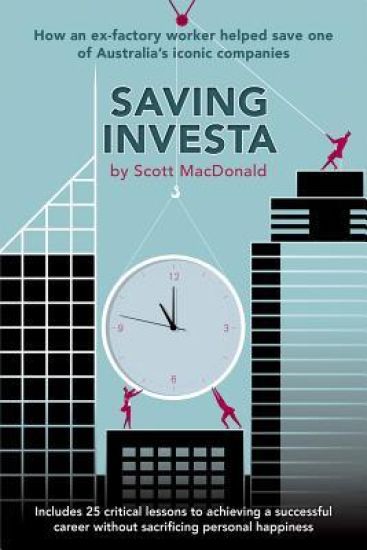
It was the biggest investment in the history of Morgan Stanley's $100 Billion real estate fund business; it was one of the largest deals in the history of Australian property. In 2007, Morgan Stanley bought Investa Property Trust for more than $6.5 billion. In less than a year, the investment was in trouble. Scott MacDonald, an American CEO with no prior experience in Australia, agreed to meet with the Company and Morgan Stanley executives in Sydney for one week in 2008. He returned home more than five years later after guiding Investa through its perilous journey to survival. The Company moved from crisis to crisis from 2008 through 2012, sometimes avoiding insolvency by hours. The drama of corporate survival is played against the backdrop of the Global Financial Crisis. The story of corporate struggle draws upon Scott MacDonald's personal experiences as chapters alternate between his life growing up and the fight to save Investa. His career includes an amazing range of experiences from fortune telling, street sweeper, and corporate CEO. Using stories and antidotes from every stage of his life, the Investa story is personalized and much more than a business memoir.
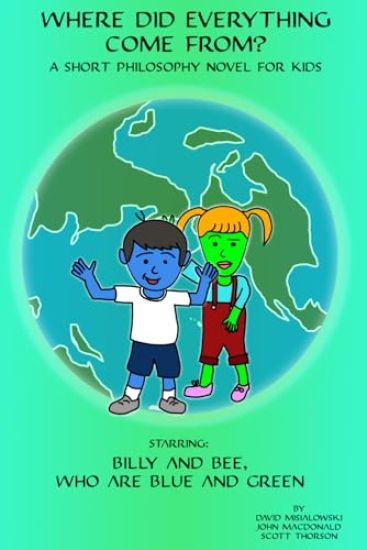
Join young Billy and Beatrice, squabbling siblings, as they visit imaginary neighborhoods in different time periods, and even blast off into outer space Engaging with oddball characters like Mr. Whom (a balloon), Mr. Sour Hour (a vulture) and Mr. Darwinkle (a bearded moose), they come to grips with Big Questions, like the nature of God, time, evolution, death, and the biggest question of all: where did everything come from?
This book examines the slide into a new Cold War in the Caribbean. The primary argument is that the Caribbean’s geopolitics have shifted from a period of relative great power disinterest in the aftermath of the Cold War to a gradual movement into a new Cold War in which a global rivalry between the U.S. and China is acted out regionally. The result of this is a gradual polarization of countries in the Caribbean as they are increasingly pressured to choose between Washington and Beijing (this being very evident during the Trump years). It can be argued that the U.S. focus on the Caribbean in the late 1990s through the early 21st century diminished, leaving the region open to a China ready and eager to do business and guided by a diverse set of objectives. The book brings the reader into a discussion on international relations with a main focus on U.S.-Chinese relations being played out in the Caribbean, an important strategic region for the North American country.
This book examines the slide into a new Cold War in the Caribbean. The primary argument is that the Caribbean’s geopolitics have shifted from a period of relative great power disinterest in the aftermath of the Cold War to a gradual movement into a new Cold War in which a global rivalry between the U.S. and China is acted out regionally. The result of this is a gradual polarization of countries in the Caribbean as they are increasingly pressured to choose between Washington and Beijing (this being very evident during the Trump years). It can be argued that the U.S. focus on the Caribbean in the late 1990s through the early 21st century diminished, leaving the region open to a China ready and eager to do business and guided by a diverse set of objectives. The book brings the reader into a discussion on international relations with a main focus on U.S.-Chinese relations being played out in the Caribbean, an important strategic region for the North American country.
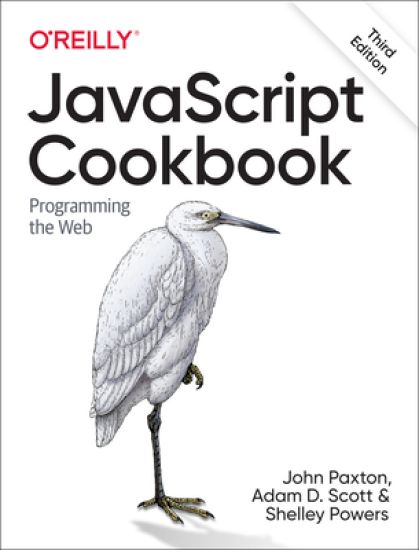
Why reinvent the wheel every time you run into a problem with JavaScript? This cookbook is chock-full of code recipes for common programming tasks, along with techniques for building apps that work in any browser. You'll get adaptable code samples that you can add to almost any project--and you'll learn more about JavaScript in the process. The recipes in this book take advantage of the latest features in ECMAScript 2020 and beyond and use modern JavaScript coding standards. You'll learn how to: Set up a productive development environment with a code editor, linter, and test server Work with JavaScript data types, such as strings, arrays, and BigInts Improve your understanding of JavaScript functions, including arrow functions, closures, and generators Apply object-oriented programming concepts like classes and inheritance Work with rich media in JavaScript, including audio, video, and SVGs Manipulate HTML markup and CSS styles Use JavaScript anywhere with Node.js Access and manipulate remote data with REST, GraphQL, and Fetch Get started with the popular Express application-building framework Perform asynchronous operations with Promises, async/await, and web workers
Visual artist John Scott is perhaps best known for his Trans Am of the Apocalypse, a car with the entire Book of Revelation scratched onto it, which is on display at the National Gallery of Canada. As Ann MacDonald discovered when she began working with him, Scott's personal life is no less compelling. So she sat down with Scott, a tape recorder and a stack of napkins for him to draw on -- Shiva's Really Scary Gifts is the result. From catching a baseball bat in the teeth to harbouring the FBI's most-wanted fugitive in his Queen Street studio, John Scott has, it seems, done it all. Join him as he, in words and drawings, terrifies a pair of robbers, loses a parent, and struggles to get a gun permit for an art installation -- John Scott's intriguing stories and the hundred accompanying drawings will help you get to know the man behind the Am.
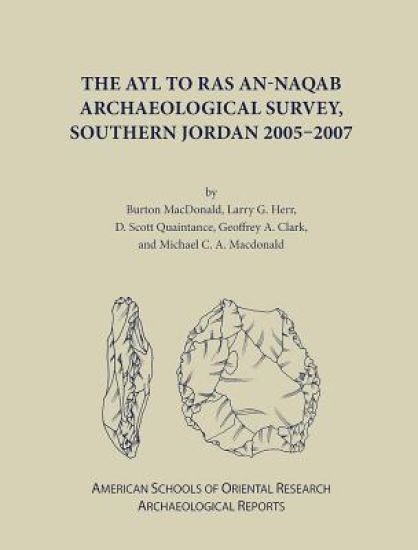
Two volumes, with DVD. Includes 74 figures, 24 tables and 100+ lithic drawings. Although segments of the ARNAS territory have been investigated for the past one hundred years, a comprehensive and systematic survey of the area had never been undertaken prior to the work of the ARNAS team members. The main goal of the project was to discover, record, and interpret archaeological sites within the survey territory. Some other objectives included: the discovery, on the basis of the artifactual material identified, the area's settlement patterns from the Lower Paleolithic (ca. 1.4mya) to the end of the Late Islamic period (AD 1918); a study of surface trends to determine, on the basis of the number of sites and the amount of lithics and/or sherds collected, where in the territory "settlements" were concentrated in antiquity; an investigation of the Khatt Shabib or "Shabib's Wall," a low stone wall running in a generally north-south direction to the east, ca. 5-10 km, of the Via Nova Traiana (Trajan's road built between AD 111-114); and to document the rock art, tribal markings, and inscriptional material of the region. ARNAS team members accomplished the objectives of the project by transecting and recording the archaeological remains found in 140 randomly-chosen squares (500 x 500 m), covering around five percent of each of the three topographical zones of the survey territory. This resulted in a statistically valid sample of the archaeological materials of the area. In addition, team members recorded 389 archaeological sites encountered within, adjacent to, or on their way to-from the squares. Lithic archaeological periods/cultural-temporal units represented in the survey territory are: Lower Paleolithic; Lower Paleolithic/Middle Paleolithic; Middle Paleolithic; Middle Paleolithic/Upper Paleolithic; Upper Paleolithic; Upper Paleolithic/Epipaleolithic; Epipaleolithic; Pre-Pottery Neolithic; and Chalolithic/Early Bronze I. As is often the case in the deflated landscapes of Jordan, Middle Paleolithic and Middle/Upper Paleolithic combined samples are the most prevalent lithic analytical units identified in the survey. Ceramic archaeological periods/cultural-temporal units represented in the survey territory are: Chalcolithic-Early Bronze; Iron II; Nabataean; Roman; Byzantine; and Late Islamic. In addition, sherds, in small numbers and at only a few sites, from the Late Bronze, Iron I, Hellenistic, Early Islamic, and Middle Islamic are also represented. The types of sites recorded included: agriculture villages or hamlets; aqueducts; camps -probably seasonal and pastoralists; caves; cemeteries and individual tombs/graves; check dams and terraces; cisterns; farms; forts; inscriptions; knapping areas; lithic and sherd scatters; milestones; reservoirs; roads; rock art and/or tribal markings; walls; watchtowers; water catchment facilities; and winnowing areas. The accompanying DVD contains Random Square Descriptions and Images, Site Descriptions and Images, a table compiling all debitage, cores, and retouched pieces, and Settlement Pattern Maps for all of the Cultural-Temporal Unites represented at ARNAS sites.
Analysis of the materials, primarily lithics and sherds, collected in the course of this project indicate that the area experienced its highest density of population during the Middle Paleolithic, Neolithic/Chalcolithic, Iron II, Nabataean and Roman, Byzantine, and Late Islamic periods. Relative to the settlement patterns of the area, it can be concluded that the area was a rural one where the chief activities were agriculture and pastoralism. The many farms, hamlets, villages, and camp sites documented show that the area most probably provisioned, during various archaeological periods, the major international sites of the area. The project has particular relevance for understanding the major site of Petra during the Nabataean, Roman, and Byzantine periods. In addition, it is important relative to the site of Udhruh during these three periods plus the Early and Late Islamic periods and the site of ash-Shawbak, located immediately to the north of the project's territory, during the Middle Islamic period. The objectives of The Shammakh to Ayl Archaeological Survey, Southern Jordan project were: to discover, record, and interpret archaeological sites in an area of approximately 590 km between Shammakh in the north and Ayl in the south in the southern segment of the Transjordan Plateau;to determine the area's settlement patterns from the Lower Paleolithic (ca. 1.4 mya) to the end of the Late Islamic period (AD 1918); to investigate the Pleistocene (as late as ca. 10,000 B.C.) sediments and lakes in the eastern segment of the survey territory;to document the many farms, hamlets, and villages that provisioned the major international sites of the area, for example, Ash-Shawbak, Petra, and Udhruh;to investigate further the Khatt Shabib or ‘Shabib's Wall,’ a low stone wall running in a generally north-south direction through the area;to record the inscriptions, rock drawings, and wasms (tribal brands) within the area;and to link up with previous work that the project director and others have carried out in southern Jordan.These objectives were accomplished by the transecting of 108 random squares and the documenting of 366 sites that range in date from the Lower Paleaolithic to the end of the Late Islamic period. Finally, the project contributed to the writing of the archaeological history of southern Jordan from Wadi al-Hasa in the north to Ras an-Naqab in the south and from the desert on the east to the international border between Jordan and Israel on the west.
This book explores the social justice implications of school autonomy reform within the context of public education in Australia. It is situated within and framed by global concerns about how public schools are navigating their ‘autonomy’ within increasingly marketised education systems.Drawing on extensive interviews with stakeholders and five in depth case study schools, the book calls attention to the ways in which the intentions of school autonomy reform to offer schools more freedom to make their own decisions and manage their own responsibilities have become increasingly contained by the market imperatives of economic e?ciency, competition and public accountability driving state and national education systems. We build on and enrich existing research in this area that highlights how market imperatives continue to exacerbate inequality within and between schools and their systems.An essential read for researchers and policymakers worldwide, the book provides insight into how education systems can better support public schools to mobilise their autonomy in socially just ways.
This book explores the social justice implications of school autonomy reform within the context of public education in Australia. It is situated within and framed by global concerns about how public schools are navigating their ‘autonomy’ within increasingly marketised education systems.Drawing on extensive interviews with stakeholders and five in depth case study schools, the book calls attention to the ways in which the intentions of school autonomy reform to offer schools more freedom to make their own decisions and manage their own responsibilities have become increasingly contained by the market imperatives of economic e?ciency, competition and public accountability driving state and national education systems. We build on and enrich existing research in this area that highlights how market imperatives continue to exacerbate inequality within and between schools and their systems.An essential read for researchers and policymakers worldwide, the book provides insight into how education systems can better support public schools to mobilise their autonomy in socially just ways.
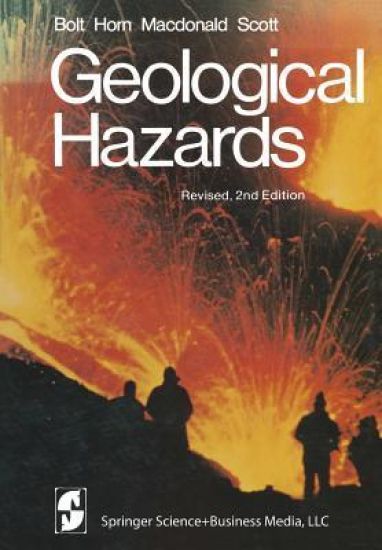
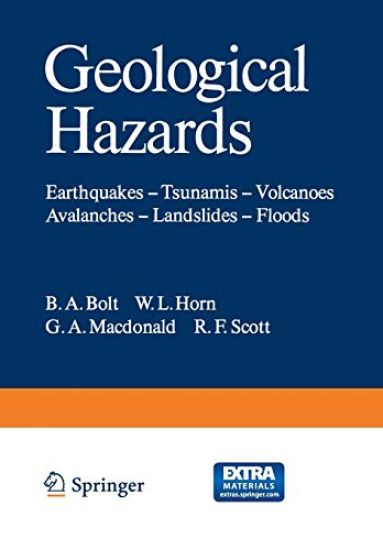
Growth of population, communication and interdependence among countries has sharpened the impact of natural disasters. Not only have calamities and miseries been given wider publicity, but the realization has grown that through rational study and foresight much can be done to mitigate these hazards to life and social wellbeing. In this book we present a summary account of hazards which nowadays are usually classified as geological: earthquakes, faulting, tsunamis, seiches, vol canoes, avalanches, rock and soil slides, differential settlement and liquefaction of soil, and inundation. The book is aimed first at the general reader who is interested in studying the history of such hazards and examining ways that risk can be reduced even if all dangers cannot be eliminated. We also hope that the book will be useful to college students in introductory courses in geology, engineering, geography, country and urban planning, and in environmental studies. We have tried to bring dut for the students the problems that remain to be solved.
Growth of population, communication and interdependence among countries has sharpened the impact of natural disasters. Not only have calamities and miseries been given wider publicity, but the realization has grown that through rational study and foresight much can be done to mitigate these hazards to life and social wellbeing. In this book we present a summary account of hazards which nowadays are usually classified as geological: earthquakes, faulting, tsunamis, seiches, vol canoes, avalanches, rock and soil slides, differential settlement and liquefaction of soil, and inundation. The book is aimed first at the general reader who is interested in studying the history of such hazards and examining ways that risk can be reduced even if all dangers cannot be eliminated. We also hope that the book will be useful to college students in introductory courses in geology, engineering, geography, country and urban planning, and in environmental studies. We have tried to bring out for the students the problems that remain to be solved.
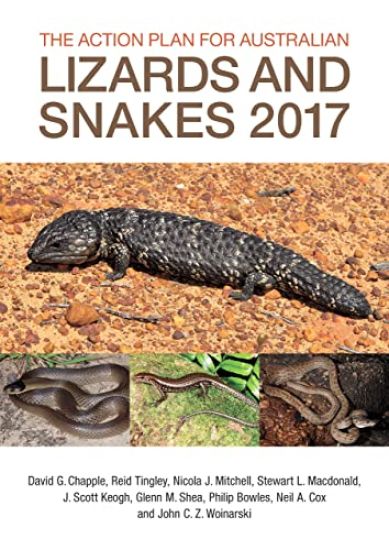
Lizards and snakes (squamate reptiles) are the most diverse vertebrate group in Australia, with approximately 1000 described species, representing about 10% of the global squamate diversity. Squamates are a vital part of the Australian ecosystem, but their conservation has been hindered by a lack of knowledge of their diversity, distribution, biology and key threats. The Action Plan for Australian Lizards and Snakes 2017 provides the first comprehensive assessment of the conservation status of Australian squamates in 25 years. Conservation assessments are provided for 986 species of Australian lizards and snakes (including sea snakes). Over the past 25 years there has been a substantial increase in the number of species and families recognised within Australia. There has also been an increase in the range and magnitude of threatening processes with the potential to impact squamates. This has resulted in an increase in the proportion of the Australian squamate fauna that is considered Threatened. Notably over this period, the first known extinction (post-European settlement) of an Australian reptile species occurred – an indication of the increasingly urgent need for better knowledge and management of this fauna. Six key recommendations are presented to improve the conservation management and plight of Australian squamates. This Action Plan represents an essential resource for research scientists, conservation biologists, conservation managers, environmental consultants, policy makers from Commonwealth and State/Territory governments, and the herpetological community. FEATURES First assessment of the conservation status of the Australian squamate fauna in 25 years. Complete assessment of the 986 Australian squamate reptile species recognised as at 2017. Analysis of the changes in conservation status of the squamate fauna over the past 25 years. Draft conservation assessments for the species described between the 2017 workshops and the 31st August 2018. Development of six key recommendations to improve the conservation management of Australian squamates.
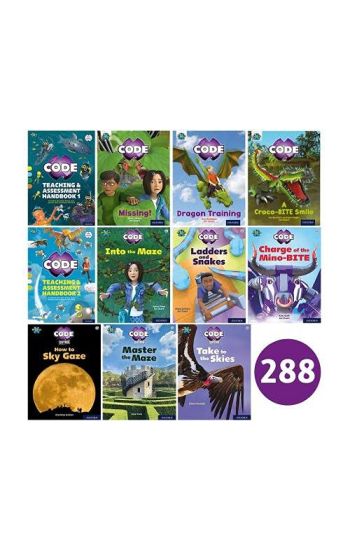
Project X CODE is specially developed to accelerate the progress of your struggling readers. This pack contains 3 copies each of all 96 CODE and CODE Extra books at Oxford Levels 3-11 (Book Bands Yellow-Lime) totalling 288 books; plus 2 copies of: Companion, The Adventure Begins, The Adventure Must End, Teaching and Assessment Handbooks 1 & 2.
Does history provide lessons for foreign policy makers today? Macdonald combines cognitive psychology theories about analogical reasoning, international relations theories about military intervention, and original archival research to analyze the role of historical information in foreign policy decision making. He looks at the role of historical analogies in Anglo-American decision making during foreign policy crises involving the possible use of force in regional contingencies during a crucial period in the 1950s when the West faced an emerging Soviet threat. This study analyzes the influence of situational and individual variables in a comparison of more than ten leaders from two nations facing four different crises.Rolling the Iron Dice describes the often significant effect of historical analogies on perceptions of the adversary and of allies, time constraints, policy options and risks, as well as the justification of policy in four crises: the 1950 Korean invasion; the 1951-53 Iranian oil nationalization incident; the 1956 Suez crisis; and the 1958 crisis in Lebanon and Jordan. Contrary to both the slippery slope and the escalation models of military intervention, Macdonald argues that leaders decide extremely early in a crisis, often on the basis of an historical analogy, but also based on perceptions of the rationality of an adversary, whether to use military force. Their decision does not change unless the adversary capitulates to every demand.
This is the first book to analyze how the technology to alter images and rapidly distribute them can be used for propaganda and to support deception operations.In the past, propagandists and those seeking to conduct deception operations used crude methods to alter images of real people, events and objects, which could usually be detected relatively easily. Today, however, computers allow propagandists to create any imaginable image, still or moving, with appropriate accompanying audio. Furthermore, it is becoming extremely difficult to detect that an image has been manipulated, and the Internet, television and global media make it possible to disseminate altered images around the world almost instantaneously. Given that the United States is the sole superpower, few, if any, adversaries will attempt to fight the US military conventionally on the battlefield. Therefore, adversaries will use propaganda and deception, especially altered images, in an attempt to level the battlefield or to win a war against the United States without even having to fight militarily. Propaganda and Information Warfare in the 21st Century will be of great interest to students of information war, propaganda, public diplomacy and security studies in general.
This is the first book to analyze how the technology to alter images and rapidly distribute them can be used for propaganda and to support deception operations.In the past, propagandists and those seeking to conduct deception operations used crude methods to alter images of real people, events and objects, which could usually be detected relatively easily. Today, however, computers allow propagandists to create any imaginable image, still or moving, with appropriate accompanying audio. Furthermore, it is becoming extremely difficult to detect that an image has been manipulated, and the Internet, television and global media make it possible to disseminate altered images around the world almost instantaneously. Given that the United States is the sole superpower, few, if any, adversaries will attempt to fight the US military conventionally on the battlefield. Therefore, adversaries will use propaganda and deception, especially altered images, in an attempt to level the battlefield or to win a war against the United States without even having to fight militarily. Propaganda and Information Warfare in the 21st Century will be of great interest to students of information war, propaganda, public diplomacy and security studies in general.