Kirjojen hintavertailu. Mukana 11 244 527 kirjaa ja 12 kauppaa.

Kirjahaku

Etsi kirjoja tekijän nimen, kirjan nimen tai ISBN:n perusteella.

1000 tulosta hakusanalla Seth Ward

Coming To The Cross: Poems by Seth Irving

Coming To The Cross: Poems by Seth Irving

Seth Irving

Independently Published
2019
nidottu
The riveting journey of author and poet Seth Irving as he delves deep into life's mysteries turning over every rock to find out the enigmas of God. Along this epic journey Seth discovers much about the world around him as well as himself and the God that is making him new each day. His journey to manhood symbolic to man's journey to God, in poetic rhythm Seth confounds himself and readers everywhere with a kinetic soul search that brings all things full circle as he himself comes ever so inquisitively to the cross of Jesus Christ. "As the testing of a boy, life will take a man through changes, as the forming of a man, in his image, God will shape us."
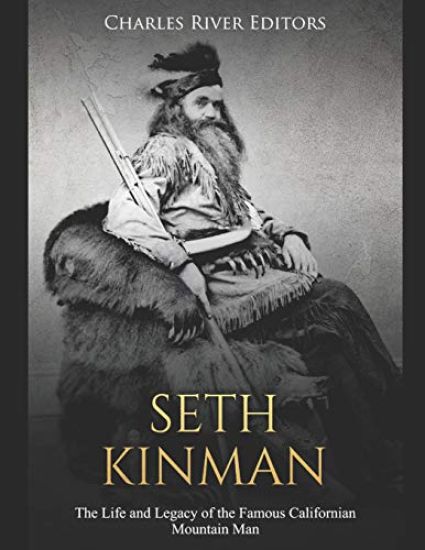
Seth Kinman: The Life and Legacy of the Famous Californian Mountain Man
*Includes pictures*Includes online resources and a bibliography for further readingBy the golden age of the mountain man in the mid-19th-century, there were perhaps only 3,000 living in the West. Their origins were disparate, although they included many Anglo-Americans. A good number hailed from wilderness regions of Kentucky and Virginia and throughout the newly purchased Louisiana Territory, which occupied the entire central section of the continent. French Canadians traveled from the north to work in the fur trade, while Creole-Europeans represented approximately 15% of the men known to be living the isolated mountain life. Others were of M tis, Spanish, American, Black, Indian, and mixed-blood origin, most often Iroquois or Delaware. Most came to the West in their late adolescent years, the oldest learning the trade in their 30s. Many roamed the west for as long as their constitutions would hold up under constant attacks on their health and personal safety. Some stayed too long and failed to survive the experience. Among the most famous, Jim Bridger arrived at the age of 16, while Edward Robinson was eventually killed in his 60s by what were known as "bad snakes," a reference to the Snake tribe in Idaho country. Jim Beckwourth left the mountains at 68 and Old Bill Williams died at the age of 62 when a band of Utes "made him to come." In the same vein, Americans have always shared an ongoing fascination with what was for them the realm of the "exotic" in the collective imagination. Such a preoccupation with alternative experience extends to a preoccupation with pre-recorded history, as it did in the furor over the discovery of extinct dinosaurs' first fossils. Similarly, stepping out of the familiar could satisfy the urge for both danger and wonder by contemplating the future, and the question of what might or might not exist. To this day, such a powerful imaginative force has underpinned the abundant science fiction and horror genres of modern films, including dramatic attempts at reviving and dominating massive and ancient beasts. Among the people who aimed to thrive in this deadly business, few became as famous or acclaimed as Seth Kinman. A tendency toward the eccentric is evident in many of the famous frontiersmen. The dangerous and solitary nature of such a life calling appears to require it, and the months of hardship between islands of human communication frequently creates it. Kinman, a notable early settler in Humboldt County, California, stands among the most diverse in his unorthodox frontier life. While most northern trappers were occupied almost solely with furnishing products to the European fur trade, Kinman, a more social person with eclectic skills, reveled in his associations with four American presidents and adoring crowds on the East Coast. In his time as a hunter supporting the forts and sawmills of his isolated region of Humboldt County, he also served as innkeeper, saloon owner, and a highly regarded musician. Most extraordinary of all was his work as a craftsman, fashioning novel furniture items taken from the bones, hides, and heads of his region's most exotic creatures, most notably elk and grizzly bear. To the non-explorer, Kinman and his creations came to symbolize the grandeur and impetus of western expansion, and such a status served as the perfect engine for the federal government's agenda and for the presidents for whom the West was an increasingly weighty issue. In his career, Kinman is believed to have personally killed over 800 grizzly bears and an untold number of elk. In what is now seen to be an environmental and social catastrophe, his prodigious "accomplishments" included the decimation of the national wildlife in his region and the wholesale abuse of the indigenous tribes in northern California.
Seth Kinman: The Life and Legacy of the Famous Californian Mountain Man
*Includes pictures*Includes online resources and a bibliography for further readingBy the golden age of the mountain man in the mid-19th-century, there were perhaps only 3,000 living in the West. Their origins were disparate, although they included many Anglo-Americans. A good number hailed from wilderness regions of Kentucky and Virginia and throughout the newly purchased Louisiana Territory, which occupied the entire central section of the continent. French Canadians traveled from the north to work in the fur trade, while Creole-Europeans represented approximately 15% of the men known to be living the isolated mountain life. Others were of M tis, Spanish, American, Black, Indian, and mixed-blood origin, most often Iroquois or Delaware. Most came to the West in their late adolescent years, the oldest learning the trade in their 30s. Many roamed the west for as long as their constitutions would hold up under constant attacks on their health and personal safety. Some stayed too long and failed to survive the experience. Among the most famous, Jim Bridger arrived at the age of 16, while Edward Robinson was eventually killed in his 60s by what were known as "bad snakes," a reference to the Snake tribe in Idaho country. Jim Beckwourth left the mountains at 68 and Old Bill Williams died at the age of 62 when a band of Utes "made him to come." In the same vein, Americans have always shared an ongoing fascination with what was for them the realm of the "exotic" in the collective imagination. Such a preoccupation with alternative experience extends to a preoccupation with pre-recorded history, as it did in the furor over the discovery of extinct dinosaurs' first fossils. Similarly, stepping out of the familiar could satisfy the urge for both danger and wonder by contemplating the future, and the question of what might or might not exist. To this day, such a powerful imaginative force has underpinned the abundant science fiction and horror genres of modern films, including dramatic attempts at reviving and dominating massive and ancient beasts. Among the people who aimed to thrive in this deadly business, few became as famous or acclaimed as Seth Kinman. A tendency toward the eccentric is evident in many of the famous frontiersmen. The dangerous and solitary nature of such a life calling appears to require it, and the months of hardship between islands of human communication frequently creates it. Kinman, a notable early settler in Humboldt County, California, stands among the most diverse in his unorthodox frontier life. While most northern trappers were occupied almost solely with furnishing products to the European fur trade, Kinman, a more social person with eclectic skills, reveled in his associations with four American presidents and adoring crowds on the East Coast. In his time as a hunter supporting the forts and sawmills of his isolated region of Humboldt County, he also served as innkeeper, saloon owner, and a highly regarded musician. Most extraordinary of all was his work as a craftsman, fashioning novel furniture items taken from the bones, hides, and heads of his region's most exotic creatures, most notably elk and grizzly bear. To the non-explorer, Kinman and his creations came to symbolize the grandeur and impetus of western expansion, and such a status served as the perfect engine for the federal government's agenda and for the presidents for whom the West was an increasingly weighty issue. In his career, Kinman is believed to have personally killed over 800 grizzly bears and an untold number of elk. In what is now seen to be an environmental and social catastrophe, his prodigious "accomplishments" included the decimation of the national wildlife in his region and the wholesale abuse of the indigenous tribes in northern California.

The Journals and Papers of Seth Pomeroy: Sometime General in the Colonial Service

The Journals and Papers of Seth Pomeroy: Sometime General in the Colonial Service

Seth Pomeroy; Louis Effingham De Forest; Charles Thompson Mathews

Literary Licensing, LLC
2012
sidottu
The Journals and Papers of Seth Pomeroy: Sometime General in the Colonial Service is a historical book that offers a glimpse into the life of Seth Pomeroy, a prominent figure in the colonial era. The book is a collection of Pomeroy's journals and papers, which were written during his time as a general in the colonial service. The book provides readers with an intimate look at Pomeroy's life and his experiences during the colonial period. It covers various topics such as military tactics, politics, and daily life in the colonies. The journals and papers also offer insights into Pomeroy's personal life, including his relationships with his family and friends. The book is written in a straightforward and informative style, making it accessible to a wide range of readers. It is an excellent resource for anyone interested in early American history, military history, or the life of Seth Pomeroy. Overall, The Journals and Papers of Seth Pomeroy: Sometime General in the Colonial Service is a fascinating and informative book that sheds light on an important figure in American history.Society Of Colonial Wars In The State Of New York, No. 38.This scarce antiquarian book is a facsimile reprint of the old original and may contain some imperfections such as library marks and notations. Because we believe this work is culturally important, we have made it available as part of our commitment for protecting, preserving, and promoting the world's literature in affordable, high quality, modern editions, that are true to their original work.
Seth: A Tale of Nations

Seth: A Tale of Nations

D. L. Bradley

Lulu.com
2013
pokkari
A fictional first person narrative of the death and birth of nations, told from the perspective of those who lived and created the times, a tale of passion, duty, love, and war told from the vantage of members of an extended family, the Adamsons.
A Sermon Preached at Concord, June 6th 1799, Before His Excellency the Governor, the Honorable Council, Senate, and House of Representatives, of the State of New-Hampshire. By Seth Payson, A.M. Pastor of the Church at Rindge
The 18th century was a wealth of knowledge, exploration and rapidly growing technology and expanding record-keeping made possible by advances in the printing press. In its determination to preserve the century of revolution, Gale initiated a revolution of its own: digitization of epic proportions to preserve these invaluable works in the largest archive of its kind. Now for the first time these high-quality digital copies of original 18th century manuscripts are available in print, making them highly accessible to libraries, undergraduate students, and independent scholars.The Age of Enlightenment profoundly enriched religious and philosophical understanding and continues to influence present-day thinking. Works collected here include masterpieces by David Hume, Immanuel Kant, and Jean-Jacques Rousseau, as well as religious sermons and moral debates on the issues of the day, such as the slave trade. The Age of Reason saw conflict between Protestantism and Catholicism transformed into one between faith and logic -- a debate that continues in the twenty-first century.++++The below data was compiled from various identification fields in the bibliographic record of this title. This data is provided as an additional tool in helping to insure edition identification: ++++British LibraryW029238Half-title: Election sermon, 1799.Portsmouth: New-Hampshire: Printed by John Melcher, printer to the state, 1799. 23, 1] p.; 8
Seth - A Misrepresented God in the Ancient Egyptian Pantheon
This study examines aspects of Seth which suggest that throughout Egyptian history he was continually worshipped and indeed, at times, enjoyed some prominence, notably in the Pre- and early-Dynastic periods, during the Hyksos interlude of the Second Intermediate Period and during the Ramesside era of the 19th and 20th Dynasties. Whilst previous authors have devoted some scholarship to these various aspects of Seth there have been very few attempts to bring all these together and to demonstrate that rather than being something of an 'outsider' to the Egyptian pantheon, he actually had an important role within it,