

Kirjahaku
Etsi kirjoja tekijän nimen, kirjan nimen tai ISBN:n perusteella.
1000 tulosta hakusanalla Shi Youwei
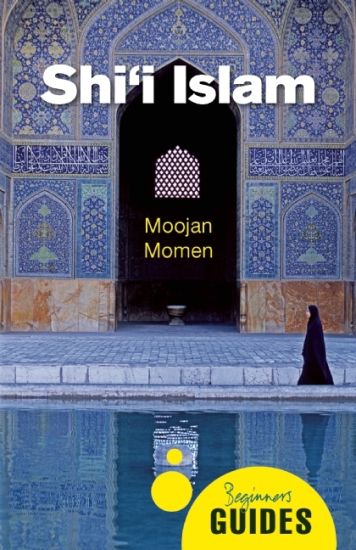
From infallible Imams to Ayatollahs in Iran, Shi’ism has long been a prominent, if misunderstood, branch of Islam. It regards Ali, Muhammad’s son-in-law, as the Prophet’s legitimate successor. But theological differences between the Shi’ah and Sunni Muslims have led to sectarian violence, massacres and the desecration of holy sites. In this Beginner’s Guide, Dr Moojan Momen offers an accessible and comprehensive overview of Shi’ism, tracing the history of the community, its leadership and doctrines, from its inception to modern times. Packed with useful tables, family trees and text boxes, this engaging and up-to-date guide is a perfect introduction to the historical and geopolitical causes of religious tensions still troubling the Middle East today.
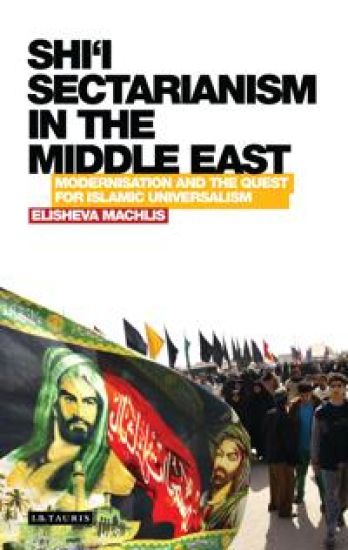
The eruption of violent sectarianism in Iraq following the US invasion in 2003 brought the question of Sunni-Shi‘i relations in the country to the forefront of the international public agenda. It also strengthened the popular belief that contemporary Shi'ism is inherently sectarian. Yet several decades earlier, Ayatollah Khomeini had declared an Islamic revolution and downplayed its Shi'i origins and links. So what is the true orientation of Shi‘i Islam in the contemporary era and how did modernisation alter its sectarian affiliation? This book contends that early Shi‘i reformist thought set the foundations for a more universal-oriented Shi'ism. Prominent reformists in the first half of the twentieth century from the holy cities of Karbala and Najaf in Iraq and from the Shi‘i centres in Southern Lebanon played a significant role in the renewal of Shi‘ism and laid the groundwork for its reinvention in the modern era. Exploring this shift towards a more ecumenical perception of Islam, Elisheva Machlis here provides a fresh perspective on inter-sectarian relations in contemporary Iraq and illuminates the intellectual roots of the Islamic revolution, by examining networks of Shi'i scholars such as Mu?ammad ?usayn K?shif al-Ghi??’ and Mu?sin al-Am?n al-‘?mil?, operating within a more globalised Muslim world. Drawing on the experiences of early Shi‘i reformists, such as ‘Abd al-?usayn Sharaf al-D?n al-M?saw? in Lebanon and Mu?ammad Jaw?d Mughniyya in Damascus, this book gives new insight on the future of inter-Muslim relations at a time of growing inter-sectarian contention, from the Iran-Iraq war to the post-2003 Sunni-Shi'i conflict in Iraq and al-Qa'ida's anti-Shi‘i message, taking into account questions of theology, historiography, jurisprudence and politics which all played a vital role in the transition to the contemporary era. The author here analyses the broad scholarly connections between Iran, Iraq and Lebanon in the twentieth century, while debating paramount questions of leadership, identity and group membership in the development of modern Shi‘ism. Examining the relationship between intellectual thought and socio-political development in the region, this book provides a new perspective concerning the future of an increasingly globalised Muslim world and will prove essential reading for students and specialists.
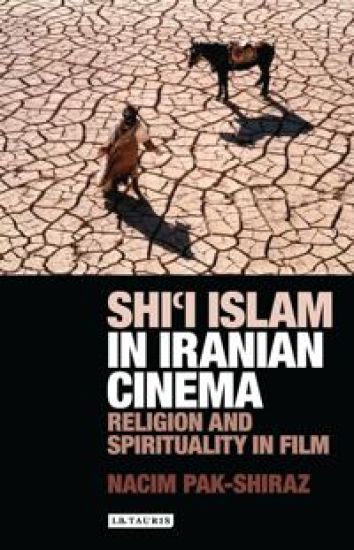
In recent years there has been a remarkable surge in Iranian films expressing contentious issues which would otherwise be very difficult to discuss publicly inside the Islamic Republic of Iran - such as the role of clergy in Iranian society. Nacim Pak-Shiraz here highlights how many Iranian film directors concern themselves with the content of the religious and historical narratives of culture and society, sparking debate about the medium's compatibility or incongruity with religion and spirituality. She explores the various ways that Shi'i discourse emerges on screen, and offers groundbreaking insights into both the role of film in Iranian culture and society, and how it has become a medium for exploring what it means to be Iranian and Muslim after thirty years of Islamic rule. This is invaluable reading students and scholars of Film Studies and contemporary Iranian cinema, but also of the culture and identity of Iran more widely.

Shi’i Islam and the Political Ideology of Ayatollah Mohammad Hossein Nai’ni
Ayatollah Mohammad Hossein Nai'ni
I.B. Tauris
2018
sidottu
Ayatollah Mohammad Hossein Nai’ni was perhaps the most important theoretician of Iran’s Constitutional Revolution (1905–11). Among his myriad influential works was Tanbih al-Umma wa Tanzih al-Milla (Enlightenment of the Community and Purification of Religion), published in 1909 at the height of the revolution and often cited as one of the most religiously authoritative expositions of democratic Islam. Shortly after the end of the civil war it was supressed and was not unearthed until more than 40 years later by Ayatollah Mahmoud Taleqhani, who published a new edition complete with introduction and extensive annotations in 1955. This later interpretation of Nai’ni’s work is arguably almost as important as the original itself and Taleqhani’s analysis was highly influential in debates leading to the 1979 Revolution and the foundation of the Islamic Republic. Nai’ni’s original text and Taleqhani’s later edition and annotations are both here reproduced in English for the first time, alongside an authoritative socio-historical introduction and commentary to contextualise these important and divisive agents of reform and revolution. The volume reassesses their complex legacy today and sheds vital light onto the two modern revolutions which bookended Iran’s twentieth century and the subsequent, and unfolding, post-modern reformation. This unique book is essential reading for understanding Iran, past and present, and political Islam.
In recent years there has been a remarkable surge in Iranian films expressing contentious issues which would otherwise be very difficult to discuss publicly inside the Islamic Republic of Iran - such as the role of clergy in Iranian society. Nacim Pak-Shiraz here highlights how many Iranian film directors concern themselves with the content of the religious and historical narratives of culture and society, sparking debate about the medium's compatibility or incongruity with religion and spirituality. She explores the various ways that Shi'i discourse emerges on screen, and offers groundbreaking insights into both the role of film in Iranian culture and society, and how it has become a medium for exploring what it means to be Iranian and Muslim after thirty years of Islamic rule. This is invaluable reading students and scholars of Film Studies and contemporary Iranian cinema, but also of the culture and identity of Iran more widely.
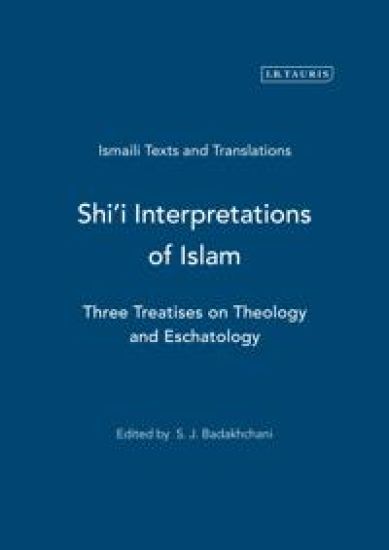
Shi'i Interpretations of Islam
I.B. Tauris in association with the Iran Heritage Foundation
2010
sidottu
One of the most prominent Muslim scholars and scientists of the medieval era, the Persian polymath Nasir al-Din Tusi (1201-1274) joined the Shi'a Nizari Ismaili community at a young age, as the armies of Genghis Khan poured across his homeland. In the course of a long and eminent career, first under the patronage of the Ismailis at the fortress of Alamut, and later with the conquering Mongols, he produced over 150 works on diverse subjects from theology and philosophy to mathematics and astronomy. His principal works on Ismaili doctrine, the Rawda-yi taslim (The Paradise of Submission) and the autobiographical Sayr wa suluk (Contemplation and Action), are already available in English translation by S J Badakhchani. In this volume, he offers new critical editions and translations of three shorter Ismaili works by Tusi, namely Aghaz wa anjam (The Beginning and the End), Tawalla wa tabarra (Solidarity and Dissociation), and Matlub al-mu'minin (Desideratum of the Faithful). In these three treatises, Tusi provides concise interpretations of key motifs in Ismaili doctrine, with special reference to the primordial nature of man, his earthly existence in relation to the imam, and his destiny in the hereafter.
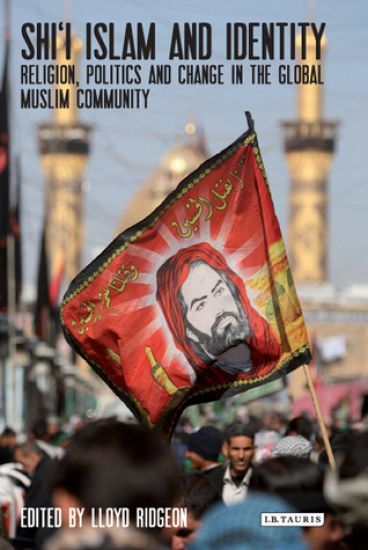
From the Civil War in Lebanon to the Iranian Revolution of 1978-79, from the dismantling of the Ba'athist regime in Iraq to the virtual splintering of the country; and from the chaos in Afghanistan to the victimisation of the Hazaras by the Taliban. Shi'i communities around the world have suffered from wars, revolutions and hostility. These problems, in different ways, have all involved a configuration of complicated events, a heritage of historical factors and interntional power politics that defy simplistic explanations. Here, Lloyd Ridgeon brings together an investigation of the nature of contemporary Shi'ism. He and his collaborators here focus on the creation of identities- showing the diversity of thought within the Shi'i world. They demonstrate the transnational nature of Shi'i networs and the forces of tradition and modernity influencing current developments in Shi'i identity both in the Middle East and in the West. This volume looks at both the attempts of authorities to construct a cohesive Shi'i identity (by using, for example, Iranian school books as an indicator of sanctioned facets of what it means to be Iranian) as well as the ways in which identity is created and developed by minority groups in the Diaspora. It also offers an analysis of the Hazaras of Afghanistan- so often overlooked when attempts to understand Afghanistan are made. It is this ethnic minority, which was so marginalised and victimised under the Taliban that offers an example of the trend of the rise of Islamism amongst the Shi'a. Moreover, by looking further afield to the Shi'a of Senegal, and asking the question of whether the Alevis of Turkey comprise part of the global Shi'i community, this book emphasizes the ways in which traditional patterns of social organisation are being transformed. Shi'i Islam and Identity highlights these global networks, and shows that it is inaccurate to speak of a 'Shi'i Crescnt'; rather, Shi'i worlds range from Senegal, Afghanistan, Pakistan, Lebanon, Iran and Iraq, to Turkey, Albania and to European capitals such as London and Berlin. This book is thus of interest to those looking at modern religion and its contemporary forms, as well as those researching Shi'ism more specifically.
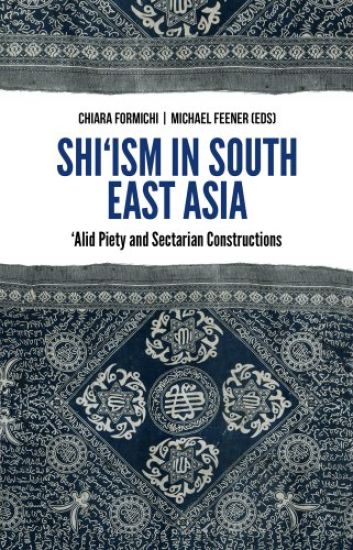
Shi'ism in South East Asia
C Hurst Co Publishers Ltd
2015
sidottu
This is the first work available in any language to extensively document and critically discuss traditions of 'Alid piety and their modern contestations in the region. The concept of 'Alid piety allows for a reframing of our views on the widespread reverence for 'Ali, Fatima and their progeny that emphasises how such sentiments and associated practices are seen as part of broad traditions shared by many Muslims, which might or might not have their origins in a specifically Shi'a identity. In doing so, it facilitates the movement of academic discussions out from under the shadow of polemical sectarian discourses on 'Shi'ism' in Southeast Asia. The chapters include presentations of new material from previously unpublished early manuscript sources from Muslim vernacular literatures in the Malay, Javanese, Sundanese, Acehnese and Bugis languages, as well as rich new ethnography from across the region. These studies engage with cultural, intellectual, and performative traditions, as well as the ways in which 'Alid piety has been transformed in relation to more strictly sectarian identifications since the Iranian Revolution in 1979.

Shi Terri at War: Book Two In The Shi Terri Trilogy
M. S. Moore
Createspace Independent Publishing Platform
2017
nidottu
With Lissy dead Emrys and the Elements struggle with their fight against Tyranus. Little do they know help is on the way from a most unexpected place.
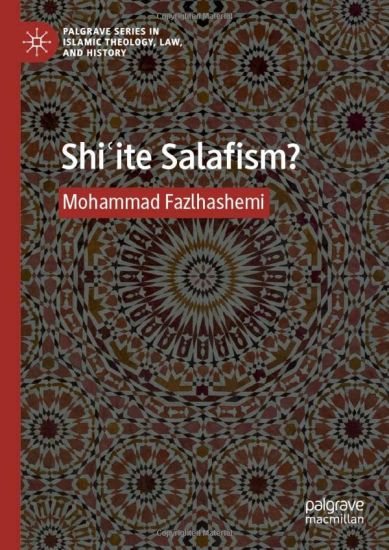
This book is about the emergence of a stream of ideas in the 1930s and 1940s within Imamiyya Shi?ite context, focusing primarily on the thought of Shari?at Sangelaji (1891–1944), who harshly criticized a number of basic theological beliefs within Imamiyya Shi?a. Accusing them of polytheism and superstition on account of their ideas about shifa?a intercession, and their pilgrimage to the graves of the Shi?ite imams, he also criticized the belief that the twelfth imam al-Mahdi has been living in covertness since the 9th century, and that a number of historical figures will be resurrected upon his return to assist him in the final battle against the evil. Taking at once a theological and historical approach, Mohammad Fazlhashemi investigates whether Salafist mainstreaming thoughts, despite its hostile attitude towards Shi?a Islam, had any influence over Shi?ite theology. He explores whether and what components of the Salafist traditionof ideas have been adopted by theologians within Imamiyya shi?a or whether in fact whether these changes were the result of an internal theological tug-of-war within the Imamiyya Shi?a that was influenced by the interwar modernization efforts. Fazlhashemi examines the characteristic features of this flow of ideas, its sources of inspiration, the reception of its thought, and the imprints it made on theological currents within Imamiyya shi?a in Iran during its time and time thereafter.
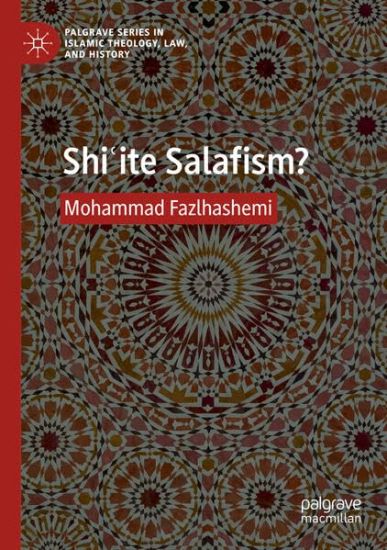
This book is about the emergence of a stream of ideas in the 1930s and 1940s within Imamiyya Shi?ite context, focusing primarily on the thought of Shari?at Sangelaji (1891–1944), who harshly criticized a number of basic theological beliefs within Imamiyya Shi?a. Accusing them of polytheism and superstition on account of their ideas about shifa?a intercession, and their pilgrimage to the graves of the Shi?ite imams, he also criticized the belief that the twelfth imam al-Mahdi has been living in covertness since the 9th century, and that a number of historical figures will be resurrected upon his return to assist him in the final battle against the evil. Taking at once a theological and historical approach, Mohammad Fazlhashemi investigates whether Salafist mainstreaming thoughts, despite its hostile attitude towards Shi?a Islam, had any influence over Shi?ite theology. He explores whether and what components of the Salafist traditionof ideas have been adopted by theologians within Imamiyya shi?a or whether in fact whether these changes were the result of an internal theological tug-of-war within the Imamiyya Shi?a that was influenced by the interwar modernization efforts. Fazlhashemi examines the characteristic features of this flow of ideas, its sources of inspiration, the reception of its thought, and the imprints it made on theological currents within Imamiyya shi?a in Iran during its time and time thereafter.

shi neng lao ren ri jian zhao gu fu wu de shi yong dui yu jia ting shi ying ying xiang zhi tan tao
Guo Qiang Xu
¿¿¿¿¿¿¿
2019
nidottu



shi chang dao xiang zu zhi xue xi zu zhi chuang xin yu zu zhi ji xiao jian guan xi zhi yan jiu
Yi Ping Lin
¿¿¿¿¿¿¿
2017
nidottu




shi wen xia an ji gao fen zi you dao fang sheng he cheng wei na mi jie gou TiO2
Yong Yan
¿¿¿¿¿¿¿
2017
nidottu