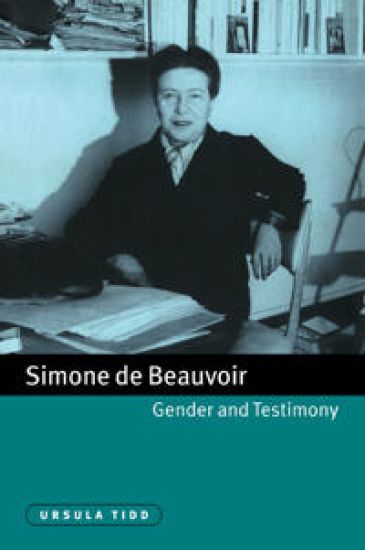
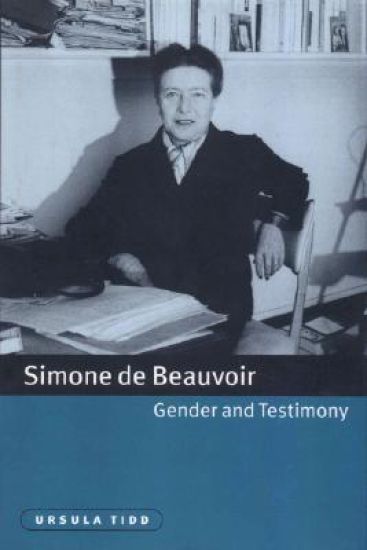
This is the first full-length study to explore Simone de Beauvoir’s autobiographical and biographical writings in the context of ideas on selfhood formulated in Le deuxième sexe and her other philosophical essays of the 1940s. Drawing on recent work in autobiographical studies and working within a broadly Foucauldian framework, Ursula Tidd offers a detailed analysis of Beauvoir’s auto/biographical strategy as a woman writer seeking to write herself into the male-constructed autobiographical canon. Tidd first analyses Beauvoir’s notions of selfhood in her philosophical essays, and then discusses her four autobiographical and two biographical volumes, along with some of her unpublished diaries, in an attempt to explore notions of selectivity, and the politics of truth-production and reception. The study concludes that Beauvoir’s vast auto/biographical project, situated in specific personal and historical contexts, can be read as shaped by a testimonial obligation rooted in a productive consciousness of the Other.
Meet Simone Biles Fact-filled Rookie Read-About Biographies introduce the youngest readers to influential women and men, both past and present. Colorful photos and age appropriate text encourage children to read on their own-as they learn about people like Serena Williams, Neil Armstrong, Rosa Parks, Anne Frank and many more. From the time she was a little girl, Simone wanted to be a world-class gymnast. Through hard work and determination she made her dreams come true. Read this book to learn all about Olympic champion Simone Biles and her path to glory.
Simone Weil - philosopher, religious thinker, mystic, social/political activist - is notoriously difficult to categorize, since her life and writings challenge traditional academic boundaries. As many scholars have recognized, she set out few, if any, systematic theories, especially when it came to religious ideas. In this book, A. Rebecca Rozelle-Stone and Lucian Stone illuminate the ways in which Weil stands outside Western theological tradition by her use of paradox to resist the clamoring for greater degrees of certainty. Beyond a facile fallibilism, Simone Weil's ideas about the super-natural, love, Christianity, and spiritual action, and indeed, her seeming endorsement of a sort of atheism, detachment, foolishness, and passivity, begin to unravel old assumptions about what it is to encounter the divine.
Help your little one dream big with a Little Golden Book biography about Olympic medalist and world-champion gymnast Simone Biles Little Golden Book biographies are the perfect introduction to nonfiction for preschoolers. This Little Golden Book about Simone Biles--the superstar Olympic athlete whose performance in the gymnastics arena has cemented her GOAT status--is an inspiring read-aloud for young children. Look for more Little Golden Book biographies: - LeBron James- Lionel Messi- Tom Brady- Muhammad Ali- Katie Ledecky
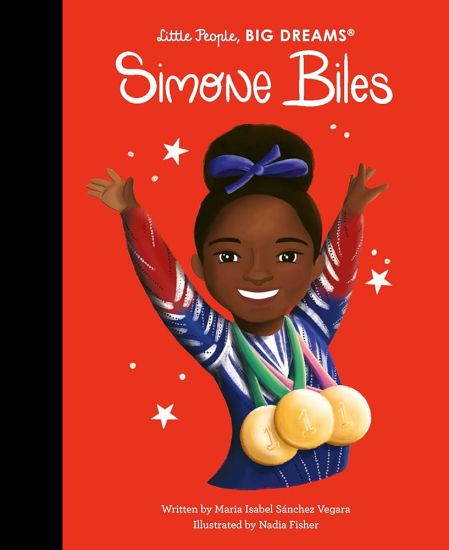
Discover the inspirational life of Simone Biles, the most decorated gymnast in history, who continues to carve her path with unparalleled brilliance and individuality. Growing up in foster care, Simone’s gymnastics training was an anchor in her life. She first tried the sport after visiting her local gym on a field trip. Coaches spotted her natural talent and, after years of hard work, she began winning world championships and Olympic gold medals. Widely cited as the greatest gymnast of all time, Simone is also an advocate for mental health awareness, having famously put her health before her sport by withdrawing from the 2020 Olympic finals. At the 2024 Olympics, Simone staged one of the most dramatic comebacks in sport history, propelling the U.S. team to win gold with her dazzling routines. This picture book tells her heroic story in a way that inspires young children to follow their dreams while taking care of themselves.This powerful book features stylish and quirky illustrations and extra facts at the back, including a biographical timeline with historical photos and a detailed profile of the gymnast’s life.Little People, BIG DREAMS is a bestselling biography series for kids that explores the lives of outstanding people, from designers and artists to scientists and activists. All of them achieved incredible things, yet each began life as a child with a dream.This empowering series of books offers inspiring messages to children of all ages, in a range of formats. The board books are told in simple sentences, perfect for reading aloud to babies and toddlers. The hardback and paperback versions present expanded stories for beginning readers. With rewritten text for older children, the treasuries each bring together a multitude of dreamers in a single volume. You can also collect a selection of the books by theme in boxed gift sets. Activity books and a journal provide even more ways to make the lives of these role models accessible to children.Inspire the next generation of outstanding people who will change the world with Little People, BIG DREAMS!
In this book from the best-selling Little People, BIG DREAMS series, discover the inspiring life of Simone Biles, the record-breaking gymnast and mental-health advocate. Growing up in foster care, Simone's gymnastics training was an anchor in her life. She first tried the sport after visiting her local gym on a field trip. Coaches spotted her natural talent and, after years of hard work, she began winning world championships and Olympic gold medals. Widely cited as the greatest gymnast of all time, Simone is also an advocate for mental health awareness, having famously put her health before her sport by withdrawing from the 2020 Olympic finals. At the 2024 Olympics, Simone staged one of the most dramatic comebacks in sports history, propelling the U.S. team to win gold with her dazzling routines. This picture book tells her heroic story in a way that inspires young children to follow their dreams while taking care of themselves. This powerful book features stylish and quirky illustrations and extra facts at the back, including a biographical timeline with historical photos and a detailed profile of the gymnast's life. Little People, BIG DREAMS is a best-selling biography series for kids that explores the lives of outstanding people, from designers and artists to scientists and activists. All of them achieved incredible things, yet each began life as a child with a dream. This empowering series of books offers inspiring messages to children of all ages, in a range of formats. The board books are told in simple sentences, perfect for reading aloud to babies and toddlers. The hardcover and paperback versions present expanded stories for beginning readers. With rewritten text for older children, the treasuries each bring together a multitude of dreamers in a single volume. You can also collect a selection of the books by theme in boxed gift sets. Activity books and a journal provide even more ways to make the lives of these role models accessible to children. Inspire the next generation of outstanding people who will change the world with Little People, BIG DREAMS
Acknowledged by many feminists as the single most important theoretical work of the twentieth century, Simone de Beauvoir's The Second Sex (1949) nevertheless occupies an anomalous place in the feminist 'canon'. Yet it has had an undeniable impact, not only on the development of critiques of sexual politics but on twentieth-century western thinking about the concept of 'woman' in general.This collection of six new essays by scholars from the disciplines of French, English literature, history, cultural criticism, feminist theory and philosophy makes a valuable contribution to the task of re-reading and reassessing this enormously influential text for a new generation of feminist readers, and also for cultural theorists, for whom the question of 'the feminine' is at the centre of key debates in philosophy and postmodernity.The contributors provide a significantly new rethinking of the place of The Second Sex in cultural history and of women and representation, the role of 'fictions' and the problem of ethical agency in the work of the leading intellectual woman of this age.
Simone de Beauvoir developed her philosophy of lived experience as she actually wrote fiction. Hence Beauvoir should be placed among major philosophical novelists of the twentieth-century like Toni Morrison and Nadine Gordimer, and Beauvoir's theory of the metaphysical novel acknowledges multicultural traditions of story-telling and song which are not locked into the theoretical abstractions of the Greek philosophical tradition. In Simone de Beauvoir's Philosophy of Lived Experience, Eleanore Holveck presents Simone de Beauvoir's theory of literature and metaphysics, including its relationship to the philosophers Edmund Husserl, Martin Heidegger, Immanuel Kant, Maurice Merleau-Ponty and Jean-Paul Sartre, with references to the literary tradition of Goethe, Maurice Barrès, Arthur Rimbaud, André Breton, and Paul Nizan. The book provides a detailed philosophical analysis of Beauvoir's early short stories and several major novels, including The Mandarins and L'invitée, from the point of view of "other" women who appear on the fringes of Beauvoir's fiction: shop girls, seamstresses, and prostitutes. Holveck applies Beauvoir's philosophy to her own lived experience as a working-class teenager who grew up in jazz clubs similar to those Beauvoir herself visited in New York and Chicago.
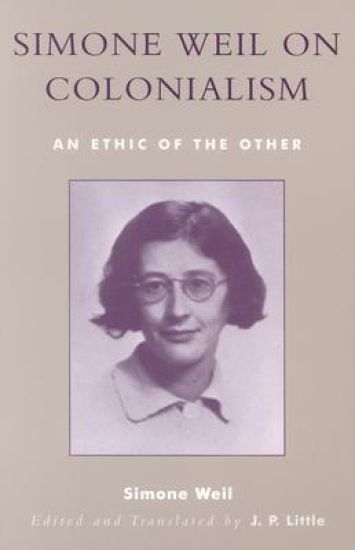
In 1931, Simone Weil read an article by Louis Roubaud in the Petit Parisien that exposed the Yen Bay massacre in Indochina. That article opened Weil's eyes, and from then until her death in exile in 1943, she cared most deeply about the French colonial situation. Weil refused to accept the contradiction between the image of France as champion of the rights of man and the reality of France's exploitation and oppression of the peoples in its territories. Weil wrote thirteen articles or letters about the situation, writings originally published in French journals or in French collections of her work. J. P. Little's fluid and clear translations finally introduce to English-speaking scholars and students this important element of Weil's political consciousness.
This book provides the first comprehensive introduction to Simone de Beauvoir's philosophical thought. Beauvoir has long been recognized as the twentieth century's leading feminist writer, but the full extent of her significance as a philosopher is just coming into focus. This study examines the history of Beauvoir's development into one of the most original and influential thinkers of her era. The Fullbrooks begin with an account of Beauvoir's formation as a philosopher. They then explore her early writing on philosophical method and the ways this shaped her fiction. The book traces the development of Beauvoir's central theories of embodied consciousness and intersubjectivity, and examines her concepts of the "individual" and the "social other". An analysis of Beauvoir's ethics of liberation leads to philosophical readings of her great works of applied ethics, The Second Sex and Old Age. Finally, Beauvoir's contribution to continuing debates about consciousness, the body, the self and the other is reassessed. The publication of this introduction to Beauvoir's philosophy is an important contribution to the current renaissance of Beauvoir studies. Clear, accessible and lively, this book is essential reading not only for students of Beauvoir but for anyone interested in the submerged record of women's impact on philosophy.
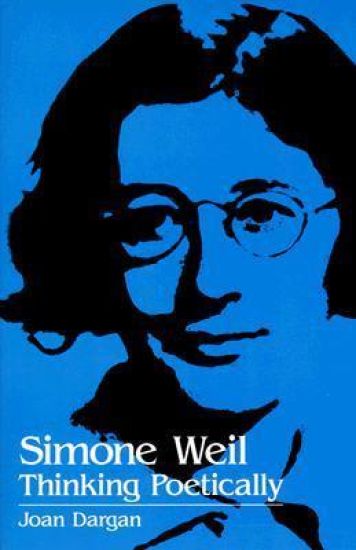
Situates Weil's writing within the French literary tradition, and recognizes her as a master stylist.Simone Weil created a memorable œuvre remarkable for its lucid, striking, and seemingly transparent prose. Aphoristic and impersonal in tone, it is the instrument of a master stylist. The first to recognize Weil's achievement as a writer, this book situates her work within the French literary tradition, showing its affinities with Pascal and Baudelaire, and acknowledges its kinship to the works of poets and writers of her generation, notably the poets René Char and Marina Tsvetaeva. The parallel between Weil's concept of decreation and the impersonality of the speaker in her prose is shown ultimately to be related to her will to surpass the boundaries of the written page in her drive to self-immolation. Close reading of passages from her notebooks, several short texts, and a proposal for front-line nurses addressed to the Free French illustrates the forces and influences at work in her writing.
Philosopher, theologian, critic, sociologist, political activist -- Simone Weil was among the foremost thinkers of our time. Best known in this country for her theological writing, Weil wrote on a great variety of subjects ranging from classical philosophy and poetry, to modern labor, to the language of political discourse. The present anthology offers a generous collection of her work, including essays never before translated into English and many that have long been out of print. It amply confirms Elizabeth Hardwick's words that Simone Weil was "one of the most brilliant and original minds of twentieth-century France" and "a woman of transcendent intellectual gifts and the widest learning." A longtime Weil scholar, Sian Miles has selected essays representative of the wide sweep of Weil's work and provides a superb introduction that places Weil's work in context of her life and times.
Long before postmodern or deconstructionist ideas became current, Simone Weil was concerned with recognizing the absence of consistency and the continual presence of reversals and contradictions in life. She was someone for whom the task of clarifying her perceptions of reality and meaning was an ongoing one. She challenged contemporary views on such complex issues as human nature, good and evil, divinity and truth. Weil's work offers a voice for those segments of society that are generally under-represented, misrepresented or totally silent in conventional historical and philosophical writings. In this introduction to Simone Weil's ideas, and the political and intellectual circumstances of her work, the authors make Weil's complex and at times elusive ideas accessible to readers. They delineate how her ideas evolved, and provide compelling excerpts from her writings to let her speak for herself. In addition, the authors provide their own interpretation of Weil's work.
Simone de Beauvoir continues to dominate twentieth century feminist theory, yet her work is the focus of inflamed debate amongst theorists of feminism. This accessible introduction to de Beauvoir's life and ideas considers the themes and tensions which inform her work. Mary Evans shows how de Beauvoir's writings resist simplistic interpretations and cannot be reduced to simple oppositions between masculine and feminine, rational and irrational, or social and natural. Highlighting the autobiographical aspects in de Beauvoir's work, Evans presents a new and important analysis of the complex relationship between fact, fiction and autobiography.
Over fifty years after her death, Simone Weil (1909-1943) remains one of the most searching religious inquirers and political thinkers of the twentieth century. Albert Camus said she had a ""madness for truth."" She rejected her Jewishness and developed a strong interest in Catholicism, although she never joined the Catholic church. Both an activist and a scholar, she constantly spoke out against injustice and aligned herself with workers, with the colonial poor in France, and with the opressed everywhere. She came to believe that suffering itself could be a way to unity with God, and her death at thirty-four has been recorded as suicide by starvation.This extraordinary study is primarily a topography of Weil's mind, but Thomas Nevin is persuaded that her thought is inextricably bound to her life and dramatic times. Thus, he not only addresses her thoughts and her prejudices but examines her reasons for entertaining them and gives them a historical focus. He claims that to Weil's generation the Spanish War, the Popular Front, the ascendance of Hitlerism, and the Vichy years were not mere backdrops but definitive events.Nevin explores in detail not only matters of continuing interest, such as Weil's leftist politics and her attempt to embrace Christianity, but also hitherto unexamined aspects of her life and work which permit a deeper understanding of her: her writings on science, her work as a poet and dramatist, and her selective friendships. The thread uniting these topics is her struggle to maintain her independence as a free thinker while resisting community such as Judaism could have offered her. Her intellectual struggles eloquently reveal the desperate isolation of Jews torn between the lure of assimilation and the tormented dignity of their communal history.Nevin's massive research draws on the full range of essays, notebooks, and fragments from the Simone Weil archives in Paris, many of which have never been translated or published.Originally published in 1991. A UNC Press Enduring Edition -- UNC Press Enduring Editions use the latest in digital technology to make available again books from our distinguished backlist that were previously out of print. These editions are published unaltered from the original, and are presented in affordable paperback formats, bringing readers both historical and cultural value.