Kirjojen hintavertailu. Mukana 11 627 220 kirjaa ja 12 kauppaa.

Kirjahaku

Etsi kirjoja tekijän nimen, kirjan nimen tai ISBN:n perusteella.

1000 tulosta hakusanalla Solomon Spaulding

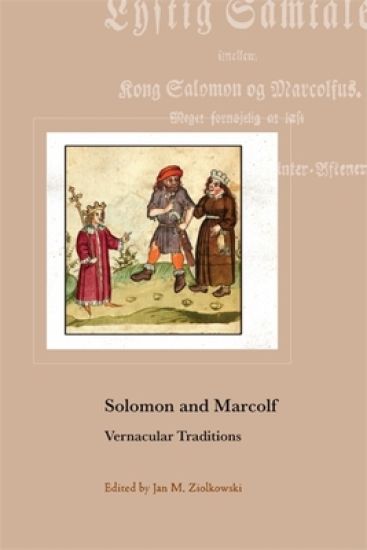
Solomon and Marcolf

Solomon and Marcolf

HARVARD UNIVERSITY PRESS
2022
nidottu
The Latin prose Solomon and Marcolf, enigmatic in origins, has been a puzzle from long before the sixteenth-century French author François Rabelais through the twentieth-century Russian critic Bakhtin to today. Though often called a dialogue, the second of its two parts comprises a rudimentary novel with twenty episodes. In 2009 the "original" received at last an edition and translation with commentary as the first volume in the Harvard Studies in Medieval Latin series. Solomon and Marcolf: Vernacular Traditions, the fourth volume in the series, displays the mysteries of the tradition. Solomon relates to the biblical king, but did Marcolf originate in Germanic or Eastern regions? Here lovers of literature and folklore may explore, in English for the first time, relevant texts, from the twelfth through the early eighteenth century. These astonishingly varied and fascinating pieces, from Iceland in the North and West through Russia in the East and Italy in the South, have been translated from medieval and early modern French, Russian, German, Icelandic, Danish, and Italian. The book opens with snapshots of two nineteenth-century polymaths, the Englishman John M. Kemble and Russian Aleksandr Veselovskii, whose hypotheses can now be evaluated. An appendix documents awareness of Solomon and Marcolf in late medieval and early modern times.

Selected Poems of Solomon Ibn Gabirol

Selected Poems of Solomon Ibn Gabirol

Solomon Ibn Gabirol

Princeton University Press
2001
pokkari
Poet, philosopher, and sensitive misanthrope, a spectacular fly in the ointment of the refined eleventh-century Andalusian-Jewish elite, Solomon Ibn Gabirol comes down to us as one of the most complicated intellectual figures in the history of post-biblical Judaism. Unlike his worldly predecessor Shmuel HaNagid, the first important poet of the period, Ibn Gabirol was a reclusive, mystically inclined figure whose modern-sounding medieval poems range from sublime descriptions of the heavenly spheres to poisonous jabs at court life and its pretenders. His verse, which demonstrates complete mastery of the classicizing avant-garde poetics of the day, grafted an Arabic aesthetic onto a biblical vocabulary and Jewish setting, taking Hebrew poetry to a level of metaphysical sophistication and devotional power it has not achieved since. Peter Cole's selection includes poems from nearly all of Ibn Gabirol's secular and liturgical lyric genres, as well as a complete translation of the poet's long masterwork, "Kingdom's Crown." Cole's rich, inventive introduction places the poetry in historical context and charts its influence through the centuries. Extensive annotations accompany the poems. This companion volume to Peter Cole's critically acclaimed Selected Poems of Shmuel HaNagid presents the first comprehensive selection of Ibn Gabirol's verse to be published in English and brings to life an astonishing body of poetry by one of the greatest Jewish writers of all time.
Solomon's Knot

Solomon's Knot

Robert D. Cooter; Hans-Bernd Schäfer

Princeton University Press
2012
sidottu
Sustained growth depends on innovation, whether it's cutting-edge software from Silicon Valley, an improved assembly line in Sichuan, or a new export market for Swaziland's leather. Developing a new idea requires money, which poses a problem of trust. The innovator must trust the investor with his idea and the investor must trust the innovator with her money. Robert Cooter and Hans-Bernd Schafer call this the "double trust dilemma of development." Nowhere is this problem more acute than in poorer nations, where the failure to solve it results in stagnant economies. In Solomon's Knot, Cooter and Schafer propose a legal theory of economic growth that details how effective property, contract, and business laws help to unite capital and ideas. They also demonstrate why ineffective private and business laws are the root cause of the poverty of nations in today's world. Without the legal institutions that allow innovation and entrepreneurship to thrive, other attempts to spur economic growth are destined to fail.
Solomon's Knot

Solomon's Knot

Robert D. Cooter; Hans-Bernd Schäfer

Princeton University Press
2013
pokkari
Sustained growth depends on innovation, whether it's cutting-edge software from Silicon Valley, an improved assembly line in Sichuan, or a new export market for Swaziland's leather. Developing a new idea requires money, which poses a problem of trust. The innovator must trust the investor with his idea and the investor must trust the innovator with her money. Robert Cooter and Hans-Bernd Schfer call this the "double trust dilemma of development." Nowhere is this problem more acute than in poorer nations, where the failure to solve it results in stagnant economies. In Solomon's Knot, Cooter and Schfer propose a legal theory of economic growth that details how effective property, contract, and business laws help to unite capital and ideas. They also demonstrate why ineffective private and business laws are the root cause of the poverty of nations in today's world. Without the legal institutions that allow innovation and entrepreneurship to thrive, other attempts to spur economic growth are destined to fail.
The Autobiography of Solomon Maimon

The Autobiography of Solomon Maimon

Solomon Maimon; Gideon Freudenthal

Princeton University Press
2019
sidottu
The first complete and annotated English translation of Maimon’s influential and delightfully entertaining memoirSolomon Maimon's autobiography has delighted readers for more than two hundred years, from Goethe, Schiller, and George Eliot to Walter Benjamin and Hannah Arendt. The American poet and critic Adam Kirsch has named it one of the most crucial Jewish books of modern times. Here is the first complete and annotated English edition of this enduring and lively work.Born into a down-on-its-luck provincial Jewish family in 1753, Maimon quickly distinguished himself as a prodigy in learning. Even as a young child, he chafed at the constraints of his Talmudic education and rabbinical training. He recounts how he sought stimulation in the Hasidic community and among students of the Kabbalah—and offers rare and often wickedly funny accounts of both. After a series of picaresque misadventures, Maimon reached Berlin, where he became part of the city's famed Jewish Enlightenment and achieved the philosophical education he so desperately wanted, winning acclaim for being the "sharpest" of Kant's critics, as Kant himself described him.This new edition restores text cut from the abridged 1888 translation by J. Clark Murray, which has long been the only available English edition. Paul Reitter's translation is brilliantly sensitive to the subtleties of Maimon's prose while providing a fluid rendering that contemporary readers will enjoy, and is accompanied by an introduction and notes by Yitzhak Melamed and Abraham Socher that give invaluable insights into Maimon and his extraordinary life. The book also features an afterword by Gideon Freudenthal that provides an authoritative overview of Maimon's contribution to modern philosophy.
The Autobiography of Solomon Maimon

The Autobiography of Solomon Maimon

Solomon Maimon; Gideon Freudenthal

Princeton University Press
2020
pokkari
The first complete and annotated English translation of Maimon's delightfully entertaining memoirSolomon Maimon's autobiography has delighted readers for more than two hundred years, from Goethe and George Eliot to Walter Benjamin and Hannah Arendt. Here is the first complete and annotated English edition of this enduring and lively work. Born into a down-on-its-luck provincial Jewish family in 1753, Maimon distinguished himself as a prodigy in learning. After a series of picaresque misadventures, he reached Berlin, where he became part of the city's famed Jewish Enlightenment and achieved the philosophical education he so desperately wanted. This edition restores text cut from the abridged 1888 translation by J. Clark Murray—for long the only available English edition—and includes an introduction and notes by Yitzhak Melamed and Abraham Socher that give invaluable insights into Maimon's extraordinary life.
Solomon Foxly: A Story of Family

Solomon Foxly: A Story of Family

Billy Haake

Billy Haake
2017
nidottu
Solomon Foxly isn't a cuddly kind of fox. He's a feral carnivore, intent on taking down anything he can catch and kill. There is, however, a nobility to the little fox. He doesn't just hunt for himself but for his family. His mate, the missus, and his pups, Noah and Eli, depend on him for their survival. For them, Solomon is willing to risk the ire of Barkley, the old hound who guards the chicken coop on the Harrison property. The dog chases Solomon all over the countryside of beautiful, rural Johnston County but is too old and fat to ever catch him.The Foxly family has other neighbors to worry about. A mother bear and her two cubs live a little too close for Solomon's comfort. At the same time, the human inhabitants of Johnston County are dealing with problems of their own. Sheriff Tom Penegar patrols his domain with the beautiful Deputy Sheriff Courtney Kruger. The three Folsom brothers, a Boy Scout troop, and a mysterious young woman all call the county home. When a natural disaster threatens their way of life, secrets will be revealed and loyalties tested in both the human and animal kingdoms.
Solomon Bull

Solomon Bull

Clayton Lindemuth

Hardgrave Enterprises
2017
pokkari
"A virile tale about a tough-as-nails Blackfoot Indian... a roaming badass... a well-crafted, solid thriller." blueink REVIEW SOLOMON BULL is the son of a rebel who died in the seventies fighting for the American Indian Movement. He trains for an Arizona race called Desert Dog, designed to shred a man, while using monkeywrench tactics to unseat a corrupt senator. Pursued by a smoking hot agent from the Treasury's Terrorism and Financial Intelligence office, a doe-like prostitute with burn marks on her back and a sick story about a corrupt senator, and by Cal Barrett--Desert Dog organizer and brain behind Operation Guillotine, set to decapitate the US Government--Solomon is about to learn if he is a mere man, or heir to his father's revolution. Manhattan Review gives SOLOMON BULL five stars and says, "All of the plot-lines feed in and out of the narrative, keeping the reader rushing to the end, much like trying a controlled run to the bottom of a steep hill." Click "Buy Now" and leave a note. You're going to run with a rowdy bunch.... ★ ★ ★ ★ ★ Praise for Solomon Bull ★ ★ ★ ★ ★ ★★★★ SEATTLE BOOK REVIEW The language of the story is poetic and staccato, like memory... an overall excellent story. Highly recommended. ★★★★★MANHATTAN BOOK REVIEWIt's politically incorrect, unexpectedly humorous, and thoughtful all at the same time. ★Praise for Clayton Lindemuth★ Clayton Lindemuth's works have been smashingly reviewed by Publishers Weekly (starred review and best of the week), Indie Next List, Kirkus, BlueInk Review, Foreword Reviews, Seattle Book Review, Manhattan Book Review, Indie Reader, Reader Views, Spinetingler Magazine, Hardboiled Wonderland, various independent best of the year mentions, (Spinetingler and DoSomeDamage, among others). Clayton's novels Cold Quiet Country and My Brother's Destroyer have been published in France by Le Seuil, and have been charmingly reviewed by Le Monde, La Croix, Le Figaro.
Solomon Carter Fuller

Solomon Carter Fuller

Mary Kaplan

University Press of America
2005
nidottu
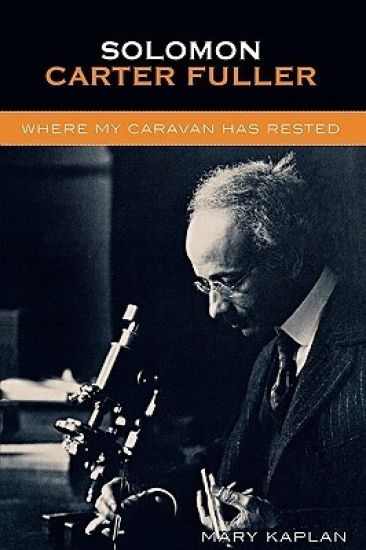
Solomon Carter Fuller: Where My Caravan Has Rested is the documentation of the life and accomplishments of an African American who would not allow racism to quench resolve and commitment to a productive life in medicine and scientific research. Dr. Fuller was born in Africa in 1872, the grandson of American slaves. He was America's first black psychiatrist and one of the first black physicians to hold faculty rank at an American medical school. He was a widely published neuropathologist and a pioneer in Alzheimer's disease research. To provide the reader with some insight into the life experiences that influenced and motivated Dr. Fuller, the book traces his family history from the days of slavery to the 1950s, crossing the North American, African, and European continents. Information obtained from his personal notes and interviews with his family provide a glimpse of the racial oppression that Fuller sought to overcome in both his personal and professional lives. This classic "Horatio Alger" strive and succeed story has important implications for our understanding of American, African, and European culture. Fuller's biography is an important addition to black history and to the history of medicine, not only for its account of a man whose achievements were many, but also for its portrait of what it was like to be black in the days of slavery, during the colonization of Liberia, and as a husband, father, and physician in early 20th century white America.
Solomon D. Butcher

Solomon D. Butcher

John E. Carter

University of Nebraska Press
2016
pokkari
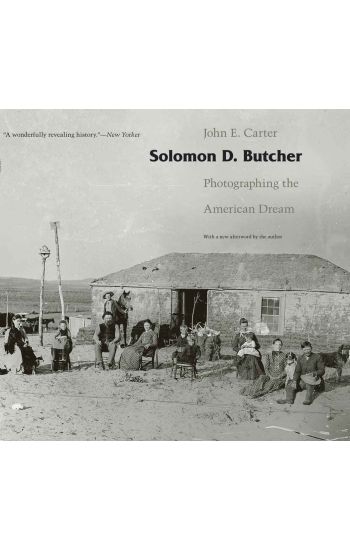
For millions of Americans, Solomon D. Butcher's photographs epitomize the sod-house frontier. His images from western Nebraska constitute the most extensive photographic record of the generation that settled the Great Plains. Their faces are imprinted on our minds: jaunty bachelors and earnest husbands (Civil War veterans of both armies), spinster sodbusters, determined mothers, cowhands, farmhands, and former slaves––all in search of land of their own. This first book devoted to Butcher and his photos presents a unique visual chronicle of that epoch, firmly establishing Butcher's place in frontier photography.In a substantial introduction, John E. Carter traces the variegated career of this Virginia-born photographer who was himself an immigrant to the Nebraska plains. Combining critical analysis with biography, Carter situates Butcher in western history as well as in the history of photography and assesses his achievements in both. Exploring the nature of Butcher's works and their scope, content, and significance, Carter offers a perspective for evaluating the historical evidence found in his work and new insights into the evolution of Butcher's style and subject matter.In this new paperback edition, more than 125 photographs are superbly reproduced in duotone from high-resolution scans of glass negatives. This edition also includes a new afterword by Carter, tracing the fascinating history of the photographs themselves after Butcher sold them to the Nebraska State Historical Society in 1912. Everyone interested in the plains pioneers or historical American photography will prize this splendid book.
Solomon's Child

Solomon's Child

William T. Lynch

Stanford University Press
2002
sidottu
This book challenges the accepted view of the early Royal Society of London that holds that its fellows did not seriously attempt to implement Francis Bacon's program for the methodological reform of the sciences. Instead, the book shows that Bacon's program shaped the Society's earliest work in important, if often contradictory, ways as fellows wedded Bacon's ideas to their various interests and problem areas. Developing Bacon's program in different directions resulted in a richer understanding of his method than the undirected empiricism often associated with his name. The author demonstrates that Bacon's call for a focus on "things themselves" was built upon three distinct images of objects of knowledge, in opposition to recent accounts that focus on the collective witnessing of matters of fact. He identifies at the core of Bacon's method a threefold metaphorical ontology of objects of knowledge and corresponding objectivities. The book reveals a picture of the Royal Society as more sophisticated and unified than previously depicted, while simultaneously demonstrating how the fellows' development of Bacon's legacy ultimately pulled in different directions. Specular objects of knowledge privileged passive observation and justified an empiricist objectivity. Manipulated objects of art or manual objects emphasized an engaged, constructivist objectivity in which knowing is doing. And, a vision of underlying forms as generative objects of knowledge, which could be combined like letters of the alphabet to produce phenomena at will, defined a theoretical concept of objectivity. These components of Bacon's method inform in varying ways the early publications of the Royal Society by John Evelyn, Robert Hooke, John Wilkins, Thomas Sprat, and John Graunt, which are examined in detail to demonstrate the collective negotiation of an ambitious inductive program employing hypotheses, active powers, and the disciplined use of analogy. Examining the Royal Society's activity in the areas of horticulture, experimentation, language reform, cultural criticism, and political arithmetic, the author synthesizes philosophical and sociological approaches to science in developing a new understanding of the Royal Society and its legacy for science, culture, and politics.
Solomon's Sword

Solomon's Sword

Michael Shapiro

Basic Books
2002
pokkari
In an era when headlines often seem dominated by horrific stories about abused children, Solomon's Sword weaves together the elements of two painful custody battles into a memorable book that no reader who cares about children will be able to put aside. In examining collisions between children, parents, and the law, Shapiro meets judges, lawyers, social workers, clergy, and therapists who must advocate a course of action in thousands of cases each year across America. Reading about these dedicated people, professionals in the vanguard of new approaches to the problem of mistreated children, will leave readers hopeful that we are finally learning how to ameliorate this enduring national disgrace. Solomon's Sword sheds new light on a dire social problem in a powerful book that will influence public policy for years to come.
Solomon Schonfeld

Solomon Schonfeld

Derek Taylor

Vallentine Mitchell Co Ltd
2015
nidottu
For nearly fifty years Rabbi Dr. Solomon Schonfeld was a controversial figure in British Jewry, after he took over the fledgling Charedi Union of Hebrew Congregations from his late father in 1933. Against all the odds, this charismatic rabbi built up the foundations of the organization until it was equal to the other traditional Jewish power bases. He also saved many thousands of lives organizing the immigration of refugees from the Continent before and after the war. He transformed the attitude of the Jewish community in Britain towards Jewish education. His Jewish Secondary School Movement provided the proof that it was possible to combine an extensive curriculum in Jewish studies with a secular curriculum, rigorous enough to take a disproportionate percentage of the pupils to the best universities in the country and into the professions. These massive achievements were only attained by overcoming an enormous amount of opposition from the Jewish establishment, and persuading successive governments to bend the rules.They were achieved by a man who had the necessary combination of conviction and determination to overcome constant financial difficulties, obdurate and inflexible opponents and daunting personal problems. Many of the fascinating figures who dominated Anglo-Jewry over these years are presented in the book. The fiery Chief Rabbi, Joseph Hertz, Schonfeld's greatest supporter; the inspiring educationalist, Judith Grunfeld; the powerful and antagonistic head of the United Synagogue, Sir Robert Waley Cohen; Schonfeld supporters such as the impressario, Victor Hochhauser, the politician, Joe Lobenstein, a young refugee, who eventually became Lord Jakobovits. Schonfeld's victory against all the odds is a fascinating story and long overdue. Chaim Bermant, one of the great Jewish writers, once described Schonfeld as 'One of G-d's Cossacks'. The story that unfolds in the book is very often that dramatic.
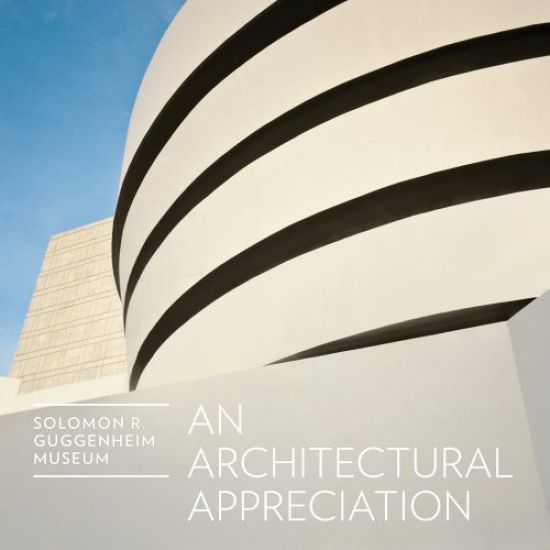
Solomon R. Guggenheim Museum: An Architectural Appreciation

Solomon R. Guggenheim Museum: An Architectural Appreciation

Stephen Hoban

Guggenheim Museum Publications,U.S.
2013
sidottu
In 1943, Frank Lloyd Wright received a letter from Hilla Rebay, the art advisor to Solomon R. Guggenheim, asking the architect to design a new building to house Guggenheim’s four-year-old Museum of Non-Objective Painting. The project evolved into a complex struggle pitting the architect against his clients, city officials, the art world and public opinion, but the resultant achievement testifies to both Wright’s architectural genius and the adventurous spirit of its founders. The Guggenheim Museum is an embodiment of Wright’s attempts to render the inherent plasticity of organic forms in architecture. His inverted ziggurat dispensed with the conventional approach to museum design, which led visitors through a series of interconnected rooms and forced them to retrace their steps when exiting. Instead, Wright whisked people to the top of the building via elevator, and led them downward at a leisurely pace on the gentle slope of a continuous ramp. The galleries were divided like the segments of an orange, into self-contained yet interdependent sections. The open rotunda afforded viewers the unique possibility of seeing several bays of work on different levels simultaneously. The spiral design recalled a nautilus shell, with continuous spaces flowing freely one into another. Solomon R. Guggenheim Museum: An Architectural Appreciation celebrates Wright’s crowning achievement with reflections by prominent architects, historians and critics. Paired alongside a half-century of photographs, they convey how, as Paul Goldberger has said, “almost every museum of our time is a child of the Guggenheim.”
Solomon's Grave

Solomon's Grave

Daniel G Keohane

Other Road Press
2017
pokkari
Nominated for the Bram Stoker Award for Superior Achievement in a First Novel Nathan Dinneck's new role as pastor may be shorter than he expects. For thousands of years a secret has been hidden from the world and protected from those who covet its power. Popes and Kings have sought it. Theologians and historians have debated its very existence. In every generation since the days of Solomon, one person is chosen to keep its secret, protect it from an ageless group claiming the treasure for their own dark god. After millennia of searching, they are finally closing in on their prize. Evil has followed Nathan home to Hillcrest, Massachusetts. Nightmares of temples and blood sacrifice, visions of angels and cemeteries foreshadow a dark battle to come. In the balance hangs the lives and souls of those chosen to protect history's most holy relic, perhaps even the gateway to heaven itself.